false identity

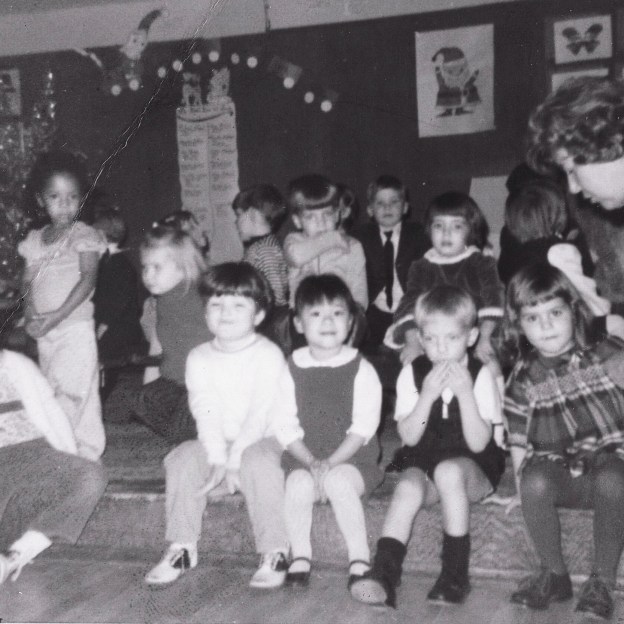
I don’t recall the exact moment I knew I was adopted. My parents must have told me at a very young age because I just always knew. They often told me that I was “chosen,” and mom occasionally retold the story of how they found me. Consequently, I came to feel “special,” but later special didn’t feel so special. Usually my mom ended up in tears, and I would try my best not to cry in front of her. Like anyone else’s parents, my mom and dad were my mom and dad. We had the same kind of relationship that other kids had with their parents. It didn’t matter that I looked different from them. As I grew up, however, my adoptive parents were completely unaware of the racial teasing that I experienced, the fear, the sense of inferiority that developed. I kept it to myself, and they never asked.

According to my mom’s story, I was the eleventh, give or take a few, child born to my birthparents; they gave all the girls up for adoption. How accurate this is, I’m not sure. My birthfather was supposedly Japanese and mother, Vietnamese. My parents attempted to find one of my biological sisters to adopt as well, but were unsuccessful in finding her. After my mom’s death in 2008, I found the original contract of my adoption, as well as many other documents, notes, receipts, etc. Everything had been carefully preserved and hidden away in a storage box up in my parent’s attic. I found one note of a list of orphanages scribbled on pieces of tablet paper; the writing appeared to be in Mandarin, but had English translations. Were these the orphanages my parents visited to look for my sister, or maybe even for me? I’ve often wondered how they found the Family Planning Association of China, the orphanage where they found me. The orphanage no longer exists today.

We traveled back to Kadena Air Force Base in Okinawa where my dad was stationed after my adoption. It would take another seven months for the petition for my visa to be approved (through the Tokyo, Japan Immigration and Naturalization Service). When my parents attended their appointment at the American Embassy to file for the petition, they were disappointed to learn that additional documentation was required attesting to “the abandoned status of their adopted daughter,” meaning a letter from the adoption agency was needed. My parents contacted the Secretary General of the Family Planning Association, Mrs. Tze-kuan Shu Kan, to write the letter. In addition to this information, I found some interesting letters to my parents from a caseworker, Rose-Marie, reassuring them that the necessary paperwork was being properly notarized and that there would be “no further trouble.” I also found the letter that Mrs. Kan eventually wrote to confirm the status of my abandonment; however, only half of it is legible. Part of the document is damaged, to my great disappointment. This was frustrating, as I was hoping to learn more about my adoption and birthfamily. What I did make out basically stated that I was abandoned at the age of 1 month, 9 days and placed in their orphanage. I’m almost positive that there was more explaining why my birthparents gave me up for adoption though. On July 7, 1967, my parents finally received approval on their petition for the visa. This enabled them to file a formal visa application, which required even more paperwork. A small note with scribbled handwriting listed all the items mom needed for the visa application: 6 photographs, 4 copies of adoption paper, 6 copies of household registration of the child, passport, medical exam and vaccinations, etc.

When I first found my adoption contract, I thought I’d made the discovery of a lifetime. What has intrigued me since examining the contract is that some of my mom’s story is contrary to the content of the contract. Mom never alluded to this document, and once when I asked to see my adoption papers, she freaked out and became suspicious. I have no idea why, except that perhaps she was afraid I’d want to find my birthfamily, which I never had any desire to do. It was all very weird. The adoption contract revealed the names of my birthparents. My birthmother’s name was Shiow-Jean Lu and birthfather’s, Chan-Huai Huang. My birth name was Hsiao-ling Huang (pronounced Shou-ling, like cow). My parents kept my birth name as my middle name but changed the spelling to Chaling. I’m speculating that during the translation of the contract, someone wrote out phonetically how to pronounce my birth name, or maybe my parents did it, and that’s how “Chaling” came to be. Or perhaps they simply ‘Americanized’ my given birth name. What really puzzles me is the fact that my birthparents names’ are not Japanese or Vietnamese, but Chinese. Could I be Chinese, or Taiwanese (I was born in Taiwan)? It’s such a mystery…

As my mom’s story goes, they knew that I was “the one” they wanted when I looked up at my mom and smiled at her. Apparently, my parents did not get to choose the baby they wanted, they were just given a baby. The process of cross-cultural adoptions in the U.S. is nothing like what my parents experienced. Adoptive parents go through a very lengthy process of completing a complicated mass of paperwork, the dossier, which can take months. Each country’s government has its own set of eligibility criteria, requirements, fees, etc. and there are also U.S. state and federal adoption laws. Then there’s interviews with adoptive parents, background checks, home visits… After all of that, adoptive parents begin to receive referrals based on their preferences. The whole process can take up to 2 or 3 years depending on which country the adoptive parents are seeking the adoption. My parents adopted me in a matter of days. Of course, they were actually there in Taiwan and able to go to the orphanage and see the children available for adoption. On December 16, 1966, I became Marijane Chaling Buck, the daughter of Lt. Col. Wendell and Gloria Buck. 

After finally receiving the visa in 1968, my dad received a transfer to the States. We moved to Westover Air Force Base in Massachusetts for a couple of years, then were transferred again to Barksdale AFB in Bossier City, Louisiana. It was in Shreveport on March 4, 1971, at the age of 4 years that I became a naturalized American citizen, along with 37 other people. I remember vaguely the naturalization ceremony, mostly feeling scared. The court room was filled with so many people, and when the judge picked me up to hold me for the news reporters, I started to cry.

We remained in Bossier City, Louisiana, throughout the rest of my childhood, and my parents continued to live there for the rest of their lives. They lived in the same house for 37 years. Obviously, finding my adoption contract has left me with a lot of questions. My parents are deceased, so it will be difficult to find the answers. After all of these years, I never thought that I’d be this curious about my past, but because my adoptive parents provided mistruths, perhaps lies, I’m perplexed and would really like to find some answers. I’m not sure if they’re out there or how to go about finding them, but I’m going to try.

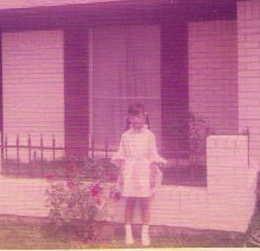
my childhood home

my childhood home

I got the call from the realtor this morning as I drove up I-17 to Phoenix. My parents’ home will finally be listed for sale this Saturday. The realtor and I exchanged a few words, shared a few laughs then hung up. Since 2008, the succession of my parents’ home has been caught up in complicated family issues. Part of me feels relieved that we’ve finally reached this point, and yet another part of me feels a great sense of loss. There’s just something about saying goodbye to the house you grew up in when there are so many memories attached. It was a small brown and white house in a subdivision called, Sun City. The streets were named after planets, and most families in the neighborhood at that time were military ones. Everyone knew each other; it felt like a real community.

I remember the first time we visited the home. My parents were so excited about purchasing a brand new house after having lived on the military base at Barksdale for some time. It must have been around 1971 – Brady Bunch era – and homes were still being constructed in the subdivision. I remember wiggling my toes through the lime green shag carpet and turning cartwheels in the wide-open space of the family room. Out back, there was a patio and yard large enough to fit a swimming pool and swing set. The family room walls were wood-paneled, and the marbled formica countertops in the kitchen matched the lime green carpet. Not real stylish by today’s standards. Down the long hallway were three bedrooms. It wasn’t a very big house, but big enough for a family of three and house pets.

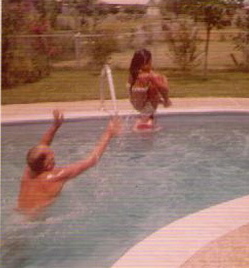
After settling in, my parents had a swimming pool built in the backyard. The sound of drills and other motorized equipment woke me up in the mornings, and I’d stand on my bed to peer out the window inspecting the daily progress. It was like waiting for Christmas. I eagerly anticipated the day that I could finally go swimming! When, at last, that day arrived, I got into the pool and fearfully clung to the edge for weeks. My mom immediately signed me up for swim lessons at the local YMCA, which fixed my fear of water pretty quick. Soon I was swimming like a little fish, although I hated my swim lessons and swimming laps every morning. My dad used to throw me up in the air like a cannonball while Mom lounged and watched us from a fold up lawn chair, the kind that left crisscrosses on the backs of your legs. In addition to swimming, I also spent a lot of evenings playing in the front yard with all the other kids from the neighborhood when it was still safe to do so. We’d play swing the statue, red rover, and red light/green light until the sun began to fade and our moms called us back in for the night. What good times those were.

My dad loved gardening and planted a large garden full of vegetables in the backyard behind the pool. We had fresh cucumbers, okra, tomatoes, and zucchini. My mom liked to make homemade ice cream with fresh peaches from our peach tree. I’d watch her pour the rock salt into the ice cream machine and then peer through the plastic top as the mixing arm swirled the ice cream around. What delight. In the mornings, I got used to waking up to the rumble of B-52’s revving up their engines at Barksdale Air Force base. It grew to be a comfort. I walked to Sun City Elementary School every morning and back home every afternoon with my niece or a friend unless it was too rainy or cold outside.

My parents owned that house for 37 years. The next time I visit Louisiana, the house will belong to some else, a stranger. For memory’s sake, I’ll take a spin down Pluto Drive just to check it out. I’ve heard that childhood homes don’t hold up to the memory once it passes on to new homeowners. New homeowners often remodel, the appearance changes, and the warm feelings you’d expect to emerge somehow don’t. Hmm…I wonder? In any case, I spent most of my childhood in that old house. I don’t think I could ever forget that.

Flight Training Wendover, UT Photo Courtesy of Steve Whitby

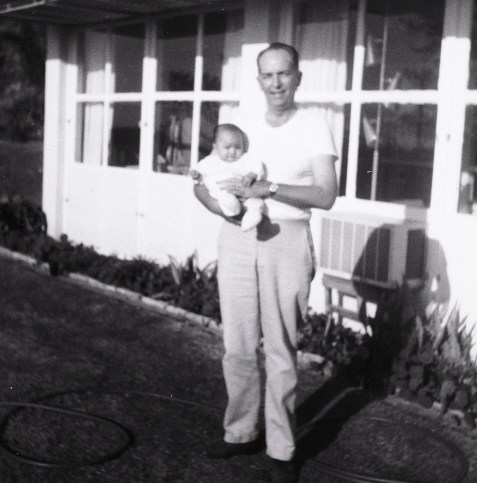
my adoptive father

On an impulse last November 11th, I took my daughter and a friend to the Arizona Wing of the Commemorative Air Force Museum in Mesa, also known as Falcon Field. It was, after all, Veterans Day, and I just felt like doing something in memory of my dad. I knew he had a long career in the Air Force and flew a B-something or other during World War II, but didn’t know much else. My dad wasn’t much of a talker; he rarely spoke of the war and only if you asked him. Dad was a tall and slender man, patient, quick with a smile, and loved sharing jokes. He seemed easy-going and cool headed, but I often wonder if there was more going on inside than he let on. Those qualities were probably what made him such a good pilot during all those bombing missions across Europe. I felt closer to my dad than my adoptive mother because of his calm nature, even though we didn’t talk a whole lot. Though he may not have expressed many of his thoughts, I believe he was deep thinker. I worried about him often as a kid, his age and health. My adoptive parents were older when they adopted me. Would he be around when I became a teenager, an adult? I kept all of these worries to myself though. What Dad didn’t express in words, he showed through gifts, things that he thought would make me happy. On my 16th birthday, he surprised me with a car, a little tan Ford Mustang sedan. I loved it. One Christmas, he got me my own phone with my own phone number. It sat on my bed stand, a green landline with the curly cord and push buttons. Mom told me that he was so proud of getting that phone.

I thought about Dad all morning as we rushed to get ready to go to the museum. I didn’t want to miss the landing of a B-17 Flying Fortress called Sentimental Journey, which was on tour across the U.S. Unfortunately, the plane had already landed by the time we got there, but we were able to take a tour inside the plane. This was the closest I’d ever been to an actual World War II aircraft and, in a way, I felt connected to my dad. I was amazed at how confining the inside of the plane was – not too comfortable and very hard to walk around in. The ball turret located under the belly of the plane was an even smaller space. A gunner would sit in this tiny cramped space during combat missions. I imagined what it would have been like in freezing cold high altitude, shooting at the enemy in such tight quarters. Yikes! We continued to look at all the other military aircraft displayed in the hanger. It was an especially meaningful trip to me, as my dad never talked about his military past.

Dad on L, Hugh Caroll, Pilot on R, Photo Courtesy of Steve Whitby

Dad on L, Hugh Caroll, Pilot on R, Photo Courtesy of Steve Whitby

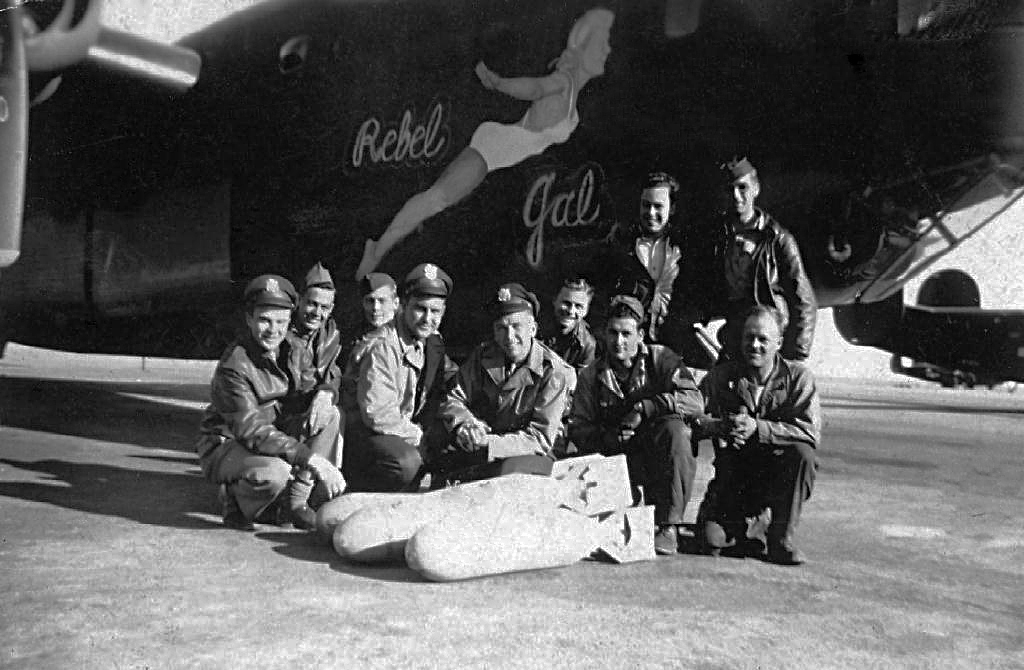
Later that evening, I got online to search, like many times before, for any information about my dad’s military history. Surprisingly, I stumbled across a link containing Dad’s name, Wendell Robert Buck. I immediately clicked on the link, which opened up to a Flickr page where dozens of his photos were displayed from World War II! I was stunned and, at the same time, elated to see so many pictures of my dad as a young man. In many of the pictures he was with others who appeared to be members of his flight crew. I had never seen such pictures before in my life. I went through each one wondering who the other guys were and wondering even more who posted the pictures. I found an email address and sent off a message to the poster inquiring about his connection to the pictures. Edward Valachovic, as it turns out, just happened to be the son of one of the crew members in most of the pictures, the bombardier. His dad, Paul Valachovic, and my dad were apparently very good friends during the war. Most of the pictures were taken in Europe where the crew was stationed at Halesworth, England. Later, I was to learn that Dad was a 2nd Lt. and co-pilot of their B-24 Liberator, which the pilot of the aircraft affectionately named “Rebel Gal.” He was a southern boy from North Carolina, and I thought what a cool name that was for a plane. I noticed a large painting on the side of the plane next to the name, “Rebel Gal,” and came to learn that it was called nose art. The crew flew together with the 489th Bomb Group, 845th Bomb Squadron, 8th Air Force during the European Theatre, January 1944 – August 1944 in 32 combat missions.

Edward referred me to a man who had conducted extensive research on my dad’s service during World War II. I could hardly wait to contact this person and had no idea who he was. He and Edward had corresponded on different occasions exchanging information about the crew of Rebel Gal. Little did I know that this person was a distant relative, Steve Whitby; his mom, Tarri, was my dad’s first cousin. Apparently, Tarri and my dad grew up together in Santa Rosa, California. Once I got in touch with Steve, there was so much to talk about! Steve’s mom had asked him to find out about Dad and his military service after my dad’s death. Steve had provided Edward with the pictures he posted on his Flickr page. Steve was also able to get a hold of of the bombardier’s (Paul Valachovic’s) personal diary during the war and had numerous pictures of my dad during WWII and his training before the war, pictures I’d never seen before. Through Paul’s diary and obtaining Dad’s military service records, he pieced together the story of my dad’s military history, including where he attended flight training and the kinds of planes Dad learned to fly in. Edward, meantime, encouraged me to call his Dad, Paul, who currently lives in upstate New York. What a dear, sweet man! Although his memory was a little patchy, he remembered my dad right away and told me what good buddies they had been. He told me of one particular mission where the crew was flying through some very heavy flak when a piece of shrapnel came through their plane missing my dad’s foot by inches. He laughed and said Dad promised to start going to church with him right after that! Steve continued to send me more pictures of dad during World War II and of his childhood on the farm where he was raised in Santa Rosa. Suddenly many of the missing pieces of my dad’s military history I’d been searching for through the years came together.

Crew of Rebel Gal, Dad kneeling in center, photo courtesy of Steve Whitby

Crew of Rebel Gal, Dad kneeling in center, photo courtesy of Steve Whitby

In December 2009 right before Christmas, my family and I headed to Hemet, California where my distant relative, Steve, lives. We stayed with him for an entire weekend looking at old pictures of his mom, Tarri, and my dad and their families together as kids on the farm. Steve gave me a copy of the booklet he put together on my dad. It was more than I could have asked for. The entries from Paul’s diary described the many combat missions the original crew of Rebel Gal flew. This crew and the other crews who flew Rebel Gal later were a very lucky bunch of men. Steve told me that none of the crews who flew her were killed.

I’ve learned so much about my dad over the last several months. In addition to the booklet, Steve also compiled a CD of numerous pictures of Dad and his family. He also got a hold of an 8 mm film Paul had taken during their flight training and reformatted it to CD. The film was dated 1944. What struck me as I watched the CD was how young these men were and how affectionately they goofed around with each other. It was amazing to see my dad in that footage and to witness a time in his life that I knew so little about.

After the war, Dad was recalled back to military service to fly in the Berlin Airlift where he was stationed at Weisbaden AFB. He flew C-54’s from 1948 – 1949 as a pilot transporting much needed food and goods to the starving people of Germany after the war. According to Steve, this was the crowning glory of Dad’s military service, something he was very proud of. Both of my adoptive parents had big and generous hearts. When the airlift ended, Dad decided to stay in the Air Force. He later flew B-29s, B-47s and B-52’s until an aneurysm almost took his life in 1963. Unfortunately, he was never able to fly again after suffering the aneurysm due to physical disability. I know that must have been utterly devastating for my dad because he LOVED to fly. I understand now so clearly why he took me to see the Thunderbirds fly every year at Barksdale Air Force base. He absolutely loved to watch all of those aerial acrobatics. I used to cover my ears in fright as the jets sped overhead, the sound of their engines roaring thunderously through the sky!

Dad receiving Distinguished Flying Cross (DFC) August 1944. Photo courtesy of Steve Whitby.

Dad receiving Distinguished Flying Cross (DFC) August 1944. Photo courtesy of Steve Whitby.

After his tour of duty, Dad received the Distinguished Flying Cross and was cited for his “skill, coolness and courage in combat flight against enemy opposition.” He saved all of his medals and ribbons from the war and the Berlin Airlift in a shadowbox that was prominently displayed in our family room. Dad never bragged or talked about what he’d accomplished. I never knew that my dad was such a hero during World War II. I’m thankful to Steve for providing so much of what I didn’t know about his military history. How I wish I could talk to my dad about all that he did. If he were here now, I’d tell him how very proud I am of him.

my mysterious adoption

Imagine your whole life believing that you are one thing and then learning in mid-life that you are not what you have always believed you were. Let me explain. When I was four months old, I was adopted by a white American family from an orphanage in Taipei, Taiwan. My dad was a lieutenant colonel in the U.S. Air Force, and he and my mom were stationed in Okinawa at the time I was adopted. My parents provided very little information about my adoption, and I knew nothing about my birth family or birth culture. I always believed that I was Vietnamese and Japanese. That is what they told me, that is what I believed. I had no reason to question what I’d been told. After my mom passed away in 2008, however, I made a discovery about my adoption that in one instant changed everything I ever knew.

My mom was diagnosed with Alzheimer’s disease, which slowly progressed across several years. Before her death, my half-sister began rummaging through our parents’ attic in an attempt to get rid of junk. There were tons of boxes stored, and none of us had a single clue what was inside them. As it turned out, one box in particular contained some very surprising things. After mom’s funeral, sorted through the boxes. There we were, in the tiny dining room where I’d sat a million times with my family for breakfast and dinner, removing yellowed tape from boxes, rummaging through what was inside. Some contained interesting artifacts from my dad’s service in the military. He was in the United States Army Air Force, a co-pilot of a B-24 in World War II. These little treasures are very meaningful to me now, old photos from my dad‘s youth, flight records, clues to his military past, which I knew so little about.

We rummaged and rummaged. Then, I stumbled upon a box where I found the original contract of my adoption plus other items related to my adoption that my mom stowed away and never told me about. I knew something of my past had to exist somewhere, but never had any motivation or reason to search up in the attic, of all places. I used to think that monsters and scary things lived in the attic. The most curious thing of all was a picture of my mom holding me in her lap in what appeared to be the orphanage where I was placed for adoption, though I can’t be certain. She is no longer here to answer the many questions about my adoption that are exponentially growing in number as I write this. A small baby bed, its railings rusted with peeling paint, is situated just behind us. I found safety pins that probably held together my cloth diapers and baby shower cards, congratulating my mom on her “new addition to the family.” I was stunned, excited about these curious new finds and that I’d finally found some tangible link to my mysterious adoption. At the same time I felt sad that my parents never shared these things with me. Why not? Why hide my early beginnings? Secrets tend to surface at some point.

At the beginning of this year I went back to Bossier City, Louisiana, to salvage what I could from my parents’ home. It all seemed so surreal knowing that this would be my last visit to the house I grew up in before it is put on the market. I shipped back home tons of old pictures, an antique grandfather clock that has been in Mom’s family forever, LP’s of Glen Miller music, and several of Dad’s military awards, plaques, and old service records. So many memories came flooding back as I unpacked all the boxes and unwrapped each little item, childhood memories, days gone by. It saddens me that neither of my adoptive parents are here anymore. We’ll never get the chance to clear things up about my adoption. It’s up to me now to figure it out. But really, that has been the theme of my life – left to figure things out on my own, alone. 

Since coming back home to Arizona, I’ve thought more and more about my adoption and decided to begin a search for my birth family. I sent my adoption contract to an adoption agency specializing in adoptions from Taiwan to American families. Surprisingly, I learned from one of the caseworkers that my birth parents were not Vietnamese and Japanese, but very possibly Taiwanese. Could I be Taiwanese? It would make sense, after all, because I was adopted from Taipei. For years I have explained to people that I was born in Taiwan, but am really Japanese and Vietnamese, adopted by white parents. I had to further explain why I had a southern accent. The script…the script became second nature, yet incredibly annoying at the same time. The fact that I didn’t exactly look like either of my parents raised question upon question and elicited unwelcome stares, especially having lived in a predominantly white area.  It will be so much easier now to just tell people that I’m Taiwanese and not feel obligated to share more, not that I am really obligated in the first place. It’s just when you grow up in an area where you don’t look like your parents or anybody else, people ask questions. And not just one question…

I’m not sure how the search for my birth family will go. Chances are that neither of my birth parents are still living. My birth mother was 39 and birth father, 55 when I was born. Still puzzling to me is why my mom told me that I was Japanese and Vietnamese. Did the translation get mixed up, or was it all fabricated? It’s hard for me to believe that my parents would purposely lie to me. But, there is that…Perhaps it will always remain a mystery.

Discovering things I never knew about my adoption, digging into my past has led to a burning curiosity to know and understand my cultural heritage, which I so strongly rejected growing up. Why would I want to look Asian in a world filled with white people? I am now more curious than ever about my birth family. Do I look like any of them, does anyone else in my birth family have an affinity for music? Are there any health issues to be concerned about, was it difficult for my birth parents to relinquish me, did they ever want to see me? Hell, I’d never even heard of the term, “birth family,” until recently. Although I may never find out anything other than what’s preserved on my adoption contract, I hope that won’t be the case. 

Related articles