Category Archives: Adoptive Family

ivory

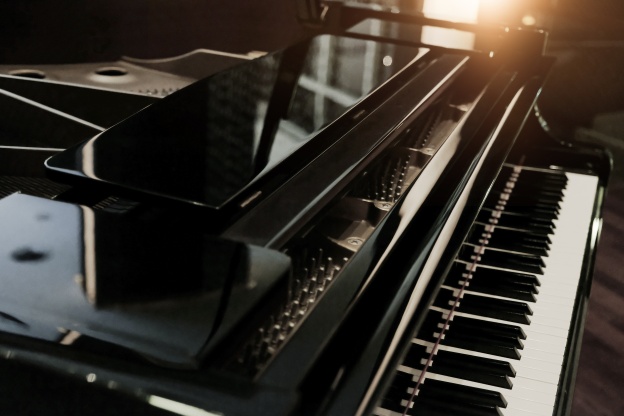
Mrs. Guinn placed the clunky brown headphones snuggly over my head, the giant earpieces squeezed my temples. A long, coiled cord snaked across the shaggy green carpet to a stereo where she stood, ready to drop the needle. I had no idea what I was in for. Mrs. Guinn had never offered to play music for me at any of my other piano lessons. Mandi, my friend next door, and I took weekly lessons at Mrs. Guinn’s home. I loved going to Mrs. Guinn’s for my piano lessons and looked forward to them every week. She lived in a quiet neighborhood in Shady Grove and was a white, 30-something year old woman. She had short brown hair in a long pixie style, a pretty face, and was always dressed in jeans and a nice top. Mrs. Guinn was married to an officer in the Air Force. I remember her as having a quiet and gentle demeanor. She reminded me of Toni Tennille of Captain and Tenille. The front living room where Mrs. Guinn taught had an upright piano on one wall and an organ against another, a large window overlooked the street. Her house was always meticulously clean and smelled good. “I have something I want you to listen to today,” she said as she guided me into the den. The headphones felt heavy against my ears as she adjusted them. I sat silently and settled into Mrs. Guinn’s plush black couch, waiting for the music to begin playing.

“Da-da-da-DUM.” “Da-da-da-DUM!” Those first four notes of Beethoven’s all too famous Fifth Symphony bellowed in my ears. The music accelerated, and I was completely enraptured, magically swept away. The pulse of the bass vibrated in my chest. I was only 9-years old at the time, and yet that was such a defining moment in my life. The rest of the world fell away in those brief eight minutes or so of that first movement. I was an extremely shy, introverted kid, but at my lesson the following week, I mustered the courage to ask Mrs. Guinn if I could listen to that recording again. Of course, she obliged. Little did Mrs. Guinn know how much that recording influenced me. I discovered I had a love for classical music. One of the other things I enjoyed while taking lessons from Mrs. Guin was the monthly gatherings she held at her home where all her students performed. The best part was when she performed for us on her organ. I loved watching her feet fly across the pedals. It was certainly a treat.

Mrs. Guinn was a member of the National Federation of Music and entered me into my first music festival where students performed and were adjudicated. I received a superior + and was selected to perform in the Honors Recital with many other students. Kabelevsky’s, The Clown, Op. 39, No. 2, was my first performance piece ever. As I climbed the stairs the night of the recital towards the concert grand piano, it felt as though I were having an out of body experience. Somehow, I got through my piece without any fumbles and took my bow to the applause of the audience. I would perform in many other recitals, each one causing more anxiety than the last. It was something I continuously struggled with.

Mrs. Guinn moved within a year or two. I was deeply saddened when she told me her husband had received a military transfer to Texas, as I had become quite attached to her. It was very hard to say goodbye, and I remember having a hard time sleeping the night before my last lesson. I probably shed a few tears, too.

My mom found a new teacher, and I began taking lessons from Mrs. Ellis, whom I didn’t like very much. The music she gave me to play was “old” and not very fun. Mrs. Ellis was older than Mrs. Guinn and had short, reddish hair and a southern drawl. I didn’t feel the same connection with her as I had with Mrs. Guinn and dreaded going to my lessons where very often, her daughter, about my age, invited me to play while I waited for the kid’s lesson before me to end. She had what seemed like a million trophies from beauty pageants stacked in her room, and I remember jumping on the trampoline with her in the backyard. I felt awkward next to her, as she seemed so accomplished for a kid our age. Eventually, I moved on and studied with Mr. Robert Buckner during my high school years. Mr. Buckner lived in Shreveport and was quite a colorful character. He had a piano studio behind his house and a dachshund named Angie. Mr. Buckner’s gray hair was always disheveled and seemed to stand on end to one side. I began every lesson with major and minor scales to warm-up, or Hanon exercises. I felt comfortable with his teaching style and sense of humor. Mr. Buckner was bit of a stout man with a laugh that welled up from his belly, which was quite infectious. A couple of times, I caught Mr. Buckner sleeping while I played. His snores always gave him away.

I decided to major in music and attended Centenary College of Louisiana where I studied piano performance, primarily because it meant I didn’t have to take a single, damn math class. I was beyond horrible in math or anything that had to do with numbers. Initially, I felt terribly inadequate compared to my peers who seemed to have much better training musically than I did. I struggled with ear training and theory and loathed sight singing, but loved composition and piano literature. It wasn’t that I couldn’t sing, it’s just that I had never been taught sight singing, and it terrified me, especially when made to sight sing in front of all my peers. That was a very joyless experience. I studied with Constance Knox Carroll and absolutely adored her. She was an inspiring teacher and incredible pianist. I’m sure, however, that I was one of her least favorite students, as I was not very disciplined and did not practice as I should have, especially during my senior year when it was expected to perform a solo recital of full repertoire. I got distracted with theatre and dance and remember her scolding me at one particular lesson for my lack of practice. I hadn’t memorized all of my pieces, and my recital loomed near. I just sat there unable to say a thing. No doubt, part of her concern was that a poor performance would reflect badly on her. She said that it seemed like I liked theatre and dance better. She was right. What did I know at that age? Not a whole lot, except there was much less pressure when you were having fun, for God’s sake.

I wasn’t exactly lazy, but discipline was not my strong suit. Practicing was such an isolating, arduous endeavor, and yet in those days, I didn’t always mind it. I typically hit the practice room four hours a day, sometimes six on the rare occasion that I was super inspired. There were times when it was such a rewarding experience to sit at the keyboard and just play without anyone listening. The freedom from judgment or making mistakes, the connection to the music; it was magical. Those were the times when I performed the best. But in front of an audience, I lost all sense of composure. Performance anxiety plagued me. I could not control my hands; they became leaden.  Adrenaline rendered me helpless, and memory slips haunted me. On one occasion, several students were to perform with the Shreveport Symphony in a special recital. I was performing the first movement of Mozart’s Piano Concerto in A, K414. I can’t describe how exhilarating it was to perform with a live orchestra. Connection to other musicians performing together was something I had never experienced. It was like flying, but without the motion sickness. Unfortunately, performance anxiety got the best of me, and my memory lapsed somewhere during the development. The orchestra continued to play as if nothing happened while I sat frozen, paralyzed. Eventually, I wove my way back in, but the damage had been done. I barely made it through the cadenza. Instead of enjoying such a performance, I was relieved when it was over. My legs were so shaky afterwards, I could barely stand.

After graduating college, I taught piano for a brief time at St. Mark’s Episcopal in Shreveport and another Christian school before moving to Florida. I didn’t touch a keyboard for nearly 20 years after that. The trauma of it all prevented me. I deeply regret that now. One day, my mom asked if I wanted my baby grand piano, the one they bought me when I first started taking lessons. Of course I did, and a couple of months later, my baby grand arrived at our tiny condo in California. It took up an entire room. I started teaching piano thereafter at a Christian elementary school in Mission Viejo, CA, and eventually taught privately on and off until 2013. My piano skills were sadly more than a little rusty, and I lamented the loss. I attempted to take piano lessons a couple of different times, but just didn’t have the time to commit to practicing with family responsibilities and work. I stopped teaching altogether in 2013 when I went back to school to pursue a Master’s degree in Social Work.

I have now had my baby grand since 1999. It has moved with us many different times in the last several years. It’s sitting in our family room in need of a little TLC – or a lot actually. When we returned to California in 2016, my husband tried to talk me into selling it because all the homes in California are so much smaller! It was more challenging to find an “affordable” (there are no affordable homes in California) home that would accommodate its size. First of all, I silently fumed that he’d ask such a thing that’s so important to me, and second I refused to budge. We were not going to sell my baby grand piano! And so it was and is and will ever be.

Every once in awhile, I sit down to play when things are quiet and I can get away with it. Recently, I felt moved to find Mrs. Guinn and searched for her via Google. Amazingly, I found her, and she wrote back to me immediately. She continues to teach, perform at churches, and accompany choirs in Nebraska. Although she only vaguely remembered me, she said that she looked up old recital programs and located one dated May 23, 1976, that I performed in. She said I played a Schaum arrangement of Yankee Doodle as a solo and again in a trio performance with Mandi, my friend, and another student named Kelly Scott. I was so happy to hear from Mrs. Guinn and that she continues to teach and play.

I trained in piano for many, many years. I wish that I’d continued to play, but there was a part of me that felt my skills were inadequate, so I didn’t play for years. When I decided to study music therapy in 2006, that passion for music rushed back. And now, I long for my piano to be more than just a pretty conversation piece in my living room. One of these days, and hopefully not too long from now, I will get back to playing, perhaps a little at a time. Sometimes, it’s hard to play because I inevitably begin to compare my current level of skill to that of when I played daily for very long hours. People tend to tell me, “you should just play for yourself.” Well, it’s easier said than done. Nevertheless, music is truly part of my fabric. I can’t think of anything more powerful and transformative than music.

So, for your listening pleasure, here is one of my favorite pianists, Murrah Perahia, at the keyboard performing Mozart’s Piano Concerto No. 12 in A, K. 414. It always makes me happy to listen to this beautiful piece of music.

To Mrs. Carroll, who inspired me to be a better pianist:

My memoir!

Cover

Beyond Two Worlds: A Taiwanese-American Adoptee’s Memoir & Search for Identity is now live! If you have not yet purchased your copy, don’t delay. I have a few books left, and signed copies can be purchased right here on my website.  Just click on Shop to order. Kindle and hardcover editions are available via my author page at Amazon, and you can also find the book at Barnes & Noble, and Indiebound.org.

If you enjoyed reading the book, please consider leaving a review on Amazon, or wherever you purchased your copy. Unfortunately, I am unable to ship internationally; however, those copies can be ordered through Amazon and Barnes & Noble online. To learn more about the book and to read an excerpt, click here, and to read reviews, click here. Thank you for supporting Beyond Two Worlds.

Happy reading!

Pre-Order Your Book

Hello out there! I’m very happy to announce that you can now pre-order your copy of my new book, Beyond Two Worlds: A Taiwanese-American Adoptee’s Memoir & Search for Identity. Please spread the word and encourage your friends and family to purchase their book on the Beyond Two Worlds website. Just click on the “Shop” tab above, which will direct you to PayPal. All books purchased through my website will be signed and autographed.

About the Book:

Born in Taipei, Taiwan, Marijane was adopted by an American military family at four months old. She grew up in a middle class neighborhood where hers was the only Asian face amongst a majority of white.

Raised to believe she was Vietnamese and Japanese, she never doubted what her adoptive parents told her, until one day, she found her lost adoption papers. This discovery unloosed secrets that had been buried for decades, causing her to question her own identity and origins. With brave determination, Marijane set out on a journey to reconstruct her past and resurrect a birth heritage that had long been forsaken. Her journey took her halfway across the world to eventually reunite with her birth family.

Beyond Two Worlds is a poignant telling of one woman’s quest for identity and belonging despite insurmountable odds, and will be of help to those seeking connection to their original families.

Coming Summer 2017!

Read an excerpt from the book here.

what every adoptee longs to know

When I was growing up in Louisiana, one of the questions I was most often asked by others upon learning that I was adopted was, “so who are your ‘real’ parents?” It was fairly obvious that I was adopted, as I looked nothing like my white parents. I had straight black hair, almond shaped eyes, and skin the color of my dad’s morning cup of coffee. I was usually annoyed by the question each and every time it was asked. My typical response was, “well my parents are my real parents.” My adoptive parents were the only parents I knew. The only parents I would ever know. I have no doubt that other adoptees encounter the same question and perhaps feel the same sense of annoyance.

What baffles me is that I was never curious about my birthparents or place of birth until about two years ago after finding my adoption papers, 40 years after my adoption. This ambivalence was perpetuated by the secrecy surrounding adoption at the time. My adoptive parents never ever talked about my birth heritage or birth family. Hell, I had never even heard the term, “birthfamily.” When I was placed for adoption, it was the beginning of the end of any connection to my birth country, to my birthfamily, to my cultural roots. After my adoption, all cultural ties were severed. I would never know that my birthparents were from China, but forced to leave the country and build a new life in Taiwan, that I had two older biological sisters and an older biological brother. I believe that my adoptive parents did everything possible to keep my past hidden from me, and for years, it would remain so. Then one day, the truth came out, or at least part of it. And when it did, it was the beginning of a new chapter in my life.

This afternoon, I went with some friends who are visiting from California to see a movie, “Philomena,” starring Judi Dench and Steve Coogan. It was a heartbreaking movie, although there was some humor between the characters that lightened things up. It is based on the true story of Philomena Lee, an Irish woman who, as a teenager, had a romantic fling with a boy at a carnival and became pregnant. Rejected by her own family, she is sent to a convent where she gives birth to a son, Anthony, and is forced to work with other young girls in order to work off the penance of their “sins.” The girls are allowed to see their children for only one hour a day. What is even more tragic is one day, Philomena watches helplessly as her three-year-old boy is taken away by a rich American couple without as much as a goodbye. The convent was in the business of selling babies to wealthy Americans and having the young mother’s sign contracts that they could never seek the whereabouts of their children. This abominable practice is historical, unfortunately. Fifty years later, Philomena is still tormented by the loss of her son and the desire to find him. She unwittingly connects with dejected political journalist, Martin Sixsmith, portrayed by Steve Coogan, who agrees to help her find her son, primarily for the tabloid possibilities of a human interest story. What follows is a tender story of loss, reconciliation, forgiveness, and ultimately acceptance.

I know some adoptees hated this film, but it really resonated with me, despite the creative license that was taken to make it more dramatic. The story of deep loss and grief was what hit me. The depiction of such a tremendous loss experienced by a woman whose child was taken away from her was so real. I felt the loss as if it were my own. So often adoption is portrayed as a happy event, yet rarely do we see the other side of adoption from the perspective of the birth mother who is forced to relinquish her child. One of the most memorable lines comes when Philomena decides to go to America with Martin Sixsmith in hopes of finding her son. Philomena says, “I’d like to know if Anthony ever thought of me…I’ve thought of him everyday.”

Since learning about my birthparents in Taiwan, I’ve often wondered if my birth mother ever thought of me. How can it not be so? Philomena answered this question for me. The separation between a mother who is forced to give up her child and the child who is relinquished causes a wound that is easily re-opened again and again. I will never know my birth mother. She and my biological father died before I had the chance to meet them. I have often wondered about her, like what her favorite color was, what kind of music she liked, what kind of personality she had, was she happy, did we bond at all while I was still with her? I was told by my sisters in Taiwan that she was a teacher, she enjoyed learning and classical music. Unbeknownst to her, my birth father, took me to the orphanage and relinquished me without her consent. I often wonder how it all happened, if he felt anything at all when leaving me at the orphanage to languish. My sisters tell me that our mother never talked about what happened, but it deeply affected her, emotionally and psychologically. When we met for the first time in Taipei, they gave me photos of our mother and father. I felt that there was such sadness behind my birth mother’s eyes.

Philomena eventually learns that the life her son attains after his adoption is much more affluent than anything she could have ever provided for him. She recognizes this fact and is happy that he grew up having opportunities that he would not have had otherwise. This is the reason why many adoptees are placed for adoption, including me. It’s quite the phenomenon when you are given everything you could possibly need and want, yet still feel a hole somewhere deep inside you, like there is a part of you that’s missing. It’s still there to this day. I’ve learned to accept it, or perhaps even ignore it so I can deal with life.

I think that many adoptees wonder why they were given up or abandoned. Questions like, “was it because I was unwanted, was it forced, was I ever thought of afterwards?” are not uncommon. Unfortunately, many adoptees will never know the answers because of a lack of documentation, abandonment or falsification of records. Finding my birthfamily brought me one step closer to the truth and to answering some of those questions. Yet, the whole truth is still so elusive. I will always have questions about my birthparents and my birthfamily. Answers are not so easy to come by.

In the movie, Martin Sixsmith quotes T.S. Eliot toward the end of Philomena’s journey, 

“The end of all our exploring will be to arrive where we started and know the place for the first time.” 

I thought how very apt this quote was. Philemona started her journey at the convent and, in the end, returns to it. My journey began in an orphanage in Taiwan. Two years ago, I returned to the city of my birth to be reunited with my birth/first family. I arrived at the place where it all started, yet only just began to know the place for the first time. Though I will never be able to meet my birth mother, I believe that she thought about me. There is no longer any doubt in my mind.

missing link

The day of my mother’s funeral just over three years ago was a day that changed my life. It was a day of saying good-bye, but ironically it was the beginning of a new chapter in my life. On that day, I recovered an important link to my past. For 41 years of my life, I had no idea that my original adoption contract lay buried in a box in my parent’s attic. After our mother’s funeral, I opened the box, as my sister had cleaned out the attic and brought down a bunch of boxes. I don’t know why she never gave me such an important link to my history. My guess is she feared I’d try to find my birthfamily or be curious about them. And I did just that. After finding my adoption contract, I set out on a journey to find any living members of my birthfamily in Taiwan.

My mom hid these documents carefully from the time she and my dad brought me home from an orphanage in Taiwan. It moved with us each time we moved due to my dad’s military career in the Air Force, unbeknownst to me. Sometimes I wonder if she ever wanted to give me my adoption contract and all the other things she saved. She never spoke of them. Around 1999, mom started to develop symptoms of Alzheimer’s disease, a terrible, terrible disease. I’m sure that she didn’t even remember that the adoption papers existed upstairs in that dank, dusty old attic. I find it surreptitious that while she was living, she didn’t tell me about those papers. However, the day of her funeral when we went back to the house and I opened up that box, it was as though she were saying, “Here, I want you to have these things now. They belong to you. I want you to know about your past, about your birth family.” Really, I imagined her saying those very things to me and believe she willed me to find that box from somewhere beyond. 

When I thought that I’d lost my adoption contract last week, I was heartbroken. We moved at the beginning of the year, and in all the frenzy, I guess I lost track of that box. I had no idea it was missing. After waiting 41 years to find something so important, was I to lose it now? I looked through the boxes in our garage to no avail. I looked through the boxes in my husband’s closet, but didn’t find anything. Luckily, my husband went through the boxes in his office one more time, and sure enough, the box was there! I couldn’t believe that I’d overlooked it, but was ecstatic.

You see, two weeks ago, I received an email from an old contact, Tien, who has been helping me search for my birthfamily in Taiwan for almost a year now. Her message came out of the blue, as I’ve tried contacting her for several months with no response. I had almost given up on ever hearing from her again. I was surprised, yet so happy to hear from her. She told me that she hadn’t forgotten about me and that she’d found one of my biological sisters in Taiwan through the Registration Office in Taipei while on visit there. She also informed me that my birth parents had passed away long ago. The officials would not give Tien the name or address of the woman who could be my sister because Tien was not related. Tien therefore sent me a link to an agency in Taipei, Child and Juvenile Adoption Information Center, that provides reunion services for Taiwanese adoptees and their birthfamilies. I completed the reunion service request form and sent them a copy of my adoption contract, but apparently there was a page missing, the most important one. It became necessary for me to find the original contract because the missing document, the “household document” was most needed to begin the search. Thankfully, having found the original papers, I was able to scan and email what I believed to be the correct page. I’ve never been so grateful for advanced technology!

So now, it’s time once again to wait. Wait and see if the person Tien discovered is really one of my biological sisters. I wish that I could fly to Taiwan and do all of this in person. It would just be so much easier. If it is my biological sister, I hope she’ll want to meet me, too. In that case, I’ll be on a flight to Taiwan somehow, someway. I know that if it’s meant to be, it’ll happen. I just have to wait, the hardest part of all.

my adoptive mother

This Easter’s Eve, I spent the afternoon baking and dying Easter eggs with my daughter. I rummaged through my mom’s old recipe box and found the one for her pecan monkey bread, one of my favorites. My daughter, who loves to bake, volunteered to help me out. My mom typically made this coffee cake on the mornings of special occasions like Christmas, Thanksgiving, or Easter. We always looked forward to the holidays.

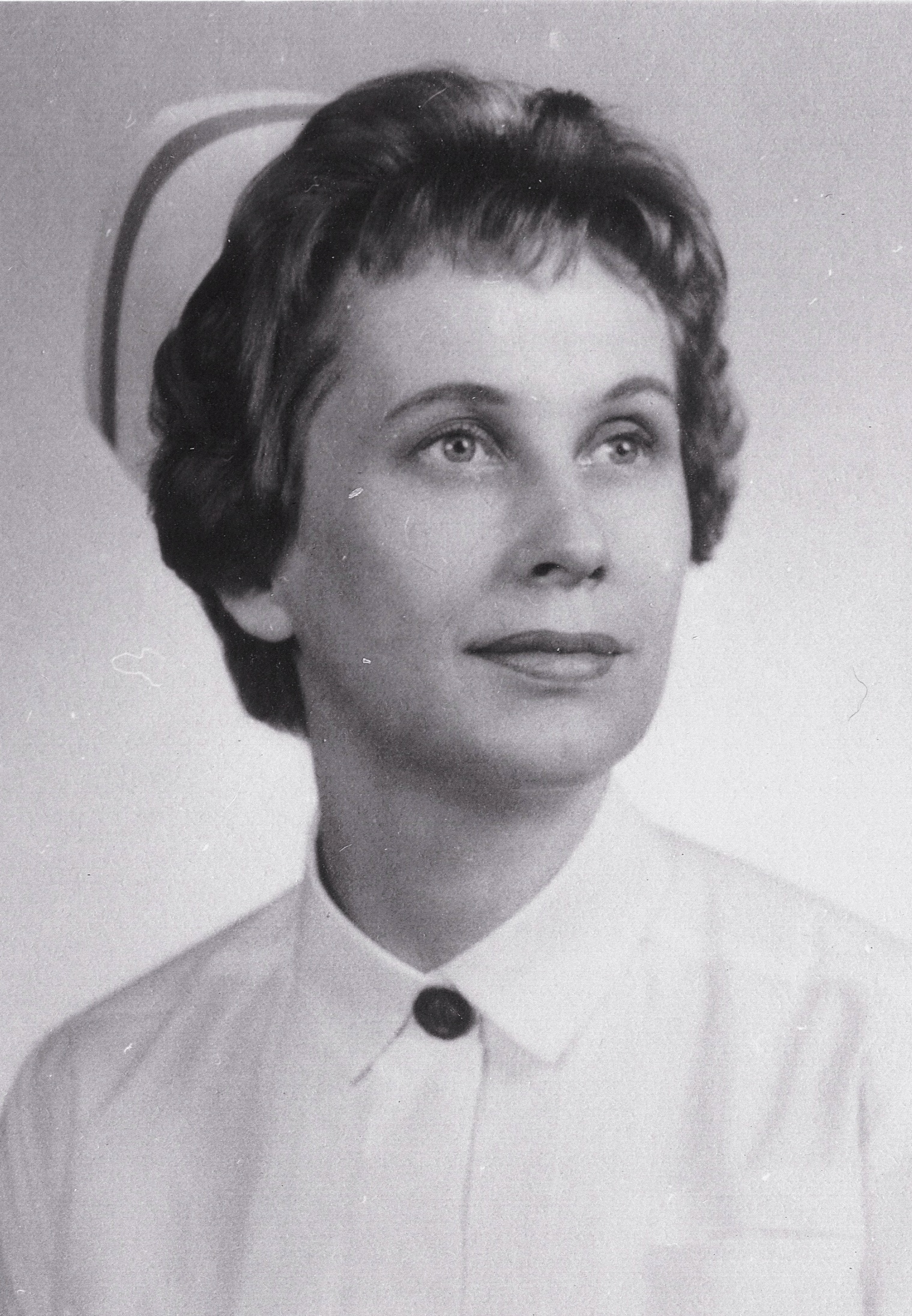
My mom was a registered nurse by profession, a wife, mother, and grandmother. She worked full-time as the director of nurses at a skilled nursing facility and came home exhausted most evenings. Tired as she was, she always managed to cook dinner, unless we decided to go out to Pancho’s or another local eatery. She was a great cook, sewed, and crocheted. I remember that mom also wrote regularly in her diary. She would get a new one each year.

Dad MilitaryMom married my dad on October 6, 1962, in Omaha, Nebraska where dad was stationed at Offut Air Force Base. On February 25, 1963, just four short months after their wedding, my dad suffered a subarachnoid brain hemorrhage which nearly took his life. Mom accompanied dad via air evacuation on a T-29 military aircraft to San Antonio, Texas, I’m assuming to a more specialized military hospital, where he underwent surgery. I can only imagine how frantic she must have been. In the bottom of my dad’s dresser drawer, I found an original Western Union telegram that was wired to his mother in California from Offutt AFB. This is what it said:
1963 FEB 26 PM 7 01

I WISH TO OFFICIALLY INFORM YOU THAT YOUR SON MAJOR WENDELL R BUCK, 37033A, WAS PLACED ON THE SERIOUSLY ILL LIST AT THE 865 USAF HOSPITAL, OFFUTT, AFB, NEBRASKA, AT 1200 HOURS ON 26 FEBRUARY 1963, AS A RESULT OF A CEREBRAL HEMORRHAGE. HIS RECOVERY IS QUESTIONABLE. HE IS BEING EVACUATED BY AIRCRAFT TO THE USAF HOSPITAL LACKLAND AFB, SAN ANTONIO, TEXAS, IMMEDIATELY. THE ATTENDING PHYSICAN RECOMMENDS YOUR IMMEDIATE PRESENCE AT HIS BEDSIDE. IN THE EVENT YOU ARE UNABLE TO VISIT HIM AT LACKLAND AFB, THE HOSPITAL COMMANDER WILL FURNISH YOU A REPORT ON HIS CONDITION EVERY FIVE DAYS, UNLESS A SIGNIFICANT CHANGE OCCURS IN WHICH CASE THEY WILL ADVISE YOU IMMEDIATELY. PLEASE ACCEPT MY SINCERE SYMPATHY IN THIS TIME OF ANXIETY=

ELKINS READ JR COLONEL USAF COMMANDER==

After reading the telegram, I thought what a miracle it was that Dad survived. Mom wrote in one of the diaries I found:

“Wendy operated on. Subarachnoid brain hemorrhage. God spared his life. Thank you dear Lord.”

After the aneurysm, dad spent several long months in rehabilitation. I remember dad telling me that he had to learn to walk all over again. The aneurysm left him partially paralyzed on one side and caused extreme headaches. He told me that the sound of mom’s pantyhose as she walked into his hospital room was excruciating. Dad eventually regained his strength and was able to resume work, although paralysis permanently weakened his left side. I believe that this unfortunate event was a turning point in his life. At the height of Dad’s military career, he was discharged from ever flying a plane again due to “physical disability.” It must have been such a crushing blow for him. He was then assigned to a new position as Personnel Director until his retirement in 1972.

Mom didn’t write about dad’s recovery in her diary. Maybe it was all just too much to write about. Two months after the aneurysm, she began practical nursing training. She graduated in April 1964 from the Omaha Public School, Vocational Education Dept. in Practical Nursing and went on to successfully pass her state boards. Mom went back to school much later to become a registered nurse (RN), around August 1972. By that time, she was 47 years old and had a full-time career in nursing as an LVN. I remember mom taking me to class with her a couple of times at Louisiana State University. She probably couldn’t find a babysitter.

mom's legacyFor the next two years, mom struggled through nursing school and late nights studying while juggling a demanding job and taking care of the family. I don’t know how she did it. The funny thing is, I don’t ever recall seeing her study, but according to her diaries, she often studied for biology, anatomy, chemistry and psychology after my niece and I were in bed. She spoke of the biology labs nearly killing her and failing a few tests. She was so disappointed in herself when she failed a test. She finally graduated from Northwestern University in August 1974. I will always remember mom wearing her white nursing uniform, white stockings and shoes, and nursing cap.

Now that I’m a mom, I empathize with the stress my mom experienced as a nurse and raising two little ones at an age when some folks were already grandparents. Every evening after work, she and my dad relaxed with a couple of martinis before dinner. Dad used to put an olive speared with one of those little plastic cocktail picks at the bottom of their drinks. When we were little, my niece and I tried to sneak up and steal the olives right out of their glasses when they weren’t looking.Looking back, I’m sure that my parents both used alcohol and cigarettes to self-medicate. They had a difficult marriage, and I remember yelling and screaming when they fought. They both chain-smoked, something they started as young adults, but then that was popular in their generation.

Mom didn’t ever seem to rest, not even during the holidays. She’d get up early and cook nearly all day. Christmas was always my favorite.  At the end of the day, mom was exhausted.

I’m definitely not half the cook my mom was. This is the first time I’ve attempted to make her monkey bread recipe. I’ve included the recipe here in case you’re interested. We’re looking forward to eating a slice 🙂

Festival Coffee Cake

First put 3/4 cups nuts into greased bundt pan. Mix 1/2 cup granulated sugar and 1 tsp. cinnamon. Melt 1 stick butter and 1/2 cup liquid brown sugar or 1 cup packed brown sugar. Boil for 1 minute. Cut 3 cans of biscuits into quarters, roll in sugar and cinnamon and place evenly on top of nuts. Pour butter and brown sugar on top. Any cinnamon and sugar left over, sprinkle on top of biscuits. Bake at 350 degrees for 35 to 40 minutes. Let set for 10-15 minutes after removal from oven. Turn upside down on plate. Enjoy! (Note: May need to extend oven time to ensure center of cake is baked through)

a mystery letter

Bits of styrofoam clung to my hands and arms as I dug down to the bottom of the box. What did my sister send? I lifted out a manilla folder which had settled among dozens of scattered pictures and styrofoam peanuts. In the folder lay a letter yellowed from age. I recognized the embellished handwriting immediately as that of my mom’s. Curiosity set in as I wondered who Dr. Woo was, the obvious recipient.

letter to dr. wooThe letter was left undated and appeared to be a draft from all of the crossed out words. Apparently, Mom had written the letter as a followup to a conversation she’d previously had with Dr. Woo. After reading through the first paragraph, I soon realized that this letter described my parents’ initial visit to the Family Planning Association of China, the orphanage where I was adopted. I could not read the rest of the letter fast enough. This is what it said:
Dr. Woo –

Following our conversation adopted Chinese daughter’s visa physical, and our conversation as to what was where we obtained her, and the cash price we paid, I will attempt to explain the procedure and all the obstacles that confront an American who adopts a child from the Family Planning Association of China.

We arrived in Taipei at 10 AM – went directly to Family Planning. We were allowed to go immediately to the 4th floor to a huge room with open windows and no heat where we walked from crate to crate and from basket to basket looking at tiny babies. I chose two from the 26 that were adoptable that day.

At 4 o’ clock that evening we were ushered into a large office and were introduced to Mrs. Tze-Kuan Shee Kan. She stated she had just returned from a fundraising drive in the United States, and had acquired $30,000 to start building a new orphanage for her children. She stated that $250 was the minimum fee, which was $150 for prior care of the child (medical, food and lodging) and $100 was for the cost of all the paper work required to bring the po baby to Okinawa. This was to be pd. in American cash.

By 6 o’ clock – the necessary papers were signed and she asked if I had picked out a baby. I told her about the 2 I had chosen and which one they brought down was all right with us. In a few moments they brought our baby to us, a beautiful three month old, 7 lbs., 7 oz., and very listless baby girl. I could not stand to think she would stay another moment under their roof. I asked permission…

I couldn’t believe there wasn’t more to the letter! I went back to the box and rummaged around trying to find a second page but found nothing. Where was the rest of the letter? I was so intrigued and disappointed that there wasn’t more. I telephoned my sister back in Louisiana to ask if she knew about the letter and had any idea where the missing part might be. She knew nothing. I had to just accept the fact that the other half was gone.

I had so many questions. Did I go home with my parents that afternoon? What did Mom ask permission for? What were some of the “obstacles” mom mentioned in adopting from the Family Planning Association? Was Mom petitioning for Dr. Woo’s assistance and did he help in any way? From the description Mom gave in the letter, I envisioned the orphanage to be in poor condition with barely enough for all of the babies and children there due to little funding. That I was only 7 lbs and 7 oz. at the age of 3 months was proof enough. I went back to read one of mom’s diaries dated the same year I was born. There was nothing said about Dr. Woo, only how they brought me home to Okinawa.

I went back to the folder and found another clue about my adoption: a medical examination form signed by Dr. Woo. I pieced together that my parents needed to get a visa for me, and he must have given the exam required. The form is dated January, 31, 1968 and was officially stamped in San Francisco on June 28, 1968, six months later. I found some other information showing that one year previous, my parents had filed for a petition for visa in Okinawa, which was officially approved on July 7, 1967. The entire process to get an actual visa took over a year from start to finish. Eventually we moved to the states around 1968 or 1969. I’m pretty sure that my parents were in a hurry to get out of Okinawa in case my birthfamily changed their mind about the adoption. My dad was transferred from Kadena Air Force Base in Okinawa to Westover Air Force Base in Massachusetts.

The letter will probably always be a mystery, but it did give me some insight into the orphanage where I was adopted. Just yesterday, as I was out sweeping the driveway, our neighbor and his son, Alex, came outside. Alex and his sister-in-law had come over to help interpret my adoption contract just a week ago. We exchanged hellos and Alex’s father proceeded to ask me if I was Chinese. Three months ago, my response would have been no, but then I’ve learned so much since then. I launched into a brief explanation of my adoption and my current attempt to find my birthfamily in China. He told me that he’d be traveling to China soon and that his brother currently works for the government there. He offered to help do whatever he could in China to find out about my birthfamily with the help of his brother. Alex suggested that I give his father the address of my birthparents listed on the adoption contract. His father will be staying in Ghuangzhou which is very close to the province where my birthparents lived at the time of my adoption. I was touched that he wanted to help.

I’ll continue to try to piece together the mystery of my adoption from what I now have in my possession. I hope that my neighbor can bring back some kind of information about my birthfamily from China, but I’m not holding my breath. Only time will tell.

learning about my adoption

I peeked out of our office window to see who was at the door. UPS. My eyes settled in on a large brown box sitting next to the delivery man’s feet. Then I remembered. My sister had shipped a package from Louisiana with more stuff from home, including my mom’s diaries. Looking at the box, I noticed that the tape had come unglued around the edges leaving wide gaping holes. The UPS guy was concerned about possible damage to the contents and asked that I take a look inside. I hurried back into the house, and after grabbing a pair of scissors, knelt beside the box and began cutting away at the tape. Styrofoam peanuts began flying out as I reached inside. I lifted up one particularly large article bound tightly with bubble wrap and tape and heard the sound of clinking glass. After suggesting that I call UPS for an inspection of the damaged goods, the UPS guy zipped off. I dragged the heavy box inside and began tearing it open. By the looks of all the stuff inside, I wondered where I’d have room to put it all. There were large picture frames containing more of my dad’s military awards and a shoebox full of pictures, mom’s diaries, yearbooks, diplomas. One of the greatest finds was a small scrapbook evidently made by my dad’s mom, whom I don’t remember meeting. She had saved several newspaper clippings of stories about my dad from their hometown, as well as his early flight training graduation program and invitation to a grand graduation ball. I could tell that dad’s mom was very proud of him. I took out the broken item and, through the bubble wrap, saw that it was a certificate given to my dad in honor of his military retirement. The signatures of several officers were visible at the bottom in various shades of blue and black ink. Dad had served honorably as Director of the Personnel Actions Division for many years after an aneurysm in 1963 had physically disqualified him from ever flying again.

I dug in the box to find my mom’s diaries and was anxious to start reading. My sister found three, although I knew that there were more. They were all in pretty good shape and readable. The first one I perused through was dated 1943 – 1946, the years during World War II. Her entries were very brief, mostly just a few sentences, but there were a few longer ones. I discovered that my mom married her first husband, Jim Bell, on July 23, 1943 at the home of Mr. and Mrs. Everett Brines, Jim’s aunt and uncle. She was only eighteen years old. It appeared that she and Jim quarreled a lot, and one entry described a near split after Jim read a letter she received from another gentlemen. It was hard for me to imagine my mom at such a young age. My brother, Larry, recently told me that Jim, his dad, had an awful temper, and it made me wonder as I read mom’s diary what this man, my mom’s first husband, was like. Mom wrote about Jim flying often and being gone from home; obviously he was in the Army Air Corp. They listened to the radio and went to see shows together frequently. On May 8, 1944, she had her first son, my half-brother Larry. I skimmed through the rest of the diary anxious to see if one of the others covered the 60’s, the year my parents adopted me. I found one dated January 1, 1962 – December 31, 1966. Mom skipped around from year to year, which made it difficult to follow sometimes. I went right to 1966 looking for clues about my adoption. The first hint of my parents wanting to adopt occurred on January 21, 1966:

“Janie and I went to Machoriato to the Souls Episcopalian Church and Father Stough to talk about the baby. Not too much help but certainly believe he’ll help…”

I’m not sure where Machoriato is, but I did a Google search on the church mom referred to and found an All Souls Anglican Church and Mission on the Internet. From what I could tell, it fit the description of the church mom talked about in her diary. I sent an email hoping to find out and no more than half an hour later, received an email from Fr. Larry Kirchner stating that indeed it was the same church, and there was a Fr. Stough during that time period.

The next entry referring to “the baby” is dated February 1, 1966:

“Janie came up very early – Father Stough called that he had a little 3 yr. old boy, then it turned out to be a girl for me to see. Janie almost hit a kid on Kadena AFB.”

So glad they didn’t actually hit the kid. Janie is my godmother. I remember vividly one of her visits to us in Louisiana. She painted my fingernails and sewed a new dress for me, and I fell in love with her. I cried the day she had to leave. She and her husband, Nelson, once visited me when I lived in Orlando, Florida in the early 1990’s. I lost touch with Janie after that and am not sure if she’s still living. Janie was my mom’s confidante at Kadena and a dearly loved friend.

On February 3, 1966, Father Stough called mom about the baby, and they set a date the following Monday to meet with a little girl. Here’s the entry from Monday, February 7, 1966:

“We go to see the little girl. Went to Naha to see her – she was beautiful – absolutely as pretty a child as I ever saw in my life. We were so disappointed that the Grandma didn’t want to give her up. Janie and Nelson brought me home.”

I can only imagine the disappointment mom felt after that. I’m now starting to wonder where my dad was as Mom and Janie were off visiting orphanages. Probably at work. The next entry to mention any news of adoption doesn’t occur until 2 months later on April 28th. Mom heard about an Okinawan girl expecting a baby. Then on May 21st she makes the first mention of adopting from Taiwan:

“Rains so heavy. Heard about getting a baby in Taiwan…”

A month later, she wrote a letter about “getting a baby from Taiwan” followed soon after by another letter to Taiwan with power of attorney, so she and Dad could become legal guardians of a minor. I found the receipt for payment dated December 20, 1966 from the Dept. of State – United States of America. For the next month, they didn’t hear anything back from Taiwan. Finally on August 8th, word came back:

“…Got letter from Mr. Forbes in Taipei, Taiwan…”

For the next three months, my parents waited. Mom wrote on November 25th, 1966:

“…Maybe we’ll go to Taiwan soon…”

Around December 5th, things started to roll. I’ve tried piecing together the information I found, but it’s a bit confusing. It appears that they didn’t wait for or receive a referral for a child like adoptive parents do today, but could travel to Taiwan anytime they wanted to. How did they know which orphanage to go to, or did they visit several? I found 2 long lists of the names of orphanages mostly in the Taipei area with all of my adoption stuff and wonder if my mom visited all of those orphanages?

“Decided to go to Taiwan next week if possible…”

On Monday, December 12th, mom found out that they’d leave on the following Thursday for Taiwan, and the next day received some information on adoption in Taiwan. The big day arrived and Mom’s entry on December 15, 1966 said:

“Left Kadena AFB for Taipei, Taiwan. Went to Family Planning. Saw Chaling. Had interview with Mrs. Kan. Chaling was brought to us. Such a beautiful baby. Faulkenburgs with us. Went out to see and meet Miss Radley and Susie.”

On my adoption contract, “Chaling” is actually spelled out Hsiao-ling. I imagine that someone probably wrote out how to pronounce the name phonetically for my parents to remember and the translation stuck, which is how I ended up with Chaling as my middle name. On Friday, December 16th, my parents started the paperwork:

“Started the paperwork for Marijane Chaling Buck – raining. Finished at the Court House by 5 pm. Then we all went out to eat. Took the baby to 7th D. Adventist Hosp. She checked out OK.”

I found the original receipts from the Taiwan Sanitarium and Hospital mixed in with all the paperwork for my adoption. I wondered if the 7th Day Adventist Hospital and Taiwan Sanitarium were somehow connected? Sure enough, after another Google search, I found a web page for the Taiwan Adventist Hospital. It’s one of over 600 healthcare institutions operated by the Seventh-day Adventist Church in a worldwide mission system. The Hospital was relocated from Shanghai to Taipei in 1949. It was later re-established as the Taiwan Sanitorium Hospital by the founder. Afterwards, due to the hospital’s growth, it was renamed the Taiwan Sanitarium and Hospital. In 1971, it was again renamed the Taiwan Adventist Hospital after more community services were added. My visit there cost my parents $559.00 for vaccinations, meds, consultation, and the doctor’s visit.

Saturday, December 17th and Sunday were filled with getting all the necessary paperwork together and a little shopping. Mom wrote,

“Run – run – trying to get things done. Everything closes at noon in Taiwan. Took train to Yan Shui to St. Benedicts’. Beautiful. Enjoyed meeting the sisters.”

“Spent a little time shopping. Then stayed out at the Hosp. Visited with Susie. She’s a darling.”

Who were the sisters at St. Benedict’s? Was St. Benedict’s another orphanage, and who was Susie? I wonder if St. Benedict’s still exists? Hmmm….In the next entry dated Monday, December 19th, it looked like all the paperwork had finally been completed. Mom wrote:

“Wendy and Alice Lee run all day – got our papers finished. Baby vaccinated. Spent all day running with Esther and Susie to find baby clothes. Not too much luck. The Faulkenburgs left.”

“Shopped a bit. Met Col. Richmond – helped us get on S/A plane. Arrived at Kadena at 2 AM. Baby very good. Mickey and Barney here – Lee and Dan got up to see baby. Girls very pleased.”

Who are all the people my mom mentioned? I have no idea who Alice Lee was, or Col. Richmond, Mickey, Barney, Lee or Dan. So many unanswered questions! The girls were my two half sisters, Lynn and Linda, one from my mom’s previous marriage and one from my dad’s previous marriage. They were both teenagers in high school when my parents adopted me. I guess I’ll probably never know who the others were.

After getting the “new baby settled in,” the 4252nd wing gave mom a baby shower. She wrote, “I got everything for Marijane. It was so nice.” Mom saved all of the baby shower cards from that day. They were all carefully placed with my adoption papers, and I was amazed that she had kept them buried all this time. One of mom’s last entries for that year was:

“Our baby girl is with us. So precious. Went to the “Little Club” for Xmas Dinner. Marijane very good. Girls had a good Xmas. A very happy day for all.”

I wonder how I adjusted to my new family? I’m sure that English was foreign to my ears at the time of my adoption. Did I attach quickly to my adoptive parents? I’m not sure that I’ll ever find out.

who am I

I guess I felt the first inkling of being “different” around the age of pre-school when we lived in Westover, Massachusetts. Although I don’t remember very much about pre-school, I do remember at that early age feeling out-of-place, distant from the other kids. I was extremely shy and hid behind my peers. I was perfectly content to read a book alone in a quiet corner or spend time listening to music. When I look back at school pictures, my face stands out among all the others. Mine was typically the only Asian one. I was a minority once we moved to the states from Okinawa, but I never knew or understood that term until much later.

The teasing began in kindergarten. By then we’d moved to Bossier City, Louisiana, where my father completed his military career. There was very little diversity in this small town, and we lived in a predominantly white neighborhood full of military families. Typically, I tried to downplay any teasing and brushed it off as though nothing had happened. Mostly, people did the same tired stereotypical thing, pulling up the corners of their eyes with their fingers or talking sing-songy. Occasionally I’d hear the word, “chink,” as I passed by. More than once, I was asked, “where are you from?” “No, where are you really from?” Once, on the school bus, someone I thought was my friend shoved me off the bus seat. At first, I thought she was joking around, but then realized she meant it. I didn’t understand why she would treat me in such a way. It was embarrassing, but I tried my best to act like nothing happened. It was a long ride to school that morning.

As I got older, feeling accepted by peers became increasingly more difficult. I’m sure some of that grew from my own insecurity and social awkwardness. Around junior high, I wanted desperately to be part of a particular group of girls who were considered “popular.” I craved acceptance. I began hanging out with them for a while, yet felt I had to fight to feel included. One day, one of the girls said to me, “Why don’t you find another group to hang out with?” Ouch. I was speechless, embarrassed, ashamed. I didn’t understand what I’d done to cause such rejection, but I got the message as confusing as it was. It didn’t occur to me that perhaps these events happened because I looked different from them, was uncool. I kept these incidents to myself and never talked to anyone about them. Back then, I wasn’t sure what to think of it all, and it was very difficult for me to put my feelings into words. Mostly, as I mentioned before, I felt embarrassed and confused. I was ashamed that I looked different from everyone around me. My parents seemed oblivious. I don’t think they ever clued into the teasing. We never talked about how things were going in school or any difficulties I may have been experiencing, and we never talked about my birth heritage. Sometimes I wonder if they had been offered education or cultural training, would things have been different? They were of a generation where families did not talk about problems openly, but rather swept them under the carpet. My parents were unaware of the pressures I felt to “fit in,” that it was compounded by my outward appearance. They did not know the sense of dread I felt going to school everyday during those elementary years and of the racial discrimination I experienced from both peers and teachers – mostly white male coaches.

As I got older I realized that being shy wasn’t cool. I longed to be liked and accepted by my peers just like any other pre-teen or teen. I downplayed my Asian features and rejected any association with my birth culture. In middle school, I wrote a biography report and lied about where I was born. In the report, I said that I was born in Hawaii, as I felt that was more “acceptable.” Many students questioned me afterwards, but I stuck to my ‘story.’ I wrote another paper about a girl who was teased by others and read it in class. My teacher, who was a black male, asked me, “does that happen to you?” or something like that. The conversation never went beyond that though.

In 8th grade, I became friends with some girls who were more accepting. Still, I struggled with insecurity. I was obsessed with wanting to look like everyone else. I used eye makeup to make my eyes appear rounder. I curled my straight hair every morning before school with hot rollers. By the end of the day, the southern humidity caused every last curl to go flat, which was incredibly annoying. In high school, I used Sun-In to lighten my hair. I pursued hanging out with the “popular” crowd. At home, I became increasingly disrespectful towards my parents. They were very strict and old-fashioned. One Christmas, my dad gave me a special present. I was horrified when it turned out to be a license plate for my car with the words “Oriental Express” inscribed across it. I refused to put it on my car and was upset with my dad. I know that in his small way, he was trying the only way he knew how to reach out to me. He had no idea how offensive the gift was. I felt conflicted that I had hurt his feelings by rejecting the gift, but was simultaneously mortified and ashamed. He and Mom were both so unaware. They were simply uneducated. I’m sure that Dad thought the gift was something special and was completely boggled by my reaction. The license plate sat on my dresser collecting dust. I didn’t want to get rid of it because I didn’t want to hurt my dad’s feelings any more than I already had. Eventually, I hid it. I’m not sure what happened to it over the years.

After college, I moved out of Louisiana. It was extremely difficult for my mom. Dad didn’t say much, but I know it was hard for him too. Mom wanted me to stay close to home, but I had other plans and ideas. I ended up in Florida for a couple of years and took acting classes. I partied with friends and enjoyed living independently out from under the control of my mother. I purposely did not go home to see my parents that first year, but stayed in Florida and worked. Eventually, I moved to California to pursue acting, which was really such a joke. That’s another story. Again, I struggled inwardly because I knew that staying away from home hurt my parents, yet I had to get out from under my mom’s control.

When I moved to California, the first thing that struck me was the large population of Asians. It was shocking. I’d never seen anything like it. Naturally, I avoided associating with anyone Asian. As time went on, I developed some close relationships with a group of friends and began to overcome my old insecurities, although, I still rejected my cultural heritage.

Last year, I began a master’s degree in social work at Arizona State University. I enrolled in a class called Diversity, Oppression and Change. This class forced me to re-examine the issues I struggled with related to culture, identity, and race-relations. I chose to write a research paper on ethnic and racial identity in Asian-American adoptees, a topic obviously close to my heart. To my surprise, I found much literature written on cross-cultural and transracial adoption. These research studies focused primarily on issues such as racial and ethnic conflict and confusion, the role of parenting and nurturing cultural identity, and the development of ethnic identity across stages of life. I also interviewed two other Asian-American adoptees, which was the best part. The whole process of researching and writing was inspiring. I became increasingly interested in learning more about other Asian-American adoptees and discussing our stories together. A desire to connect to my birth heritage took root and has been growing ever since.

For many years, I struggled with my identity and a sense of belonging. It never occurred to me that other internationally adopted persons experience similar feelings. I feel certain now that I’m not the only one.

the translation

Last Thursday morning I found the nerve to knock on our neighbor’s door. I knew the family was from China and wanted to ask if someone could help me with the translation of my adoption contract, which had been buried in my parents’ attic for years, hidden in an opened box. I wondered why I’d waited so long to have someone take a look at it. As I stood there waiting for someone to answer the door, I studied a small red vase with intricately etched dragons and yellow flowers hanging next to the door, undoubtedly for Chinese New Year . I wondered what the characters on the vase said. After several minutes, my neighbor answered the door. He owns a Chinese food restaurant right down the street. I stumbled over my words as I tried to explain why I had stopped by. He told me in broken English to come back in half an hour when his daughter-in-law would be there. I busied myself around the house and lost track of time until the doorbell rang an hour or so later. Our neighbor’s youngest son, Alex, appeared in the doorway with his sister-in-law, Kelly. He introduced her to me and explained that she did not speak English but would be happy to interpret my papers. I gave him a copy of the adoption contract, regretful that he had to hurry off to class. That meant I’d have to wait for the interpretation. I tried not to think about it too much throughout the day as I anticipated meeting them later.

The following night, our doorbell rang once again. It was Alex and Kelly. After showing them in, we gathered around the dinner table with the adoption contract, and the translation began. I sat on the edge of my chair wishing I could understand what Kelly was saying. I tried to determine the language she spoke. Was it Mandarin or Cantonese? Every so often Alex would interject to ask a question. Finally, Alex turned to me. The first thing he told me was that one particular page of the contract was a history of why my birth parents placed me for adoption. According to this paper, my birth parents were very poor and “there was no money in the household.” I was the 4th daughter from a large family. It didn’t state how many other siblings there were, but Alex and Kelly seemed to believe that the family was very large. They had to give one girl up for adoption and it happened to be me, the youngest. I immediately wondered had I been born a boy, would they have kept me? I wondered if they had been disappointed that another girl had been born into the family? Did they waiver over the decision to relinquish me? Was I placed in the orphanage right after my birth, or did I stay with my birth parents for a little while? In my mind, I was also trying to reconcile the huge differences in stories between my mom’s account and what was actually written on the contract. Mom had always told me that my birth parents had placed all the girls for adoption, and that they had tried to find one of my sisters to adopt her too. So many missing pieces.

Alex then brought my attention to a specific area of the contract. It was the handwritten signatures of my birth mother and birth father on the contract. I was amazed that their signatures were actually right there on the paper, and I’d never noticed it before. Had both of them signed, or just one? Alex circled their names, the Mandarin characters written one on top of the other, perfectly vertical. In fact, the entire contract was written in traditional Chinese forming vertical columns from top to bottom. I examined the faded handwriting of my birth parents more closely. Alex moved on and explained that my birth parents were from a province in China, not Taiwan, called Guangxi. Another surprise. “It’s in south China,” he explained, “like Hong Kong.” He wrote out the name phonetically, Gong-sai, so that I’d remember how to pronounce it. Cantonese is the prominent language in Guangxi and all of southern China. Later, I did some research on Guangxi learning that it has a population of 45 million people made up of several ethnic groups and borders the country of Vietnam. Hmm… So maybe that had something to do with my adoptive parents telling me that I was part Vietnamese. So, how did I end up in Taiwan? Did my birth parents travel, or actually move there? Alex suggested that perhaps the orphanages were better in Taiwan and my birth parents placed me there to increase any chances of being adopted.

As the evening came to a close, Alex and Kelly assured me that my adoption was legally agreed upon by both my adoptive and birth parents. Alex told me that traditional Chinese families typically remain living in one house their whole lives, so chances are that the family still currently lives in Guangxi at the same address. He also told me that their address would be fairly easy to locate if we should travel to China one day. I thanked them both for taking the time to help me, and they wished me good luck in my search happy to have been of help.

After they left, I went over everything Alex and Kelly told me. It’s frustrating not having all of the pieces, and I’m more intrigued than ever. I’ve enlisted the help of a social worker at an adoption agency specializing in adoptions from Taiwan. I hope that she can help me find my birthfamily, or at least connect me to the right people. It seems like a longshot, but I can always hope.

false identity

I don’t recall the exact moment I knew I was adopted. My parents must have told me at a very young age because I just always knew. They often told me that I was “chosen,” and mom occasionally retold the story of how they found me. Consequently, I came to feel “special,” but later special didn’t feel so special. Usually my mom ended up in tears, and I would try my best not to cry in front of her. Like anyone else’s parents, my mom and dad were my mom and dad. We had the same kind of relationship that other kids had with their parents. It didn’t matter that I looked different from them. As I grew up, however, my adoptive parents were completely unaware of the racial teasing that I experienced, the fear, the sense of inferiority that developed. I kept it to myself, and they never asked.

According to my mom’s story, I was the eleventh, give or take a few, child born to my birthparents; they gave all the girls up for adoption. How accurate this is, I’m not sure. My birthfather was supposedly Japanese and mother, Vietnamese. My parents attempted to find one of my biological sisters to adopt as well, but were unsuccessful in finding her. After my mom’s death in 2008, I found the original contract of my adoption, as well as many other documents, notes, receipts, etc. Everything had been carefully preserved and hidden away in a storage box up in my parent’s attic. I found one note of a list of orphanages scribbled on pieces of tablet paper; the writing appeared to be in Mandarin, but had English translations. Were these the orphanages my parents visited to look for my sister, or maybe even for me? I’ve often wondered how they found the Family Planning Association of China, the orphanage where they found me. The orphanage no longer exists today.

We traveled back to Kadena Air Force Base in Okinawa where my dad was stationed after my adoption. It would take another seven months for the petition for my visa to be approved (through the Tokyo, Japan Immigration and Naturalization Service). When my parents attended their appointment at the American Embassy to file for the petition, they were disappointed to learn that additional documentation was required attesting to “the abandoned status of their adopted daughter,” meaning a letter from the adoption agency was needed. My parents contacted the Secretary General of the Family Planning Association, Mrs. Tze-kuan Shu Kan, to write the letter. In addition to this information, I found some interesting letters to my parents from a caseworker, Rose-Marie, reassuring them that the necessary paperwork was being properly notarized and that there would be “no further trouble.” I also found the letter that Mrs. Kan eventually wrote to confirm the status of my abandonment; however, only half of it is legible. Part of the document is damaged, to my great disappointment. This was frustrating, as I was hoping to learn more about my adoption and birthfamily. What I did make out basically stated that I was abandoned at the age of 1 month, 9 days and placed in their orphanage. I’m almost positive that there was more explaining why my birthparents gave me up for adoption though. On July 7, 1967, my parents finally received approval on their petition for the visa. This enabled them to file a formal visa application, which required even more paperwork. A small note with scribbled handwriting listed all the items mom needed for the visa application: 6 photographs, 4 copies of adoption paper, 6 copies of household registration of the child, passport, medical exam and vaccinations, etc.

When I first found my adoption contract, I thought I’d made the discovery of a lifetime. What has intrigued me since examining the contract is that some of my mom’s story is contrary to the content of the contract. Mom never alluded to this document, and once when I asked to see my adoption papers, she freaked out and became suspicious. I have no idea why, except that perhaps she was afraid I’d want to find my birthfamily, which I never had any desire to do. It was all very weird. The adoption contract revealed the names of my birthparents. My birthmother’s name was Shiow-Jean Lu and birthfather’s, Chan-Huai Huang. My birth name was Hsiao-ling Huang (pronounced Shou-ling, like cow). My parents kept my birth name as my middle name but changed the spelling to Chaling. I’m speculating that during the translation of the contract, someone wrote out phonetically how to pronounce my birth name, or maybe my parents did it, and that’s how “Chaling” came to be. Or perhaps they simply ‘Americanized’ my given birth name. What really puzzles me is the fact that my birthparents names’ are not Japanese or Vietnamese, but Chinese. Could I be Chinese, or Taiwanese (I was born in Taiwan)? It’s such a mystery…

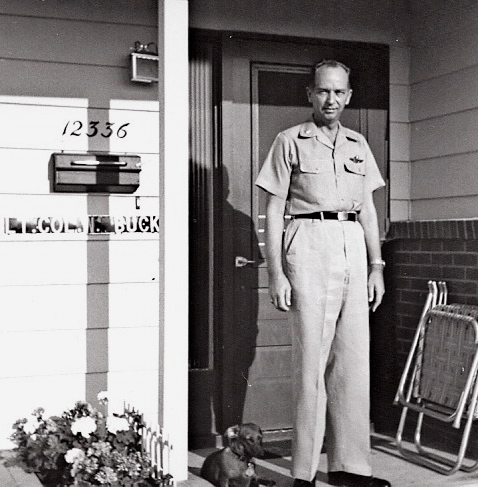
As my mom’s story goes, they knew that I was “the one” they wanted when I looked up at my mom and smiled at her. Apparently, my parents did not get to choose the baby they wanted, they were just given a baby. The process of cross-cultural adoptions in the U.S. is nothing like what my parents experienced. Adoptive parents go through a very lengthy process of completing a complicated mass of paperwork, the dossier, which can take months. Each country’s government has its own set of eligibility criteria, requirements, fees, etc. and there are also U.S. state and federal adoption laws. Then there’s interviews with adoptive parents, background checks, home visits… After all of that, adoptive parents begin to receive referrals based on their preferences. The whole process can take up to 2 or 3 years depending on which country the adoptive parents are seeking the adoption. My parents adopted me in a matter of days. Of course, they were actually there in Taiwan and able to go to the orphanage and see the children available for adoption. On December 16, 1966, I became Marijane Chaling Buck, the daughter of Lt. Col. Wendell and Gloria Buck. 

After finally receiving the visa in 1968, my dad received a transfer to the States. We moved to Westover Air Force Base in Massachusetts for a couple of years, then were transferred again to Barksdale AFB in Bossier City, Louisiana. It was in Shreveport on March 4, 1971, at the age of 4 years that I became a naturalized American citizen, along with 37 other people. I remember vaguely the naturalization ceremony, mostly feeling scared. The court room was filled with so many people, and when the judge picked me up to hold me for the news reporters, I started to cry.

We remained in Bossier City, Louisiana, throughout the rest of my childhood, and my parents continued to live there for the rest of their lives. They lived in the same house for 37 years. Obviously, finding my adoption contract has left me with a lot of questions. My parents are deceased, so it will be difficult to find the answers. After all of these years, I never thought that I’d be this curious about my past, but because my adoptive parents provided mistruths, perhaps lies, I’m perplexed and would really like to find some answers. I’m not sure if they’re out there or how to go about finding them, but I’m going to try.

my childhood home

my childhood home

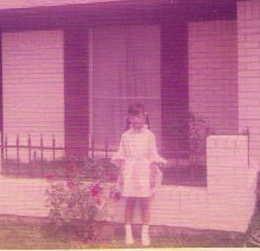
I got the call from the realtor this morning as I drove up I-17 to Phoenix. My parents’ home will finally be listed for sale this Saturday. The realtor and I exchanged a few words, shared a few laughs then hung up. Since 2008, the succession of my parents’ home has been caught up in complicated family issues. Part of me feels relieved that we’ve finally reached this point, and yet another part of me feels a great sense of loss. There’s just something about saying goodbye to the house you grew up in when there are so many memories attached. It was a small brown and white house in a subdivision called, Sun City. The streets were named after planets, and most families in the neighborhood at that time were military ones. Everyone knew each other; it felt like a real community.

I remember the first time we visited the home. My parents were so excited about purchasing a brand new house after having lived on the military base at Barksdale for some time. It must have been around 1971 – Brady Bunch era – and homes were still being constructed in the subdivision. I remember wiggling my toes through the lime green shag carpet and turning cartwheels in the wide-open space of the family room. Out back, there was a patio and yard large enough to fit a swimming pool and swing set. The family room walls were wood-paneled, and the marbled formica countertops in the kitchen matched the lime green carpet. Not real stylish by today’s standards. Down the long hallway were three bedrooms. It wasn’t a very big house, but big enough for a family of three and house pets.

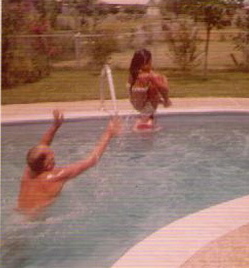
After settling in, my parents had a swimming pool built in the backyard. The sound of drills and other motorized equipment woke me up in the mornings, and I’d stand on my bed to peer out the window inspecting the daily progress. It was like waiting for Christmas. I eagerly anticipated the day that I could finally go swimming! When, at last, that day arrived, I got into the pool and fearfully clung to the edge for weeks. My mom immediately signed me up for swim lessons at the local YMCA, which fixed my fear of water pretty quick. Soon I was swimming like a little fish, although I hated my swim lessons and swimming laps every morning. My dad used to throw me up in the air like a cannonball while Mom lounged and watched us from a fold up lawn chair, the kind that left crisscrosses on the backs of your legs. In addition to swimming, I also spent a lot of evenings playing in the front yard with all the other kids from the neighborhood when it was still safe to do so. We’d play swing the statue, red rover, and red light/green light until the sun began to fade and our moms called us back in for the night. What good times those were.

My dad loved gardening and planted a large garden full of vegetables in the backyard behind the pool. We had fresh cucumbers, okra, tomatoes, and zucchini. My mom liked to make homemade ice cream with fresh peaches from our peach tree. I’d watch her pour the rock salt into the ice cream machine and then peer through the plastic top as the mixing arm swirled the ice cream around. What delight. In the mornings, I got used to waking up to the rumble of B-52’s revving up their engines at Barksdale Air Force base. It grew to be a comfort. I walked to Sun City Elementary School every morning and back home every afternoon with my niece or a friend unless it was too rainy or cold outside.

My parents owned that house for 37 years. The next time I visit Louisiana, the house will belong to some else, a stranger. For memory’s sake, I’ll take a spin down Pluto Drive just to check it out. I’ve heard that childhood homes don’t hold up to the memory once it passes on to new homeowners. New homeowners often remodel, the appearance changes, and the warm feelings you’d expect to emerge somehow don’t. Hmm…I wonder? In any case, I spent most of my childhood in that old house. I don’t think I could ever forget that.

Flight Training Wendover, UT Photo Courtesy of Steve Whitby

my adoptive father

On an impulse last November 11th, I took my daughter and a friend to the Arizona Wing of the Commemorative Air Force Museum in Mesa, also known as Falcon Field. It was, after all, Veterans Day, and I just felt like doing something in memory of my dad. I knew he had a long career in the Air Force and flew a B-something or other during World War II, but didn’t know much else. My dad wasn’t much of a talker; he rarely spoke of the war and only if you asked him. Dad was a tall and slender man, patient, quick with a smile, and loved sharing jokes. He seemed easy-going and cool headed, but I often wonder if there was more going on inside than he let on. Those qualities were probably what made him such a good pilot during all those bombing missions across Europe. I felt closer to my dad than my adoptive mother because of his calm nature, even though we didn’t talk a whole lot. Though he may not have expressed many of his thoughts, I believe he was deep thinker. I worried about him often as a kid, his age and health. My adoptive parents were older when they adopted me. Would he be around when I became a teenager, an adult? I kept all of these worries to myself though. What Dad didn’t express in words, he showed through gifts, things that he thought would make me happy. On my 16th birthday, he surprised me with a car, a little tan Ford Mustang sedan. I loved it. One Christmas, he got me my own phone with my own phone number. It sat on my bed stand, a green landline with the curly cord and push buttons. Mom told me that he was so proud of getting that phone.

I thought about Dad all morning as we rushed to get ready to go to the museum. I didn’t want to miss the landing of a B-17 Flying Fortress called Sentimental Journey, which was on tour across the U.S. Unfortunately, the plane had already landed by the time we got there, but we were able to take a tour inside the plane. This was the closest I’d ever been to an actual World War II aircraft and, in a way, I felt connected to my dad. I was amazed at how confining the inside of the plane was – not too comfortable and very hard to walk around in. The ball turret located under the belly of the plane was an even smaller space. A gunner would sit in this tiny cramped space during combat missions. I imagined what it would have been like in freezing cold high altitude, shooting at the enemy in such tight quarters. Yikes! We continued to look at all the other military aircraft displayed in the hanger. It was an especially meaningful trip to me, as my dad never talked about his military past.

Dad on L, Hugh Caroll, Pilot on R, Photo Courtesy of Steve Whitby

Dad on L, Hugh Caroll, Pilot on R, Photo Courtesy of Steve Whitby

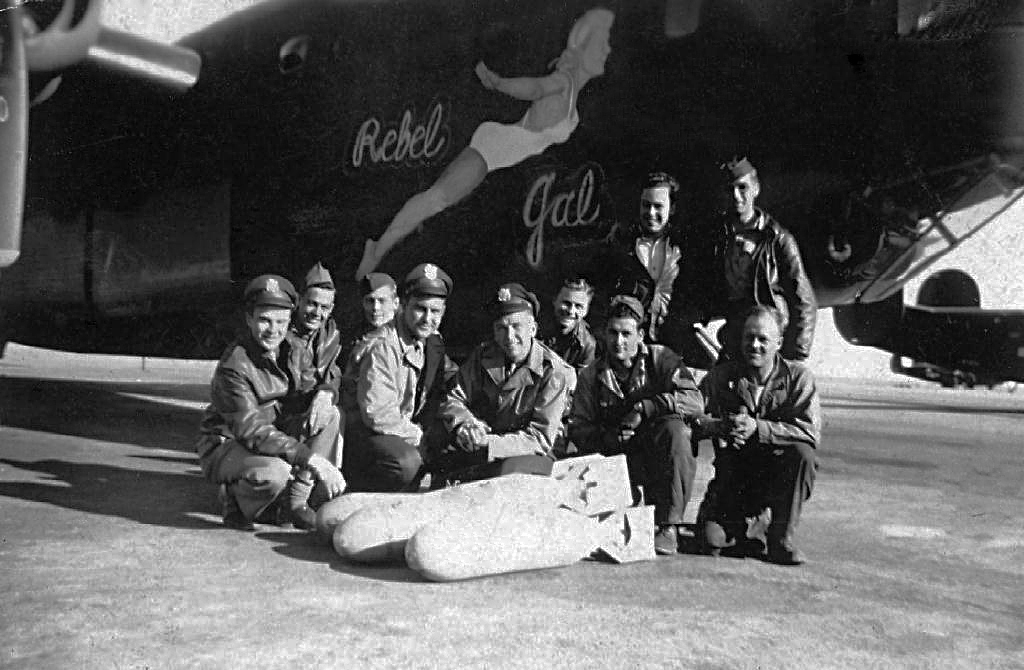
Later that evening, I got online to search, like many times before, for any information about my dad’s military history. Surprisingly, I stumbled across a link containing Dad’s name, Wendell Robert Buck. I immediately clicked on the link, which opened up to a Flickr page where dozens of his photos were displayed from World War II! I was stunned and, at the same time, elated to see so many pictures of my dad as a young man. In many of the pictures he was with others who appeared to be members of his flight crew. I had never seen such pictures before in my life. I went through each one wondering who the other guys were and wondering even more who posted the pictures. I found an email address and sent off a message to the poster inquiring about his connection to the pictures. Edward Valachovic, as it turns out, just happened to be the son of one of the crew members in most of the pictures, the bombardier. His dad, Paul Valachovic, and my dad were apparently very good friends during the war. Most of the pictures were taken in Europe where the crew was stationed at Halesworth, England. Later, I was to learn that Dad was a 2nd Lt. and co-pilot of their B-24 Liberator, which the pilot of the aircraft affectionately named “Rebel Gal.” He was a southern boy from North Carolina, and I thought what a cool name that was for a plane. I noticed a large painting on the side of the plane next to the name, “Rebel Gal,” and came to learn that it was called nose art. The crew flew together with the 489th Bomb Group, 845th Bomb Squadron, 8th Air Force during the European Theatre, January 1944 – August 1944 in 32 combat missions.

Edward referred me to a man who had conducted extensive research on my dad’s service during World War II. I could hardly wait to contact this person and had no idea who he was. He and Edward had corresponded on different occasions exchanging information about the crew of Rebel Gal. Little did I know that this person was a distant relative, Steve Whitby; his mom, Tarri, was my dad’s first cousin. Apparently, Tarri and my dad grew up together in Santa Rosa, California. Once I got in touch with Steve, there was so much to talk about! Steve’s mom had asked him to find out about Dad and his military service after my dad’s death. Steve had provided Edward with the pictures he posted on his Flickr page. Steve was also able to get a hold of of the bombardier’s (Paul Valachovic’s) personal diary during the war and had numerous pictures of my dad during WWII and his training before the war, pictures I’d never seen before. Through Paul’s diary and obtaining Dad’s military service records, he pieced together the story of my dad’s military history, including where he attended flight training and the kinds of planes Dad learned to fly in. Edward, meantime, encouraged me to call his Dad, Paul, who currently lives in upstate New York. What a dear, sweet man! Although his memory was a little patchy, he remembered my dad right away and told me what good buddies they had been. He told me of one particular mission where the crew was flying through some very heavy flak when a piece of shrapnel came through their plane missing my dad’s foot by inches. He laughed and said Dad promised to start going to church with him right after that! Steve continued to send me more pictures of dad during World War II and of his childhood on the farm where he was raised in Santa Rosa. Suddenly many of the missing pieces of my dad’s military history I’d been searching for through the years came together.

Crew of Rebel Gal, Dad kneeling in center, photo courtesy of Steve Whitby

Crew of Rebel Gal, Dad kneeling in center, photo courtesy of Steve Whitby

In December 2009 right before Christmas, my family and I headed to Hemet, California where my distant relative, Steve, lives. We stayed with him for an entire weekend looking at old pictures of his mom, Tarri, and my dad and their families together as kids on the farm. Steve gave me a copy of the booklet he put together on my dad. It was more than I could have asked for. The entries from Paul’s diary described the many combat missions the original crew of Rebel Gal flew. This crew and the other crews who flew Rebel Gal later were a very lucky bunch of men. Steve told me that none of the crews who flew her were killed.

I’ve learned so much about my dad over the last several months. In addition to the booklet, Steve also compiled a CD of numerous pictures of Dad and his family. He also got a hold of an 8 mm film Paul had taken during their flight training and reformatted it to CD. The film was dated 1944. What struck me as I watched the CD was how young these men were and how affectionately they goofed around with each other. It was amazing to see my dad in that footage and to witness a time in his life that I knew so little about.

After the war, Dad was recalled back to military service to fly in the Berlin Airlift where he was stationed at Weisbaden AFB. He flew C-54’s from 1948 – 1949 as a pilot transporting much needed food and goods to the starving people of Germany after the war. According to Steve, this was the crowning glory of Dad’s military service, something he was very proud of. Both of my adoptive parents had big and generous hearts. When the airlift ended, Dad decided to stay in the Air Force. He later flew B-29s, B-47s and B-52’s until an aneurysm almost took his life in 1963. Unfortunately, he was never able to fly again after suffering the aneurysm due to physical disability. I know that must have been utterly devastating for my dad because he LOVED to fly. I understand now so clearly why he took me to see the Thunderbirds fly every year at Barksdale Air Force base. He absolutely loved to watch all of those aerial acrobatics. I used to cover my ears in fright as the jets sped overhead, the sound of their engines roaring thunderously through the sky!

Dad receiving Distinguished Flying Cross (DFC) August 1944. Photo courtesy of Steve Whitby.

Dad receiving Distinguished Flying Cross (DFC) August 1944. Photo courtesy of Steve Whitby.

After his tour of duty, Dad received the Distinguished Flying Cross and was cited for his “skill, coolness and courage in combat flight against enemy opposition.” He saved all of his medals and ribbons from the war and the Berlin Airlift in a shadowbox that was prominently displayed in our family room. Dad never bragged or talked about what he’d accomplished. I never knew that my dad was such a hero during World War II. I’m thankful to Steve for providing so much of what I didn’t know about his military history. How I wish I could talk to my dad about all that he did. If he were here now, I’d tell him how very proud I am of him.

my mysterious adoption

Imagine your whole life believing that you are one thing and then learning in mid-life that you are not what you have always believed you were. Let me explain. When I was four months old, I was adopted by a white American family from an orphanage in Taipei, Taiwan. My dad was a lieutenant colonel in the U.S. Air Force, and he and my mom were stationed in Okinawa at the time I was adopted. My parents provided very little information about my adoption, and I knew nothing about my birth family or birth culture. I always believed that I was Vietnamese and Japanese. That is what they told me, that is what I believed. I had no reason to question what I’d been told. After my mom passed away in 2008, however, I made a discovery about my adoption that in one instant changed everything I ever knew.

My mom was diagnosed with Alzheimer’s disease, which slowly progressed across several years. Before her death, my half-sister began rummaging through our parents’ attic in an attempt to get rid of junk. There were tons of boxes stored, and none of us had a single clue what was inside them. As it turned out, one box in particular contained some very surprising things. After mom’s funeral, sorted through the boxes. There we were, in the tiny dining room where I’d sat a million times with my family for breakfast and dinner, removing yellowed tape from boxes, rummaging through what was inside. Some contained interesting artifacts from my dad’s service in the military. He was in the United States Army Air Force, a co-pilot of a B-24 in World War II. These little treasures are very meaningful to me now, old photos from my dad‘s youth, flight records, clues to his military past, which I knew so little about.

We rummaged and rummaged. Then, I stumbled upon a box where I found the original contract of my adoption plus other items related to my adoption that my mom stowed away and never told me about. I knew something of my past had to exist somewhere, but never had any motivation or reason to search up in the attic, of all places. I used to think that monsters and scary things lived in the attic. The most curious thing of all was a picture of my mom holding me in her lap in what appeared to be the orphanage where I was placed for adoption, though I can’t be certain. She is no longer here to answer the many questions about my adoption that are exponentially growing in number as I write this. A small baby bed, its railings rusted with peeling paint, is situated just behind us. I found safety pins that probably held together my cloth diapers and baby shower cards, congratulating my mom on her “new addition to the family.” I was stunned, excited about these curious new finds and that I’d finally found some tangible link to my mysterious adoption. At the same time I felt sad that my parents never shared these things with me. Why not? Why hide my early beginnings? Secrets tend to surface at some point.

At the beginning of this year I went back to Bossier City, Louisiana, to salvage what I could from my parents’ home. It all seemed so surreal knowing that this would be my last visit to the house I grew up in before it is put on the market. I shipped back home tons of old pictures, an antique grandfather clock that has been in Mom’s family forever, LP’s of Glen Miller music, and several of Dad’s military awards, plaques, and old service records. So many memories came flooding back as I unpacked all the boxes and unwrapped each little item, childhood memories, days gone by. It saddens me that neither of my adoptive parents are here anymore. We’ll never get the chance to clear things up about my adoption. It’s up to me now to figure it out. But really, that has been the theme of my life – left to figure things out on my own, alone. 

Since coming back home to Arizona, I’ve thought more and more about my adoption and decided to begin a search for my birth family. I sent my adoption contract to an adoption agency specializing in adoptions from Taiwan to American families. Surprisingly, I learned from one of the caseworkers that my birth parents were not Vietnamese and Japanese, but very possibly Taiwanese. Could I be Taiwanese? It would make sense, after all, because I was adopted from Taipei. For years I have explained to people that I was born in Taiwan, but am really Japanese and Vietnamese, adopted by white parents. I had to further explain why I had a southern accent. The script…the script became second nature, yet incredibly annoying at the same time. The fact that I didn’t exactly look like either of my parents raised question upon question and elicited unwelcome stares, especially having lived in a predominantly white area.  It will be so much easier now to just tell people that I’m Taiwanese and not feel obligated to share more, not that I am really obligated in the first place. It’s just when you grow up in an area where you don’t look like your parents or anybody else, people ask questions. And not just one question…

I’m not sure how the search for my birth family will go. Chances are that neither of my birth parents are still living. My birth mother was 39 and birth father, 55 when I was born. Still puzzling to me is why my mom told me that I was Japanese and Vietnamese. Did the translation get mixed up, or was it all fabricated? It’s hard for me to believe that my parents would purposely lie to me. But, there is that…Perhaps it will always remain a mystery.

Discovering things I never knew about my adoption, digging into my past has led to a burning curiosity to know and understand my cultural heritage, which I so strongly rejected growing up. Why would I want to look Asian in a world filled with white people? I am now more curious than ever about my birth family. Do I look like any of them, does anyone else in my birth family have an affinity for music? Are there any health issues to be concerned about, was it difficult for my birth parents to relinquish me, did they ever want to see me? Hell, I’d never even heard of the term, “birth family,” until recently. Although I may never find out anything other than what’s preserved on my adoption contract, I hope that won’t be the case. 

Related articles