Tag Archives: Inter-Country Adoption

a certain slant of adoption

Howdy! I’m reblogging this post from exactly nine years ago today. As I reread it, a wave of thoughts, feelings, and emotions came forward all at once. It has been a long time since I’ve actively reflected on my own adoption, and yet I know it is always there, just beneath the surface.

I hope you’ll take a moment to read the post. My hope is that it offers a deeper understanding of the complexity of transnational (or international) and transracial adoption.


Hello folks! It’s Sunday morning, and the skies are gray in my lovely locale. Nevertheless, I’m enjoying the weekend, despite the clouds.

Today, I want to talk about adoption. Yes, that’s a given, but I have something more specific in mind.

For the past seven years, I have actively sought out and read blogs, books, scholarly research, adoptee forums, birth mother narratives, and adoptive parent spaces in search of connection, knowledge, resources, and validation. What I have found is a vast spectrum of perspectives on adoption, so many it feels impossible to neatly categorize them. The landscape is wide, varied, and deeply human, shaped by experience, identity, and lived reality.

As an international and transracial adoptee, my own perspective on adoption has continued to evolve. I don’t think it is uncommon for our views to shift as we experience personal growth and, for lack of a better term, mature. Adoptees often hold deeply personal perspectives on adoption, shaped by their own lived experiences, identities, and circumstances.

I’ve spoken with adult adoptees who are not particularly interested in connecting with their cultural roots or birth heritage, nor in searching for their birth families. Perhaps there is some curiosity, but not yet a compelling enough reason or desire to pursue that path. Other adoptees speak strongly against international adoption, and their concerns are often rooted in very real and painful experiences.

International adoption carries a complicated and, at times, troubling history. There are countless adoptees who were adopted through illegal or unethical practices, including cases where agencies and adoptive parents were aware that information had been falsified. These deeply harmful practices continue to occur in parts of the world today. The evidence exists, and while these realities are often difficult to confront, they cannot be ignored.

I have several friends who are adoptive parents and have adopted children internationally from China, India, Africa, Ethiopia, and Russia. They, too, hold strong and deeply personal perspectives on international adoption. At times, perhaps even often, my friends and I do not see eye to eye; nevertheless, we remain friends, and I value the ability to hold space for different experiences and viewpoints.

I strongly believe in family preservation and in expanding access to resources and support services that allow children to remain with their biological families whenever possible. As an adopted person, that belief is something I cannot look past. And yet, we live in a world where adoption continues to exist and thrive, even as international adoption has declined in many places.

At times, I feel conflicted because I carry my own complicated feelings about adoption while also supporting my friends and other adoptive parents. Ultimately, my deepest concern is the well-being of children, whether they are adopted or not.

What I particularly struggle with across the landscape of adoption is judgment and the way we judge one another based on our beliefs, experiences, and perspectives around international adoption. I know I have been judged for what I believe and support. I don’t necessarily like being judged; the word itself carries such a heavy weight. And yet, I also recognize that I judge others at times. It’s a part of being human. We all do it.

I cannot control what others think or say, but I can reflect on and take responsibility for my own thoughts, words, and actions.

I have moved through a wide range of emotions connected to my adoption and my identity as an international adoptee: from curiosity and awe, to anger and self-rejection, to grief, loss, and depression, and eventually toward acceptance. Like many adoptees, ignorance is one of the things that affects me most deeply. There is still so much misunderstanding surrounding international and transracial adoption, and people can say incredibly uninformed and hurtful things.

Sometimes I can laugh it off. Other times, I feel the anger rise and need to process it with a trusted friend or another adoptee who understands. There is something deeply healing and validating about sharing our stories and realizing we are not alone in these experiences.

And what about birth mothers? Of all those within the adoption constellation, their voices and stories are often the least heard. Yet I believe many have also experienced trauma, separation, grief, loss, and judgment.

Throughout history and across the world, there have been many cases where women were pressured or coerced into relinquishing their children, including in countries such as Australia and Brazil. In some instances, those children were later adopted by families or individuals from other countries.

Societal attitudes have often placed intense judgment and stigma on unwed or single pregnant women, leaving many with limited support, resources, and choices. Their experiences are an important part of the larger adoption conversation and deserve to be heard with compassion and honesty.

What do we make of all of this? I understand that I will be judged for what I say and do. That is part of life, and I can accept it, even when it feels painful.

There are many adoptees and others within the adoption community who hold strong voices and deeply held opinions about how things should be. What I cannot accept is bullying from those who believe everyone must share the same perspective or take the same stance.

Adoptees do not all share the same point of view. Likewise, adoptees, adoptive parents, and birth mothers each carry vastly different lived experiences. What is visible on the outside is not always reflective of what is held within.

I recognize that we may not always agree, but we can still strive to respect one another and honor our own personal, and often unmatched, journeys. We can also find ways to inform and listen to those who have not walked in our shoes. I speak here as one adoptee to another.

I hope to support you wherever you are in life and wherever your journey may lead. I believe that, collectively, we can create meaningful change. We can use our voices and lived experiences to help illuminate the path forward in adoption, especially those of us who have walked through this deeply complex and often painful process.

ROC national day

Taiwan, The Republic of China (ROC), celebrates National Day, otherwise known as Double Ten Day, on October 10th every year. Taipei, Taiwan, is my place of birth. I was adopted as an infant by an American family, and consequently, lost all connection to Taiwan and my first/birth family. That changed, however, over the Lunar New Year of 2012, at which time I traveled to Taipei to reunite with my first family including my two older sisters and brother, my uncle, niece and nephew, and close family friends. Sadly, I know very little about Taiwan’s history and had even less knowledge of Double Ten Day . So I messaged my oldest sister to learn more about its significance. I’m so glad I did, and my sister seemed pleased that I wanted to know more about Taiwan’s history. So I share what I learned now with my fellow Taiwanese adoptees.

Double Day Ten in Mandarin is 雙十節. means double or two; means ten; means day. Here is the history of Double Ten that my sister shared with me:

The Wuchang Uprising in China occurred at the beginning of the Revolution of 1911, and the Qing Dynasty, China’s last imperial dynasty, was overthrown by Chinese revolutionaries. The Republic of China was subsequently established on January 1, 1912. Since the first day of the Wuchang Uprising occurred on October 10, 1911, October 10 is commemorated as the anniversary of the founding of the Republic of China. My sister shared that there is not as much importance attached to Double Ten Day as in years past. She remembers that, at one time, there were many activities on National Day, and the whole country was joyous. The national flag was flown all over the sky, and national flags were placed everywhere on the streets and lanes, fluttering beautifully. There was a flag-raising ceremony at the Presidential Plaza at six o’clock in the morning, and during the day, the heads of state, officials from various ministries, and invited international guests gathered in the stands to watch a military parade. The Air Force and Army presented majestic shows. It was a very popular holiday, and there were numerous performances by various groups celebrating various folk customs. What everyone looked forward to most was the fireworks at night. Colorful fireworks were placed in the square in front of the Presidential Palace, bringing on cheers and applause. Everyone enthusiastically participated in the parade, holding a small flag and walking around for a long time following the performances. My sister said that In recent years, there have been firework displays at Taipei 101 and Sun Yat-sen Memorial Hall. She shared that these are the memories of older generations, and the jubilance once felt as a nation on this day has diminished. Now there are different kinds of activities on Double Ten in Taiwan but it is just a holiday without the same jubilance, and few young people pay attention to its meaning.

I asked about the Double Ten flag and Taiwan’s national flag. My sister explained, our national flag is based on the blue sky with a white sun created by the revolutionary martyr, Lu Haodong, and the founding father, Sun Yat-sen, with red as the background color. The 12 rays of light on the sun represent the 12 months of the year and the 12 traditional Chinese hours in a day (each ray equals two hours). In 1928, the red and blue flag with the white sun officially became the national flag of the Republic of China. The white flag with the double ten red Chinese characters is the flag that represents Double Ten Day.

I appreciate this history lesson about Taiwan from my sister. I hope it has meaning for you, too. There is still so much to learn and know. Incidentally, my daughter’s birthday is on October 10, to which my sister said, she has lucky blessing!

My memoir!

Cover

Beyond Two Worlds: A Taiwanese-American Adoptee’s Memoir & Search for Identity is now live! If you have not yet purchased your copy, don’t delay. I have a few books left, and signed copies can be purchased right here on my website.  Just click on Shop to order. Kindle and hardcover editions are available via my author page at Amazon, and you can also find the book at Barnes & Noble, and Indiebound.org.

If you enjoyed reading the book, please consider leaving a review on Amazon, or wherever you purchased your copy. Unfortunately, I am unable to ship internationally; however, those copies can be ordered through Amazon and Barnes & Noble online. To learn more about the book and to read an excerpt, click here, and to read reviews, click here. Thank you for supporting Beyond Two Worlds.

Happy reading!

a Korean adoptee’s search

Greetings from sunny Long Beach, California! Hope you’re enjoying the holiday season. This morning, I wanted to share a very touching video posted by adoptee, Brent Silkey, who was born in S. Korea and adopted by an American family. Brent is currently searching for his birth mother. I saw the video below posted on an adoptee-only Facebook group page, Adoptees from Asia, and knew I had to post it here. The video has received around 136,000 views worldwide so far and close to 3,500 shares.

Brent’s birth mom and dad met through mutual friends and started dating. They enjoyed things like camping together with their friends. After their relationship ended, Brent’s birth mom found out she was pregnant. She had no way of getting in contact with his birth father. She came from a family that didn’t have a lot of financial means and dropped out of school after her second year of middle school (the US equivalent of 8th grade). Brent believes his birth mom helped her family cleaning homes, and she was the eldest of three girls. She lived with her father and father’s parents.

When Brent was born, his birth mom was just a teenager (19 years old in Korea, which is equivalent to 18 in America). He was a full-term baby and was placed for adoption immediately.

Brent expressed: I don’t know exactly why, but I would imagine that she wanted to give me the gift of life, but knew she would have been unable to take care of me with the other demands of her life and family.

I am SO thankful for her. I love her. I want to tell her how thankful I am for giving me the opportunity to be taken care of by such a wonderful foster family and then to be adopted by my parents in America. I have had such a blessed life and I want to give my birth mom a hug and thank her for being courageous enough to have me and to give me a great opportunity to have a wonderful life.

It is my dream to meet her in person, to share with her my life’s journey, and to tell her how my life has been forever changed by the love of God through Jesus Christ.

I would be incredibly honored to introduce her to my beautiful wife and two daughters (her granddaughters!!). We would do whatever we needed to in order to have the opportunity to meet her and to have relationship with her if she would allow us to.

I have only feelings of love, respect, and gratitude toward her.

I hope she has not carried around a sense of guilt or shame for the last 30 years. That is why I want to give her a hug.

I’ve been working with my adoption agency, but we continue to hit road blocks regarding the search. Her name is a very common name and “they don’t have the man power” to search for her.

I hope you’ll join me in supporting Brent and passing this video along. I’m certain that his birth mom never forgot him.

out of the fog

A recent post written by another adoptee caught my attention the other day. The author’s name is Kumar, and he blogs at A Stroll Through My Mind. Kumar was adopted from Pudukottai, Tamil Nadu, India. In this particular post, he discusses a book, Daughter of the Ganges, written by author/adoptee, Asha Miro. Miro chronicles her travels back to India to uncover her native roots. She visits India on two separate occasions, the second eight years after the first. What struck me as I read Kumar’s post was his comparison of the two trips and how the impetus of Miro’s journey seems to change over time. He reflects, “Her first [trip] feels naive, innocent and very good natured. She, as I would do myself, trusts that others have her best interest at heart and ends up receiving information that is not wholly accurate.” I have not read Miro’s books, but could certainly relate to the naivety in which Miro sets out to uncover her roots and the receipt of inaccurate information. Kumar shares that he similarly trusted that others had his best interest at heart, as did I when I first began this blog and the initial search for my birthfamily in Taiwan. I trusted my adoptive parents and the information they provided to me only to find out that the information was hugely inaccurate. Unfortunately, I will probably never know where the lines got crossed. Miro’s second journey to India is quite different. Kumar says, “She pushes people for information, gets the necessary help and is able to create some amazing connections.” Adoptees are constantly pushing others for information. It often doesn’t come easily.

I set out to find my own native roots anxious to investigate the unknowns and find answers. I had a right to know about my past, yet my adoptive parents failed to provide this to me. Finding and reunifying with my birthfamily has been one of the most significant events in my life, one that I continue to ponder. That my sisters and family never forgot me and wanted to reunite is beyond wonder. As I have researched international adoption and read the stories of many other adoptees and birth mothers, I have lost the naivety I once possessed regarding adoption. Although I gather that many adoptive parents approach international adoption with the best of intentions and for a multitude of reasons, the very nature of international adoption is complex and rooted in loss, which is oft misunderstood or minimized. The loss of a culture and language, the loss of parents/caregivers, the loss of everything familiar is no small thing, and this grief and loss cannot be understated nor underestimated. Most internationally adopted children eventually adapt and assimilate, yet for some of us, the unknowns continue to be painful reminders that our pasts are not quite whole.

I know that my adoptive parents loved me, and despite the challenges in our family, I loved my parents. It was not easy growing up in my adoptive family, and I was often conflicted by their expectations and anger, primarily my adoptive mother’s, and my own insecurities. I’ve come to terms with who I am as a transracially adopted person, although there are days when my drive for perfection and neurosis drives even me crazy. I’m no longer the naive, “good natured” adoptee that I once was, which is actually freeing. I can’t help but be a little cynical and sarcastic. With age and maturity, I’ve come to a new knowledge, perspective, and understanding – in other words, like many other adult adoptees, I’ve come “out of the fog.”

I have many friends who have adopted children internationally, and it’s ironic that I somehow end up inadvertently in the company of others connected to adoption in some way…One of the psychiatrists I worked with at the state hospital had children adopted from Ethiopia and I want to say Guatemala, and my co-worker, also a social worker, was adopted from Brazil. On the long plane ride to the adoption initiative conference in NJ, I happened to sit next to a woman who had an adopted daughter from China. She wanted to know about my experiences and how I managed. Her daughter is a second year college student going through her own set of challenges. Go figure.

I find it difficult to discuss international adoption as the only alternative. I know far too many adoptees around the world whose stories are not characterized by the “forever family” rhetoric and whose adoptions occurred as a result of unethical adoption practices (that’s another story). Search and reunion becomes extremely difficult as you can well imagine because of falsified information or lack of information. But no matter, adoptees are resilient. I think it’s in our genes. We awaken, we learn, we evolve, we transform, and we become. Sometimes it’s a lonely, misunderstood road, but we keep going…And we wish our voices to be heard by those in the industry who would otherwise hope for us to be grateful that we were adopted.

another new year

Hello 2016! I say this every new year, but really, where did the time go? Now that Christmas 2015 has come and gone, I’m a little sad that I was so caught up in my busy life, primarily the new job. I have never worked in dementia care, and it feels like a really big transition. I have a great co-worker, another social worker, but getting to know new staff and job responsibilities is always stressful, right?

What are you hoping for in 2016? Personally, 2016 promises to be a year of big changes. My niece in Taiwan is soon to be married! How I would love to be there to see my family. In 2012, I reunited with my birthfamily in Taipei and have wanted to go back each year since. One day, I will return, maybe even in 2016.

Our daughter will be going to college in the Fall. She’s been accepted by four different universities, so we’re ecstatic that she has options. We’ll hear from two other colleges in the spring. I have moments of grief knowing she’ll be gone soon. She’s our only child. Tears are sure to be shed. Life is certainly going to be different when she’s in college. I have mixed feelings about how much less time I have with her now that I’m working full-time. The energy put into work is depleting. Isn’t that every working mom’s dilemma? She’s a teen and yes, very independent, yet it’s our last year at home with her before she leaves the nest. That time can never be had again. On the other hand, it’s exciting that she’s entering a new stage in her life sure to be full of adventures and paths to increased learning and growth. We couldn’t be more proud of her.

On the professional front, I’m submitting a proposal to the Adoption Initiative’s 9th Biennial Adoption Conference. The theme this year is Myth and Reality in Adoption: Transforming Practice Through Lessons Learned. My master’s thesis investigated how international and transracial adoptees manage experiences of racism and racial discrimination. It also focused on strategies adoptees proposed to better equip adoptive parents and adoption professionals to help international/transracial adoptees manage identity issues and racism/racial discrimination. I’ve never attended an adoption conference and am really looking forward to it. I plan to attend the conference whether my proposal is accepted or not and am excited about traveling to the East coast.

Finally, I hope this year to be one where I focus more on spending time with friends and on taking better care of myself. For the last two years, I’ve been rather isolative. It seems that the older I get, the more difficult it is to stay connected with friends.

To all my family, friends, fellow adoptees and followers far and near, I wish you good cheer, good health, and a new year full of personal and spiritual growth. Oh yeah, be sure to stop and smell the roses along the way.

the photo of my birth mother

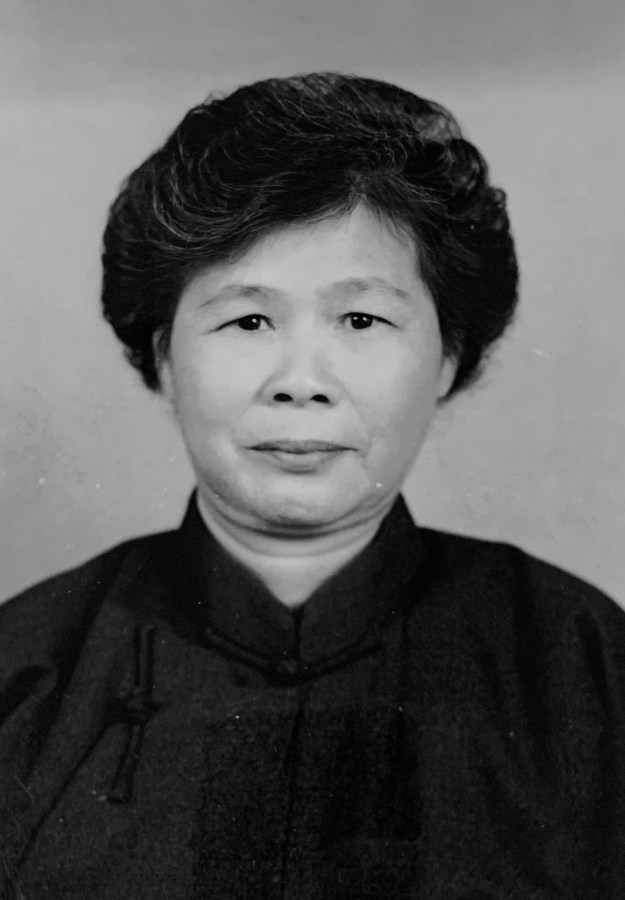
I finally framed the picture of my birth mother, the only photo I have of her, which was given to me by my sisters in Taiwan. It was one of the first things they gifted to me at the airport upon my arrival to Taipei. It’s a 5×7 black and white photo. My sisters had the photo carefully laminated to prevent any damage. Such a thoughtful gesture. Her name was Shiow-Jean Lu according to my original adoption contract, which my adoptive parents hid from me.

My initial thought was that my birth mother looked so solemn. She’s wearing a black mandarin collared jacket or shirt. Her hair is short and neat in the style of older women. Her eyes are downturned slightly at the outer corners. I thought she appeared sad, as though she had seen many sorrows in her lifetime. She is not quite smiling, and I often wonder what she was thinking when the photo was taken. I never asked my sisters how old she was at the time. I think that I was so overwhelmed with joy to have her picture. Well, that and I didn’t want to ask too many questions, although I had many. My guess is she was somewhere in her fifties. My sisters told me that I look very much like our mother in her younger years. Unfortunately, there are no photos left of her when she was a young woman, as they were burned according to my sisters by our mother in a time of conflict. I don’t know much more about it, but I’m so curious.

It’s a really odd feeling knowing that I was born to two people who I will never meet — a sense of numbness, emptiness. The story of how and why I was placed for adoption is nearly unbearable to process. Yet my sisters believe and told me repeatedly that my adoptive parents were “angels” and are very happy and thankful that I had the opportunity to be raised in the U.S. I understand why it happened the way it did. My birth family was impoverished, per my adoption contract, and I’m certain that life for my birth parents was not easy. I have benefited from white privilege due to my adoption, yet often feel conflicted by this. My adoptive parents loved me, yet there were numerous challenges, especially during my adolescent years. My parents were ill-prepared to parent a transracial adoptee, to support and help navigate identity issues. I feared my adoptive mother due to her lability. Her mood frequently changed, and when she was angry, it was terrifying.

I am happy that my sisters and family wanted to reunify. They have very big, kind, and generous hearts. The picture of my birth mother is now sitting in a place where I see it every morning. Framed, she appears happier, if only in my imagination. Sometimes I’m pained to look at the photo. Other times, I’m filled with such curiosity. I wish that I knew more about her, and I wonder what she was like, what she enjoyed, if she was happy, how she managed when I was relinquished unknowingly by my birth father…did she ever think about me? There is nothing that I can do but wonder…

the invisible red thread

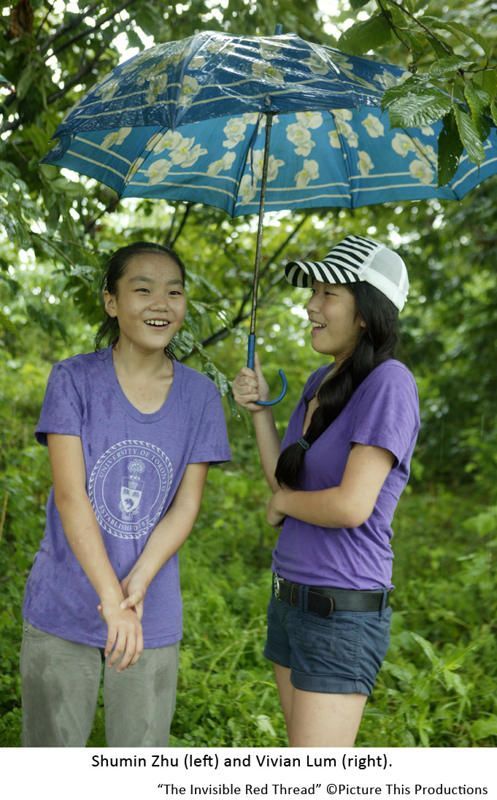
Shumin_Vivian2Over the last couple of years, it seems that there have been a number of film documentaries made on inter-country/transracial adoption. But many people in Arizona do not have the opportunity to see such films, which are typically introduced at film festivals and then screened via special engagements. Earlier this year, we were able to host a screening of Somewhere Between by Linda Knowlton Goldstein through Tugg. We had a super turn out and even sold out of tickets. I received much positive feedback after the event from friends and adoptive families.

In 11 days, we will host another film screening on adoption in Chandler. This event is called, “Honoring One’s Cultural Roots.” We’ll screen the film documentary, The Invisible Red Thread, from director Maureen Marovitch, although this event will be slightly different, as the movie is shorter (approx. 55 minutes), and we’ve invited psychotherapist Stephanie Withrow to speak after the movie. Stephanie has a private practice inTempe, AZ and works with adoptive families. She and her husband, Doug, have adopted 3 girls from China. In addition, another friend and colleague, Dalena Watson, LPC, FAMI, MT-BC, has helped to coordinate the event. She and her husband, Dustin, have 2 adopted children from China and Korea. If you live in the Phoenix-Metro area, I hope that you’ll be able to join us. You can find all the details at the link above entitled, The Invisible Red Thread- An AZ Premier. The film is recommended for kids 11 and older. Reservations and pre-payment are required, so be sure to reserve your seats. You can actually pre-pay for the screening by clicking on the Paypal button located on the right sidebar of this site. If you cannot attend the event but would like to contribute to the cost of bringing the film to Chandler, you can make a donation by clicking on the same button. For more about the movie, see the official website by following this link.

Come out and meet other adoptees and adoptive families who live in the valley!

Stephanie and her family

Stephanie and her family