Category Archives: Adoption

a certain slant of adoption

Howdy! I’m reblogging this post from exactly nine years ago today. As I reread it, a wave of thoughts, feelings, and emotions came forward all at once. It has been a long time since I’ve actively reflected on my own adoption, and yet I know it is always there, just beneath the surface.

I hope you’ll take a moment to read the post. My hope is that it offers a deeper understanding of the complexity of transnational (or international) and transracial adoption.


Hello folks! It’s Sunday morning, and the skies are gray in my lovely locale. Nevertheless, I’m enjoying the weekend, despite the clouds.

Today, I want to talk about adoption. Yes, that’s a given, but I have something more specific in mind.

For the past seven years, I have actively sought out and read blogs, books, scholarly research, adoptee forums, birth mother narratives, and adoptive parent spaces in search of connection, knowledge, resources, and validation. What I have found is a vast spectrum of perspectives on adoption, so many it feels impossible to neatly categorize them. The landscape is wide, varied, and deeply human, shaped by experience, identity, and lived reality.

As an international and transracial adoptee, my own perspective on adoption has continued to evolve. I don’t think it is uncommon for our views to shift as we experience personal growth and, for lack of a better term, mature. Adoptees often hold deeply personal perspectives on adoption, shaped by their own lived experiences, identities, and circumstances.

I’ve spoken with adult adoptees who are not particularly interested in connecting with their cultural roots or birth heritage, nor in searching for their birth families. Perhaps there is some curiosity, but not yet a compelling enough reason or desire to pursue that path. Other adoptees speak strongly against international adoption, and their concerns are often rooted in very real and painful experiences.

International adoption carries a complicated and, at times, troubling history. There are countless adoptees who were adopted through illegal or unethical practices, including cases where agencies and adoptive parents were aware that information had been falsified. These deeply harmful practices continue to occur in parts of the world today. The evidence exists, and while these realities are often difficult to confront, they cannot be ignored.

I have several friends who are adoptive parents and have adopted children internationally from China, India, Africa, Ethiopia, and Russia. They, too, hold strong and deeply personal perspectives on international adoption. At times, perhaps even often, my friends and I do not see eye to eye; nevertheless, we remain friends, and I value the ability to hold space for different experiences and viewpoints.

I strongly believe in family preservation and in expanding access to resources and support services that allow children to remain with their biological families whenever possible. As an adopted person, that belief is something I cannot look past. And yet, we live in a world where adoption continues to exist and thrive, even as international adoption has declined in many places.

At times, I feel conflicted because I carry my own complicated feelings about adoption while also supporting my friends and other adoptive parents. Ultimately, my deepest concern is the well-being of children, whether they are adopted or not.

What I particularly struggle with across the landscape of adoption is judgment and the way we judge one another based on our beliefs, experiences, and perspectives around international adoption. I know I have been judged for what I believe and support. I don’t necessarily like being judged; the word itself carries such a heavy weight. And yet, I also recognize that I judge others at times. It’s a part of being human. We all do it.

I cannot control what others think or say, but I can reflect on and take responsibility for my own thoughts, words, and actions.

I have moved through a wide range of emotions connected to my adoption and my identity as an international adoptee: from curiosity and awe, to anger and self-rejection, to grief, loss, and depression, and eventually toward acceptance. Like many adoptees, ignorance is one of the things that affects me most deeply. There is still so much misunderstanding surrounding international and transracial adoption, and people can say incredibly uninformed and hurtful things.

Sometimes I can laugh it off. Other times, I feel the anger rise and need to process it with a trusted friend or another adoptee who understands. There is something deeply healing and validating about sharing our stories and realizing we are not alone in these experiences.

And what about birth mothers? Of all those within the adoption constellation, their voices and stories are often the least heard. Yet I believe many have also experienced trauma, separation, grief, loss, and judgment.

Throughout history and across the world, there have been many cases where women were pressured or coerced into relinquishing their children, including in countries such as Australia and Brazil. In some instances, those children were later adopted by families or individuals from other countries.

Societal attitudes have often placed intense judgment and stigma on unwed or single pregnant women, leaving many with limited support, resources, and choices. Their experiences are an important part of the larger adoption conversation and deserve to be heard with compassion and honesty.

What do we make of all of this? I understand that I will be judged for what I say and do. That is part of life, and I can accept it, even when it feels painful.

There are many adoptees and others within the adoption community who hold strong voices and deeply held opinions about how things should be. What I cannot accept is bullying from those who believe everyone must share the same perspective or take the same stance.

Adoptees do not all share the same point of view. Likewise, adoptees, adoptive parents, and birth mothers each carry vastly different lived experiences. What is visible on the outside is not always reflective of what is held within.

I recognize that we may not always agree, but we can still strive to respect one another and honor our own personal, and often unmatched, journeys. We can also find ways to inform and listen to those who have not walked in our shoes. I speak here as one adoptee to another.

I hope to support you wherever you are in life and wherever your journey may lead. I believe that, collectively, we can create meaningful change. We can use our voices and lived experiences to help illuminate the path forward in adoption, especially those of us who have walked through this deeply complex and often painful process.

goodbyes are damn hard

Hello out there, and happy May! I hope wherever you are, the weather is sunny and warm. It’s been a rather chilly spring thus far here in Southern California. We did have a few very warm days about a month ago, but since then it’s cooled off. I’m completely enjoying it.

I’m in the process of winding things down at the university — holding final sessions with clients and preparing for my departure. I underestimated how difficult it would be to say good-bye. When I was considering resigning last year, all I could feel was the fatigue, day after day, the burnout.

It’s funny — once you decide to leave, people begin to share their appreciation for you and your work. It’s difficult to truly assess any impact you’ve made when you’re “in it.” I enjoyed my role as the Asian & Pacific Islander (API) Liaison. I deeply loved the work, and I will miss the students and director of APCC (The Asian & Pacific Cultural Center), who has become a friend.

We recently held a cultural graduation celebration for the Asian & Pacific Islander/Southwest Asian & North African students. It was a more intimate gathering, a space to truly honor the graduates in a way the larger ceremonies simply can’t. I’m sure the students felt that. One student I’ve gotten to know pretty well over the past year asked me to attend their graduation, and I was so touched. So yes, my heart is breaking a little — maybe a lot. I think I’m writing this simply to give the grief somewhere to go.

Goodbyes have always been difficult, even as a young child — adoption trauma at its finest. I remember experiencing intense anxiety when my adoptive dad, in particular, went away on business trips. It was like a panic attack laced with grief, a kind of separation anxiety that sat so heavy in my chest. I hated being left at daycare and later, elementary school. Yep, I was the screamer and had terrible stomachaches at school that couldn’t be explained.

My godmother, Janie, visited our family once when I was in elementary school. When it was time for her to return home, I felt that same profound sadness and panic. With every day, I grew increasingly anxious and sad. I sobbed in the car as my mom and I took her to the airport. I stayed there, too embarrassed to step out because I couldn’t stop crying. For days afterward, I mourned her departure. I couldn’t find the words to explain the depth of my emotions, even when my mom asked. I recognize it now as simply pain.

Moments of separation still tend to feel like a small death, not to be morbid, just honest. The intensity has softened, but the grief remains. Some trauma wounds don’t fully close, I’m convinced. It’s part of being human, and perhaps what has shaped me into the trauma therapist I’ve become.

I have facilitated groups for the past three years at APCC. It’s such a vibrant hub where API students gather to study, hang out, play mahjong, and student workers/leaders host support groups. The group I facilitate is called HAPI Hour (get it?), and we explore different topics related to API student mental health. This Wednesday is our last one… and it will be a celebration of all the fun we’ve shared. What great memories I’ll have of the center and the students who I came to adore.

With my resignation, I’ll have more time to devote to sound therapy — growing my practice and following what calls to me. Still, I’ll miss the university, my colleagues, and the students, despite the burnout and those moments I wasn’t sure I could make it through another workday. Goodbyes are damn hard.

May the coming months open into a simpler, more inspired life — one filled with creativity, and of course, magick.


Photo by Alexander Popovkin on Unsplash

Honor Rest & Renewal on Samhain

Today, I pause. I breathe. I rest and honor my ancestors on this blessed Samhain.

I’m grateful to have the day off – to simply be. To sit in stillness and solitude without the weight of expectation feels like a blessing in itself. The veil is thin today, and I lean into the presence of those who came before me – my birth mother and father, and the lineage of ancestors whose names I may never know. I honor them, and I honor the mystery that connects us across time and space.

Lately, life has felt full and demanding. I’m working full-time again, and though I hoped summer break would bring the restoration I so deeply needed, fatigue seems to have returned too soon. Halfway through the fall semester, I find myself wondering how to sustain balance – how to counsel others, meet the demands of my current job while not forgetting myself.

My dream remains clear: To eventually transition into full-time sound therapy work. Supporting my adult daughter these past two years has delayed that shift, yet I hold faith that in time, things will align. When she finds her footing, I’ll be able to step more fully into the work my heart longs for, creating healing spaces through resonance, stillness, and sound.

Despite the challenges, I’m proud of the small steps forward. I’ve completed my website, OM Sacred Sound Journeys, a milestone that feels like planting a tiny seed. Beginning next February, I’ll offer bi-weekly sound therapy sessions, a sacred rhythm I hope will grow into something sustainable and nourishing. 

I’m reconnecting with my musical roots, singing and playing for a herd I once worked with in equine-assisted psychotherapy and slowly returning to my guitar after years away. These small acts of reconnection remind me that healing unfolds gradually, as does starting a private practice.

Self-employment feels both thrilling and terrifying. The freedom to follow my calling is overshadowed by the very real worries of bills, rent, health insurance, and all the practicalities of life. Yet amidst uncertainty, I sense that this path is where I’m meant to go.

So today, under the quiet light of Samhain, I choose rest. I choose reflection. I choose to listen deeply to the whispers of my ancestors, to the call of my own heart, and to stillness. May this season bring renewal, remembrance, and faith in what is yet to come.


Photo by Catherine Crawford on Unsplash

ROC national day

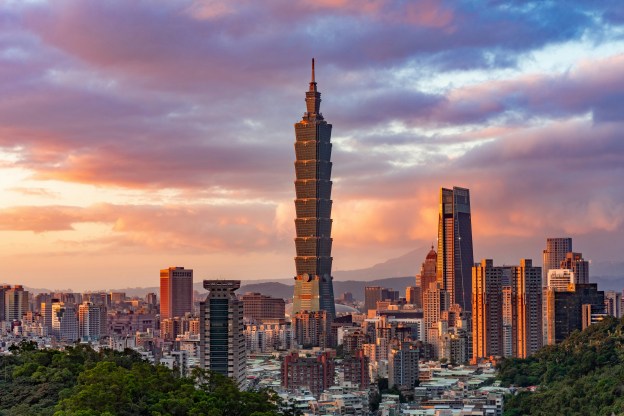
Taiwan, The Republic of China (ROC), celebrates National Day, otherwise known as Double Ten Day, on October 10th every year. Taipei, Taiwan, is my place of birth. I was adopted as an infant by an American family, and consequently, lost all connection to Taiwan and my first/birth family. That changed, however, over the Lunar New Year of 2012, at which time I traveled to Taipei to reunite with my first family including my two older sisters and brother, my uncle, niece and nephew, and close family friends. Sadly, I know very little about Taiwan’s history and had even less knowledge of Double Ten Day . So I messaged my oldest sister to learn more about its significance. I’m so glad I did, and my sister seemed pleased that I wanted to know more about Taiwan’s history. So I share what I learned now with my fellow Taiwanese adoptees.

Double Day Ten in Mandarin is 雙十節. means double or two; means ten; means day. Here is the history of Double Ten that my sister shared with me:

The Wuchang Uprising in China occurred at the beginning of the Revolution of 1911, and the Qing Dynasty, China’s last imperial dynasty, was overthrown by Chinese revolutionaries. The Republic of China was subsequently established on January 1, 1912. Since the first day of the Wuchang Uprising occurred on October 10, 1911, October 10 is commemorated as the anniversary of the founding of the Republic of China. My sister shared that there is not as much importance attached to Double Ten Day as in years past. She remembers that, at one time, there were many activities on National Day, and the whole country was joyous. The national flag was flown all over the sky, and national flags were placed everywhere on the streets and lanes, fluttering beautifully. There was a flag-raising ceremony at the Presidential Plaza at six o’clock in the morning, and during the day, the heads of state, officials from various ministries, and invited international guests gathered in the stands to watch a military parade. The Air Force and Army presented majestic shows. It was a very popular holiday, and there were numerous performances by various groups celebrating various folk customs. What everyone looked forward to most was the fireworks at night. Colorful fireworks were placed in the square in front of the Presidential Palace, bringing on cheers and applause. Everyone enthusiastically participated in the parade, holding a small flag and walking around for a long time following the performances. My sister said that In recent years, there have been firework displays at Taipei 101 and Sun Yat-sen Memorial Hall. She shared that these are the memories of older generations, and the jubilance once felt as a nation on this day has diminished. Now there are different kinds of activities on Double Ten in Taiwan but it is just a holiday without the same jubilance, and few young people pay attention to its meaning.

I asked about the Double Ten flag and Taiwan’s national flag. My sister explained, our national flag is based on the blue sky with a white sun created by the revolutionary martyr, Lu Haodong, and the founding father, Sun Yat-sen, with red as the background color. The 12 rays of light on the sun represent the 12 months of the year and the 12 traditional Chinese hours in a day (each ray equals two hours). In 1928, the red and blue flag with the white sun officially became the national flag of the Republic of China. The white flag with the double ten red Chinese characters is the flag that represents Double Ten Day.

I appreciate this history lesson about Taiwan from my sister. I hope it has meaning for you, too. There is still so much to learn and know. Incidentally, my daughter’s birthday is on October 10, to which my sister said, she has lucky blessing!

what every adoptee longs to know

When I was growing up in Louisiana, one of the questions I was most often asked by others upon learning that I was adopted was, “so who are your ‘real’ parents?” It was fairly obvious that I was adopted, as I looked nothing like my white parents. I had straight black hair, almond shaped eyes, and skin the color of my dad’s morning cup of coffee. I was usually annoyed by the question each and every time it was asked. My typical response was, “well my parents are my real parents.” My adoptive parents were the only parents I knew. The only parents I would ever know. I have no doubt that other adoptees encounter the same question and perhaps feel the same sense of annoyance.

What baffles me is that I was never curious about my birthparents or place of birth until about two years ago after finding my adoption papers, 40 years after my adoption. This ambivalence was perpetuated by the secrecy surrounding adoption at the time. My adoptive parents never ever talked about my birth heritage or birth family. Hell, I had never even heard the term, “birthfamily.” When I was placed for adoption, it was the beginning of the end of any connection to my birth country, to my birthfamily, to my cultural roots. After my adoption, all cultural ties were severed. I would never know that my birthparents were from China, but forced to leave the country and build a new life in Taiwan, that I had two older biological sisters and an older biological brother. I believe that my adoptive parents did everything possible to keep my past hidden from me, and for years, it would remain so. Then one day, the truth came out, or at least part of it. And when it did, it was the beginning of a new chapter in my life.

This afternoon, I went with some friends who are visiting from California to see a movie, “Philomena,” starring Judi Dench and Steve Coogan. It was a heartbreaking movie, although there was some humor between the characters that lightened things up. It is based on the true story of Philomena Lee, an Irish woman who, as a teenager, had a romantic fling with a boy at a carnival and became pregnant. Rejected by her own family, she is sent to a convent where she gives birth to a son, Anthony, and is forced to work with other young girls in order to work off the penance of their “sins.” The girls are allowed to see their children for only one hour a day. What is even more tragic is one day, Philomena watches helplessly as her three-year-old boy is taken away by a rich American couple without as much as a goodbye. The convent was in the business of selling babies to wealthy Americans and having the young mother’s sign contracts that they could never seek the whereabouts of their children. This abominable practice is historical, unfortunately. Fifty years later, Philomena is still tormented by the loss of her son and the desire to find him. She unwittingly connects with dejected political journalist, Martin Sixsmith, portrayed by Steve Coogan, who agrees to help her find her son, primarily for the tabloid possibilities of a human interest story. What follows is a tender story of loss, reconciliation, forgiveness, and ultimately acceptance.

I know some adoptees hated this film, but it really resonated with me, despite the creative license that was taken to make it more dramatic. The story of deep loss and grief was what hit me. The depiction of such a tremendous loss experienced by a woman whose child was taken away from her was so real. I felt the loss as if it were my own. So often adoption is portrayed as a happy event, yet rarely do we see the other side of adoption from the perspective of the birth mother who is forced to relinquish her child. One of the most memorable lines comes when Philomena decides to go to America with Martin Sixsmith in hopes of finding her son. Philomena says, “I’d like to know if Anthony ever thought of me…I’ve thought of him everyday.”

Since learning about my birthparents in Taiwan, I’ve often wondered if my birth mother ever thought of me. How can it not be so? Philomena answered this question for me. The separation between a mother who is forced to give up her child and the child who is relinquished causes a wound that is easily re-opened again and again. I will never know my birth mother. She and my biological father died before I had the chance to meet them. I have often wondered about her, like what her favorite color was, what kind of music she liked, what kind of personality she had, was she happy, did we bond at all while I was still with her? I was told by my sisters in Taiwan that she was a teacher, she enjoyed learning and classical music. Unbeknownst to her, my birth father, took me to the orphanage and relinquished me without her consent. I often wonder how it all happened, if he felt anything at all when leaving me at the orphanage to languish. My sisters tell me that our mother never talked about what happened, but it deeply affected her, emotionally and psychologically. When we met for the first time in Taipei, they gave me photos of our mother and father. I felt that there was such sadness behind my birth mother’s eyes.

Philomena eventually learns that the life her son attains after his adoption is much more affluent than anything she could have ever provided for him. She recognizes this fact and is happy that he grew up having opportunities that he would not have had otherwise. This is the reason why many adoptees are placed for adoption, including me. It’s quite the phenomenon when you are given everything you could possibly need and want, yet still feel a hole somewhere deep inside you, like there is a part of you that’s missing. It’s still there to this day. I’ve learned to accept it, or perhaps even ignore it so I can deal with life.

I think that many adoptees wonder why they were given up or abandoned. Questions like, “was it because I was unwanted, was it forced, was I ever thought of afterwards?” are not uncommon. Unfortunately, many adoptees will never know the answers because of a lack of documentation, abandonment or falsification of records. Finding my birthfamily brought me one step closer to the truth and to answering some of those questions. Yet, the whole truth is still so elusive. I will always have questions about my birthparents and my birthfamily. Answers are not so easy to come by.

In the movie, Martin Sixsmith quotes T.S. Eliot toward the end of Philomena’s journey, 

“The end of all our exploring will be to arrive where we started and know the place for the first time.” 

I thought how very apt this quote was. Philemona started her journey at the convent and, in the end, returns to it. My journey began in an orphanage in Taiwan. Two years ago, I returned to the city of my birth to be reunited with my birth/first family. I arrived at the place where it all started, yet only just began to know the place for the first time. Though I will never be able to meet my birth mother, I believe that she thought about me. There is no longer any doubt in my mind.