Category Archives: grief

On Getting Older

I can say with all honesty that I hate getting older. I know that sounds rather harsh; the aging process is not for the faint of heart.

I was at my doctor’s yesterday for a checkup. She’s a naturopath I’ve worked with for the past ten years. Wow, just saying “the past ten years” makes me feel old! I was complaining about wrinkly skin and how much I feel I’ve aged over the past three years when she bemusedly said, “We don’t talk about wrinkles.”

And the other day, I met with a student client. At the end of the session, we did an oracle card reading. The office space where we meet is very dimly lit, and I had to use the flashlight on my iphone to read the guidebook. My client said they’d like to read it, so I handed them the book. Of course, they were able to read the text easily, despite the dim lighting!

Seriously?

Aging feels so disorienting. It’s like the face in the mirror has suddenly begun to look different from the face I carry around inside myself. My internal sense of who I am isn’t aging at the same speed as the reflection I see in the mirror every morning. There’s an unfamiliar disconnect between the two that I find quite difficult to accept.

At the same time, I’m in yet another transitional period in life (I am so over transitions!). A new decade. Leaving behind a long professional chapter and building something new with sound, creativity, spirituality, and healing.

Sometimes, it doesn’t feel quite authentic. I’m decades older than many of the people I work with, although they’d never know it unless I revealed my age. I don’t show how much I struggle with this truth. Running alongside younger practitioners. Even at the university I recently left, I was much older than most of my colleagues.

There is this invisibility to aging that occurs internally. From the outside, people see me functioning, creating, building something new, putting myself out there. What people don’t see, however, is the private reckoning happening below the surface, the studying of my face in the mirror, noticing what has changed, or trying to reconcile the person I still feel myself to be with the body that keeps reminding me that time is passing. Passing at a pace I find disconcerting.

With age certainly comes wisdom. And I appreciate that greatly. But there is also grief as I experience this body physically changing without my permission.

How confounding to be mourning my younger self at precisely the moment another version of me is trying to be born.

And then there’s the way women are pressured to chase after beauty, to preserve our youthfulness as we age. Both the external and internal pressures feel perilous. It seems like nearly every female celebrity over 50 has had some kind of intervention, whether Botox, fillers, plastic surgery, or something else to enhance her appearance. The privilege inherent in having such access bothers me, but even more maddening is the expectation that any evidence of aging should somehow be erased.

A slow erasure of the self.

Sometimes I wonder how other people perceive me. Do they see the lines and wrinkles, the spots that I see? Do they notice the changes that sometimes seem glaringly obvious to me? Or is it only because I know my own face and body so intimately that every new line or dimple feels magnified?

I grieve not only the physical changes, but what youth represents: possibility, desirability, sexuality, physical ease, and time stretching out ahead of you. I get tired of hearing “embrace your age” and “love your wrinkles” when there’s a new dark spot that seems to appear every damn day! I can know intellectually that aging is a privilege, that a life well lived is something extraordinary, and still fucking hate these lines and wrinkles.

But, perhaps, the most terrifying part is recognizing that time no longer stretches endlessly before me.

This poem by Mary Oliver about aging really hits home:

Halleluiah

Everyone should be born into this world happy
and loving everything.
But in truth it rarely works that way.
For myself, I have spent my life clamoring toward it.
Halleluiah, anyway I’m not where I started!

And have you too been trudging like that, sometimes
almost forgetting how wondrous the world is
and how miraculously kind some people can be?
And have you too decided that probably nothing important
is ever easy?
Not, say, for the first sixty years.

Halleluiah, I’m sixty now, and even a little more,
and some days I feel I have wings.


Maybe that’s where I am with aging. I don’t have to love it. I don’t have to embrace every wrinkle, dark spot, ache, or reminder that time is passing. I can grieve the younger versions of myself and still be curious about the woman I’m becoming.

Maybe the medicine isn’t learning how to love getting older, but learning how to remain fully alive and present while I’m getting older.

Keep creating. Stay curious. Notice and invite in beauty. Allow myself to want things I haven’t yet experienced. Keep becoming, even as I become increasingly aware that my time here is finite.

I don’t know that I’ll ever look in the mirror and celebrate the changes. Very likely not. The grief is underneath everything, while above ground, I’m busy trying to build the next life.

What a long and winding path.


I’ve loved this song since adolescence, but it hits differently now.

“When the Universe Said, Go Home”

I participated in a Wellness Faire on Saturday with the Collective I recently joined, looking forward to offering mini sound baths throughout the afternoon for anyone who wanted to experience one. I was also to co-facilitate a collective sound bath with two other practitioners at the end of the event. Attendees could sign up for mini sessions with the various practitioners and explore a range of healing offerings throughout the day, each offered at a nominal cost. Instead, I spent the next three days learning a rather different lesson in wellness: sometimes the healthiest thing you can do is stop.

I arrived excited about the day, hoping that people would want to experience a mini sound bath. Before we opened our doors to guests, we were gifted with ceremonial cacao lovingly prepared by two of the practitioners. I had never had cacao before, so I was delighted to try this offering.

The afternoon started slowly. Another practitioner and I did an energy exchange: she offered me a quantum healing session, which I found extremely fascinating, and I offered her a mini sound experience in return. As the day wore on, however, I began experiencing some cramping. I didn’t think much of it at first and found someone who had some ibuprofen. I took four and continued on.

The cramping worsened to the point that I felt I needed to go home and grab a heating pad. But once I got home, I realized I really wasn’t feeling well and begrudgingly made the decision to stay home. The lead practitioner was understanding and reassured me not to worry. After all, with a collective of practitioners, everything would be okay.

In my haste to leave the Collective, I left my instruments set up in the space given to me. I hated doing that, but I was getting sicker by the minute. In fact that evening, I experienced such severe cramping that I thought I might pass out. I spent most of the night in the bathroom. I was so disappointed in myself and in my body to have to leave and miss the collective sound bath. It felt like a punishment in some way from the Universe.

Looking back, I’m fairly certain the cacao contributed to my illness. I’m pretty sensitive to herbs and have a small frame, but didn’t think anything of it beforehand because it was new to me. I also hadn’t eaten much that day. I later learned that cacao can cause digestive upset, particularly when consumed on an empty stomach, and I’m sure taking four ibuprofen while I was already experiencing stomach distress didn’t help. Whatever the exact cause, my body was clearly having a very strong reaction to something. And, as far as I knew, no one else at the Faire experienced anything similar.

What I didn’t anticipate was that, in my absence, my Tibetan and crystal singing bowls would be used by another practitioner for the collective sound bath and perhaps even for individual mini ones. My Tibetan and crystal singing bowls aren’t merely equipment I use in my work. They are instruments I have carefully chosen, worked with, touched, played, listened to, developed relationships with, and incorporated into my practice. My energetic resonance lives within them, and their energetic resonance resides within me.

When I unexpectedly had to leave them behind, I experienced an entirely different kind of vulnerability. To later see photographs of another practitioner using my bowls without my permission broke my heart. They carry a meaning for me that isn’t necessarily visible from the outside. They are not interchangeable tools to me. They are part of my practice, my relationship with sound, and the way I offer healing to others.

I am still struggling with how to process all of it. Part of me worries that speaking up about it will make me appear selfish or ungrateful to the practitioners who stepped in to facilitate the sound bath in my absence. I can acknowledge that their intention may have been generous. Perhaps my bowls helped create a meaningful experience for those who attended. Perhaps they even supported the practitioners who used them.

And yet, something in me keeps saying: this was still a boundary crossing.

Both things can be true. I can appreciate the intention behind someone’s actions and still feel that they should have asked my permission. I don’t think honoring a boundary makes me selfish, and I don’t think protecting the things that carry deep meaning for me diminishes the generosity of those who were trying to help.

Perhaps this is part of the listening I am being asked to practice: learning to distinguish between being ungrateful and having a boundary. They are not the same thing.

I continue to be a student. I am learning to sit with what is difficult for me to confront, while still standing firm in my values and beliefs, even when doing so may be uncomfortable or misunderstood by others. It is a difficult lesson.

Apparently, the Universe had not finished making its point.

The next evening, I felt weak, but better than the night before, so I went to retrieve my instruments. As I was getting ready to load everything, I discovered that I had a flat tire. WTF?! I called AAA for a tow only to realize that all the tire shops were closed. I decided to leave my car overnight in the parking lot, Uber home, and deal with towing and repair the next morning.

Yesterday morning, I Ubered back to the Collective, contacted AAA once again, and a tow truck was dispatched. I received a message saying that the the tow truck had arrived, yet there was no tow truck in sight. Minutes later I receive a call from the driver, who had been dispatched to my home address. OMG.

“Not a problem,” he tells me, and made his way to my location. All the while, I was hoping I wouln’t be charged for the tow and additional miles. When the truck finally arrived, I was greeted by an older friendly man who reassured me that he had me covered. He also gently touched my shoulder, which, admittedly, creeped me out a little. We arrived at the supposed destination, only to discover that dispatch had once again sent him to the wrong location. Geez.

So around we turned and made our way to the tire shop.

By the time we arrived, I was feeling vulnerable, exhausted, inconvenienced, and kinda dependent on other people. I was so relieved that the tow truck driver turned out to be a genuinely helpful guy and that I was greeted by a friendly dude at the tire shop. Two other guys came out to examine the damage and provide an estimate. They had my car fixed in no time, and the cost of the tire was extremely affordable. I was deeply grateful for the honesty and assistance I received.

I’d been bracing myself for the possibility of needing to defend myself against being taken advantage of. Instead, I was helped. There was no fight, no negotiation, no need to prove anything. Just strangers doing their job well and treating me with kindness.

It was a huge comfort to realize that, for once, I didn’t have to be the one holding everything together.

I suppose the larger lesson here for me, as someone who is used to defending herself and has experienced a lifetime of having to do so, is that I don’t always have to armor up for every situation. Every once in a while, the Universe works in my favor.

I’m wondering what it would be like to lay down my armor and let go, while still maintaining boundaries. It feels extremely vulnerable to not armor up. To let go. To receive help, or even ask for it. I’m used to figuring shit out on my own, but it tends to take an energetic toll.

So perhaps this is a new life lesson, or one that I just haven’t learned yet: trusting myself to know when to lay down a boundary and keep it firm, even if it pisses people off. Trusting that other people will respect me when I ask for help.

God that seems like a super tall order.

One that I may continue to struggle with. I still feel disappointed that I wasn’t able to finish strong at the Wellness Faire. I wanted to be there. I wanted to co-facilitate the sound bath. I wanted the day to unfold differently.

But I also listened to my body when it said, “Go home.”

Perhaps that’s enough for now.

The only thing to do is recover, be kind to my heart, and hold on to my truth. The rest will have to wait.


This isn’t typically my kind of music. I’m usually more at home with Turnstile, Wolf Alice, or Beach House. But this song feels especially vulnerable to me right now. I’ve been carrying a lot of heartache, and somehow this quiet, tender song found its way in. Maybe that’s part of laying down the armor.

Winter Song by Sara Bareilles & Ingrid Michaelson

Photo by Anna Saveleva on Unsplash

Grieving the Mother Given to Me

I hesitated to write this post about my adoptive mom. Yesterday was her birthday. She would have been 83-years old. She died in 2008 of Alzheimer’s disease. It has come to my attention recently that I still carry trauma wounds that need attention, and writing is one of the ways I process difficult feelings and emotions.

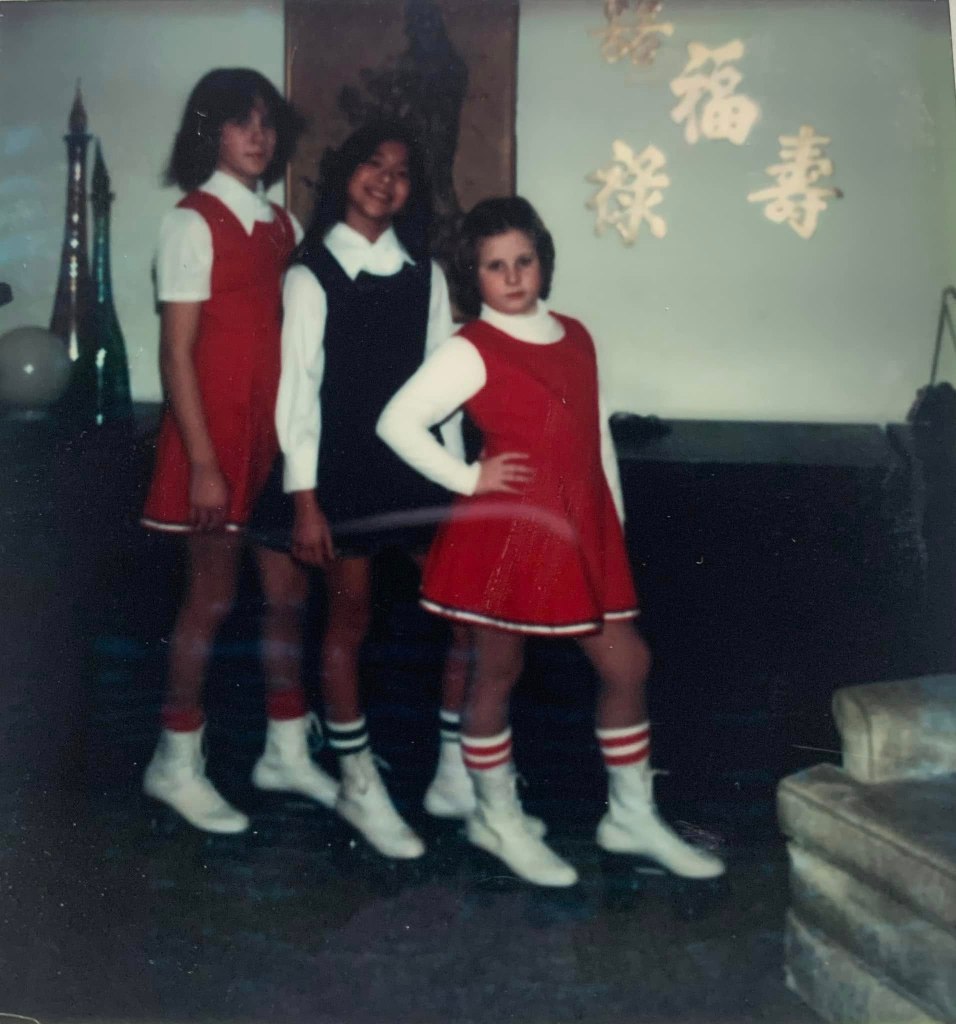
My adoptive mom was an RN. She returned to school later in life to complete her nursing education; I must have been in preschool or early elementary at the time — my memories are fuzzy. I do remember her taking me to class with her on occasion, likely when she was unable to find a sitter. Looking back, I realize there was so much about my mom’s life that I knew very little about. I knew her as my mother, but I didn’t know much about the woman she was beyond that role.

When I was a very young girl, I don’t remember much physical affection. I know she and my adoptive father loved me, but I don’t recall either ever engaging in play with me. I was an extremely insecure child — slept with a blanket beyond the age considered acceptable and drank from a bottle longer than I probably should have. I remember “the maid” throwing my blanket away because it was literally in tatters. I suspect my mom had her do it. I remember the gutwrenching grief that followed, which lasted days, perhaps weeks. That blanket had been a source of comfort and security to me, and losing it was profoundly painful. Looking back, I recognize that those attachments reflected a need for comfort and security.

In elementary school, I began having painful stomaches, and I frequently cried to my first grade teacher, asking her to call my mom to be checked out of school. On one occasion, my mom picked me up in the morning before class had even begun. When we got home, she promptly spanked and yelled at me. Spanking was, of course, a common form of discipline at the time, and I received my fair share of it. As I grew older, the stomachaches subsided, but I carried with me an intense shyness and great difficulty asking for help, especially from teachers or other adults. I learned at a subconsious level that expressing distress might not necessarily bring comfort.

My parents, particularly my mom, sheltered me. They were overprotective in many ways, and this became increasingly troublesome as I grew older. It was during preadolescence that the relationship with my mom became increasingly tense. While most teens were beginning to establish greater independence, my mom exerted more control. She chose the activities I was allowed to participate in and made it clear when she didn’t like certain friends or didn’t want me hanging out with them.

My mom had wild mood swings. On weekends, our home was often filled with tension as she cleaned the home or made meals. When she was angry, she yelled. Her anger was often directed at me, but also my dad, whom she critized often. He rarely fought back. There were, however, a few verbally aggressive arguments between them that were particularly frightening to my younger self.

Both of my parents abused alcohol and cigarettes. Some might say this was typical of their generation. As a young child, the evening martinis seemed to lighten the mood. I didn’t understand the significance of drinking till intoxicated nearly every evening. Our home was thick with cigarette smoke most of the time. As I grew older and wanted more independence, I became aware that the alcohol seemed to make my mom angrier and more emotional. What I experienced as tension as a child began to feel more threatening as I entered adolescence.

I know it isn’t uncommon for teens to yell back at their parents, and perhaps some of what happened between my mom and me was not unusual for adolescents of that time. What makes my story more complicated, however, was not only the misunderstandings between us, but my parents’ lack of understanding about how race and identity shaped my desperate need to fit in with my peers.

Staying out late, dating, and many other things my friends were beginning to experience were forbidden in our home. I watched my friends gain the freedom I desperately wanted. So I yelled back. It was the only way I knew how to protect myself. There were no conversations, no teaching, no attempts to help me understand or show support. Just yelling.

On one occasion, my mom became so angry that she pushed me back onto my bed and began tearing my shirt off, leaving a hole in the fabric. Another time, she ripped the telephone in my bedroom out of the wall jack while I was talking to a friend. These incidents, and many others, created such fear in me that I shrank, and I hated my mom in those moments. There was no one to confide in, not that I would have known how to ask for help or how to express myself at the time. I was unable to make sense of what was happening in our home, and there was nowhere to take the confusion, anger, and fear except music. Music is where I escaped

When I went to college, I grew more and more distant from my parents. I lived at home my first year, then moved on campus. I loved having the physical distance. It provided a respite, a barrier between me and my mom, and a place where I finally felt safe.

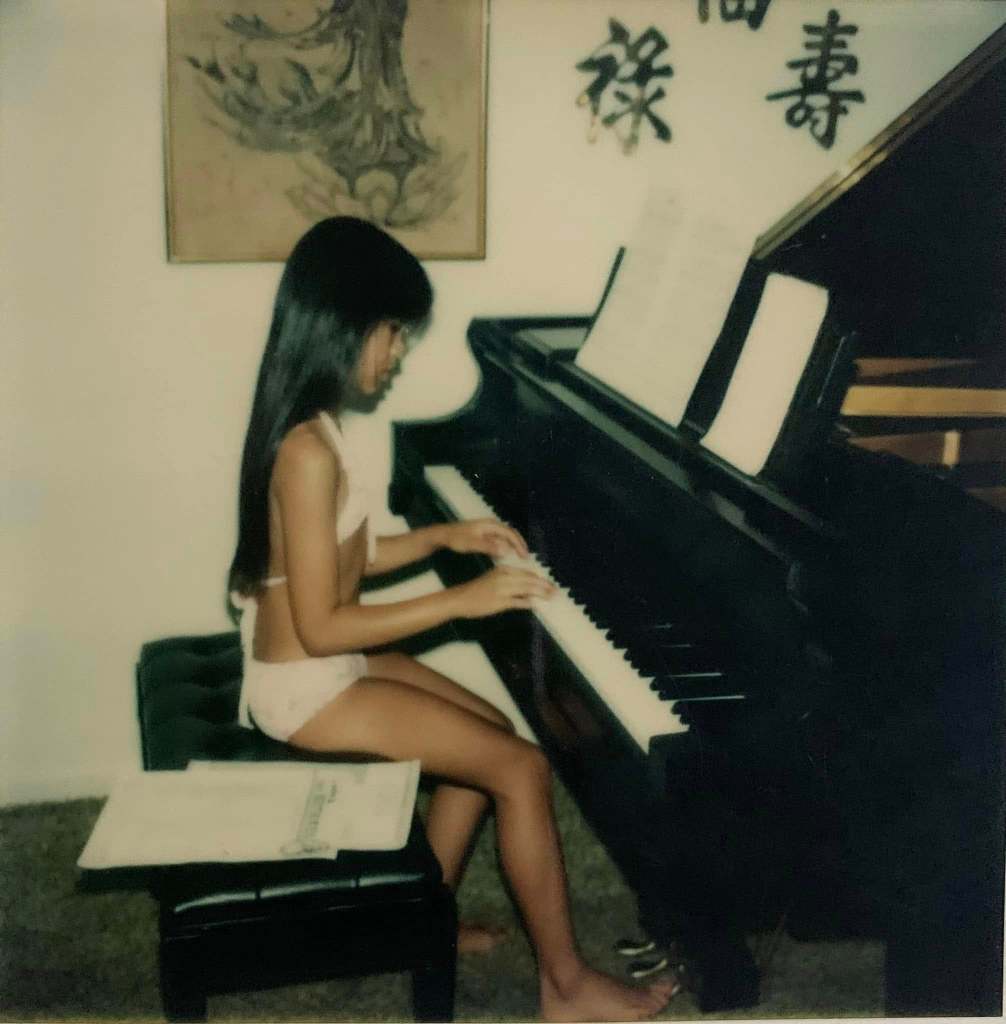
I loved college. Perhaps, not surprisingly, I began experiencing everything in excess, indulging in the freedoms that come along with being away at college. Excessive drinking, partying, staying out late, doing pretty much whatever the hell I wanted, alongside hours of practicing the piano. Some of my favorite moments were the quiet ones, practicing late into the night, alone in the music building, holed up in a tiny practice room. It was just me and the piano. There was something deeply magical about those hours.

The flip side was that I hated performing. The expectations of perfection that came with being a piano performance major was crushing. To this day, anything that makes me feel as though I have to perform or prove myself can trigger intense anxiety. I’m better now at moving through it without beating myself up when I fail to meet my own expectations. But I recognize that old feeling. Somewhere along the way, performance became intertwined with the fear of not being good enough.

In college, I began planning my escape. After graduation, I moved back in with my parents for about a year while I taught paino lessons to kids. I kept my distance from my mom as much as I could. Eventually, I hatched a plan to get out of Louisiana. By then, my grandmother had moved into our home. Though she and my mom didn’t always see eye to eye, I think it must have been a comfort to my mom to have her there. One morning, I packed my car with whatever belongings would fit and drove away.

I remember seeing both of my parents standing in the driveway, waving goodbye. My mom’s face held a sadness and worry that I had rarely seen before. I was leaving the home I had desperately wanted to escape, yet seeing her standing there caused something in me to break a little. I loved her. I resented her. I was relieved to be leaving, yet I was sad to leave her. This was the beginning of an inner conflict I would carry for many years: loving and despising my mom at the same time.

I got married at 26. That is a completely different story for another day. And, I gave birth to my daughter on October 10, 1997. Her birth marked the beginning of a profound new chapter in my life. She was the first human with whom I experienced what felt like true intimacy. Becoming a mother changed the way I saw my own mother. Something softened. For the first time, I could glimpse at her pain and suffering in a way I hadn’t been able to before. My mom was diagnosed with Alzheimer’s disease not long after. And, very gradually she declined, until one day I returned for a visit, and she no longer recognized me.

I have wrestled with grief and guilt, struggling to reconcile both the resentment I held for my mom with deep sadness, knowing we will never be able to express apologies or forgiveness to one another. I do not hold anger or hatred towards her anymore. What remains is sorrow.

I know she did and said terrible things. For years, I refused to visit my parents. But time has a way of softening us. I don’t know much about my mom’s history or what she endured before I knew her, but I imagine there were wounds and pain none of us understood. I wish I had known more. I wish I could have understood her suffering while she was still here. And I hate that she suffered from Alzheimer’s disease. It was tragic to watch her deteriorate physically and cognitively as the years passed.

To this day, i feel I never really knew my mom. I know she loved me, and I feel gratitude that she did; perhaps she was doing the best she could with what she had. That doesn’t erase my own pain and suffering. It simply calls me to continue healing the wounds that are still tender and that sometimes affect me in ways I don’t even recognize. In some ways, I believe this pain led me to my profession. It has helped me understand the complexity of trauma, the ways our early experiences shape us, and the importance of creating the safety and compassion that I sometimes needed as a child. Perhaps this is one way I have made meaning from what I experienced.

My birthday is only nine days after my mom’s. Every year, those two dates sit close together on the calendar, a reminder of the complicated bond we had and the ways I will always be connected to her.

So, happy birthday, Mom.

May you be at peace, and may you be somewhere kinder and gentler now.


Photo by Christopher Sardegna on Unsplash

Summertime

What is it about summertime that takes me back to my youth?

The older I get, the more aware I become that there are fewer summers ahead than behind me. There’s a Portuguese word for this feeling: saudade. It describes a deep, melancholic longing for a person, a place, or even a version of yourself that is gone and may never return. It’s the bittersweet ache of being grateful the past existed while quietly mourning that it’s gone.

I can actually feel the word saudade. It’s a sensation that settles somewhere between my heart, my throat, and my belly.

There’s also senescence, but hell, saudade sounds a whole lot sexier 🤣

Summers were uncomfortably hot in the South. I grew up in Bossier City, Louisiana, where heat, humidity, mosquitos, and very large bugs were part of life. Yes, we had a bug zapper hanging from the metal canopy over our backyard patio.

I remember lying on the front lawn during my childhood, staring into an endless blue sky, picking dandelions just to blow their fluffy seeds into the wind. Every once in a while, I’d wander to the ditch behind our neighborhood, catching minnows, crawdads, and toads, all the while hoping my parents didn’t catch me; they strictly forbid going anywhere near the ditch.

Yep. That was childhood in Louisiana.

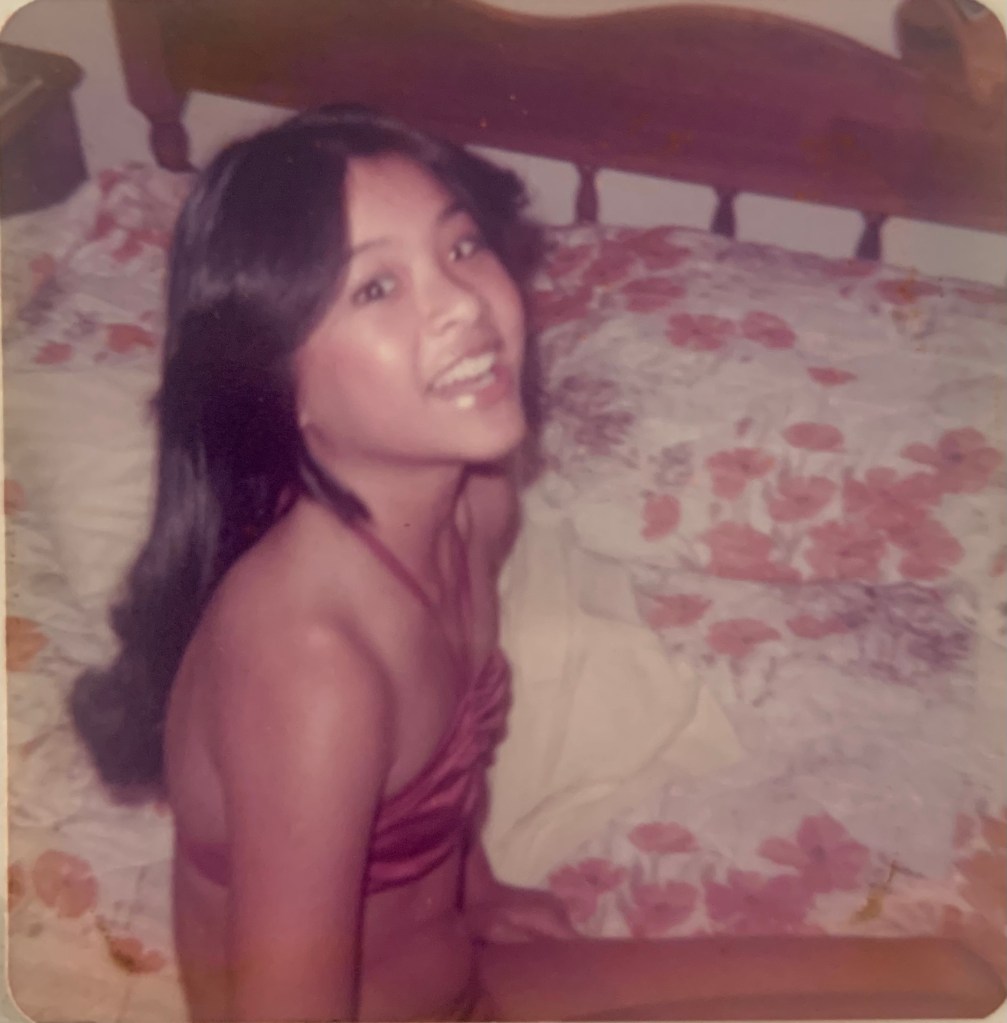
Summers were also for swimming, of course. I lived in a two-piece 😂 My parents had a pool built in our backyard, and the anticipation of finally being able to jump in felt like waiting for Christmas morning.

Ironically, once it was filled with water, I was terrified to jump in. I clung to the side of the pool until my mom enrolled me in swimming lessons at the local YMCA. How I hated those lessons. Swimming lap after lap felt like torture.

I became a strong swimmer though. You couldn’t keep me out of the water after that. There were countless afternoons and pool parties with my girlfriends, our skin glistening with baby oil as we stretched out in the blazing Louisiana sun for hours. Back then, a tan was the goal. We had no idea we were collecting the sun damage we’d spend decades trying to undo.

Music has always been like a time capsule.

This morning I was listening to Fantasy by Aldo Nova. Some of you may be too young to know who he is, but hearing that song immediately transported me back to my youth. I have a classic rock soul, though I love other genres of music. (Country is probably my least favorite… although I did have a country music phase in the mid-2000s!)

There are a few artists who never fail to stir memories like Blue Öyster Cult, Red Rider, Robert Plant, The Police, Fleetwood Mac, Scorpions, Duran Duran, Adam Ant, Blondie, AC/DC, Night Ranger, Def Leppard, Van Halen, Styx, Eagles, Journey, Rush, Heart, April Wine, and Foreigner. I’m sure I’m forgetting a few, but you get the idea.

Certain songs are like time machines, carrying me back to who I was, where I was, and how I felt. My first heartbreak. Summertime freedom. The quiet, rebellious part of me that wouldn’t fully emerge until years later, after I stopped trying so hard to fit in. I was fortunate to grow up surrounded by unforgettable music, and those songs are like old friends whenever they find their way back to me.

I think certain songs mysteriously call out, wanting to be listened and paid attention to. Perhaps it’s my guides. Perhaps it’s my own intuition gently reminding me to sit with this feeling of saudade. To embrace getting older instead of resisting it.

I’ve lived a life filled with brilliant moments and profoundly painful ones, as we all have. And there’s still a part of me trying to make sense of it all, searching for meaning in the moments that hurt the most.

Until then, I’ll keep listening to the music that nourishes my heart and soul.

I hope you do the same.

Rock on🤘


Rain Through Me

The memory of you grows fainter
with each passing day,
your smile growing distant.

I cherish the way
the crinkles around your eyes
and mouth light me up,
yet that image is fading
like twilight into night.

I long to hear your laugh,
like the gentlest rainstorm
pouring through me.

Night stretches on;
an old weight gathers
beneath my ribs.

I hoped you’d always be
right by my side,
but nothing lasts forever, my love.

m. buck


A little poem I wrote last night about the one you miss. Mj

no longer here

the tiny murmur in my heart

became a whisper, and the whisper grew to be a wail until

the wail became a moan; the moan reminds me that you are no

longer here; the tourniquet has stilled the spill aound my grieving heart,

yet has done nothing to remove the memory of you from my pounding head,

so i will write and write another day until the moan becomes a wail,

and the wail softens into a whisper, and the whisper once again

becomes a tiny murmur, then there will be nothing but

silence to remind me that you are no longer here

m. buck


—Sometimes the feeling of loss is so visceral. Mj


Photo by Sasha Freemind on Unsplash