In my last post, I mentioned that adoptees in the U.S. adopted through international adoption are often subjected to racism, discrimination, and microaggressions. It’s a subject that interests me greatly because I know how damaging the effects of racism, discrimination, and microaggressions are. I chose to investigate this subject for my master’s thesis in social work.
Over the past two months, I’ve sent letters and announcements to numerous adoption agencies, primarily in Arizona, but also California and Oregon. I have contacted adult adoptee groups on social media platforms and reached out to friends who may know of families with adopted children. I continue to search for adoptees 18+ years of age who were adopted from another country to the U.S. by parents of a different race/ethnicity to participate in the study. Participation includes an in-person interview. In the interview, I talk with adoptees about their background, experiences with family, peers, and their community. We discuss incidents that the adoptee has experienced related to racism, racial discrimination, microaggressions, prejudice, and stereotyping. My hope is to interview at least ten adoptees for this qualitative study. So far, I’ve conducted five interviews. The interviews are about 1.5-2 hours in length and are conducted in a location that ensures privacy, i.e, a study room at a local library. I use participatory diagramming or visual timelines to examine critical points in each adoptee’s life related to racism, discrimination, microaggressions, prejudice, and/or stereotyping as part of the interview process. Participants are informed that the interviews are confidential and no identifying information will be revealed in the study.
How international and transracial adoptees personally cope with racism and discrimination is not an area that is well understood in the literature. It is hoped that this research will produce data that will inform the development of interventions for international adoptees and their families that will provide tools to manage the effects of racism and discrimination. I hope that the study will also prompt further investigation into this particular area. If you know of an adoptee or are an adoptee who resides in Arizona and might be interested in participating in this study, please pass along the above information. I can be contacted privately at mcnguyen@asu.edu if you’d like to know more about the study or would like to schedule an interview. Any help you can provide would be greatly appreciated!
I believe that this is such an important issue for adoptive families and adoptees. It’s my belief that adoptive families and adoptees who are better equipped to face racism and discrimination will be happier and healthier. Thank you.
Hey folks! I’ve waited long enough to share some very exciting news. In four days, my family and I are heading to Las Vegas to meet my birth family! My sisters, my niece, and brother-n-law are coming to the U.S. In fact, they are touring Alaska even now and will then head to Vegas for a brief visit. I haven’t written about our reunion because one of my sisters has had some health challenges and wasn’t sure if she could make the trip. I have prayed for her constantly and am so happy that she is well enough to travel so far away. I think that it’s just hitting me that I’m really going to see them again in a few short days. My family and I had planned to take a trip to Taiwan this fall but will not be able to after all, to my great disappointment. However, I’m hoping to be able to go back to Taiwan sometime next year – we’ll see.
So much has happened since our reunion in Taiwan in 2012 when I met my birth family for the first time since my adoption. I can’t wait to catch up with my sisters! My Mandarin, sadly, has not improved. I do hope that one day I’ll be able to speak the language, or at least manage it somewhat. School has taken over my life. It has been a challenge and I cannot wait to graduate in 2015. I often wonder if going back to school will be worth all the trouble. I do hope so. In any case, I plan to enjoy the summer while it lasts, especially the reunion with my sisters and family in Vegas. I’ll keep you posted on our adventure.
Hello everyone! I hope that you are staying cool during these hot summer days. We have officially hit triple digit weather here in Arizona! I have written recently that I’m working on a master’s thesis. I’m currently looking for volunteers to participate in this qualitative research study.
The purpose of the study is to examine the ways in which international and transracial adoptees experience racism, prejudice, racial discrimination and/or stereotyping and to identify patterns of coping. To explore these issues, interviews with international adoptees will be conducted. Results from the study will highlight the unique experiences of internationally adopted persons and provide a deeper understanding of how adoptees cope with racial derogation and discrimination. In-person interviews with adoptees will be approximately 1.5-2 hours.
To participate in this study, individuals should:
Be at least 18 years of age or older
Be adopted from another country to the U.S. by parents of a different race/ethnicity
Currently reside in Metro Phoenix, Arizona
All interviews will be conducted in a location that ensures privacy and confidentiality.
By participating in this study you will be contributing to the work of understanding how international and transracial adoptees manage racism and discrimination in their lives and how these issues impact the development of adoptees’ identity. The study will help to inform social workers and other healthcare professionals what types of support services would most benefit international and transracial adoptees and their families.
If you are interested in participating or would like more information about the study, please contact me. The link below contains a formal announcement including my contact information. Please feel free to distribute the announcement to any persons you think might have an interest in participating in the study. Thank you!
This research is conducted under the direction of:
Cecilia Ayón, MSW, PhD
Associate Professor
School of Social Work
College of Public Programs
Arizona State University
Click on the link below for the announcement and my contact information:
I finally framed the picture of my birth mother, the only photo I have of her, which was given to me by my sisters in Taiwan. It was one of the first things they gifted to me at the airport upon my arrival to Taipei. It’s a 5×7 black and white photo. My sisters had the photo carefully laminated to prevent any damage. Such a thoughtful gesture. Her name was Shiow-Jean Lu according to my original adoption contract, which my adoptive parents hid from me.
My initial thought was that my birth mother looked so solemn. She’s wearing a black mandarin collared jacket or shirt. Her hair is short and neat in the style of older women. Her eyes are downturned slightly at the outer corners. I thought she appeared sad, as though she had seen many sorrows in her lifetime. She is not quite smiling, and I often wonder what she was thinking when the photo was taken. I never asked my sisters how old she was at the time. I think that I was so overwhelmed with joy to have her picture. Well, that and I didn’t want to ask too many questions, although I had many. My guess is she was somewhere in her fifties. My sisters told me that I look very much like our mother in her younger years. Unfortunately, there are no photos left of her when she was a young woman, as they were burned according to my sisters by our mother in a time of conflict. I don’t know much more about it, but I’m so curious.
It’s a really odd feeling knowing that I was born to two people who I will never have an opportunity to meet, partly a sense of numb, emptiness. The story of why and how I was placed for adoption is nearly unbearable of think about. Yet my sisters believe and told me more than once that my adoptive parents were angels and are very happy and thankful that I had the opportunity to be raised in the U.S. I understand why it happened the way it did. My birthfamily was impoverished, per my adoption contract, and I’m certain that life for my birth parents was not easy. I have benefited from white privilege due to my adoption, yet often feel conflicted by this. My adoptive parents loved me, yet there were numerous challenges, especially when I was a teen. My parents were ill-prepared to parent an adoptee with identity issues, and I feared my adoptive mother because of her instability, emotionally and psychologically. Her mood could change in a split second, and when she was angry, it struck terror in me.
I am happy that my sisters and family wanted to reunify. They have very big, kind, and generous hearts. The picture of my birth mother is now sitting in a place where I see it every morning. Framed, she appears happier, if only in my imagination. Sometimes I’m pained to look at the photo. Other times, I’m filled with such curiosity. I wish that I knew more about her, and I wonder what she was like, what she enjoyed, if she was happy, how she managed when I was relinquished unknowingly by my birth father…did she ever think about me? There is nothing that I can do but wonder…
I cannot begin to tell you how relieved I am that my second year in graduate school has just ended! I’m now taking full advantage of some R & R. Over the summer, I plan to catch up on some reading. Before I explain more, I wanted to go back to my last post, “what’s in a name?” I completed the paperwork to legally change my middle name to my given birth name, Hsiao-ling; however, upon filing the paperwork at the court, I was informed of a $340 fee attached to the process. I didn’t expect the fee to be so costly and will have to wait to finish this process at a later time. It’s truly disappointing.
Anyhow, I’m embarking on another small adventure. When I first learned about my true identity, I experienced many mixed emotions- shock, surprise, elation but I was also very confused. I know that my birthparents lived in Guangxi (广西), which is situated in the southern part of China. I don’t know when they moved to Taiwan, but know that I was born in Taipei in August 1966, the same month and year that China’s Communist leader, Mao Zedong, launched what became known as the Cultural Revolution. I also know that my birth father served in the military, but do not know to what capacity. I have so many questions, but the path to my past brings up very painful memories for my biological sisters. I am thankful for what my eldest sister was willing to share with me.
I decided to take on a reading challenge and am reading books written by Chinese and Taiwanese authors, fiction and non-fiction, or books that depict Chinese culture or history over the summer. Although I was born in Taiwan, my birthparents were originally from China. I just finished reading “The Ghost Bride” by Yangsze Choo. I loved the story – it is a work of fiction with elements of fantasy, folklore, and Chinese culture that I very much enjoyed reading. I learned about some of the superstitions and beliefs in Chinese folklore, especially in regards to the “afterlife” and honoring one’s ancestors. I found it overall to be a very fun and entertaining read. Currently I’m reading “Peony in Love” by Lisa See. See is not a Chinese author, however her works often describe some period of Chinese history and culture. The story is based on actual historical events and goes back to seventeenth-century China after the Manchus seize power and the end of the Ming dynasty. I cannot imagine living under such oppressive conditions for women, who basically had no rights.
I’m concurrently reading “The Good Women of China: hidden voices” by Xinran. Xinran is a Chinese journalist/writer. In the book, she captures through oral histories the voices of several Chinese women, all anynomous, who lived during decades of civil strife in a painfully restrictive society. It is an incredibly moving book. The stories shared by these women with Xinran are heartbreaking. I chose to read this book in order to understand how things may have been for my birth mother, who also suffered many hardships. She lived in China most of her life. I hope to gain a better understanding of what life may have been like for her. Perhaps her story could have been one included in Xinran’s book, but I couldn’t be sure.
My roots go back to China where my birthfamily first lived. I don’t know our complete family history, but I think that their move to Taiwan was not under favorable conditions. And I know that their lives in Taiwan were extremely difficult. By summer’s end, I hope to understand a little more about Chinese culture and indirectly about my own biological family or at least what China was like when my birth parents were in their youth. Sadly, I will not be able to travel to Taiwan this year with my own family as I’d planned to visit my sisters and extended family. There’s always 2015 – I do hope I can go back to see my family in Taiwan then. Until then, I will strive to learn more about my origins through reading and research.
I am posting the following article written by adoptee, Amy Mihyang Ginther, who originally posted on Transracialeyes.com, another blog that I follow. I could relate to what she writes about honoring and validating our complex identities as adoptees in many, many ways. It’s difficult to convey the kinds of emotion and feelings that are at the very center of your story, but I think Amy has done it. I felt validated upon reading Amy’s article and recognize that even at the age of 47, I’m still wrestling with a few things and perhaps always will be in some sense. Sometimes I wish that I could just be done with it, but I guess that it’s just part of the fabric of who I am. I hope that Amy’s article will resonate with other adoptees and that we can as Amy expressed, “validate and support our intersected identity locations, whether it’s race, language, gender, sexuality, class, religion, nationality, or politics.” Thank you, Amy and Daniel of Transracial Eyes, for allowing me to repost this article. Please read on…
I have this memory from 3rd grade.
On the surface, it’s a fairly mundane image; I am staring at a piece of paper with a large circle drawn on it. The circle is empty. The assignment was to utilize our newly learned pie chart making skills and create a graph that represents our family ancestry. I just sat there, doing nothing, as my classmates excitedly talked about their percentages and colored them into the large circle on their papers. 50% Irish. 25% French. 1/16th Cherokee. I just sat there, paralyzed in confusion, shame, and futility. My circle was blank. I didn’t know what I should do.
When I was completing my MA in Voice Studies, I met a fellow voice coach who was also a hypnotherapist. I had wanted to try hypnotherapy because I wanted to further process the trauma of adoption and separation from my Omma (Korean mother) in a way that I couldn’t do consciously, as I was adopted at the age of three months.
I only had two sessions with this woman, and we never went back as far as three months old under hypnosis. But the memory of 3rd grade and the blank circle came back to me very strongly during one of our sessions. Hypnotherapy is a bit difficult to describe: you don’t feel powerless or under someone’s control – there is a sense of calm and clarity and it can feel really safe to explore memory and experience. Revisiting this moment, staring at this blank circle, brought quiet tears streaming down my face. I was 29 years old, grieving over a classroom assignment in elementary school. The pain and the frustration hadn’t left my mind or my body and I needed to be fully present within those feelings to really process and understand them.
Even by the 3rd grade, I was a goodadoptee. I was the perfectionist and the high-achiever. I was excellent at excelling at any task or assignment I was given. But this blank circle, this pie chart, was impossible. I was faced with the choice of using my parents’ ethnic ancestry to complete the assignment: a seemingly satisfactory combination of Irish, Polish, French, German, and Scottish or filling in the entire pie chart a single color and just writing “Korean 100%.” Neither of them seemed to be the right answer; the former felt like it wasn’t really me at all and the latter didn’t use our pie-chart making skills the way the lesson clearly intended. If I made the chart 100% Korean, it was as if I cheated. And I would surely have failed.
Despite my young age, those feelings were very real and they were powerful enough to stay with me, twenty five years later. I didn’t realize at the time that deep down, those emotions related to an embedded fear of being abandoned again; that if I didn’t do this thing right, make this pie chart the way I was expected to, I would be given up again. This might sound irrational to a non-adoptee. Of course I wouldn’t be given up. I had a loving family and a stable childhood. But for too long, adoptees and adoptee discourse are not fully addressing that our trauma is not just in our heads- it is in our bodies, in a more abstract and subconscious way. The insidious nature of our trauma means that we don’t always realize that difficulty in our lives or relationships relates to our adoption. We don’t connect the dots. I had been in therapy for some time during my childhood, mostly for performance anxiety in relation to perfectionism. I have no memory of this ever being connected with my adoption.
Sometimes I think about what I’d fill into that circle today if given the same assignment. I think about the many adoptees who have struggled to be too much of this and not enough of that. Being a theatre-maker has allowed me to make that circle a playing space. Through my acting and voice work, I have been able to fill in that circle with whatever I choose to in a safe environment. And I have found the permission to allow the circle to change when I want it to. Sometimes, in rehearsal or a workshop, or anytime really, I feel crushing frustration when I’m not given clear enough instructions to complete a task successfully. I breathe. I remember that these feelings stem from old, false truths, and when they are brought out in the light of the present moment, they dissipate.
I reject even the idea of a circle because I know as transracial adoptees, we have much more dimension than that. Like all people, in reality, we are much more expansive than we realize. There are days and moments where my sphere is a lot more Korean and times when my Americanness takes up more space. It is not about the percentages, though, or even the shape. It is about surrendering to the idea that identity is never fixed and that we are many different versions of ourselves all at once and at different moments. We must courageously acknowledge that all these versions, percentages, pie slices, are valid, legitimate, beautiful parts of ourselves.
What would be in your circle? Are these parts of you in harmony or in conflict? What can we do in our community to validate and support our intersected identity locations, whether it’s race, language, gender, sexuality, class, religion, nationality, or politics?
****This is my first post with TRE and I would like to share my gratitude to Daniel and the other contributors for this space. And for you, readers.
I have this memory from 3rd grade.
On the surface, it’s a fairly mundane image; I am staring at a piece of paper with a large circle drawn on it. The circle is empty. The assignment was to utilize our newly learned pie chart making skills and create a graph that represents our family ancestry. I just sat there, doing nothing, as my classmates excitedly talked about their percentages and colored them into the large circle on their papers. 50% Irish. 25% French. 1/16th Cherokee. I just sat there, paralyzed in confusion, shame, and futility. My circle was blank. I didn’t know what I should do.
When I was completing my MA in Voice Studies, I met a fellow voice coach who…
When I was a very young girl, I didn’t think much about being adopted. I didn’t think about the physical differences between my white parents and I. Since my parents and almost everyone around me were white, I thought of myself in the same way – white. This became a problem when I entered kindergarten and realized that my physical appearance was different than the other kids around me. As I’ve mentioned in other posts, I grew up in a predominantly white area, Bossier City, Louisiana. Our neighbours were mostly white, middle-class families. There were African American families, too, but I knew that I wasn’t black. There was prejudice and discrimination all around me. I was too young to understand the implications of such bias. In my family, we never talked about race, my race, my adoptive parents’ race, racism, prejudice, etc. But I perceived very early that whites were “superior” to other races. It makes me very sad that such racism existed (and still does) where I grew up and, furthermore, within my own family. I often wondered how my adoptive mother felt about me when I heard her make racist remarks toward others of a different race. It made me struggle and lose respect for my mom. I thought silently that she was a hypocrite.
At my current internship, I spend time with families who adopt children transracially through the child welfare system. These are typically white families who adopt African American, biracial, or Hispanic children. Maybe it’s me, but I am always surprised at how little time is spent discussing with adoptive parents issues of race, culture, and identity. Couples in the process of adopting seem to minimize the importance of these issues often thinking that because the child(ren) who will be placed with them permanently are so young, they have time to plan how to manage such issues. I would dare say that parents of internationally adopted children receive even less education on race, culture, and identity (less overall required training in general) than families who adopt through child welfare. Prospective foster and adoptive parents must complete a 10-week training at many Arizona adoption agencies called PS-MAPP (Model Approach to Partnerships in Parenting). Arizona is a little more diverse than Louisiana, but still mostly White at 84.3% of the population.
I would hope that White adoptive parents would want their adopted black or Hispanic children to grow up with a strong sense of identity and connection to their cultural heritage. I personally believe that, in the best interest of the child, children should be placed with families of the same ethnic/racial background. Unfortunately, there are few, if any, African American and Hispanic families who adopt children from the child welfare system, at least here in Arizona. I wish that we could recruit families of African American and Hispanic descent who are financially able, willing, and have the emotional/psychological capacity to adopt children through child welfare. I do believe it’s better for a child to be adopted into a family capable of providing the kind of love and care necessary regardless of race rather than languish in the system.
We would like to think that racism does not exist. We would like to believe that love is enough. Some would like to embrace the idea of being colorblind – that we are all human beings and that the color of one’s skin doesn’t matter. But in our society it does matter, and being colorblind does not really work. Racism is alive and well, granted that some areas of the country hold to racist views more than others. There are potential risks inherent in transracial adoption. Adoptive parents must develop cultural competence and the tools necessary to help their adopted child(ren) manage and integrate cultural differences. There are children’s books that discuss race at a level meant for very young children. Family discussions held regularly on issues of race and culture are another way to prepare children for racism and/or discrimination and to help children develop a sense of ethnic pride. Proactive is better than reactive. Studies show that adoptive parents who demonstrate a high regard toward their adopted child’s race foster within their child(ren) a greater sense of ethnic pride.
Transracially adopted persons will explore their ethnicity sooner or later. Familial support, especially during the adolescent years, will help transracially adopted children develop a greater sense of self and ethnic identity. It may seem insignificant, but how race, culture, and identity are negotiated in a transracially adopted child’s developmental years will undoubtedly affect his or her psychological and emotional adjustment across the lifetime.
When I was growing up in Louisiana, one of the questions I was most often asked by others upon learning that I was adopted was, “so who are your ‘real’ parents?” It was fairly obvious that I was adopted, as I looked nothing like my white parents. I had straight black hair, almond shaped eyes, and skin the color of my dad’s morning cup of coffee. I was usually annoyed by the question each and every time it was asked. My typical response was, “well my parents are my real parents.” My adoptive parents were the only parents I knew. The only parents I would ever know. I have no doubt that other adoptees encounter the same question and perhaps feel the same sense of annoyance.
What baffles me is that I was never curious about my birthparents or place of birth until about two years ago after finding my adoption papers, 40 years after my adoption. This ambivalence was perpetuated by the secrecy surrounding adoption at the time. My adoptive parents never ever talked about my birth heritage or birth family. Hell, I had never even heard the term, “birthfamily.” When I was placed for adoption, it was the beginning of the end of any connection to my birth country, to my birthfamily, to my cultural roots. After my adoption, all cultural ties were severed. I would never know that my birthparents were from China, but forced to leave the country and build a new life in Taiwan, that I had two older biological sisters and an older biological brother. I believe that my adoptive parents did everything possible to keep my past hidden from me, and for years, it would remain so. Then one day, the truth came out, or at least part of it. And when it did, it was the beginning of a new chapter in my life.
This afternoon, I went with some friends who are visiting from California to see a movie, “Philomena,” starring Judi Dench and Steve Coogan. It was a heartbreaking movie, although there was some humor between the characters that lightened things up. It is based on the true story of Philomena Lee, an Irish woman who, as a teenager, had a romantic fling with a boy at a carnival and became pregnant. Rejected by her own family, she is sent to a convent where she gives birth to a son, Anthony, and is forced to work with other young girls in order to work off the penance of their “sins.” The girls are allowed to see their children for only one hour a day. What is even more tragic is one day, Philomena watches helplessly as her three-year-old boy is taken away by a rich American couple without as much as a goodbye. The convent was in the business of selling babies to wealthy Americans and having the young mother’s sign contracts that they could never seek the whereabouts of their children. This abominable practice is historical, unfortunately. Fifty years later, Philomena is still tormented by the loss of her son and the desire to find him. She unwittingly connects with dejected political journalist, Martin Sixsmith, portrayed by Steve Coogan, who agrees to help her find her son, primarily for the tabloid possibilities of a human interest story. What follows is a tender story of loss, reconciliation, forgiveness, and ultimately acceptance.
I know some adoptees hated this film, but it really resonated with me, despite the creative license that was taken to make it more dramatic. The story of deep loss and grief was what hit me. The depiction of such a tremendous loss experienced by a woman whose child was taken away from her was so real. I felt the loss as if it were my own. So often adoption is portrayed as a happy event, yet rarely do we see the other side of adoption from the perspective of the birth mother who is forced to relinquish her child. One of the most memorable lines comes when Philomena decides to go to America with Martin Sixsmith in hopes of finding her son. Philomena says, “I’d like to know if Anthony ever thought of me…I’ve thought of him everyday.”
Since learning about my birthparents in Taiwan, I’ve often wondered if my birth mother ever thought of me. How can it not be so? Philomena answered this question for me. The separation between a mother who is forced to give up her child and the child who is relinquished causes a wound that is easily re-opened again and again. I will never know my birth mother. She and my biological father died before I had the chance to meet them. I have often wondered about her, like what her favorite color was, what kind of music she liked, what kind of personality she had, was she happy, did we bond at all while I was still with her? I was told by my sisters in Taiwan that she was a teacher, she enjoyed learning and classical music. Unbeknownst to her, my birth father, took me to the orphanage and relinquished me without her consent. I often wonder how it all happened, if he felt anything at all when leaving me at the orphanage to languish. My sisters tell me that our mother never talked about what happened, but it deeply affected her, emotionally and psychologically. When we met for the first time in Taipei, they gave me photos of our mother and father. I felt that there was such sadness behind my birth mother’s eyes.
Philomena eventually learns that the life her son attains after his adoption is much more affluent than anything she could have ever provided for him. She recognizes this fact and is happy that he grew up having opportunities that he would not have had otherwise. This is the reason why many adoptees are placed for adoption, including me. It’s quite the phenomenon when you are given everything you could possibly need and want, yet still feel a hole somewhere deep inside you, like there is a part of you that’s missing. It’s still there to this day. I’ve learned to accept it, or perhaps even ignore it so I can deal with life.
I think that many adoptees wonder why they were given up or abandoned. Questions like, “was it because I was unwanted, was it forced, was I ever thought of afterwards?” are not uncommon. Unfortunately, many adoptees will never know the answers because of a lack of documentation, abandonment or falsification of records. Finding my birthfamily brought me one step closer to the truth and to answering some of those questions. Yet, the whole truth is still so elusive. I will always have questions about my birthparents and my birthfamily. Answers are not so easy to come by.
In the movie, Martin Sixsmith quotes T.S. Eliot toward the end of Philomena’s journey,
“The end of all our exploring will be to arrive where we started and know the place for the first time.”
I thought how very apt this quote was. Philemona started her journey at the convent and, in the end, returns to it. My journey began in an orphanage in Taiwan. Two years ago, I returned to the city of my birth to be reunited with my birth/first family. I arrived at the place where it all started, yet only just began to know the place for the first time. Though I will never be able to meet my birth mother, I believe that she thought about me. There is no longer any doubt in my mind.
“Today, this Parliament, on behalf of the Australian people, takes responsibility and apologises for the policies and practices that forced the separation of mothers from their babies, which created a lifelong legacy of pain and suffering…” National Apology for Forced Adoptions by Julia Gillard, Prime Minister of Australia, March 21, 2013
Adoption has gotten a lot of rap in the media lately. Unfortunately, not the kind of rap that tells of happy “forever families.” They are stories of adoption that have gone tragically awry. I’m speaking of the Adoptive Couple v. Baby Girl (Veronica) and the Hana Williams cases, both heart wrenching in their own right. There is yet another story that has captured my attention and that of other adoptees. It’s of a national apology issued on March 21, 2013 by former Australian Prime Minister, Julia Gillard, to birth mothers/fathers, adoptees, and others affected by forced adoptions that took place in Australia primarily during the 1950s, 60s and 70s. The excerpt above is the opening sentence of the apology delivered by Gillard. I was intrigued, first of all, that a government would publicly take responsibility for their share in such a scandal and apologize, but also seek to make reparations to those whose lives have been irreversibly affected. Second, I wanted to know how these events occurred, what has changed since in adoption practice, what prompted the government to finally act, and what is currently being done?
“We deplore the shameful practices that denied you, the mothers, your fundamental rights and responsibilities to love and care for your children. You were not legally or socially acknowledged as their mothers. And you were yourselves deprived of care and support. To you, the mothers who were betrayed by a system that gave you no choice and subjected you to manipulation, mistreatment and malpractice, we apologise. We say sorry to you, the mothers who were denied knowledge of your rights, which meant you could not provide informed consent. You were given false assurances. You were forced to endure the coercion and brutality of practices that were unethical, dishonest and in many cases illegal. We know you have suffered enduring effects from these practices forced upon you by others. For the loss, the grief, the disempowerment, the stigmatisation and the guilt, we say sorry.” National Apology for Forced Adoptions by Julia Gillard, March 21, 2013
Recently, a national research study was conducted by a team of Australian researchers to examine experiences of past adoption practices as they relate to the current support and service needs of affected individuals. It was a mixed methods study utilizing a series of large-scale quantitative surveys and in-depth qualitative interviews with those affected by closed adoption (in Australia), including birth mothers and fathers, adoptees, adoptive parents and extended family members. The researchers also engaged with representative bodies, service providers and relevant professionals, including psychologists, counselors and social workers.
According to the study, adoption practice in Australia from the mid-20th century was enshrouded in secrecy, and the concept of having a “clean break” from the birth parents was idealized as the right solution. Unwed single women who were pregnant were encouraged–rather forced–to “give up” their babies for adoption. These women were stigmatized as “unfit” mothers due to their status as single, unwed and pregnant. The adoption practices at that time were referred to as “closed adoption.” This meant that an adopted child’s original birth certificate was sealed forever and an amended birth certificate issued that established the child’s new identity and relationship with their adoptive family. Legislative changes in the 1960s tightened these secrecy provisions, ensuring that neither party, the birth mother nor adoptive family, saw each other’s names. At its peak in 1971–72, there were almost 10,000 adoptions in Australia. It has been cited that more than 250,000 Australian women had “relinquished” a baby for adoption since the late 1920s, although it is not known what proportion of these adoptions involved force, coercion, or other unethical or illegal behaviors (Kenny, P. Higgins, D., Soloff, C., Sweid, R. (2012). Past adoption experiences: National Research Study on the Service Response to Past Adoption Practices. Research Report 21. Melbourne: Australian Institute of Family Studies. ISBN978-1-922038-05-0).
Mothers who were coerced into closed adoptions were subjected to unauthorized separation from their children, later to become known as “forced adoption.” From the 1970s, advocacy led to legislative reforms that overturned the secrecy within adoption, such as mothers receiving identifying information. However, it was not until further changes were made in the 1980s (1990s in some Australian jurisdictions) that information on birth parents was made available to adopted children/adults. Further changes took place in 1976 when state/territory-based registers were established for both birth parents and adopted children who wished to make contact. And, in 1984, Victoria implemented legislation granting adopted persons over the age of 18 the right to access their birth certificate (subject to mandatory counseling). Similar changes followed in other states/territories.
In the study, birth mothers reported numerous accounts of maltreatment including, “experiences of abuse or negligence by hospital and/or maternity home staff, administration of drugs that impaired their capacity, lack of the ability to give or revoke consent, not being listened to about their preferences, and being made to feel unworthy or incapable of parenting, particularly from authority figures.” Physicians and nurses used highly unethical methods to prevent mothers from seeing their babies, such as not allowing the mother to hold or feed the baby. They frequently lied to mothers telling them that their babies had died, did not allow a mother to see the baby through active shielding with a sheet or other physical barrier during birth, or removed the baby or mother from the ward immediately after birth. The traumatization of these experiences caused many mothers to feel emotions such as grief, loss, shame and secrecy surrounding their experiences. The next excerpt is just one of several accounts from young mothers who share their painful stories. Please be advised before reading it that the information contained here may cause distress for some.
“I have gone through my life feeling guilty about my daughter being given up to adoption … If only I was able to have more support instead of being forced … From the time my hands were shackled to the bed to stop me from touching my baby’s head while she was being born, and pillows and sheets being put over my face until I was in a drug-enforced sleep to stop me from being a nuisance … Then the memory of waking up in a ward with three other young girls, … all in the same position as me … That room had baby weighing scales in there … The nurses brought babies in there to weigh them … We would all sit up and try and see the babies … We were all told not to bother because the babies weren’t ours … I will never ever forget that!!! I couldn’t understand why we were in that room … How could another human being be so cruel to another … Such painful memories.” (Kenny, P. Higgins, D., Soloff, C., Sweid, R. (2012). Past adoption experiences: National Research Study on the Service Response to Past Adoption Practices. Research Report 21. Melbourne: Australian Institute of Family Studies. ISBN978-1-922038-05-0).
As I continued to explore the information available about this dark period in adoption history, it reminded me of other horrific events that have occurred in the past that were later brought to the surface. I know that no one was sent to the gas chamber, yet so many young, frightened women were tortured psychologically, emotionally, and even physically in a way that most of us have not nor ever will be. And that the Australian government was willing to acknowledge such abuse is quite amazing to me. I have to admit that I was somewhat skeptical as to why the government was now taking responsibility, but the fact that they did so is a step closer toward healing for all those many, many individuals affected.
“We recognise that the consequences of forced adoption practices continue to resonate through many, many lives. To you, the siblings, grandparents, partners and other family members who have shared in the pain and suffering of your loved ones or who were unable to share their lives, we say sorry. Many are still grieving. Some families will be lost to one another forever. To those of you who face the difficulties of reconnecting with family and establishing ongoing relationships, we say sorry. We offer this apology in the hope that it will assist your healing and in order to shine a light on a dark period of our nation’s history. To those who have fought for the truth to be heard, we hear you now. We acknowledge that many of you have suffered in silence for far too long.” National Apology for Forced Adoptions by Prime Minister, Julia Gillard, March 21, 2013
So what are the next steps? Following the national apology by Prime Minister Gillard, the National Archives established a project team to deliver a website, exhibition and education program with 2 main purposes: to increase awareness and understanding of experiences of individuals affected by forced adoption practices and to identify and share experiences of forced adoption. The Forced Adoptions History Project website was launched in March 2014. At this website, a link is provided for individuals who would like to share their stories, which may be included in the project. In 2015, an exhibition will follow to be launched at the National Archives in Canberra. And last but not least, as part of her apology, Prime Minister Gillard announced that $5 million (£3.4 million) would be provided to improve access to specialist support and to help records-tracing and mental health care for those affected by forced adoption. Surely this cannot repair all of the damage suffered by so many women. Yet it is a step in the right direction.
I hope that as a result of the national apology issued by the Australian government, mothers who were forced to give up their children find some solace in knowing that their pain, grief, and loss has at last been acknowledged. That they were in no way at fault, that their voices deserve to be heard, and that reparations must be made. I fear that unethical practices in international adoption continue to exist in certain parts of the country and that the only way to prevent this immorality is to advocate, advocate, advocate for ethical adoption practices. There is more that must be done. To birth mothers everywhere who have been forced to give up a child, I grieve with you and wish you a lifetime of healing.
The Invisible Red Thread made me laugh, made me cry, made me more attuned to the disturbing fact that orphaned and abandoned children in this world are far too numerous. On Saturday, June 1st, we screened the film documentary at an event called Honoring One’s Cultural Roots. Twenty-two people attended, including adoptive parents and their adopted children. There were seven adoptees, three were adults.
The documentary was filmed in 2010 by directors Maureen Marovitch and Dr. Changfu Chang and follows two adopted adolescent girls from China who live on opposite sides of the planet. We accompany 15-year old Vivian, who lives with her family in Toronto, Canada, as she and her adoptive father, Hubert, travel back to China to meet Shumin. Shumin, 14 years old at the time of filming, was adopted within China by the Zhu family due to the One Child Policy. Unfortunately, Vivian’s adoptive mother was unable to travel to China with her and her father due to a sudden illness.
The film was about an hour long. I laughed when Shumin introduced Vivian to shopping outdoor market style where many interesting and live foods were being sold, including frogs, snakes, and all kinds of seafood. We watched Vivian squirm as she walked with Shumin up and down the aisles of the market holding her nose. On the flip side, Vivian took Shumin and her family to the city, which Shumin had never visited before. Shumin used a fork and ate toast and jelly for the first time. Watching Shumin’s facial expressions as Vivian showed her how a toaster worked was priceless. Vivian pondered what life would have been like for her in China had she not been adopted.
We also met Shumin’s birth parents, as well as another birth mother who was searching for the daughter she gave away in hopes that Vivian might be her daughter. This adoptive mother was obviously feeling so many emotions as the filmmakers documented her story. Vivian was not her daughter. Without fail, whenever I see the pain a birth parent feels due to the relinquishment of his/her child, I’m deeply saddened.
After the film, therapist, Stephanie Withrow, facilitated a discussion with those who were able to stay. One of the highlights of the discussion was how international adoption has evolved since it first became “popular” in the U.S. after the Korean War. One parent pointed out that because much has been learned about international/transracial adoption over the years, adoptive parents are more informed and educated about the challenges of raising an internationally and transracially adopted child. It’s possible that adoptees today may even experience fewer problems with identity and race because adoptive parents are more sensitive to these issues, facilitate an open dialogue with their adopted children, and seek opportunities to help their child develop a healthy sense of identity. I think more research is needed to demonstrate how changes in international adoption over the past few decades may affect adoptees and their families compared to previous decades. Finally, Dalena Watson prepared some information on homeland tour agencies for families interested in perhaps planning a trip one day to their adopted child’s birth country.
As a final note, I wanted to again thank all those who came out and spent the afternoon with us. It was a pleasure to meet all of you and your families. Your thoughts and comments are invaluable, and we hope to continue hosting community adoption events that you’ll be interested in attending.
Over the last couple of years, it seems that there have been a number of film documentaries made on inter-country/transracial adoption. But many people in Arizona do not have the opportunity to see such films, which are typically introduced at film festivals and then screened via special engagements. Earlier this year, we were able to host a screening of Somewhere Between by Linda Knowlton Goldstein through Tugg. We had a super turn out and even sold out of tickets. I received much positive feedback after the event from friends and adoptive families.
In 11 days, we will host another film screening on adoption in Chandler. This event is called, “Honoring One’s Cultural Roots.” We’ll screen the film documentary, The Invisible Red Thread, from director Maureen Marovitch, although this event will be slightly different, as the movie is shorter (approx. 55 minutes), and we’ve invited psychotherapist Stephanie Withrow to speak after the movie. Stephanie has a private practice inTempe, AZ and works with adoptive families. She and her husband, Doug, have adopted 3 girls from China. In addition, another friend and colleague, Dalena Watson, LPC, FAMI, MT-BC, has helped to coordinate the event. She and her husband, Dustin, have 2 adopted children from China and Korea. If you live in the Phoenix-Metro area, I hope that you’ll be able to join us. You can find all the details at the link above entitled, The Invisible Red Thread- An AZ Premier. The film is recommended for kids 11 and older. Reservations and pre-payment are required, so be sure to reserve your seats. You can actually pre-pay for the screening by clicking on the Paypal button located on the right sidebar of this site. If you cannot attend the event but would like to contribute to the cost of bringing the film to Chandler, you can make a donation by clicking on the same button. For more about the movie, see the official website by following this link.
Come out and meet other adoptees and adoptive families who live in the valley!
Some 8,668 children were adopted into U.S. families from abroad in the 2012 fiscal year; 105 international adoptions took place right here in Arizona (U.S. Dept. of State, 2013). Although declining in number since 2004, intercountry adoption is still prevalent throughout the U.S. and is so often misconceived. One of the most complicated areas of transracial adoption is the development of identity. I read somewhere recently that identity is defined both by what one is and what one is not. Identity is affected by all members of the adoption triad. Adoptees who are born into one family, a family who will probably remain nameless to them, lose an identity then borrow one from the adopting family. Birthparents are parents and yet are not. Adoptive parents who were not parents suddenly become parents. Adoption, for some adoptees, precludes a complete or integrated sense of self. Adoptees may experience themselves as incomplete, deficient, or unfinished, or may lack feelings of well-being, integration, or solidity associated with a fully developed identity. We often lack medical, genetic, religious, and historical information and may be plagued by questions such as: Who am I? Was I merely a mistake, or an accident? Why was I relinquished? Do my birthparents ever think of me? This lack of identity may lead adoptees, particularly in adolescent years, to seek out ways to belong in more extreme ways than many of their non-adopted peers. Furthermore, adoptees may wish to search for their birthfamily or reconnect with their birth country.
To honor the cultural roots of an adoptee is a necessity. We must make every effort to help adoptees develop a strong sense of identity, to help them navigate through the process of identity development, to maintain the cultural connection to an adoptee’s birth country. This can be difficult, as we know that the tendency to assimilate to the predominant culture is strong (although having a parent of the same ethnic background or who speaks the language of the country from which the adoptee was born lessens the cultural disconnect).
In an attempt to address these needs, we are hosting an event, Honoring One’s Cultural Roots, on Saturday, June 1st. We will screen the film documentary, The Invisible Red Thread, written and directed by Maureen Marovitch of Picture This Productions in Montreal, which I’m very excited to see. Following the movie, Stephanie Withrow, M.S., LPC, will facilitate a discussion as we explore the intersection of adoption, culture and identity and what it means to honor one’s cultural roots. Stephanie and her husband have three adopted children from China. The event is for the whole family, although the film is recommended for children 10 and older. Admission is $10/person; children under 12 receive free admission. Reservations and pre-payment are also required. To make reservations, please contact Mj Nguyen at mjnguyen7@cox.net. For all the details, click on the The Invisible Red Thread- An AZ Premier link located above.
The Honoring One’s Cultural Roots event will be held at The Chandler Public Library, 22 S. Delaware Street, Chandler, AZ 85225, in the Copper Room (2nd level). Please join us for what I think will be a memorable and exciting event! I hope that many will leave feeling a greater sense of community and understanding the importance of honoring adoptees’ cultural roots. Please see the Honoring One’s Cultural Rootsfacebook page. Screening of The Invisible Red Thread is made possible through Picture This Productions of Montreal, QC (Canada).
I am so happy to share the following piece below with my readers. It was written by one of the people I hope most to meet one day in person. Ma-Li and I connected a few years ago when she contacted me with news that she was also adopted in Taipei from The Family Planning Association of China. We are just a year apart in age. I was so excited that someone who once lived at the same orphanage contacted me. Ma-Li currently lives in Germany, but was raised in the UK by British parents. She is a gifted writer and poet. You can read some of her beautifully written poetry at Poet Jena’s Blog. Please stop by for a visit. Here’s a little about Ma-Li in her own words:
I am a writer, a poet, a thinker, a philosopher, a storyteller, a lover of children and animals and beauty – an artist, love-junkie and music addict which, in terms of taste, can mean anything and everything…. ! My background is a ‘story within a story’ in the way that there is a ‘play within a play’ in William Shakespeare’s tragedy, “Hamlet”. It involves being given up to adoption at an early age and adjusting to foreign cultures. It is a story of a lonely upbringing and at the same time the never ending search for identity. Above all, it is the archetypal journey from the life saving pages of a diary begun as a despairing teenager to the crystallization of thought as found in the adult poetry of my current writing.
By Ma-Li:
In an television broadcast I caught by non-coincidence, I was reminded of the adopted part of me, what in the end may only amount to a story in an ocean of stories, but still, I felt immediately connected to this interviewee, this woman called Sarah Fischer.
Existence beyond duality says we are all ONE. To find a little piece of ourselves in another is the seed of the hope of this awareness.
Others who have lived a part of our own lives strike us to the very core, or so I have always found. They awake inside us what it is we mean to ourselves. Or what we may have believed we have meant to ourselves for the longest time. As if by magic, there is the sudden and extremely moving recognition of a deep knowing – a sense of timelessness almost.
But perhaps what resonates for me most is when she says, to paraphrase, – it was of great importance to her that the man she met and eventually married had ‘roots’.
Something else which touched me deeply: in order to find out that Germany was her true home, she had to first undertake a trip around the world.
It reminds me that no matter in which ways we choose to do it, whether adoption or by other means, the underlying journey of which this globetrotting, to me, seems to be only an allegory, is one of self-discovery, and moreover, ‘re’-covery. And in it, one sees the soul’s intense longing to finally be acquainted with itself. And what relationship is there or was there ever going to be which is more essential than that?
Sarah Fischer, Globetrotter | Talking Germany | DW.DE | 01.03.2013
In her current book, “Heimatroulette”, Munich photographer Sarah Fisher describes her search for her own roots. She was adopted by a German couple as baby.
A few closing words from Ma-Li:
I came into contact with the writer of this inspiring blog some time ago during my own attempts to uncover aspects of my adopted past. It is now coming up to more than forty years since the day that I myself got on that JAL airlines plane headed for a new and unknown life. Finding her was not only a surprise, but a huge unexpected delight. Imagine someone so close in age to me and even having been born in Taiwan! And that is how the connection began. At present, time will not allow me to write more than this. Suffice to say that like all adoptions it is a story, and a somewhat involved one at that, whose multifaceted details are to this day still not all known to me. But for better or worse, adopted, I am. And nowadays I am starting to come around to the thought that the adoptees journey is not as rough a one as I might have believed in the beginning. Although we have never met in person, there is somehow a sense of closeness for me to have met someone such as this, in that space, as her blog so aptly says, “beyond the two worlds”. Simply put. It is an honor to know you Marijane. And, without having ever been adopted myself our paths might never have crossed.
The other day I happened upon a video of an adoption reunion posted by writer, Vicki-lynn, who blogs at adoptionfind. The video, called “Recovering What Was Left Behind,” by Korean adoptee, Kira Donnell, documents her reunion with her birth mother, which took place in October 2010. Kira also blogs at starlingblue. Vicki-lynn describes the footage well in this statement, “you are privy to the torment many birth mothers carry in their hearts after relinquishing a child.” It is a reminder of the grief and loss experienced by many birth mothers who must give up a child due to poverty or their status as unwed, single women. The footage also speaks to the adoptee’s need to know in many instances and desire to connect with her/his birth heritage. I often wonder if my birth mother mourned the loss of her fourth child (my biological father secretly relinquished me due to financial stress). As a mom, I cannot imagine being separated from my own daughter. There was such a strong emotional and spiritual bond I felt immediately following her birth. It’s almost indescribable. We were inseparable from that moment on. My heart goes out to any woman who is forced to relinquish a child or consider such a plight because of adverse circumstances during that period in her life. Kira and her birth mother celebrated their reunion, although not all reunion stories end as happily. Kira sends out a beautiful poem at the end of the video meant for her birth mother. Watch the video (approximately 7 minutes) below. Thank you, Vicki-lynn, for sharing this story.
Last year I met Victoria Linchong at the North American Taiwanese Women’s Association (NATWA II) Annual Convention. Victoria is a Taiwanese-American actress, writer, producer and director working in both theater and film. Her feature directorial debut, Almost Home: Taiwan, is currently in post-production. Almost Home was inspired by a 2008 family road trip back to Taiwan. Victoria recently held a successful campaign via Indiegogo where she raised over $5,000 to complete the production of the film. She was also featured in Asian Cinevision’s Cinema Spotlight last December where she discussed her film, as well as her journey as an actor, entrepreneur, and filmmaker. Almost Home: Taiwan is a feature-length documentary that examines the legacy of political repression and the emergence of Taiwanese identity and independence through a family union that takes place after 22 years. In the documentary, Victoria returns to Taiwan with her family searching for long-lost connections. She becomes re-acquainted with the unique culture of the island and its beauty. Bridging the deeply personal and globally political, Almost Home clarifies the controversies surrounding Taiwan, while introducing viewers to Taiwanese culture via raucous night markets, aboriginal festivals, saint trees, and kissing fish.
When I attended the NATWA II Convention last year, I had just returned from reuniting with my birthfamily in Taipei. I knew very little of Taiwan’s history. Victoria helped give me a better understanding of Taiwan’s political past, something you don’t learn about in the textbooks! I look forward to seeing the film and understanding more of Taiwan’s political past and how it’s shaped the country it is now. Currently, Victoria is busy with another production, Big Flower Eater, which she also wrote and stars in. Big Flower Eater is a whimsical collage of folktale, ritual, dance, and historical text that explores the untold history of women in Asia through shamanism in three different cultures: Hmong, Korean, and Taiwanese. It premiered February 7th on stage in New York City. Break a leg, Victoria!
For a snippet of Almost Home: Taiwan, please watch the trailer below:
Please stop by and read Victoria’s interview at Cinevision in full at this link. It’s super interesting! Also visit and like the Almost Home: Taiwan facebook page here.
I was talking to my friend, Kathy, today about the Phoenix screening of Somewhere Between, directed by Linda Goldstein Knowlton (the one I’ve been plugging for the last month!). Last Thursday evening, adoptive families, friends, and members of the community joined us for the feature length documentary. It was such a wonderful event in many ways. Kathy and her husband, Dave, adopted a little girl from China at the age of 15 months five years ago. Jade is now six. She has such an infectious personality that all who meet her cannot help but fall in love with her. Kathy and I talked about the film for over an hour and its implications for adoptive families, adoptees, and international adoption in general. I thought about how international, or inter-country adoption has changed from the time I was adopted, an era when adoptive parents did not talk to their kids much about their adoption or birth culture.
I was so happy that our screening sold out, which means that there is a thriving community in Phoenix of those interested in international adoption. I was worried that we would not meet the threshold set by Tugg, Inc. to secure the Phoenix screening, but as it turns out, there weren’t enough tickets. Over half of the audience was adoptive families, including four teen adoptees from China, Kyndra, Hannah, Kiara, and Cassandra. One family I met is in the process of adopting a little girl from Taiwan and currently awaiting finalization. Of special mention, the mother-in-law of director, Linda Goldstein-Knowlton, who lives in the Phoenix area, was a member of the audience. Mrs. Knowlton was accompanied by her daughter and other extended family members. It was very cool to see so many adoptive families and to have many personal friends come out to support the film – big thanks to Maria, Kathy, Diane, and Ted!
For me, the film did exactly what the director hoped it would. In the words of Linda Goldstein Knowlton:
I hope the film will create an emotional experience for viewers, and in the process educate and help create a language that helps describe what it means to be “other” in the U.S. I also hope the film will inspire reflection on how we all form our identities, and on our growing global and personal interconnections, especially those networks of women and girls that have been formed due to this large wave of adoptions.
One of the most poignant segments of the film was Haley’s reunion with her birthfamily in China. SPOILER ALERT! I found it heart wrenching to watch the emotional reaction of Haley’s biological father upon their reunion. He was obviously happy that she had found him, yet guilt and remorse over her abandonment was painfully evident. Haley’s biological mother, due to financial distress, surrendered her without telling anyone, including Haley’s biological father. Haley’s reunion with her biological mother was equally painful. The difficulty her biological father had in relinquishing her yet again at the end of their reunion that just about broke my heart. Likewise, I was moved by Run-yi’s story, another little girl with cerebral palsy whose adoption was partially documented. As she realized time drew closer for her departure, which meant leaving everything familiar to her in China, she cried inconsolably. In an attempt to comfort her, her new adoptive mother wrapped her up in her arms, but she was a complete stranger to Run-yi. It confirmed that, although adoption is often framed as “growing families” and “one of the most loving things to do,” there is grief and loss that accompanies it, and it’s felt not only by the child separated from his/her birthmother/father and environment, but by the birthparents who are often forced to relinquish them due to desperate circumstances. We see just how very vulnerable the adopted child is, as well as the birth parent(s).
I very much enjoyed the film. I thought that the four teen girls, Fang, Jenna, Haley, and Ann, whose stories we follow were very thoughtful and wise in understanding where they are in life considering their identity, family, and being adopted. They demonstrate a maturity that is impressive and perhaps beyond that of kids their own ages, as they’ve had to grapple with issues like identity and belonging that other kids take for granted. It would be interesting to see how they continue to mature at different developmental stages.
Following the screening, we had a discussion. It was a great forum in which to hear from many adoptive parents who shared information and experiences. I felt a real sense of community and support amongst everyone there. Thanks to all who came out to see the film. It was a pleasure to meet and talk with many of you. And finally, thanks to Tugg for making our screening possible. I do hope that we will have more opportunities to come together as a community in the future. Please keep in touch!
(Note: If I got your name wrong or misspelled it, please contact me and I’ll correct it!)
Well, I have already broken my 30-day challenge to stay off-line the third day in! I thought this news important enough to share though and the quickest way to get out, especially if you live in the Phoenix-Metro area. I’m so happy to announce that there will be a special presentation of the film documentary, Somewhere Between, by director Linda Goldstein Knowlton on January 24, 2013, 5:30 pm, at the AMC Arizona Center 24 in Phoenix. Tickets are $10.00 and must be purchased in advance (see below for ticket purchasing info). We need a total of 84 people to attend in order for the screening to take place!
If you haven’t already heard, Somewhere Between is an award-winning film about four teenage girls. They live in different parts of the US, in different kinds of families, but have one thing in common: all four were adopted from China as a result of China’s “One Child Policy” and their birth parents’ inability to keep them. Although typical American teens, these four young women reveal a heartbreaking sense of self-awareness and grapple with issues of race, gender, and identity more acutely than most their age.
There will be a brief introduction preceding the film and discussion afterwards if you’d like to stick around. All of this has been made possible through Tugg and Kevin Carlson, who has worked on getting the film here to Phoenix for the past several months. A big warm THANK YOU to Kevin for making this possible. For more information about the presentation and to reserve your tickets, go to http://www.tugg.com/events/2633, or contact me directly via email at mjnguyen7@cox dot net (your credit card will not be charged until we meet the threshold of 84 people). Signing off once again and hope to see you at the showing!
Note: DVDs of the film are being pre-sold on Amazon and will be released on February 5, 2013.
I have been crazy busy this week preparing for the holidays and to host a Christmas party for a bunch of teens. Before I started baking though, I realized that this day exactly one year ago is the date I sent a letter to Taiwan– the letter that brought my birthfamily and I together.
By the time Tien (the social worker who helped me find my birthfamily) thought to write the letter to the Registration Office of Taipei, we already knew that I had two older sisters and one older brother. I was also working with an agency in Taiwan at the same time who found the addresses and names of my sisters but were unwilling to reveal them to me until they had received permission from my sisters. With continued delays, Tien decided to pen a letter in Mandarin to the Registration Office as if I had written it pleading for assistance in locating my sisters. We were so close to finding them, yet it seemed nearly impossible to move forward. I remember feeling frustrated over our inability to access the information we needed. The day I sent the letter, my co-worker, Jewel, and I drove to the Phoenix post office from the hospital where we worked. It was a cold, rainy afternoon, and I was worried that we wouldn’t have time to mail my packet if there was a long line. Sure enough, there was a line creeping along from the entrance to the counter. Jewel, however, spotted a self-mail kiosk with no line at all. I hopped over and, after printing and attaching a mailing label, sent the letter on its way to Taiwan.
It’s hard to believe that nearly a whole year has gone by since mailing that letter. I couldn’t wait to hear news from Tien about a response from Taiwan. Each day that passed, I waited in anticipation. Two weeks later on Christmas eve, I got my response from Tien! It truly feels like just yesterday I arrived in Taipei and met my biological sisters and family for the first time since my birth.
A couple of days ago, I was sifting through some of my adoption papers, and I looked more closely at a document that’s almost blackened beyond readability, perhaps from sun damage. I had forgotten that I was relinquished for adoption at the age of one month and nine days. It suddenly struck me how brief a period I had with my birth mother. My adoption became legal on December 16, 1966, 45 years ago.
2012 has been a year full of introspection, reflection, and wonder. Not only did I reunite with my birthfamily, but for the first time, I understand some of the reasons why I am the way that I am. After all these years, I feel comfortable in my own skin. I thank God for bringing my birthfamily and I together and at the perfect time. There were plenty of times when I lost faith that we’d ever find them. My eldest sister and I still keep in touch regularly, and she passes along my hellos to the rest of the family. In the Fall of 2014, my husband, daughter, and I will make a trip together back to Taiwan. I imagine it will be another exciting celebration of family and reunion.
In between overindulging on Halloween chocolate and preoccuation with the holidays, I watched two brief film documentaries, Struggle for Identity: Issues in Transracial Adoption (released on VHS in 1998) and a follow up to Struggle: A Conversation 10 Years Later (released in 2007). In the first documentary, we meet six adult transracial adoptees of different ethnic and racial backgrounds: John, Michelle, Josh, Allison, Martin and Seujan, who each speak on various issues related to transracial adoption. In addition, we hear from some of the adoptive parents and siblings. Both documentaries are short, 20 minutes each, yet pack a punch. As a transracial adoptee, I could relate fully to many of their insights, feelings and experiences and was literally moved to tears in some instances. As the month of November is “National Adoption Month,” I thought I’d share some of the highlights of the documentaries and things that resonated with me over the course of this month.
One of the most challenging issues transracial adoptees encounter is that of stereotypes and labels, the first topic of discussion in Struggle. John, a bi-racial adoptee adopted by white parents, stated,
“There are so many societal expectations, and every time I walk into a room, people react to the way I look or dress, or the way my hair is, or the color of my skin, and that can make you crazy if you don’t have some sort of frame of reference, which is why identity or this label becomes so important.”
John continued to discuss how he “rejected” the idea of labels during his first couple of years in college. He expressed,” I thought of myself as brown for a semester or maybe yellow. I’m not white, I’m not black, I’m just going to be brown.”
The problem is, as John pointed out, society doesn’t work like that. Society wants you to make a choice. John continues, “It was never a choice to be white because it was clear, you’re not white, but what are you? Are you black?” John shared later that around the age of 22 or 23, he finally came to accept and say, “yes I am black” (John Raibles has become a nationally-known adoptee, speaker and author on transracial adoption).
I understood well this identity confusion. My adoptive parents were also white, and I lived in the South. Obviously I didn’t look like my parents and I didn’t talk as most people assumed I might. In fact, I had a southern American accent just like everyone else in Louisiana. One of my most vivid memories of stereotyping occurred when I lived in Florida. I was waitressing at TGI Fridays and one of the other servers expressed his initial surprise at my southern accent. He said, “I didn’t expect this little Asian girl to have a southern accent.” At the time, it was laughable to me. But I realize now that any kind of stereotyping can be hurtful and damaging.
Martin, an African-American adoptee adopted by white parents, discusses another example of stereotyping. In this incident, he was listening to his Walkman when another black youth came up to him and asked what he was listening to. Martin replied, “Pearl Jam.” The black youth said, “that’s ‘white’ music… can’t be listening to that. You have to listen to rap, reggae, all this other stuff.” Martin’s response was, “it’s what I like.” In answer, he received this remark, “you’re double-crossing the black community.”
The expectation to embody a certain way of being according to your outward appearance is confusing for transracial adoptees because we have roots in two cultures, maybe even more. For a long, long time, I rejected any link to my cultural roots. Surrounded by mostly white and African-American peers, what I learned at an early age was that it was not cool to be Asian, to look the way that I did. As a result, I tried to change the way I looked via makeup, hair coloring, what I wore, my attitude, etc. When a friend advised me to take a look in the mirror one day, not maliciously, to point out that I was, indeed, Asian I was affronted. To say that I minimized my ethnicity is an understatement. Identity was a confusing matter to me growing up. I was not able to define myself with any confidence until much later in my life.
The other adoptees in the documentary also shared personal experiences of stereotyping and marginalization, as well as how they came to eventually define themselves culturally speaking. Suffice it to say that identity for anyone is a process, but frequently a process of struggle for transracial adoptees. To confront “societal expectations,” we must learn to define ourselves from the inside out. As Michelle, an African-American adoptee, stated in the documentary the question of who we are, our identities, must eventually turn into a statement, “I am ____”. When that happens is different for each adoptee. For some of us, it can take half a life time. When I finally grasped a sense of identity and could say, I am Taiwanese-American (not just American), I did it with confidence, not based on anyone’s approval or disapproval, but it came after a lot of inner conflict, introspection, and searching.
You can purchase a special edition DVD of both documentaries at Photosynthesis Productions (a friendly fore-warning, the DVD is expensive. I was able to get mine on Amazon for half the price). Also, from November 12-16 as part of the Minnesota Transracial Film Festival, you will be able to stream the documentaries via Watch Adoptee Films for a very small fee.
Tune in next time as I continue to discus the two film documentaries.
Watch the trailor for Struggle for Identity: Issues in Transracial Adoption
It appears that filmmaking on transracial adoption is on the rise and continues to gain increasing attention within the adoption community. Three feature films caught my attention this year: Finding Seoul(by filmmaker/adoptee, John Sanvidge, now available on DVD), Somewhere Between (by director/producer, Linda Goldstein Knowlton) and Going Home(by director/adoptee, Jason Hoffman). Another film/documentary, Kinship of Geographies, by Korean filmmaker, Deann Borshay Liem, hit the social media platform recently when a kickstarter campaign to raise money for the film was launched and then successfully funded. Liem is also Producer, Director, and Writer for the Emmy Award-nominated documentary, First Person Plural (Sundance, 2000) and the award-winning film, In the Matter of Cha Jung Hee (PBS, 2010). This past June, a special showing of Finding Seoul was scheduled in Scottsdale, AZ. Unfortunately, I was out of town and missed it, but I had a friend with an adopted son from Korea who attended. I recently requested a Phoenix showing of Somewhere Between through Tugg— keeping my fingers crossed in hopes that it’ll make it here.
In November, The Minnesota Transracial Film Festival, co-hosted by AdopSource, AK Connection and Land of Gazillion Adoptees, will exhibit several feature films and shorts on transracial adoption. Hosted by AdopSource, MNTRFF made its debut on November 14, 2009 in the Twin Cities. With one of the largest transracial and transcultural adopted communities located in Minnesota, the festival was started in order to showcase both the community and its rich diversity, as well as some of the emerging voices telling their point of view through film, words, and music. MNTRFF will host the physical portion of the festival beginning November 10th at the University of Minnesota’s St. Paul Campus. The following Monday-Friday (November 12th-16th), the festival will continue online via Watch Adoptee Films, which will stream (worldwide) some of the films from the physical portion of the festival and a handful of others. Here’s what’s on the program so far:Invisible Red Thread, Finding Seoul, Going Home, Seoul Searching (short), Struggle for Identity (short- also available for purchase on DVD), You Follow (teaser trailer), Geographies of Kinship (teaser). I would love to be there for the festival, but planned a trip to Orange Co., CA at the same time. I do plan to catch some of the festival online though when I get back in town.
I noticed that four of the films/shorts are by Korean filmmakers. Two others tell the stories of adoptees from China and India, and there is a film short specifically on the issue of identity featuring transracial adoptees of different ethnic/racial backgrounds. My hope is that one day, there will be a documentary on Taiwanese adult adoptees. In 2011, there were approximately 205 adoptions from Taiwan to the U.S. according to the U.S. Dept. of State. Although the percentage of adult Taiwanese adoptees may be smaller than that of Korean and Chinese adoptees, there are several of us out there. Over the past couple of years, a handful of Taiwanese adult adoptees have contacted me via my blog, which is fantastic. And I had the honor and privilege of getting in touch with another adult Taiwanese adoptee this summer after 40+ years. Carmen was the godchild of my adoptive parents, and I found her adoption paperwork recently amongst all of my adoption documents. Yes, it would be cool one day to see a documentary on Taiwanese adoptees. One can dream…
The following is a guest post by blogger, Nikki. Nikki is a transracial adoptee, born in the U.S. to Korean immigrant parents and adopted by white parents. She is a contributor to Somebody’s Child, a book of essays about adoption. This post was originally posted at A Small Song. Nikki also blogs at Irene’s Daughters.The article below is in response to an NPR review of the new film, “Somewhere Between,” a documentary following four teenaged girls adopted from China and now living in the United States. Many things in Nikki’s article deeply resonated with me, and I wanted to share it with all of you in hopes that it will provide some insight from the perspective of adoptees.
Sometimes I kind of find myself wishing that adoptive parents would stop writing about adoption. Particularly if the subject is transracial adoption.
I realize that probably sounds a bit harsh. It’s not that an adoptive parent cannot have plenty of good, worthwhile things to say about adoption. But there is SO MUCH of THIS out there. And this, an NPR review of a new documentary about adopted Chinese-born teens, Somewhere Between:
…all four girls are thoughtful, moving and imaginative on the subject of their split identities. Haley thinks of herself as a “banana,” yellow on the outside, white on the inside. Describing herself as “stuck between two countries,” Fang laments that she’s always trying to compensate for the fact that she was abandoned because she’s a girl.
Watching the tears roll down Fang’s otherwise cheerful face, I wondered whether she’d be this sad if she wasn’t facing a camera. On the plus side, Somewhere Between is refreshingly free of the cloying, one-size-fits-all dogma that sometimes bedevils the adoption community. (I parted company with my chosen adoption listserv when I got tired of hearing about “the holes in all our daughters’ hearts.”)
Inevitably, though, the film makes it seem that these girls’ lives are dominated by worry about who they are and whether they’ll be emotionally crippled by conflicting allegiances. Adopted or not, few of us develop our identities in the abstract — least of all today’s adolescents, who try out their ever-shifting multiple selves with their friends in every social medium, and are far more nonchalant about racial difference, let alone adoption, than we boomers can ever be.
Oh, yes, because being “nonchalant about racial difference” should be the gold standard to which we all aspire. And why is Fang so sad? It’s awfully telling that journalist/adoptive mom Emma Taylor confesses she can’t bring herself to stay on her adoption listserv because they talk too much about adoption loss and grief and all that downer stuff.
Notice how, in this “review” of a documentary featuring the voices of adopted teenaged women of color, Taylor just can’t help but make the whole thing about her own feelings and opinions? It’s not that I think every adoption-related story needs to be written by an adopted individual or birthparent. I know some wonderful adoptive parents, and their perspectives are important, too. But the traditional adoption narrative in this country is so completely dominated by adoptive parents as a group — THEIR experiences, THEIR emotions, what THEY believe to be “the truth” about their children’s adoptions. And that is especially problematic when you have white people clearly looking to take the easy way out and not think about race too hard. Could NPR not have found, oh, I don’t know, a Chinese adult adoptee to write about this film? There are a ton of them out there. I’m sure they’ve got opinions.
Emma Taylor, meanwhile, sees the film — and the young women featured in it — through the filter of her own form of white adoptive-parent magical thinking, and makes it all about her:
My Chinese teen was bat mitzvahed last year; she celebrates the Jewish, Chinese and any other New Year that comes with a party. On Facebook, she brands herself as “Jew Crew,” “Asian, so deal with it” and a Yankee Brit, among others. Accustomed to a polyglot world, she takes it mostly in stride.
Her only visible adoption crisis came when she was about 8, just after we’d watched the excellent movie Stuart Little, about a mouse adopted into a loving family who nonetheless has an “empty space” in his heart. A couple of hours later, my ordinarily sunny, unflappable child burst into tears and asked piteously why her mommy had let her go.
Caught off guard, I opted for honesty and told her it made absolutely no sense to me, and who wouldn’t want to be the mother of a great kid like her? After a moment, she asked for her drawing materials and drew three female figures with Chinese features (“You, me, and my other Mommy”), then said firmly, “Okay, let’s play something else.”
First of all, why was she “caught off guard” when her child brought this up? Why hadn’t they discussed it before? Why hadn’t they been discussing it all along? I can’t eventell you how much it bothers me that Taylor is so obviously relieved and almost triumphant about the fact that she and her daughter have only had the one conversation about abandonment in her entire thirteen years. One conversation? ONE? Oh, good then, I guess you’re off the hook!
Often, adopted children talk about issues only if they feel safe doing so. Generally, adopted kids learn at a young age which adoption-related topics are “safe” in their adoptive families, and which are not. It is up to parents to create an environment in which everything is on the table. Adoptive parents can’t cringe and fluster or express zero empathy with placing birthparents or spout platitudes about how it all worked out great anyway, so there’s no reason to ever feel less than 100% positive about your adoption, honey. Adopted children need more than that. Because, at some time or another, and probably throughout their lives, they will feel more than that. Adoptive parents, like all parents, need to be able to admit when they aren’t enough.
I’m a parent, and I know how difficult it is to face the fact that you can’t meet your child’s every need every moment of the day. But I think it’s crucial to look ourselves squarely in the mirror, and really look at our children too, and see areas in which we may be ill-equipped or even totally helpless to fix a problem or answer a question or meet a deep-seated yearning. We can try, but it might not be enough. We can’t pretend to be their end-all and be-all, the answer to all their questions, the fulfillment of all their hopes, because their lives are not about us or filling some hole in our lives. At some point, they will need something we can’t provide. They might need to look elsewhere for it, and that doesn’t mean their bonds with us are any less important or strong.
I feel this point is often lost on adoptive parents, especially those who have waited a long time to become parents. They want so much to feel like the “real parents” and meet all comers, but there are things some adopted children face — such as not knowing anything about their family history; or being Asian but feeling/being treated as white — that adoptive parents cannot fix. And instead of facing that fact straight on and asking what they can do to walk alongside their children, even if they can’t take away a particular burden, they instead deny that it exists (italics are mine).
Taylor ends her “review” by expressing gratitude for the fact that her daughter is “lucky enough to live in a hybrid world,” and will, like the girls in the film, find a way “to make a virtue out of being somewhere between.” Never mind what her daughter might feel in the future, when she’s not eight or thirteen. Never mind if she doesn’t think of being “somewhere between” as a “virtue” all the time. She’ll just have to figure it out for herself. Her mother certainly considers the matter closed.
I recently read a book called, “The Language of Flowers,” by Vanessa Diffenbaugh. It is the heartbreaking, yet poignant story of a young woman who grows up in the foster care system. Until the age of 9, Victoria is shuffled from one family and group home to the next never quite meeting the “standards or expectations” of the adults in her life. Victoria’s social worker, jaded and quite unsympathetic, believes she is nothing more than a troublemaker. Victoria is hurt and traumatized and acts out the only way she knows how to after years of abuse and abandonment – through defiance. She mistrusts everyone around her and has great difficulty developing and maintaining relationships, that is, until she’s placed with Elizabeth. Victoria eventually learns to trust Elizabeth after a period of opposition that would send most of us over the edge and grows to share her passion for flowers. However, circumstances arise that threaten Victoria’s new found sense of security with Elizabeth. Out of desperation, Victoria engages in a dangerous ploy to win over Elizabeth’s undivided love and attention once and for all, which just invites havoc into her life again.
I was genuinely moved by the story of this young woman. Her struggles to maintain meaningful relationships and to be loved deeply resonated with me. She was imprisoned by her own self-loathing and inability to let others into her life. I totally get that. Yet, she had a special ability and desire to help others through the flowers she chose for them, having learned under Elizabeth’s careful tutorship the meaning of flowers.
For many years, I wrestled with identity. Like a lot of people in their 20’s, I had yet to figure out what I really wanted to do with my life. This was compounded by all of the insecurities I tried to hide – the trauma of being raised in a culturally non-diverse environment, an Asian girl trying to fit in with a predominantly white group of peers and never ever quite feeling worthy enough. Feelings of inferiority, passivity, shyness, and an inability to communicate my feelings made it difficult to connect with others, not to mention to self. I was even called a wallflower by a church leader in a church that I attended, where leaders were praised for their loud personalities, but that’s a whole different story.
We lived in a predominantly white area, so naturally, I just wanted to be like everyone around me, white. It never occurred to me that being Asian was a positive thing. Having been teased at an early age about my outward appearance, I learned that Asian was not attractive or popular. It makes me sad looking back that I felt so unhappy and insecure. Unfortunately, my adoptive parents were not well attuned nor prepared to parent a child of a different race with gaping attachment wounds. They were also racist, especially my mother, and often make discriminatory remarks that made me feel extremely uncomfortable and angry.
It has taken a very long time to feel comfortable in my own skin. Probably the first significant event that helped occured after the birth of my daughter. I was 31 years old. Becoming a mom literally transformed me. It opened up my heart in a way I’d never experienced. I didn’t know then that the attachment wounds I experienced had never really healed and caused me to feel unsafe in relationships. My husband once told me that other women in our small church family group found it difficult to feel “close” to me, as though it were my fault. Of course, I felt like a terrible leader and was hurt by his comments. Having my daughter was safe. Being a mom was safe and gave me the opportunity to nurture, hold, rock, and comfort another being, something I had not experienced in my early years. There was an unconditional love and bond that connected me to my daughter, which expanded my heart. I began to “like” myself because I cherished being a mom. My daughter taught me to give love and to accept love. For once, I felt confident in my role as a mother.
Another such turning point occurred just recently. As many of you know, I reunited with my birthfamily in Taiwan at the beginning of the year and discovered that, after eons of believing that I was Japanese and Vietnamese (41 years to be exact), I’m actually Taiwanese. Many people ask me if I feel closure now that I’ve met my birthfamily. At first I thought this was such an odd question because it’s not an ending, far from it, but a beginning. From others’ perspective, it may appear like closure because I found connection to my cultural roots and birth family. I suppose it is closure, but in a different sense. I accept who I am unequivocally. There’s no mistaking that I’m Taiwanese and finally feel a sense of pride around my ethnicity. I have a renewed sense of identity. I’m still exploring this identity and what it means to be Taiwanese and American. I want to become more involved in the Taiwanese American community and greater Asian community in our area. I hope to take more trips to Taiwan and hope to help somehow in the intercountry adoption community. My identity is a work in progress. At times, it’s been a painful process, but nonetheless, one that has taught me self-preservation, resilience, compassion, and self-worth.
Every once in awhile, I sift through the contents of the box that preserves my adoption papers. Recently, I came across something baffling: the papers of another little girl who was also adopted by a military family. Apparently, my parents knew the family in Okinawa. My father and the little girl’s father were both stationed at Kadena Air Force Base. The little girl’s name was Carmen. I vaguely remember hearing the name growing up, and in the recesses of my memory, recall an Asian girl who was older than me and very pretty. My mom put her school picture in a family photo album. I actually remember looking at her picture as a kid and wishing I looked more like her. Curiosity got the best of me, and soon, I found myself digging through the cramped quarters of our storage closet in search of that old photo album.
As I flipped through the pages of one particular album, two pictures caught my attention. I recognized myself – I couldn’t have been more than 2 years old – but who was the other little Asian girl and the white woman? There was no writing on the back of these photos, but something told me that the other little girl was Carmen and the woman in the picture was her adoptive mom. I speculated that my parents were Carmen’s godparents and that’s how her adoption papers ended up amidst my adoption stuff. Obviously, there was some connection.
Carmen, Scotty, Me. July, 1970.
I did more digging. I googled the name, “Carmen Marie Faulkenburg,” her “American” name. Her name appeared under mylife, which listed her location and age – 49, just a few years older than me. I was disappointed, however, that I couldn’t get any further information. I searched again and found a Scott Faulkenburg. I clicked on the Facebook link hoping to find info leading me to Carmen. What should I find as I scrolled through Scott’s Facebook friends but the name and picture of, “Carmen Faulkenburg Seitz,” Scott’s sister – an Asian woman! I knew it had to be her! I immediately emailed Scott explaining why I was contacting him in hopes he would respond and not think I was crazy. I’m happy to say that Scott contacted me four days ago letting me know that he passed my message on to Carmen!
That same evening, Carmen emailed me. Since then, we’ve talked on the phone twice trying to piece together the connection between our families and adoptions. Carmen has a southern drawl that reminds me so much of growing up in Louisiana. I laughed when Carmen told me that her brother first announced, “I found your sister!” when initially forwarding my message to her. We may not be blood-relatives, but I certainly feel like I’ve found a long lost sister! I learned from Carmen that she was abandoned as a baby and left beside a set of railroad tracks in Taipei. She was taken in by a group of nuns at a Catholic organization, St. Benedict’s Home for Children, now a Catholic monastery. Carmen actually returned to Taiwan with her husband in 2008 and reconnected with the nun who signed her adoption contract. Carmen’s date of birth is unknown, but was presumed to be around 1962. She was adopted in 1965 by Clarence and Janice Marie Faulkenburg, just a year before my adoption. Carmen found out from her father that he and my father were close friends in Okinawa and made a verbal agreement stipulating my parents as Carmen’s godparents. My speculation was right! Carmen wrote, “from the stories that my dad told me about Colonel Buck, he was a very good man.”
The Faulkenburgs, July 1970
Later, I found an old letter addressed to the Faulkenburg’s from St. Benedict’s Home for Children. Why my parents had the letter, I’m not sure. Intrigued, I took the letter out and read it. It was written by a nun, Sister Glenore, O.S.B. (Order of St. Benedict). She was trying to confirm with the Faulkenburgs that my parents had finally adopted a child. My parents had evidently been on a waiting list of families hoping to adopt from St. Benedict’s, but found me first at The Family Planning Association of China. Sister Glenore thanked the Faulkenburgs, my parents and others who had contributed much needed necessities to the orphanage. After I found the letter, I remembered seeing other photos of an older Carmen in some of our family photo albums. Again, I started searching. Sure enough, I discovered pictures of Carmen, her younger brother, Scott, and her adoptive parents at our home on LaNell Street. Having matched faces with names, I now recognize the Faulkenburgs in an old black and white photo taken after my adoption. They are pictured with my sister, Lynn, my mom and I.
The Faulkenburgs on L, my sister, mom and me
It’s been exciting to connect with Carmen and to discover yet another little piece of my past. We are hoping to meet each other at the end of July when I’ll be traveling to Indiana, just across the border from Kentucky where Carmen lives. In the meantime, she is visiting her father in Indiana this weekend and, perhaps, will learn a little more about our adoptions. I’m thrilled that we have found each other and truly amazed that our paths have crossed once again, 40 something years later!
My first pair of shoes. I found them in the box, the one my adoptive mom hid in the attic with the rest of my adoption stuff. They are so small. A few scuff marks are visible where creases have worn into the toes. Amazingly, the laces are still a pristine white. The shoes smell faintly of mustiness after all these years having been buried in an old attic for who knows how long. On the soles of each shoe, my mom wrote, “Mari, 1st Shoes, Taiwan.” My family and close friends back home in Louisiana called me Mari, except for my dad. He always called me by my full name.
I will never know for sure why my mom hid so many things about my adoption. I suspect that she was being protective. When she died, I truly believe that she felt she had unfinished business. I’ll tell you why. She appeared to me shortly after her death, during a music therapy workshop, of all places. I was in a training class, along with some of my classmates, for The Bonny Method of Guided Imagery and Music (GIM), which is a music-oriented exploration of consciousness intended to awaken a deeper understanding of self. Basically, it’s music-assisted psychotherapy.
During the training, we practiced facilitating sessions with each other, one student facilitating, the other playing the role of client. During my session, the imagery that emerged was of my adoptive mom and another unknown figure. I sensed that my adoptive mom wanted to tell me something important. I saw her face so clearly; it was how I remembered her before she got sick. Her eyes beamed radiantly at me the way they always did when she was happy. I felt such warmth and gentleness emanating from her presence and wanted so desperately to reach out to her. She was nudging me toward something, or someone. A figure appeared before me in the distance wearing a cloak similar to the one we all recognize from the fairy tale, Red Riding Hood, except, this cloak was dark. At first, I felt afraid. The figure was kind of creepy looking and ominous, and I wasn’t sure why it was there. It seemed to be waiting. As the music changed, the figure became less imposing, it took on the stature of a slender female figure. I noticed a pair of long gray gloves adorning her hands and forearms, like those long white gloves that women wore back in the 50’s. It slowly dawned on me that the figure was my birth mother. I’m not sure how I knew it was my birth mother, her face was hidden behind the hood of the cloak, but I just knew it was her. What’s interesting to me is that before this experience, I had never consciously thought about my birth mother. Of course, I’d never met or seen her before either. At the time of the workshop, I didn’t know that she had passed away several years previous. My birth mother came closer and then embraced me. We stood like that for a long time. She was so elegant and lovely. She told me that she hadn’t wanted to give me up and that my musicality was a gift from her. She affirmed her love for me, not only through her words, but through an unspoken understanding. Much later when I reunited with my biological sisters in Taiwan, I learned that my birth mother loved and listened to classical music, which I also love and studied for many years, and that my biological father had placed me for adoption without telling her. So it was true, she hadn’t consented to relinquish me. She, nor my 2 biological sisters, had any idea what our father was up to.
The imagery was intensely vivid and powerful. I’ve never experienced anything quite like it before. It’s like you’re in a dream-like state, but are aware at all times of your surroundings and what’s going on around you. At the end of that session, I was sobbing and in quite a state of shock. That is the only contact I’ve ever had with my birth mother as an adult, in the subconscious recesses of my mind. We processed with the workshop facilitators afterwards, who assured me that many clients have reported similar spiritual experiences in which loved ones who have passed on appear during their sessions. Was it my way of working through my adoptive mother’s death and the loss of being separated from my birth mother, or was it somehow a real connection spiritually between me, both my adoptive and biological mothers? I struggled to believe the latter, that my two mothers had come back to visit me through some transcendent experience. But in the end, I came to accept it and believed it was true.
When I first found the shoes, I felt a deep pang of loss all over again. The loss of my mom, the loss of my dad, discussions I would never have about my adoption. A disparity between what I thought to be my true identity and the evidence that stated otherwise surfaced in a mere instant leaving me not only grief-stricken, but dumbfounded. Grieving leaves such a huge gaping hole in your heart, a heaviness that weighs down on you as though you’re suffocating. In addition to the grief, I struggled with feelings of guilt over my long absence from home as my mom became more and more demented from Alzheimer’s. Simultaneously, those moments of sifting through the items in that box were empowering. It was as though my mom was telling me it was OK for me to know about my past. I was in a daze for a long time after that discovery as the realization that I was not who I thought I was sunk in.
As I’ve gone back through all the photo albums my mom made, I’ve noticed those shoes in several pictures. My mom dressed me in them often. I found another pair of white shoes similar to my first pair, just a little bigger to accommodate my growing feet. Obviously, it was important for my mom to keep these items. She could have given them to Goodwill, or passed them on to my niece, but she didn’t. She had to have known that one day I’d find everything, my adoption contract, the shoes, the picture of her holding me in the orphanage, the diaper pins and baby shower cards. It pains me to imagine the relationship my mom and I could have had if she hadn’t gotten Alzheimer’s. Would we have been more open with each other? Would she have confessed that she’d hidden my adoption papers and eventually given them to me? Would I have become curious about my biological family on my own and questioned my adoption story without the discovery of my adoption papers? Would I have had the desire to connect with my birth culture and search for my birth family, or would I have remained ignorant?
I’m glad my mom kept the shoes. I’ve had them setting out for a couple of weeks, wanting to write about them, but not really having the inspiration, or time. They bring back a flood of memories. They remind me of the shy little girl I once was and of a mostly happy childhood with my adoptive family before the turmoil of my teen years. They remind me of growing up in Louisiana. I’m not the least bit bitter or angry towards my deceased parents, adoptive nor biological. There are days when I still question, when I still want more answers, but mostly, I feel at peace knowing that I was loved by my adoptive parents and that they sacrificed in many ways to raise me as their own child. I realize that everything that’s occurred has made me who I am. I’m doing my best to accept what I cannot change about the past and striving to work through my sense of loss and the unknown answers to so many of my questions.
When I received an email in January from Ho Chie Tsai, founder of the popular website TaiwaneseAmerican.org, little did I know that I would soon find passage into the world of Taiwanese America. I was relatively unaware that the Taiwanese community in the U.S. is a growing and vibrant populace that reaches across the states, branching into Canada and other countries outside of Taiwan. It all began with an article Ho Chie wrote and posted on TaiwaneseAmerican.org about my adoption journey and, at that time, impending reunion with my birth family in Taiwan. I couldn’t be more thrilled about this inception into my birth culture, having ignored its existence for far too long.
Last weekend, I attended the North American Taiwanese Women’s Association (NATWA II) 24th Annual Convention in Milpitas, CA. I had never heard of the organization until recently, but am beyond excited to have connected with so many other Taiwanese American women, 1st and 2nd generation! The event was coordinated by Jen Kuo, Deana Chuang, and Joann Lo. College students, graduate students, and professionals attended from all across the U.S. and Canada. There were several mothers and daughters. Over the course of the weekend, I met 2 women from Tuscon, AZ. It’s nice to know that there are other Taiwanese American women in AZ!
I was invited to participate in a speaker’s panel at the convention with 2 other women, Victoria Linchong, actress, writer, producer and director and Marilyn Fu, screenwriter. I had such a blast getting to know both women, so bright and talented! Victoria is currently working on directing a film project called Almost Home: Taiwan, a feature length documentary about Taiwan’s struggle for democracy as told through the perspective of a family who return to Taiwan. Marilyn recently wrote a screenplay called The Sisterhood of Night, a narrative film project and story about “how teens connect with each other through art, friendship, and the power of secrets.” One of the teen characters portrayed in her film is Taiwanese American.
The speaker’s panel was a lot of fun. The room was packed full of 1st and 2nd generation attendees. We each answered a series of questions related to mother/daughter relationships and what it was like being raised Taiwanese in America. I talked mostly about what it was like to be raised Taiwanese in a white family (although I didn’t know I was Taiwanese until I was 40 years old!), and how my sense of racial and cultural identity has developed slowly along my journey. I was a little nervous at the beginning of our panel, especially because I didn’t want to go too long in my responses, as we answered each question individually. I brought along a powerpoint slideshow of pictures of my adoptive family and of the reunion with my birth family. I was so surprised and encouraged by the incredible show of support I felt after speaking about “my long journey home.” It was amazing and felt like a huge welcome home.
Deana Chuang and Tammy Chang
The weekend was packed with roundtables, keynote speeches and performances! Ho Chie was one of the keynote speakers on Saturday morning. He gave an impressive presentation on “Nurturing the Next Generation of Taiwanese America: Past Successes, Present Challenges, and New Horizons.” Ho Chie is an amazing speaker and has made it his personal mission to inspire young people to make an impact by discovering their values and passions. He spoke of the influence of the 1st generation Taiwanese and formation of community organizations, the growth of 2nd generation Taiwanese Americans who are paving the way for community and identity in mainstream America, and how we all play a role in defining the future of Taiwanese America as the 3rd generation grows up. I enjoyed participating in the “Learn your Love Language” roundtable facilitated by Michi Fu and Monique Hawthorne and found it so interesting that no matter what culture you come from, no family is perfect and we’re not so different cross-culturally. Although I grew up in a white household in comparison to the other Taiwanese women present who grew up in more traditional Taiwanese households, our parents shared similar communication styles – for the most part, our parents were not very communicative or expressive, and rarely, if ever, communicated words of affirmation. We had a great time discussing and laughing about our own love languages and getting to know each other in our small groups.
Saturday evening, each chapter of NATWA (1st generation women) gave a performance, including NATWA II. I have to admit, I steered clear of participating in the NATWA II skit, but the volunteers who did participate were quite entertaining!
Perhaps one of the best parts of the convention was going out to eat with all the NATWA II ladies! Other than the Taiwanese food I ate in Taiwan, I have not been exposed to much Taiwanese cuisine, so the girls made sure that I sampled plenty! We were right next to an Asian plaza with numerous Chinese and cross cultural restaurants. I was completely stuffed the whole weekend!
The convention went by entirely too fast. I feel like I was just getting to know everyone when it was time to come back home and wish that I had stopped to take more pictures. It seems that I have added to my family 30 something new Taiwanese American sisters. I’m already looking forward to next year’s convention in Los Angeles and am planning to take my family along. One of the things I appreciated most about the convention was how welcomed I felt into the Taiwanese American community, at least into the community of women and families who attended. It felt like a true sisterhood. For so long, I didn’t know that I was Taiwanese. It’s almost like a part of me was missing, though I could never quite put my finger on what exactly it was before. During a conversation I had recently with a friend, I told her that there are many different pieces of my identity. At one time, I believed that I was part Vietnamese and Japanese, but tried so hard to be white. Now that I’ve discovered what my true cultural roots are, the pieces are beginning to fit. There will always be a part of me that’s a southern girl from Bossier City, LA. I love my family back in LA, my sister and her kids. Another part of my identity, the one that I rejected for so many years, has finally emerged. That part of me would like to go back to Taiwan one day to see my biological sisters again and to get to know the country better. I would also love to get to know some of the women I met at the convention better. There’s always next year in LA!
When I returned from Taiwan in January, I wanted to apply for Taiwanese citizenship. I still have my original baby passport issued when we moved from Okinawa to the States, and I was born in Taipei, so I figured it would be possible to re-apply. I was excited about the idea of having dual citizenship and reclaiming a part of my Taiwanese heritage. It was suggested that I contact TECO (The Taiwanese Economic and Cultural Office). So, I called the TECO office in LA a couple weeks ago. The woman I spoke with first asked if I spoke Mandarin. Sadly, although I’m studying Mandarin, I’m not quite at the level yet to carry on a conversation about renewing my passport. She informed me that I needed to send for the family household document from my sister in Taiwan and asked me repeatedly if I still had my original passport. I assured her that I did. She was not rude in any way. I think she was just making sure that I really did have a passport issued from Taiwan. Upon receiving the household document, she asked that I contact her again to proceed.
Yesterday, I received the household document from my sister. Yea! I called TECO to find out what the next steps were. Again, the same woman asked if I spoke Mandarin then asked several times if my passport was issued in Taiwan or China. It took me a couple of minutes to convince her by reading my passport that indeed it was issued in Taiwan, not China.
And now the next stage is to complete the passport application form, which is available online thank goodness. After that, I will have to send the completed app signed by a notary republic, a copy of the household document, my baby passport, a copy of my current US passport, 2 photos for my new passport, a $50 check, and a return self-addressed envelope to TECO. I’m so grateful my mom kept my passport despite the fact that she never revealed that I had one, nor that she still had it in her possession, and that I found it. My mom did however keep newspaper clippings of my U.S. naturalization ceremony and my naturalization certificate, another important document since I don’t have an original birth certificate. Today I went to download the passport application form. I clicked on the link and there was there form – in Mandarin. I didn’t see any link leading to an English language form, so I called the woman back to see if there was one. Unfortunately, there is not, so I will enlist the help of my Mandarin tutor, or an acquaintance of ours who is Taiwanese. More incentive for me to study my Mandarin harder!
Just before hanging up, I asked the woman if I was still a Taiwanese citizen, even though my sister told me weeks ago that I was. I just wanted reassurance that it was true. “Yes, you are still citizen – don’t worry,” was her reply. I felt relieved, pleased, thrilled. Really, I always had been a national but didn’t know it. Why am I so pleased? After 40 something years of rejecting my birth heritage, I feel more and more drawn to it. I can’t say that every transracially adopted person will feel the same way, but for me it’s been an awakening. It comes as a bit of a surprise even to me that I’m heading in this direction, but it feels right. Little pieces of my identity are coming together. It’s been shown that the identity piece for transracial adoptees is typically a complex one and that reuniting with one’s birth family, or even connecting with one’s birth culture helps adoptees feel more “whole.” For me, I was already beginning to arrive at a sense of wholeness before meeting my biological family. I think life experience and having my own family has been part of that process. Meeting my sisters and birth family brought joy. Yes, also a sense of completeness in that my search for them culminated in our reunion. I connected with my birth culture in the most profound way, and I learned more about my birth parents and why I was placed for adoption. But there were many factors that came in waves over the years that helped me develop that sense of wholeness. Am I there yet? I think like anyone, whether transracially adopted or not, we all go through so many different stages during our lives. Accepting that I’m Taiwanese has been like taking one step forward, two steps back, three steps forward and so forth, because it’s been a long road full of surprises, denial, questioning, searching, and finally acceptance. Being adopted is part of who I am and always will be. Finding my birth family and owning my Taiwanese citizenship is another leg in the journey – a really significant one.
Back in January, I came home loaded with all kinds of gifts from my two sisters in Taiwan. They were so generous, and it was completely unexpected. They actually bought me an extra surplus-sized suitcase in order to bring everything home! I’m sure glad they did because there was no way all those gifts would have made it back with me without that extra suitcase. I came back to Arizona with pineapple cakes, packages of high mountain tea, milk candies, cookies, fresh jerky from one of the best shops in Hualien, and other specialty items from Taiwan. My family and I polished off the pineapple cakes and jerky within a week. We’re still enjoying some of the wonderful candies though. Taiwanese nougat candy. They come in different flavors: vanilla, green tea, coffee, chocolate, etc.
The white candies are the original milk flavor well known in Taiwan. The dark ones are sort of a cross between caramel and coffee. The color reminds me a bit of karo syrup. They’re soft and chewy with a bit of a crunch from the nuts inside.
Each candy is individually wrapped. On the front of the wrapper, it says “Delicious”, “Tasty & Pleasant to Taste.” That’s the only thing I could read because it was the only thing written in English!
There’s a clear outer layer wrapped around the candy called candy paper, or as my elder sister called it, sweet paper. She told me you just eat it along with the candy. At first, I couldn’t get used to eating a piece of candy with a wrapper still around it even though it’s very thin, tastes sweet, and basically melts in your mouth. After a few more, though, I got used to it. I love the nuts inside. It looks kind of like taffy and has a similar texture, although it’s a little more thick and chewy. The original milk flavored candies taste like milk, but sweeter. I can’t decide if I like the dark or white ones better.
I took some to work to share with my co-workers, and it disappeared within a week. I would love to try some of the other flavors in the future – maybe on my next trip to Taiwan.
When we lived in Okinawa, my parents must have enjoyed the culture. Mom bought some beautiful housewares while there, which came with us to the States. One of the most precious to me is a coffee, tea and sake set that I can only guess is Japanese. It looks ancient to me, although I’m not sure how ancient it really is. Mom had it stored in some kitchen cabinets back home. I made sure to confiscate it and send it back home to Arizona before our old house sold. I’ve done research online to try and figure out if it has a pattern name, but to no avail. The set includes a teapot and several teacups, a sake set, including tiny little sake cups, a large punch bowl, a pitcher, coffee pot and coffee cups, a sugar jar and creamer, and candlestick holders. The porcelain is very thick and heavy, not thin like china. It’s almost an antiquish pale blue-green in color with soft charcoal colored bottoms and crackled appearance both on the outside and inside. There are also heart shaped inlays cut into each piece. I can’t imagine how they did that, and each piece has gold trimmings and a gold horse and/or butterfly on the outside and bottom inside. I think it’s absolutely beautiful and am so glad to have it in my possession.
This is pretty much the whole set, with the exception of a few other cups.
This is my favorite piece. I love the bamboo handle.
This is the very large punch bowl. Each piece in the set has the same gold horse adorned on the outside.
The bottom inside of the punch bowl has two horses
In addition to the gold horse, both the teapot and coffee pot have what looks like a butterfly sitting on a branch on the other side. I’m not sure if it’s a butterfly, but it kind of looks like it.
This is the inside of one of the small coffee cups.
This is the sake set. The little sake cups look much larger here than they really are.
Sugar Jar and Creamer
I have the set displayed in some of our kitchen cabinets with glass panels. However, the cabinets just don’t do it justice. One day, it would be nice to display it in a china cabinet, or something similar. Wish I knew where my mom bought the set and if there’s any background or significance to the horse and butterfly.
I’m speaking at the upcoming NATWA II (North American Taiwanese Women’s Association) Convention! I was invited to join the speaker’s panel to share a little of my adoption story, as well as to address the topic of identity, more specifically the journey to my Taiwanese identity. The NATWA II Convention is held annually. This year’s theme is “Love and Compassion.” I’m thrilled to have the opportunity to meet so many other Taiwanese American and Canadian women, as well as to rub shoulders with the other speakers who include Marilyn Fu, screenwriter, and Victoria Linchong, actress, writer, producer, and director. Furthermore, I’m excited about becoming a part of the Taiwanese American community. I’ve never attended anything like this related to my Taiwanese heritage.
NATWA II is an association bringing together 1.5 and 2nd generation Taiwanese American and Canadian women. Its parent organization is NATWA, which consists of 1st generation Taiwanese women, mothers, grandmothers, aunts. The purposes of NATWA II include:
(1) to establish a network consisting of 1.5- and 2nd-generation Taiwanese American and Canadian women. (2) to cultivate and promote talents among young Taiwanese American and Canadian women. (3) to preserve Taiwanese culture and promote Taiwanese American and Canadian identity.
You can check out NATWA II’s website and find more information on the convention and speakers at http://natwa2.org/. Both NATWA and NATWA II will present separate and joint programs. The convention will be held in San Jose/Silicon Valley, CA from April 19-22. I’m looking forward to it!
My sisters and I left very early the morning of January 18th to head for Hualien County on the Eastern coast of Taiwan, south of Taipei. My elder sister planned an overnight trip just for the three of us. I took a cab from my hotel and met my sisters at the train station. They were awake and so perky. I still felt groggy, but my sisters bought me a coffee and some pastries, which they offered once I arrived. They’d also bought little snacks to take along the trip. They’re always so organized and prepared for everything! Our train ride was about three hours long. Once we arrived in Hualien, we met our driver, Mr. He, who took us everywhere and was very knowledgeable about the sights in the area.
Our first stop was at Taroko National Park. We stopped and ate lunch on the way, a delight. Taroko National Park is one of the seven national parks in Taiwan. It was named after the Taroko Gorge, the landmark gorge of the park. The park spans Taichung City, Nantou County, and Hualien County.
Eternal Springs Shrine above is one of the many beautiful shrines/towers. It was built in memory of the hundreds of workers who died or were injured during the construction of the central highway that runs through the Eastern section of Taroko Gorge. I was amazed at the road system and tunnels that ran through the park obviously built through the mountain rock.
Taroko Gorge and the surrounding area is well known for its supply of marble. Throughout the park, you could see evidence of this in the statues and architecture.
This beautiful statue is made of marble
One of the many lovely views in the park
Bridge of the Kind Mother
My elder sister told me that the drive to the park would be a bit windy, but it wasn’t bad at all and I was fine the whole trip. I have a terrible problem with motion sickness. My sisters said that our mother also struggled with the same thing.
Swallow’s Grotto
Day Peak Tower
Cheung Tak Temple
Shakadang Bridge (Bridge of 100 Lions)
A suspension foot bridge. No way you could get me on that!
The visit to the park was beautiful. At the end of the day we headed to an inn where my eldest sister had made reservations. It was a distance away from the park, and by the time we made it there, it was dark. I slept most of the way there, as despite efforts to stay awake, I was jet lagged and sleep overtook me. My sisters chatted in Mandarin to Mr. He. I wished that it didn’t sound so foreign. Although I couldn’t see the ocean, I could hear it, the roar of the waves was intoxicating. The inn was very quaint, and it was so nice to hit the sack after a full day of sightseeing. I fell asleep almost immediately to the sound of ocean waves and woke up the next morning to a breathtaking view of the ocean right outside my window! We had a lovely breakfast, and I was introduced to the innkeeper. The Taiwanese are simply the kindest and most gracious people! After breakfast, my sisters and I strolled on the beach and took pictures. Then, it was time to go. We visited a few shops before heading back to the train. My sisters bought some jerky for my husband and a few things for my daughter. They refused to let me pay for anything. I loved this trip. It was an experience I’ll never forget! To spend so much time with my sisters, and for them to book such a lovely trip for us was just beyond!
On my second day in Taiwan, I met with two news reporters, a female reporter from Taipei Times and a male reporter from United, who were both interested in the story of my adoption and reunion. Only one reporter actually ran the story in the end, however. Most Taiwanese have a negative view of international adoption, which was surprising to me. So, in hopes of presenting a more positive light on adoption, Tien though the good publicity would be beneficial. After the interviews, Tien and her friend Elaine, who helped with translation during the interviews, my sisters and I all had lunch together. We went to Sogo, a department store, where there was a restaurant on the 14th floor! The food was delicious. I had my first taste ever of black sesame pudding. It was really good!
After lunch, we parted ways with Tien and Elaine. My sisters and I then went to Longshan Temple by the MRT. The temple was built long ago and withstood the air raids of WWII. The smell of burning incense was overpowering. It was hard to catch my breath. The temple was very crowded due to the upcoming Lunar New Year, and many people were there to worship. The temple was quite ornate and beautiful. The dragons on top of the temple represent protection.
4th floor, view outside my hotel window
My sisters worshiped and were thankful for my safe arrival. I thanked God for the opportunity to be in Taiwan and to reunite with my sisters and birth family. After visiting the temple, we took a taxi to my elder sister’s home in Banqiao. My second eldest sister made us a light dinner. Then we had high mountain tea indulged in watching Korean dramas! I was happy to find out that my sisters also love Korean dramas. They introduced me to a few new ones, and we ended up watching some of “Sweet Spy.” Can’t wait to watch the rest of it. Around 9 pm, I took a taxi back to my hotel. We have a very early morning tomorrow. We’re taking a trip to Hualien and the beautiful eastern coast of Taiwan! My eldest sister made a schedule of all the places we can go sightseeing. Looking forward to seeing more of Taiwan! I can hardly believe I’m here. I’m here with my biological sisters in Taipei, Taiwan, where I was born at long last!
Yesterday was a tough day. At the same time, I spent another wonderful afternoon with my sisters before departing Taiwan and heading back to Arizona. I really do hate good-byes, even though I know in this case it won’t be the last time I see my sisters. We’ve talked about future visits and the possibility of them coming to the U.S. in a couple of years. It was hard to say good-bye nevertheless to my dear sisters who embraced and truly took me under their wings as their little sister ( 小妹 ). There was one event in particular that stands out. I got very sick suddenly the morning that we were to visit the pagoda of our mother and father. My two sisters ended up having to take me to the emergency room at Mackay Memorial Hospital in Taipei. About 30 minutes into our trip, I started to feel very dizzy and ill and asked to return to the hotel – I knew I wouldn’t make the hour long drive up the mountain to the pagoda. By the time we arrived at the hotel, I was so sick that I couldn’t stand and felt very close to passing out. The hospital was not far from my hotel, thank goodness. I remember a paramedic lifting me out of the taxi and putting me onto a gurney. I was wheeled around to several different rooms for tests, and I just remember thinking, I wish they’d stop wheeling me around. It made the dizziness even worse. To make a long story short, it turned out that my potassium level was extremely low causing my electrolytes to be way off balance. I received a couple of injections and stayed in ER for a couple of hours. When I felt well enough, my two sisters went out of their way to make sure I was going to be OK. My 2nd sister went to a nearby store and bought porridge for all of us and fresh orange juice. I’m now a diehard porridge addict! My sisters would not let me pay for the emergency visit. I’m just so grateful that they took care of me. After that incident I was, unfortunately, slightly ill for the rest of the trip, and we ended up cancelling some of the sightseeing that I had on my list of must do’s. My sisters and I still spent time together, but I had to slow down some.
Yesterday afternoon, my sisters took me out to lunch at a restaurant where they make the best dumplings. I don’t know the name of it, but the dumplings were amazing. I ate so much the entire time I was in Taiwan! My sisters said that I “eat like a bird,” but on the contrary, I always left each meal feeling overstuffed. The restaurant we went to must be a popular one because shortly after arriving, the whole place was packed.
My beautiful sisters
The restaurant was close to my hotel, so we walked back and had afternoon tea. It was still too early to go to the airport, so my elder sister taught me a little Mandarin. She bought 3 little books on Mandarin symbols, made a CD pronouncing each symbol, and wrote out each symbol very neatly. We decided that we’d Skype each other daily at a certain time so that she could teach me one new Mandarin word, or phrase. That should increase my vocabulary within a year.
Now that I’m back in the States, my trip to Taiwan seems like a dream. Just yesterday I was having lunch with my sisters, and now here I am at home. So much happened in such a short period of time. What I value the most from my trip is getting to know my two older sisters. I know I’ve said this before, but their generosity truly amazed me, as did the generosity of the rest of my birthfamily. I left having mixed feelings about international adoption. I’m very grateful to my adoptive parents who will always be my parents. But, I also felt sadness and compassion for families who decide to give up a child due to poverty and the inability to provide for their child, especially for the birth mother. I learned from my sisters that my biological father relinquished me to adoption without the knowledge of my birth mother, who was not well physically or mentally at the time. My elder sister told me that they would play with me and hold me everyday after school at the babysitter’s who lived nearby until I was no longer there. Both sisters also told me that our mother had sadness in her heart the rest of her life, even though she never talked about me after I was gone.
From what my two sisters shared with me, my birthfamily’s situation was challenging when I was born for many reasons. They are happy for me that I was able to go to college and study music and be in a stable home environment. I’m so happy my search for my birthfamily ended in reunion. A lot of people wished for me that I’d find exactly what I was looking for before setting out for Taiwan. I thought that was somewhat odd, because what I was looking for was my sisters. Maybe they were worried that my birthfamily wouldn’t want to meet me; however, such was not the case. Maybe they thought it would bring some kind of closure. On the contrary, meeting my birthfamily is really a beginning. I can’t imagine now not ever knowing them. It just doesn’t make sense to me to have gone through life having never met them; they’re my biological family, maybe not the family I grew up with, but nonetheless, my family. I feel like I’m part of two worlds now, one here with my own family and one far away in Taiwan.
So, I will continue studying Mandarin and may one day apply for Taiwanese citizenship. I vowed to get better at speaking Mandarin, and my 2nd sister vowed to get better at speaking English. My sisters admonished me several times to take better care of my health and not work so hard. That I hope to do. Both my sisters and brother practice Qigong. Their lives are so much less stressed than our lives here in the U.S. I think Qigong contributes to their good health and well-being. I’m hoping to learn Qigong or T’ai Chi Ch’uan, whatever I can find here in Arizona. Maybe the next time we visit one another, we’ll all be able to practice Qigong together, as well as communicate in Mandarin.
As I look outside my hotel window, it’s a bit dreary and overcast, and there’s a light drizzle that seems to come and go at whim. No matter rain or shine, today marks a very special occasion for my family in Taiwan. It is the eve of the lunar Chinese New Year, and I will be reunited with my birthfamily this evening. I will meet my older brother, as well as an Uncle and his children, the spouses of my two sisters, and the children of my 2nd sister for the first time. It will be a momentous occasion, one to remember always. My elder sister made plans for this evening before I even arrived in Taiwan. I’m so happy that we will celebrate and welcome in the New Year together, and am so grateful for all that my two sisters have done for me since my arrival here in Taiwan.
It’s now 8:00 pm, and my sister rings to tell me that all are waiting downstairs for us. My heart makes a giant leap. First, she asks to come up to my room to deliver something special. She arrives bundled in her silver jacket and hat, umbrella in tow, and it’s obvious that it’s raining outdoors, as the special items she has brought show evidence of rain droplets. First, she hands me a gift from my brother, John. It’s specialty teas from Taiwan and next she hands me another gift filled with a bag of candies, apples, and jewelry significant to the New Year. The gifting never ends, and my family has been more than generous. This afternoon, I wrapped gifts for each of my 10 family members to present this evening. Small tokens from the U.S. and the state of Arizona. I hope that they like them, though I feel they are so insignificant compared to what I’ve received. The special gift my elder sister gives me is remarkable. It’s a handmade stamp with my Chinese name. The stamp is quite beautiful; a deep, dark shade of red and at the top in the form of a dragon. The set includes a small, round beautiful blue and white porcelain container of red ink. It is so special, and I am deeply moved by the thoughtfulness and generosity of my sisters and family.
Elder sister with Mr. Fortune
We head downstairs to meet the rest of the family and to the restaurant. My brother, the eldest among the 4 of we siblings, tells me, “nice to meet you,” and shakes my hand. My sister introduces her two children, and I’m introduced to Uncle and my 2nd sister’s sister-n-law, my two sisters’ spouses, and my Uncle’s son and daughter. They are all so welcoming. I tell each, “nice to meet you,” and immediately wish that I knew more Mandarin. We stop to take pictures, including pictures with Mr. Fortune who is dressed in full costume. After 45 years, we are finally reunited. I am overwhelmed with feelings of gratitude, happiness, and joy.
We head into the dining room. The spirit of festivity and celebration is in the air. There are many other families gathered together. I hand out the gifts I’ve brought from home to each member, or couple, in my family. Soon, one course after another is brought out, and by the end of our dinner, I’m stuffed. Many toasts are given to the elders at the table, and “welcome home, Marijane” is also toasted several times. I am moved when my Uncle, now the eldest in our family, comes to sit next to me. I try my best to understand what he’s saying and understand the significance of his gesture to speak with me as the brother of my biological father. He tells me that he doesn’t know what his brother would say now that I’m come back, “he’s not here.” As he continues to speak, Uncle’s eyes appear to be watering, although I can’t be sure. It seems as though he is on the verge of tears, his voice and lips trembling. Later, my elder sister confirms that he was quite emotional and that he is a very kind-hearted and gentle man. His beautiful wife died after only 6 years of marriage, and he was left to care for his two children on his own. Uncle says that he wishes to give me something, that I’m part of the Huang family and asks if I’ll accept it. My Uncle then hands me a red envelope. I’m again overwhelmed with gratitude for my family and their great generosity towards me. I give him a big hug and thank him. I truly feel at a loss for words.
My 2nd sister’s sister-n-law, L and Uncle on R
My birthfamily
As the evening continues, there is much lively conversation, more toasts, and I feel like this is the most amazing homecoming. I want so much to honor those in my birthfamily as they have honored me. I vow that next time I visit, my Mandarin will be much more up to par. As the evening comes to a close, I’m elated that we had this time together. I didn’t take as many pictures as I wanted, as I was so caught up in the moment. However, my sister will send more to me – her husband took numerous photos throughout the evening. I am so grateful that my family has welcomed me home. I never in a million years dreamed of such an occasion. It’s almost more than I can bear to have to leave by the end of the week. For now, I will enjoy this time with them. May there be many more celebrations in our future.
I’ve been in Taipei just shy of one week now. So much has happened in the past 5 days. As much as I’ve wanted to keep a daily journal, I’ve just been too tired and busy to keep up. It’s a good kind of tired and busy though. Below is a recap of my first day in Taiwan.
The journey to Taiwan begins on Saturday, January 15th. I feel amped up and nervous about leaving my family behind, but once I get to the Seattle airport, I feel a bit more calm. I Skype my husband and daughter, and they seem fine. Around 10:30 pm, I notice a woman who looks like Tien arrive at the gate and immediately go to introduce myself. She’s the miracle worker (with the most effervescent personality) who has been instrumental in helping me find my birth family in Taiwan. We arrange to have seats near each other and get acquainted while waiting to board the plane. At last, boarding begins, and we make our way up to the top deck. I’m glad that Tien is here and that we’re traveling together. It’s around 1:00 am. Once airborne, the flight attendants start a meal service, not a snack, but a full on meal. Really, at 1:30 am? I’m not really hungry, but I eat anyway. It doesn’t take long for everyone to start snoozing. I sleep for most of the flight. Although it’s a 13-hour trip, time seems to pass quickly to my amazement. Another meal is served about 2-hours before we are to land. What bizarre times to eat! The Taiwanese woman sitting next to me strikes up a conversation and from then on doesn’t stop! She is giving me all kinds of advice about Taiwan after I explain to her why I’m visiting. She is leaning in towards me as close as she possibly can without bumping my head and continues to poke my sore left arm where I recently got a tetanus shot. I try to lean away the other way. She and her husband are very nice, but I’m glad when the flight attendants announce that we’re preparing for landing, a welcome distraction. The air turbulence doesn’t even bother me as we begin our bumpy descent toward Taipei. I can’t help but grin as we get closer to our destination; the anticipation of meeting my sisters growing. I gaze out the airplane window at Taipei City below. A thousand tiny specks of light illuminate the curvy highways below.
Finally, we touch ground; it’s around 6:30 am Taiwan time. I want to shout a really loud yahoo, but decide to keep it to myself. We wait impatiently for the plane to come to a complete stop at the gate. Once the signal is given, I gather my stuff and make my way into the crowded aisle. I feel like I’ve been stuffed into a can for the past 24 hours, and it’s nice to stand up. Tien tells me to go ahead of her, as she has to wait to get her carry on. We trudge off the plane and head straight to the money exchange window, fill out arrival cards and wait in the queue for the next available representative. Everything goes quickly and smoothly, and to my surprise, I don’t feel a bit tired. Next, downstairs to baggage claim and to meet my sisters! As we near the airport lobby, I immediately recognize my older sister. She and my 2nd sister are holding a white banner with big blue letters saying, “Welcome, Marijane.” I hurry over as fast as I can despite being weighed down by a set of heavy luggage and give each one a big hug. Our smiles are big enough to light up the entire city of Taipei. Tien and my sisters introduce themselves and exchange conversation, and I get caught up in the chatter of Mandarin and laughter. My older sister shows me pictures of our mother and pa-they’re mine to keep. She has also made a CD of pictures of our pa in his later years and gives this to me. I study my sisters’ faces. They both look so much alike, but do I look like either of them? My second sister tells the other something in Mandarin, and my older sister says to me, “she thinks you resemble our mother.” But after seeing both of our parents’ pictures, I think I look more like our pa in his younger days; same eyes and nose. Wow. Now I finally know what my biological parents look like. Soon, my older sister begins to take photos. I can’t seem to find my camera, but she reassures me that she’ll send me all of her pictures. I’m told that our brother is not physically well and will not join us until the dinner with the whole family on lunar Chinese New Year, January 22nd. I immediately notice the affection between my two sisters; they’re only one year apart in age. Now they have extended their affection toward me, little sister by 10 years. I’m amazed at how warm and welcoming they are, as though we’ve known each other our whole lives.
After a half hour or so of talking together, we decide it’s time to head for my hotel, about an hour’s drive away. My oldest sister first gives me a hand phone in a cute little red case and a diamond studded handle complete with charger for me to keep during my visit. She puts it inside another little case for safe keeping. They have thought everything through and are so organized! Older sister explains how to use it and makes sure that I know which number is hers and my other sister’s. She takes charge and both sisters wheel my luggage outside toward a long line of other people waiting for taxis. They banter back and forth in Mandarin. Once a taxi becomes available, we climb in and my sisters encourage me to close my eyes and rest. I’m too caught up in the moment to go to sleep though. So we talk most of the ride to the hotel. Once we arrive, my sisters help me check in, and we head upstairs to my room. They shower me with gifts, pineapple cakes packaged beautifully, a thermos, an umbrella, and a small knife for cutting up fruit. They insist on making sure I get some rest and leave shortly thereafter only to return to hand me some cash. They don’t take no for an answer either!
At 6 pm, they come by to take me to dinner, a nice Chinese restaurant not far from the hotel. They come bearing more gifts, fruit and specialty cookies famous in Taiwan, which the bell person offers to take to my room. We get into another taxi and head to the restaurant. After a quick drive through the crowded downtown streets, which continually abound with taxis, cars, and motorcycles, we arrive at the restaurant and are ushered upstairs to dine. My 2nd sister orders for us, and we talk about how my search for them first began. The food arrives quickly, one course after another, and is very delicious. Suddenly I feel like I’m 10-years old again as my sisters see to it to keep adding more food to my plate once it appears near empty. I’m stuffed by the time dinner is over. After dinner, we go back to the hotel room, and I show them the photo album that I put together of my adoptive family.They ooh and ah over my baby pictures, and my oldest sister comments on how alike both my adoptive father and our pa look. I totally agree!
It’s been an amazing day, and again I don’t feel the least bit tired. Maybe it’ll hit later on. It’s very surreal to be here in Taiwan, to have finally met the 2 sisters who looked after me at the babysitters after school. They were only 10 and 9 years old when I was born. Both tell me that they used to hold me when visiting the babysitters’. Interestingly, while we are looking at the photo album, my oldest sister recognizes a woman holding me in some of the pictures; it is the babysitter! How very amazing – another piece of the puzzle fits into place. My sisters do not overstay so that I can get some rest. Tomorrow there will be 2 interviews with 2 different newspaper reporters who are interested in our reunion story. My sisters decide not to be in the interview in order to protect their privacy. Before I even arrive, both have been contacted by the news reporters and are quite shocked. I respect their wishes. Tien will be there to translate. Oh, what a day it’s been, a joyous reunion to remember! My sister’s have made a schedule for our time together. It will be like trying to cram in a lifetime’s worth of being apart into 2 short weeks. It’s all an adventure!
Wow, there’s a lot of noise in my head right now! As I attempt to de-stress from what seemed like an extraordinarily long day at work, a list a mile long of things I’d like to get done before traveling to Taiwan seems daunting. First there’s the packing. I’ve always hated packing and typically wait until the last possible minute to throw stuff into my suitcase. This trip takes a little more planning, however. My eldest sister in Taiwan emailed me and informed me that a cold front is to be expected and to bring gloves, scarf, heavy coat, etc. I’ve looked at the weather forecast and it looks like rain as well, so I’ll toss in an umbrella. Then there’s the laundry to do so that I actually have stuff to throw, I mean pack neatly, into my suitcase. I’ve also been on the hunt looking for things “Arizonian” to bring to my family in Taiwan. After work, I stopped by the farmer’s market near our house. I love the farmer’s market and always enjoy the live music, which makes looking at all the vendors’ exhibits so much more festive. The 35-foot tumbleweed Christmas tree in the center of downtown and giant snowflakes strewn between the street lights are still on display. It reminds me that it was just Christmas Eve that I learned that we’d found my birth family.
Then there’s the mom in me that worries about my daughter and how she’ll fair while I’m gone. Having a teenage daughter is always an adventure, and I’m wondering how my husband will handle the responsibility of playing “taxi cab” in my absence. I’ll hope that he has lots of patience. Lots. Every once in a while, a wave of panic hits as I realize that I’ll be away for two weeks out of the country. I think the longest I’ve been away from my family is ten days. Don’t get me wrong, I’m thrilled beyond words that I’m meeting my birth family in just three days! It’s a dream finally realized, and I’m so excited about the plans my sister has already made for us, for the whole family. I just tend to be a worry wart.
Despite all of my little worries, I know that going to Taiwan to meet my birth family is going to be an amazing, life-changing event. I look back at my life and never dreamed that a trip like this was possible. For so long, I lived my life without giving thought to the mother and father who relinquished me, the country I was born in, the culture I never knew. When my adoptive mom passed away and I found my adoption papers, I knew I had to find my birth family. I have so many questions, and there are so many mistruths told to me by my adoptive mother that I must figure out.
So, I will finish some more laundry tonight and try to get to bed early for a change. The excitement of my trip and everything else has kept me up too late. Packing can wait a little while longer. The day I leave for Taiwan will be here soon, two more days to be exact. Imagine that.
As we close 2011, I am ecstatic that the search for my birth family has finally ended in actually finding them. It was in November 2009 that I first began the search. I had gone to see journalist, Mei-Ling Hopgood, author of “Lucky Girl” on November 1, 2009, where she was giving a book signing at the Phoenix Public Library. She was also adopted from Taiwan by a white-American couple and reunited with her birth family at the age of 23. Her book inspired me to forge ahead with my own search and gave me hope that perhaps it was possible to find my birth family. I was referred to Tien, a social worker, around that time by an adoptive mother from FCC (Families of Children from China), and from there the rest is history. I have saved nearly all of my correspondences with Tien and other people who were referred to me over the past couple of years in the hopes of one day, creating a timeline.
The best part of 2011 is now being able to correspond with my oldest sister. I received the first email from her this past Wednesday morning before work. I was overjoyed. My sister’s English is really good, much better than my Mandarin. She told me a little about my older brother and other sister and that they each have grown children. She also said that when they were little, they were good at painting and music. We all share some artistic abilities! We continued to email each other up through Friday. With each email I learned a little more about my birth parents and the circumstances that led to my adoption. My sister tells me that I resemble our mother and that our father was quite handsome. I’ve always wondered if I looked like any of my sisters or birth parents. I so look forward to meeting all of them soon.
I’m happy that this evening, we are joining some friends to celebrate New Year’s. Our friends adopted a little girl at 15 months from China nearly 3 years ago. They were at our home on Christmas Eve and were some of the first people to hear the news that Tien had made contact with my oldest sister in Taipei. All of this seems surreal, and yet I know that I’ll be in Taiwan soon. It’s been difficult to concentrate at work because I’m preoccupied with all the emotions of at long last finding my biological siblings. I’m on cloud nine.
My Mandarin tutor taught me a new word today: Wǒmen yǒuyuán (我们有缘). It means “have fate” or “we are destined.” My sisters, brother, and I are fortunate to have good fate, the kind that brings people together. I feel so lucky to celebrate New Year’s here with good friends and onward to celebrate Chinese New Year with my birthfamily in Taiwan.
It’s Christmas Eve. We have guests staying with us from out of town, and this evening we have a houseful of friends and kids over for dinner. The day has been full of catching up with old friends and running around here and there. Now, our kitchen is a buzz of conversation and laughter as everyone mingles together and loads their plates full of holiday fixings. In all honesty, I begin to feel a little overwhelmed by the houseful of people and noise and decide to steal upstairs for a few minutes of quiet. I log onto my computer to check my emails. Earlier today, I sent Tien an email to wish her a merry Christmas. Tien has been helping me with the search for my birth family. I’m happy to find an email from her in return. Her email begins, I have the greatest Christmas gift for you. As I continue reading, she tells me she has received an email from my oldest sister in Taiwan! I can hardly believe it! “You have two older sisters and one older brother,” Tien tells me. She has corresponded with my sister and has told her that we’ll be in Taipei in January. Tien includes my sister’s email response to her. She tells Tien that she just received letters from the Household Registration Office today learning of my search for her and my other siblings. She writes,
“To my greatest pleasure that my youngest sister(黃筱玲) is now very well in USA. and she will visit Taiwan early next year.
Though we family members missed for almost half century, like a broken kite line. Thank God, we finally find each other in our life time. Isn’t it a miracle?”
I’m in tears and cannot believe that we have found my sister! She mentions that she will tell my brother and other sister about me and my trip to Taiwan. From her email, it appears that she speaks and writes in English, unless Tien translated her email, but I don’t think so. I run downstairs to share the news with our friends and my own family. I’m so happy that my sister wants to meet me! They remember me! I feel the same way she does, thank God that we have finally found each other in our life time. It is truly a miracle.
Without Tien’s help, none of this would be possible. She wasn’t kidding when she said she had a great Christmas gift. Tien has been a miracle worker, and God has truly answered my prayers. I thank all of you who have also sent up prayers!
I send my sister an email back directly, as she included her email and home and hand phone numbers. I wonder how I should begin, how to introduce myself. Finally I just begin by telling her, “I’m your youngest sister” and that Tien has sent word to me that she’s contacted her. I tell her a little bit about myself and family and how happy I am that she wants to reunite. I hope that my email sounds okay and appropriate.
My sister ends her email to Tien with this,
“…And I think we all are happy for the greatest gift of God, our reunion” and sent Christmas wishes to us all. It is the greatest gift of God to have the opportunity to finally reunite with my birth family. I’m still soaking in the news, full of anticipation. I will be able to meet them soon. I’m amazed at how everything is falling into place. Our goal to contact my sister before leaving for Taiwan has happened! Though I was prepared to go to Taiwan with no news about my birthfamily, as I bought my airline ticket blindly, I’m grateful that it did not come to that. It’s nothing short of a Christmas miracle.
Tien and I have been exchanging several emails in preparation for our trip to Taiwan. She has been helping me with a number of different things, which I am extremely grateful for. Most recently, she penned a letter in Mandarin addressed to the Registration Office in Taipei City explaining that I’m searching for my birthfamily and asking them for their help in this search. She revised the letter a couple of times and had me send it back to her once I signed it. I have been printing, signing, and scanning the letter with each revision then sending back via email to Tien. After the third revision, she felt it was just right. In the letter, Tien provided her contact info and asked that, as my translator, they contact her with any information per my permission. Our hope is that my birth sister’s address will be released to me once they see the accompanying documents that prove that I’m related by blood. Yesterday, during my lunch break, my co-worker, Jewel, and I headed to the post office to mail the letter along with copies of my adoption contract and baby passport to prove that I’m a true member of the family Huang. As we walked up to the post office, Jewel mentioned that she hoped there wouldn’t be a long line. It turned out that there was a very long line of people waiting to mail Christmas packages and letters. I began to worry that we wouldn’t have enough time to mail the package. Jewel noticed a self service kiosk when we first walked in and stood in line for me so I could go check it out. Then, I realized that I couldn’t read the address label that Tien sent me because it was in Mandarin. How would I know what the zip code was? Thankfully once I typed in where the package was going, it automatically found the correct city and postage. A postage label was printed out with all the appropriate info in a matter of seconds. Phew! The letter is now on its way to Taiwan!
I hope that the letter arrives safely to the right destination and in good time. Most importantly I hope that a reply is sent to Tien with news of my sister’s whereabouts before we arrive in Taiwan. Once there, Tien has arranged for a guide to drive me to the Registration Office and to meet with my sister if we are able to locate her (and if she wants to meet me). I wonder how this will all turn out. I’ll be in Taiwan for the beginning of the Chinese New Year celebration. 2012 is the Year of the Dragon. Maybe it will also be the year that I find one of my birth sisters.
This is my favorite time of the year. The cooler weather, the Christmas carols, the food, family, friendships, holiday shopping; the holiday spirit is upon us. Getting caught up in the holiday spirit, I thought I’d change the look of my blog. It all started yesterday when we put up our Christmas tree and decorated the house. Today, I just happen to be home with a sick kiddo who is suddenly feeling well enough to bake a pumpkin pie. The house is beginning to smell like a bakery. It’s actually nice to be home, to slow down a bit and reflect. I realize that I have so many things to be grateful for.
As we move into the busy holiday season, I want to take a moment to thank all of you who have followed my blog, left comments, or just stopped by to visit this virtual space. When I started this blog nearly two years ago, I had no idea where it would all go. Likewise, when I first began the search for my birthfamily in 2009, I didn’t know what to expect. I was almost afraid to expect anything because I had so little information to go on. What I have discovered has gone beyond any of my expectations. I’ve learned more about both my adoptive parents, especially my dad and his service in the U.S. Army Air Corp. I’ve learned some about my birth parents, and unfortunately, both have passed on. I have had my adoption contract translated. Not only have I been able to write about my adoption experience, but I found a connection to all of you. I am so grateful to have found others who have themselves been adopted, or are adoptive parents. I sincerely appreciate your encouraging comments and support as I continue the search in hopes of connecting to my biological sisters. I travel to Taiwan next January. And still, we wait to hear something. Nevertheless, it always brightens my day to connect with others who also have a story to tell. It’s great to be a part of an adoption community. I anticipate one day meeting one of my biological sisters. Now that we have something to go on (an address in Taiwan), I feel that perhaps it is possible to find someone still living from my birthfamily, and I hope to share this ongoing journey with all of you.
I have become intrigued by everything Asian, specifically things related to Chinese culture and to Taiwan. It surprises me how strongly I feel about this. Sometimes I wonder if I’ve become a little too obsessed. Am I going overboard? Is this a mid-life crisis? Have other transracially adopted adults gone through this kind of searching later in life? When I explain to friends and family that I’m taking Mandarin lessons, going to Taiwan soon, and really exploring my cultural roots, their reactions are often encouraging, but I don’t think they quite get it. Perhaps they believe that this is just a phase I’m going through similar to a kid going through adolescence. It has, after all, taken half of my lifetime to get to that point of wanting to learn more of my cultural heritage. Twenty years ago I would never have thought twice about pursuing a search for my biological sisters, planning a trip to Taiwan, or learning Mandarin. There was no hint of a desire whatsoever.
I am happy that this new chapter of my life has begun. I’m not sure where it will all lead, but it’s an adventure. Recently, I’ve been watching a Taiwanese TV drama called, “Meteor Garden.” I had a hard time getting into it at first because it’s targeted for a younger audience, but I must say I got sucked in. I’ve begun to pick up on a few Mandarin words and phrases here and there. I have a growing list of Taiwanese dramas that I want to watch! I’ve also been listening to K-Pop (Korean pop music) and Taiwanese pop music lately. I’ve been enjoying it and am getting acquainted with popular Taiwanese singers and bands, like Jay Chou and Jerry Yan. I’m sure there are a lot more great artists out there.
I still have many questions about my adoption. One thing that still mystifies me is why my adoptive parents told me that I was Japanese and Vietnamese. My birth parents were both from China and moved to Taiwan where I was born and adopted. When and why they moved from China to Taiwan, I’m not exactly sure. I would like to know what happened to the adoption agency, The Family Planning Association of China, as it no longer exists. I’d like to know if Tze-kuan Shu Kan, the director of the agency, is still living. My adoptive mom also kept a list of orphanages in the Taipei area. I wonder if she visited all those orphanages before finding me? I would like to visit one of those orphanages in Taipei while I’m there in January. Of course, to find one of my biological sisters and meet would be beyond wonderful and would most likely lead to some of the answers to my questions. Maybe going to Taiwan is just the beginning. I hope that more doors open up. I don’t think that this is just a phase. I think it’s a growing appreciation for my birth culture, an opportunity to explore it and expand my identity. So, I may come off a little obsessed, but it really is a whole new world.
I walk into Starbucks on 46th and Chandler Boulevard. It’s on the other side of town, but I don’t mind. I’m ten minutes early for my second Mandarin lesson, and the place is nearly packed. I hurry over to the only table left and sit down. I lay my notebook on the table and begin studying my lesson from the previous week. Xièxie means thank you. Now how do I pronounce it correctly again? Is it a “sh” sound or “ch” sound…short i sound, or short e sound? More customers walk in and check the place out as they stand in line ready to order their lattes and frappuccinos. They seem to stare at me since I’m sitting alone at a table with two empty chairs. No way I’m giving up my table though! I continue studying. Bù kè qimeans your welcome and zài jiàn means goodbye. Hello is nǐ hǎo. Of course, the spelling of these words is only a phonetic representation of how they are pronounced, as it’s Pīnyīn. We haven’t yet focused on Mandarin characters, although they are there written next to the phonetic spelling of each word in my lessons. I try to acquaint myself with the characters, but they don’t quite stick in my mind. I continue to sit and then wonder if I should get something to drink, a hot tea or coffee while I’m waiting. I decide not to. I have to save as much as possible for the trip to Taiwan.
My tutor, Shuchen, arrives shortly with a big smile and warm welcome. Shuchen is as petite as petite can be, but really big on enthusiasm. I appreciate her pep and her obvious interest in why I’m going to Taiwan and helping me learn Mandarin. We focus on learning language that will help me get by in the short amount of time we have before I go on my trip and will later focus more on filling in the gaps. I’m happy with this arrangement and try my best to get the pronunciation down and remember what the heck I’m actually saying in Mandarin. What’s familiar about Mandarin is that it’s a tonal language. I studied Vietnamese for a while, which is another tonal language. This helps, and I’m able to hear and pronounce the f different tones (really five) pretty easily. Shuchen is very encouraging and tells me that being a musician also helps in hearing the inflection of each tone. Right on!
Recently, I got hooked on a Korean drama, “Boys Over Flowers” and watched the episodes online through Hulu. I looked up Taiwanese dramas thinking that it would be helpful in getting Mandarin “in my ear.” There is a Taiwanese version of “Boys Over Flowers” called “Meteor Garden.” It came out in 2001 and appears to have been very popular. Apparently, it stars some of Taiwan’s most popular young actors and actresses. The online streaming was really awful though, so I didn’t watch more than a few minutes of the first episode. Instead, I began watching another Taiwanese drama on Hulu called, “Single Princesses and Blind Dates.” It’s not nearly as good as “Boys Over Flowers” and I can’t say that I’m hooked, but it’s definitely good for listening and trying to learn Mandarin! I wish there was an easier way to learn another language and quickly. As it is, I’ll continue meeting with Shuchen. I’m glad that I found the right tutor and am really enjoying learning Mandarin, despite the difficulty.
Well, I booked a flight to Taiwan! That’s right, I’m going to Taipei, Taiwan, in January. I’m beside myself! My adoption search contact here in the states, Tien, invited me awhile back to go with her when she travels to Taiwan. She’s going back to visit family for Chinese New Year, as well as take care of some business. Although there’s not much time to prepare, I couldn’t pass up this opportunity to go with someone familiar with adoptions from Taiwan as well as the country itself. Luckily, I was able to book the same flight overseas, so Tien and I will be flying and meeting together for the first time since we first began corresponding, nearly two years ago! I’m very much looking forward to finally meeting face to face.
Today, I got my passport paperwork taken care of. I tried not to be too disappointed at how bad the photos came out! I’m also trying to decide on the best hotel to stay at and how to hire a travel guide who I can take with me everywhere I go. Within a week or two, I’ll begin taking Mandarin lessons. I’m just waiting on my new tutor to contact me. I won’t know enough to speak the language fluently before I go, but maybe I’ll be able to learn a few phrases.
This trip will be a milestone in my journey towards finding any living members of my birth family. And just as important, it’s an opportunity for me to connect with my birth culture, really for the first time. I know that it will be a memorable and life changing experience. Perhaps the first of more trips in the future back to the country where I was born, at least I hope so. I’m thrilled. I’ve never done anything quite like this, travel to another country without anyone else. In college, I was in a show choir, and we traveled internationally every other year. One year, we went to Tokyo, Bangkok, Hong Kong, Guangzhou, New Delhi, Agra, and London. It was quite the experience and one that I enjoyed very much. I grew to love traveling abroad. I would love to travel to Hong Kong again and also to Seoul, Korea one day. For now, I’m Taiwan bound. I can’t think of a better way to celebrate Chinese New Year!
Wow, it’s been nearly a month since my last post. I feel as though I live in slow motion as I continue to wait on news of the search for my biological sister in Taiwan. At the end of September, I received an email from Beatrice at The Child and Juvenile Information Center in Taipei City, the agency that’s leading the search for my sister. Beatrice is always very encouraging and sent word that the household system in Taipei has record of my sister’s address, my second sister to be exact. Wow, second sister! I’m assuming second born daughter to my birth parents; I was the fourth and the only one given up for adoption that I know of. Just knowing that small fact makes this all seem a little bit more real. She’s alive, she’s living somewhere out there. Will we find her? Beatrice expresses that finding this information is a big step, and they will try to contact her as soon as possible. More importantly, she also informs me that everyone needs to register in the household system, so everyone will have an address in the system; however, that does not guarantee that the individual registered will live at the address listed. I understand the message: we can’t be certain that my sister still currently lives at this address. My heart sinks a little. I want to be hopeful, but the possibility of finding my sister seems nearly impossible, far away, intangible, like looking for a needle in a haystack. I wish for things to be more certain, that perhaps after all this time, destiny will be on my side.
At the beginning of the month, I email Beatrice asking how the search is going. She expresses that although they sent letters to the address, there has been no reply from anyone. She suggests that it’s possible my sister no longer lives at that address, or that she has rented the house out. I become curious about the address, whether it is listed in Taiwan or in China. The reason behind this is my adoption contract lists my birth family’s address in the province of Guangxi, China. This is confusing to me and makes me wonder if I’m Chinese or Taiwanese? Furthermore, what led my birth family to move from China to Taiwan? Beatrice explains that the address on my adoption contract traces back to my ancestral descent, to my birth father’s family and that my sister’s address is in Taiwan. She assures me that I’m Taiwanese since my family lived in Taiwan.
Beatrice emails soon after noticing that it bothers me somewhat not knowing if I am Chinese or Taiwanese. I explain that my adoptive mom had always told me I was part Japanese and part Vietnamese – my mother, Vietnamese, and father, Japanese. I have no idea how she got this information, and I certainly never questioned it growing up. When I found my adoption contract in 2010 (after my adoptive mother’s death), I discovered that my birth parents were both Chinese, at least their names were Chinese, not Vietnamese or Japanese. This was shocking to say the least. My whole life, I believed myself to be Vietnamese and Japanese. Finding my adoption contract opened up an unsettling mystery about my birth heritage. Both of my adoptive parents have passed on, and recently I learned that both of my birth parents have also passed on. I’m left to investigate my past on my own. I can only say that now, I’m more curious than ever to discover something of my cultural roots.
Last week, we spent the weekend with some good friends of ours in California. My friend is Korean and her husband, from Czechoslovakia. While there, she introduced me to a popular Korean TV series, “Boys Over Flowers“. I can’t say that I was very interested in watching it, but to my surprise I got totally hooked, and when we returned home, continued to watch the entire 25 episodes! Watching this series was not only great entertainment, but on a much deeper level, it helped me to appreciate my Asian roots in a way I’ve never experienced before. I feel proud to be Asian. I’m sad to say that for the greater part of my life, I downplayed any reference to my Asian heritage, never fully embracing my cultural roots. I tried for many years to look “western,” American, white. When I look in the mirror now, I’m beginning to appreciate what I see, the shape of my eyes and nose, the color of my hair and skin. I have a burning desire, whether my sister is found or not, to go to Taiwan and immerse myself in the culture, to even learn Mandarin. I want to explore that part of my identity that I rejected for so long and feel compelled to do so. It’s been difficult to wrap my head around all of the emotions that have crept in over the last several weeks.
I know that Beatrice and the agency in Taiwan are doing everything they can to find my sister. It will take time. Whether or not I receive good or bad news, the good news to me is that I’m slowly learning about my cultural roots. I hope that in so doing, I will appreciate who I am and who I’m becoming in a greater way. I realize that my self-identity is still so full of complexities. But things are coming full circle, and in the end, I know that I won’t regret this journey.
From the Child and Juvenile Adoption Information Center, New Taipei City, Taiwan, September 5th, 2011:
“…We received some information from the household system; it’s about your birth parents. As your blog mentioned, your birth parents passed away, your birth father was died in 2008, and your birth mother was died in 1998, we are deeply sorry about this information. About the member in your birth family, we now have some information but still need time to check if we do find the right person, please be patient for our following contact…”
I received the email very early in the morning Arizona time. Anxious to get to my email to see if anything had come back from the agency in Taiwan, I turned on my computer and waited for the screen to upload. The agency had requested that I provide some information on my current life, why I wanted to find my birth family, what I would do in the event that my birth family could not be found, or refused contact with me, etc. I was happy to oblige and sent them as much information as I could without being too long-winded. I also sent them a link to my blog, which I didn’t really anticipate them reading.
At last the computer uploaded, and there waiting in my inbox was an email from Taiwan. I skimmed through it happy to hear from them. I fixated on the last paragraph, the one that spoke of my birth parents having passed away. My reaction took me completely by surprise. I felt hollow, and the hollow sank deep into my chest. Although I knew that my birth parents were no longer living through a correspondence sent to me by, Tien, the caseworker who has been helping me search for my birth family for over a year now, the news just hit me right between the ribs. Intuitively, I had always believed that they were no longer living. I never knew my birth parents; how could I feel such a deep sense of loss? I was in shock. All I could do was sit for awhile. I went upstairs to get ready for work. I let the tears come. I think that knowing the dates that my birth parents passed away somehow brought a kind of finality, a realization that I would never ever know them, meet them, talk to them. Questions popped into my mind. Did they ever think of me? I thought mostly of my birth mother. Did she grieve over the loss of relinquishing me? Until recently, I had never wondered. Do I look anything like her? How did my birth parents die? I hoped that it was peacefully. I also thought about my adoptive parents and felt an even greater loss in that they, too, are gone, my adoptive mom in 2008, and adoptive dad in 1993.
I spent the greater part of the morning at work thinking about my birth parents, wanting to take the time to sort through my feelings. I thought about calling in sick so that I could spend some time processing all that I had learned, but decided not to. I know that this is not the end. There was some indication of hope in the agency’s correspondence; they mentioned the possibility of having information on a certain member of my birth family, but needed more time to verify it. I don’t know how long this process will take, but I await to hear back from them whether it be sooner or later.
I haven’t thought about my birth parents lately, except for in writing this post. Life is always so busy. Work, family, school all keep me occupied. One day I’ll return to the news I received about them and let myself imagine what their lives may have been like. I hope that in the future I’ll have some of the answers to my questions about their lives. It seems only natural now to wonder and to want to know.
The agency sent back an email shortly after receiving my background information. They have read my blog, this very one and expressed that they understand why I want to reunite with my birth family. It’s now only a matter of time before learning something more. Until then, I wait patiently…
The day of my mother’s funeral just over three years ago was a day that changed my life. It was a day of saying good-bye, but ironically it was the beginning of a new chapter in my life. On that day, I recovered an important link to my past. For 41 years of my life, I had no idea that my original adoption contract lay buried in a box in my parent’s attic. After our mother’s funeral, I opened the box, as my sister had cleaned out the attic and brought down a bunch of boxes. I don’t know why she never gave me such an important link to my history. My guess is she feared I’d try to find my birthfamily or be curious about them. And I did just that. After finding my adoption contract, I set out on a journey to find any living members of my birthfamily in Taiwan.
My mom hid these documents carefully from the time she and my dad brought me home from an orphanage in Taiwan. It moved with us each time we moved due to my dad’s military career in the Air Force, unbeknownst to me. Sometimes I wonder if she ever wanted to give me my adoption contract and all the other things she saved. She never spoke of them. Around 1999, mom started to develop symptoms of Alzheimer’s disease, a terrible, terrible disease. I’m sure that she didn’t even remember that the adoption papers existed upstairs in that dank, dusty old attic. I find it surreptitious that while she was living, she didn’t tell me about those papers. However, the day of her funeral when we went back to the house and I opened up that box, it was as though she were saying, “Here, I want you to have these things now. They belong to you. I want you to know about your past, about your birth family.” Really, I imagined her saying those very things to me and believe she willed me to find that box from somewhere beyond.
When I thought that I’d lost my adoption contract last week, I was heartbroken. We moved at the beginning of the year, and in all the frenzy, I guess I lost track of that box. I had no idea it was missing. After waiting 41 years to find something so important, was I to lose it now? I looked through the boxes in our garage to no avail. I looked through the boxes in my husband’s closet, but didn’t find anything. Luckily, my husband went through the boxes in his office one more time, and sure enough, the box was there! I couldn’t believe that I’d overlooked it, but was ecstatic.
You see, two weeks ago, I received an email from an old contact, Tien, who has been helping me search for my birthfamily in Taiwan for almost a year now. Her message came out of the blue, as I’ve tried contacting her for several months with no response. I had almost given up on ever hearing from her again. I was surprised, yet so happy to hear from her. She told me that she hadn’t forgotten about me and that she’d found one of my biological sisters in Taiwan through the Registration Office in Taipei while on visit there. She also informed me that my birth parents had passed away long ago. The officials would not give Tien the name or address of the woman who could be my sister because Tien was not related. Tien therefore sent me a link to an agency in Taipei, Child and Juvenile Adoption Information Center, that provides reunion services for Taiwanese adoptees and their birthfamilies. I completed the reunion service request form and sent them a copy of my adoption contract, but apparently there was a page missing, the most important one. It became necessary for me to find the original contract because the missing document, the “household document” was most needed to begin the search. Thankfully, having found the original papers, I was able to scan and email what I believed to be the correct page. I’ve never been so grateful for advanced technology!
So now, it’s time once again to wait. Wait and see if the person Tien discovered is really one of my biological sisters. I wish that I could fly to Taiwan and do all of this in person. It would just be so much easier. If it is my biological sister, I hope she’ll want to meet me, too. In that case, I’ll be on a flight to Taiwan somehow, someway. I know that if it’s meant to be, it’ll happen. I just have to wait, the hardest part of all.
I have searched for my birthfamily now for a little over a year. What instigated it all so late in my life was the discovery of my adoption papers three years ago after the death of my adoptive mom. My original adoption contract was hidden away in my parents’ attic in Louisiana where it remained buried in a box for nearly 40 years. When I started searching for my birthfamily, I knew it would be challenging. So many years had passed. I was adopted in December of 1966. Were there any records that had survived over the years? Was anyone from my birthfamily still living? Where should I start to look for answers? Who do I try to contact first? Little by little, I’ve been able to piece together bits of my past, and yet so many questions remain annoyingly unanswered. My mother’s diaries and an old letter I found helped fill in some of the gaps. The internet and social media have been invaluable resources during this journey. I’ve done search after search online for The Family Planning Association of China, the orphanage where I was adopted. Unfortunately, the agency no longer exists. I have emailed countless numbers of people who have in turn provided other contacts and resources to assist. Still so many unanswered questions. Recently, I gave up hope of ever finding anything or anyone related to my adoption or birthfamily. I felt like my past would always be some obscure thing. Last week, however, I received a surprising, but most welcome comment on my blog:
“Do the words Family Planning Association of China, Taipei City mean anything to you? I was adopted at the age of 3 via that organisation, but unlike you got delivered to London, Heathrow in the summer of 1970. The thought of going back to recover the lost, forgotten roots of my beginnings has been with me for a very long time…”
I couldn’t believe my eyes! The idea that another adoptee adopted from The Family Planning Association might ever contact me never crossed my mind, but we do live in an age of increased accessibility due to the internet. I followed the link to the commenter’s blog to see if I could find any pictures of her, then immediately emailed her. After hearing back from Ma-Li, we set up a time to connect via Skype. So cool! I learned that Ma-li lives in Germany between the cities of Weimer and Erfurt. There’s a nine hour time difference, so catching up to each other was tricky. On Easter morning after my family and I attended service, I discovered that Ma-li had left a voice message on my cell phone. Her British accent was so lovely! We finally connected last week.
I was getting ready for work when I saw the incoming call from Skype. Knowing it was Ma-li, I rushed to log on so that I wouldn’t miss her call. It was beyond awesome to actually see her face and hear her voice in real-time. She held up a business card to the computer screen with the name Tze-Kuan Shu Kan centered across it. I have googled that name in the past thousands of times in hopes of finding something about The Family Planning Association of China. Mrs. Kan was the director at the time of our adoptions. I have a similar card with the same name embossed on it which I found with my adoption papers. Another adoptee adopted from the same orphanage, with the same business card! Ma-li and I talked as long as we could before I had to leave for work. I learned that she and I share many things in common. Ma-li was adopted by an older British couple in the summer of 1970 and was raised in the UK. I was adopted by an older American couple, but raised in the US. Ma-li’s father served in World War II in the Royal Air Force. He was a pilot and flew a Supermarine Spitfire, a fighter aircraft used by the British. My father was also a pilot in the US Army Air Corp and flew a B-24 Liberator. I wonder if our fathers’ paths ever crossed somewhere up in the big blue. Ma-li said that her parents were terribly old-fashioned and strict, as were mine. Her father left the family when she was very young, so she was raised primarily by her adoptive mom as an only child. For the most part, I too, was raised as an only child. Ma-li’s parents are no longer living, just as both of my parents have passed on. We talked about the difficulties of growing up looking different from everyone else around us. She, too, struggled with identity issues, an Asian face that stood out among the crowd. Interestingly, Ma-li is just one year younger than me, however I was adopted at a younger age. My parents adopted me at the age of four months. Ma-li was adopted around the age of three years. She learned from her adoption contract that her birth father was not around the family much and that she was relinquished because her birth mother was unable to care for her. My birthfamily also relinquished me due to poor family conditions. I now know that I was the youngest and fourth daughter born to my birthfamily. Ma-li feels strongly that she, too, has siblings somewhere out there. Will we ever connect with them
I wish that we could have chatted longer. I’m amazed that she found me through my blog. What are the chances of that happening? Ma-li and I ended our conversation more motivated to, as she said, “recover the lost forgotten roots of our beginnings.” In Ma-li, I’ve found a kindred spirit, even if she is halfway across the world.
The featured photo is a young Ma-li. She sent the photo and gave me permission to post.
Tien made a new suggestion to try and find my birthfamily in Taiwan. She suggests that I place an article in a local newspaper stating that I’m in search of my birthfamily. The best solution by far would be to travel to Taiwan in person and search for records. Tien has even invited me to accompany her on her next expedition there in the near future. I would be very interested in doing so, although it seems like pursuing this is such a distant dream. Now that I’ve started a new full-time job, it would be difficult to get the time off from work. Honestly, I’ve been so wrapped up in my new job, I’ve given my adoption search less thought. But tonight, I wonder a little if this search will ever lead me to someone from my birthfamily. Will placing such an article in a newspaper draw any attention? It’s worth a chance.
I’m hoping to hear back from Tien soon to find out what information is needed to write such an article. What will I say? Woman in search of birthfamily who was adopted by Americans over 40 years ago? Who knows if anyone from my birthfamily is still living. I was the youngest, and I’m 44 years old. My birth parents may not be living, in fact, most likely are not. I know of other adoptees who have found their birth parents, or siblings, not all Asian American adoptees, but some white, who were adopted domestically. It seems that because my adoption took place so long ago, and both of my adoptive parents are no longer living, the little information that I’ve discovered is not enough to find out anything significant. It seems impossible. The obsession to find someone from my birthfamily has drifted a little. Perhaps I’m losing hope. Perhaps the hill is too steep to climb. I think it has some to do with working and having other distractions. In any case, I’ll have to continue to wait and see what unfolds. Who knows, maybe a trip to Taiwan will come to fruition in the not too distant future. I can hope.
It appears that rising birth rates among older women have increased, a trend that keeps growing as more women pursue education and careers in their 20s and 30s. Actress, Nicole Kidman, gave birth at 41, actress, Holly Hunter, gave birth to twins at 47, singer, Cheryl Crowe adopted her first child at 45 and her second at 48. According to an article published in Psychology Today, “forty is the new 20 when it comes to having babies…”
Several months ago I came across a letter written to the editor of a More magazine in response to an article entitled “Mommy Mavericks.” The article featured women who had given birth after the age of 50. The reader took issue with these “Mommy Mavericks” calling them “incredibly selfish.” She expressed that her own father was 52 and mother 45 when she was born, both of “whom she loved dearly.” Her father died when she was in her twenties (he was 78); her mother was 84 at the time. Her mother eventually had a stroke, and the reader spent the first years of her marriage caring for her mom and toddler. Her mother died four days after the birth of her second child, and the reader herself suffered a stroke before her mother’s funeral. The question she posed at the end of her letter was, “Do these ‘Mommy Mavericks’ realize how sad it is that their children’s children will never know them?” You could say that the same concerns regarding “age appropriateness” apply to older adults who want to adopt a child. I pondered my own situation with my adoptive parents. So, how old is too old to adopt?
Interestingly, the maximum age limit to adopt domestically by most adoption agencies in the U.S. is 40. Obviously, age is a factor for eligibility here. However, when it comes to intercountry adoption, the upward age limit for adopting increases significantly. For example, China allows parents to adopt until age 50, 55 if adopting a child with special needs. Here’s an even more interesting fact: for the majority of countries with children available to adopt, there is no maximum age limit, those countries that do place a limit are in the minority. Age and maturity are considered sought-after virtues in adoptive parents rather than a hindrance to adopting in some foreign countries. The notion that more mature adoptive parents may possibly have an advantage over younger, less experienced adopters is indeed a plausible one.
As I read her letter to the editor, I could very much identify with the pain experienced by the reader above who lost her parents and dealt with their declining health before her children had the chance to know and love them. Although our situations are somewhat different because I was adopted, my parents both passed away before my daughter had the opportunity to know either of them; one was stricken by a horrible disease which left little time for our daughter to build a relationship. I was 25 when my dad died (he had just turned 70), and my mom had Alzheimer’s disease for 10 years before her death at age 82. My daughter doesn’t remember her, and my mom never recognized her. I never had the opportunity to have the kind of relationship with my parents as an adult that I would have liked to, one where we could talk about things as adults and I could express more to them. That is a painful reality.
That also brings up a couple of issues for older adoptive parents: 1) Will the adoptive parent(s) live long enough to see their children grown, independent, and self-supporting? Will they live to see their children’s children? 2) will the older adoptive parent be physically capable and mentally prepared to appropriately connect with the child despite the age difference?
My mom was 40 and dad 43 at the time of my adoption. Not that old by today’s standards. As a very young child though, I often worried about my parents aging and not being around for me by the time I became a teenager. I was an anxious kid by nature, but this was a big fear. I’d make myself sick with worry calculating how old they’d be when I was 13, 16, 20, and so on. My dad had his first heart attack when I was a freshman in college. His health began to steadily decline after that just as I began transitioning into life independently and moved to another state clear across the country. He did not live long enough to participate in my wedding or meet my future husband or daughter. Ironically, over the past year I’ve learned more about my dad than I ever knew while he was still here. My mom’s health began to decline shortly after that following the death of her mother, which was only a year after my father’s. She began showing symptoms of Alzheimer’s when my daughter was still a toddler. When she became unable to care for herself, my sister in Louisiana became the primary caregiver. I visited as often as I could, but wish I could have been there more.
The most challenging area for my older adoptive parents and me was that of connecting emotionally and mentally. They made it to all of my piano recitals, softball games, graduations, and my dad even participated in my girl scout troop, but the teen years proved to be a battle field as I struggled to develop a sense of who I was and what I believed. There was a huge generation gap between my parents and I. They grew up in a different era and believed that parenting involved obedience, not necessarily giving choices or talking through things. They were inadvertently blind to the issues confronting transracially adopted children regarding cultural and racial identity. As I opposed my mom’s authority, she tightened the reins and became over controlling, which caused a full-blown teen rebellion.
I look back on those days with some regret and wish that my parents could have handled things differently. I wish that they had had better health and that we could have spent more time together before they died. I wish that there had been a way to communicate better and be seen and heard without anger. There were no trainings for adoptive parents back then, and still today, there are some adoptive parents who really should not be permitted to adopt at all, not just because of age. Ultimately, adoption should be for the child, not the adults adopting. Unfortunately, providing permanency to children is not going away. And sadly, too many adults adopt for themselves, to fulfill a need in themselves, not to raise a child who needs permanency. I wish people who adopted stopped to consider the special needs of raising a child through adoption because traditional parenting doesn’t work, no matter what age the parent is. Are parents prepared for that? Are they willing to face the challenges that come up when parenting an adopted child, e.g., identity issues, attachment, genetics, open communication, willingness to learn new ways of parenting and correcting behavior – no physical discipline, etc? These are things that all adoptive parents need to consider, whether young or old.
Just before noon, my inbox alerted me to a new email. It was from Tien at Journeys of the Heart adoption services in Hillsboro, Oregon. She’s a caseworker at the agency who has volunteered to help me in the search for my birthfamily back in China. Tien is from Taiwan and therefore speaks the language. After three months, she finally returned my email in response to moving forward with the search. My neighbor, a month ago, offered to do what he could to help search for any information while he was visiting China. He returned last Thursday, but hasn’t contacted me at all. My husband suggested that perhaps this wasn’t of high priority to our neighbor and not to bug him. I’m at a loss and feel that finding my birthfamily is not going to be easy. I’m doubting that after such a long time there could be any possibility of finding them. Strangely, I’m not surprised that our neighbor did not come back with any news. Still, I feel disappointed.
It turns out that Tien’s email was timely. We’ll pick up where we left off. I She wasn’t surprised either that my neighbor came back with no information because my adoption took place such a long time ago. She mentioned something about the civil war that occurred in Mainland China making it even more difficult to gain information. I will now give my consent for power of attorney to give her contact person in Taiwan authority to dig for more information for me there, i.e., search records, ask for information, etc. I have to send this form to the Taiwan Economic and Cultural Office (TECO) for legalization.
We may not be able to get any further than this. Tien seems to think that my birthfamily moved from China to Taiwan where I was placed for adoption at the Family Planning Association of China. Unfortunately, that orphanage no longer exists. I will continue to hope for the best and try to figure out other ways to find information about my birthfamily.
This Easter’s Eve, I spent the afternoon baking and dying Easter eggs with my daughter. I rummaged through my mom’s old recipe box and found the one for her pecan monkey bread, one of my favorites. My daughter, who loves to bake, volunteered to help me out. My mom typically made this coffee cake on the mornings of special occasions like Christmas, Thanksgiving, or Easter. We always looked forward to the holidays.
My mom was a registered nurse by profession, a wife, mother, and grandmother. She worked full-time as the director of nurses at a skilled nursing facility and came home exhausted most evenings. Tired as she was, she always managed to cook dinner, unless we decided to go out to Pancho’s or another local eatery. She was a great cook, sewed, and crocheted. I remember that mom also wrote regularly in her diary. She would get a new one each year.
Mom married my dad on October 6, 1962, in Omaha, Nebraska where dad was stationed at Offut Air Force Base. On February 25, 1963, just four short months after their wedding, my dad suffered a subarachnoid brain hemorrhage which nearly took his life. Mom accompanied dad via air evacuation on a T-29 military aircraft to San Antonio, Texas, I’m assuming to a more specialized military hospital, where he underwent surgery. I can only imagine how frantic she must have been. In the bottom of my dad’s dresser drawer, I found an original Western Union telegram that was wired to his mother in California from Offutt AFB. This is what it said:
1963 FEB 26 PM 7 01
I WISH TO OFFICIALLY INFORM YOU THAT YOUR SON MAJOR WENDELL R BUCK, 37033A, WAS PLACED ON THE SERIOUSLY ILL LIST AT THE 865 USAF HOSPITAL, OFFUTT, AFB, NEBRASKA, AT 1200 HOURS ON 26 FEBRUARY 1963, AS A RESULT OF A CEREBRAL HEMORRHAGE. HIS RECOVERY IS QUESTIONABLE. HE IS BEING EVACUATED BY AIRCRAFT TO THE USAF HOSPITAL LACKLAND AFB, SAN ANTONIO, TEXAS, IMMEDIATELY. THE ATTENDING PHYSICAN RECOMMENDS YOUR IMMEDIATE PRESENCE AT HIS BEDSIDE. IN THE EVENT YOU ARE UNABLE TO VISIT HIM AT LACKLAND AFB, THE HOSPITAL COMMANDER WILL FURNISH YOU A REPORT ON HIS CONDITION EVERY FIVE DAYS, UNLESS A SIGNIFICANT CHANGE OCCURS IN WHICH CASE THEY WILL ADVISE YOU IMMEDIATELY. PLEASE ACCEPT MY SINCERE SYMPATHY IN THIS TIME OF ANXIETY=
ELKINS READ JR COLONEL USAF COMMANDER==
After reading the telegram, I thought what a miracle it was that Dad survived. Mom wrote in one of the diaries I found:
“Wendy operated on. Subarachnoid brain hemorrhage. God spared his life. Thank you dear Lord.”
After the aneurysm, dad spent several long months in rehabilitation. I remember dad telling me that he had to learn to walk all over again. The aneurysm left him partially paralyzed on one side and caused extreme headaches. He told me that the sound of mom’s pantyhose as she walked into his hospital room was excruciating. Dad eventually regained his strength and was able to resume work, although paralysis permanently weakened his left side. I believe that this unfortunate event was a turning point in his life. At the height of Dad’s military career, he was discharged from ever flying a plane again due to “physical disability.” It must have been such a crushing blow for him. He was then assigned to a new position as Personnel Director until his retirement in 1972.
Mom didn’t write about dad’s recovery in her diary. Maybe it was all just too much to write about. Two months after the aneurysm, she began practical nursing training. She graduated in April 1964 from the Omaha Public School, Vocational Education Dept. in Practical Nursing and went on to successfully pass her state boards. Mom went back to school much later to become a registered nurse (RN), around August 1972. By that time, she was 47 years old and had a full-time career in nursing as an LVN. I remember mom taking me to class with her a couple of times at Louisiana State University. She probably couldn’t find a babysitter.
For the next two years, mom struggled through nursing school and late nights studying while juggling a demanding job and taking care of the family. I don’t know how she did it. The funny thing is, I don’t ever recall seeing her study, but according to her diaries, she often studied for biology, anatomy, chemistry and psychology after my niece and I were in bed. She spoke of the biology labs nearly killing her and failing a few tests. She was so disappointed in herself when she failed a test. She finally graduated from Northwestern University in August 1974. I will always remember mom wearing her white nursing uniform, white stockings and shoes, and nursing cap.
Now that I’m a mom, I empathize with the stress my mom experienced as a nurse and raising two little ones at an age when some folks were already grandparents. Every evening after work, she and my dad relaxed with a couple of martinis before dinner. Dad used to put an olive speared with one of those little plastic cocktail picks at the bottom of their drinks. When we were little, my niece and I tried to sneak up and steal the olives right out of their glasses when they weren’t looking.Looking back, I’m sure that my parents both used alcohol and cigarettes to self-medicate. They had a difficult marriage, and I remember yelling and screaming when they fought. They both chain-smoked, something they started as young adults, but then that was popular in their generation.
Mom didn’t ever seem to rest, not even during the holidays. She’d get up early and cook nearly all day. Christmas was always my favorite. At the end of the day, mom was exhausted.
I’m definitely not half the cook my mom was. This is the first time I’ve attempted to make her monkey bread recipe. I’ve included the recipe here in case you’re interested. We’re looking forward to eating a slice 🙂
Festival Coffee Cake
First put 3/4 cups nuts into greased bundt pan. Mix 1/2 cup granulated sugar and 1 tsp. cinnamon. Melt 1 stick butter and 1/2 cup liquid brown sugar or 1 cup packed brown sugar. Boil for 1 minute. Cut 3 cans of biscuits into quarters, roll in sugar and cinnamon and place evenly on top of nuts. Pour butter and brown sugar on top. Any cinnamon and sugar left over, sprinkle on top of biscuits. Bake at 350 degrees for 35 to 40 minutes. Let set for 10-15 minutes after removal from oven. Turn upside down on plate. Enjoy! (Note: May need to extend oven time to ensure center of cake is baked through)


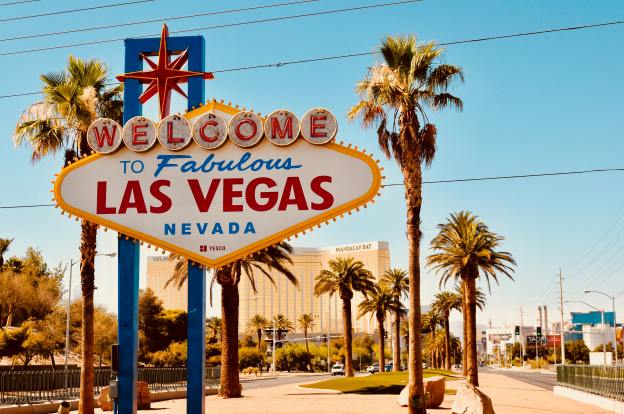



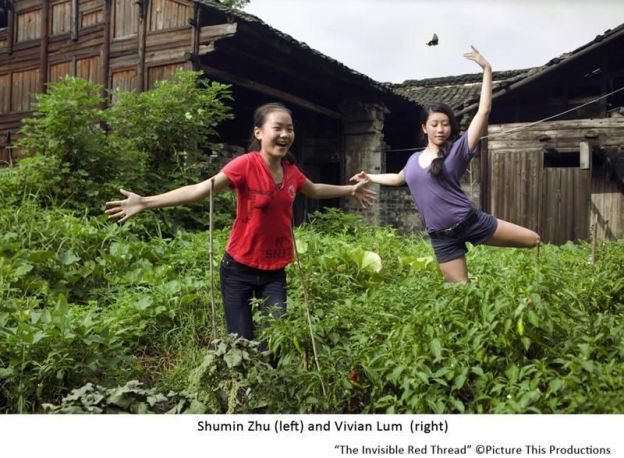
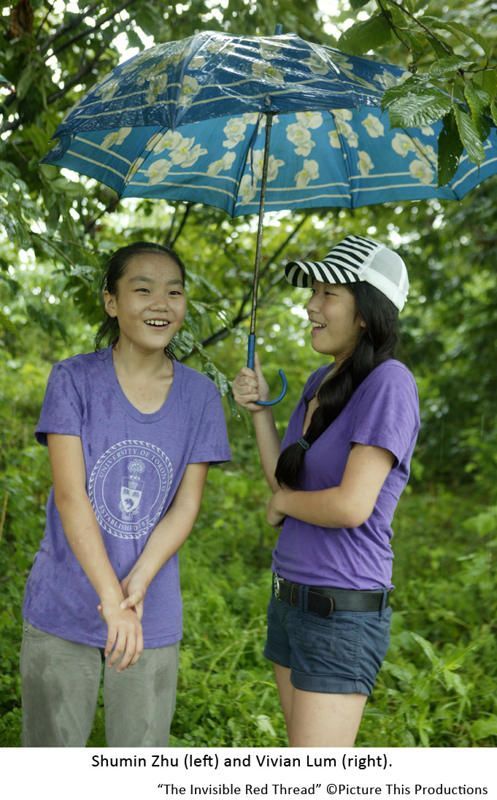 Over the last couple of years, it seems that there have been a number of film documentaries made on inter-country/transracial adoption. But many people in Arizona do not have the opportunity to see such films, which are typically introduced at film festivals and then screened via special engagements. Earlier this year, we were able to host a screening of Somewhere Between by Linda Knowlton Goldstein through Tugg. We had a super turn out and even sold out of tickets. I received much positive feedback after the event from friends and adoptive families.
 Some 8,668 children were adopted into U.S. families from abroad in the 2012 fiscal year; 105 international adoptions took place right here in Arizona
  I am a writer, a poet, a thinker, a philosopher, a storyteller, a lover of children and animals and beauty – an artist, love-junkie and music addict which, in terms of taste, can mean anything and everything…. ! My background is a ‘story within a story’ in the way that there is a ‘play within a play’ in William Shakespeare’s tragedy, “Hamlet”. It involves being given up to adoption at an early age and adjusting to foreign cultures. It is a story of a lonely upbringing and at the same time the never ending search for identity. Above all, it is the archetypal journey from the life saving pages of a diary begun as a despairing teenager to the crystallization of thought as found in the adult poetry of my current writing.

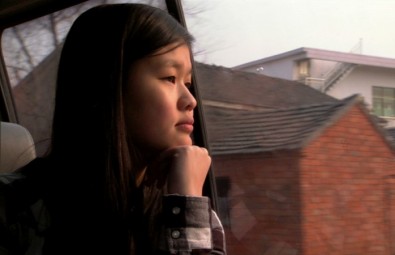

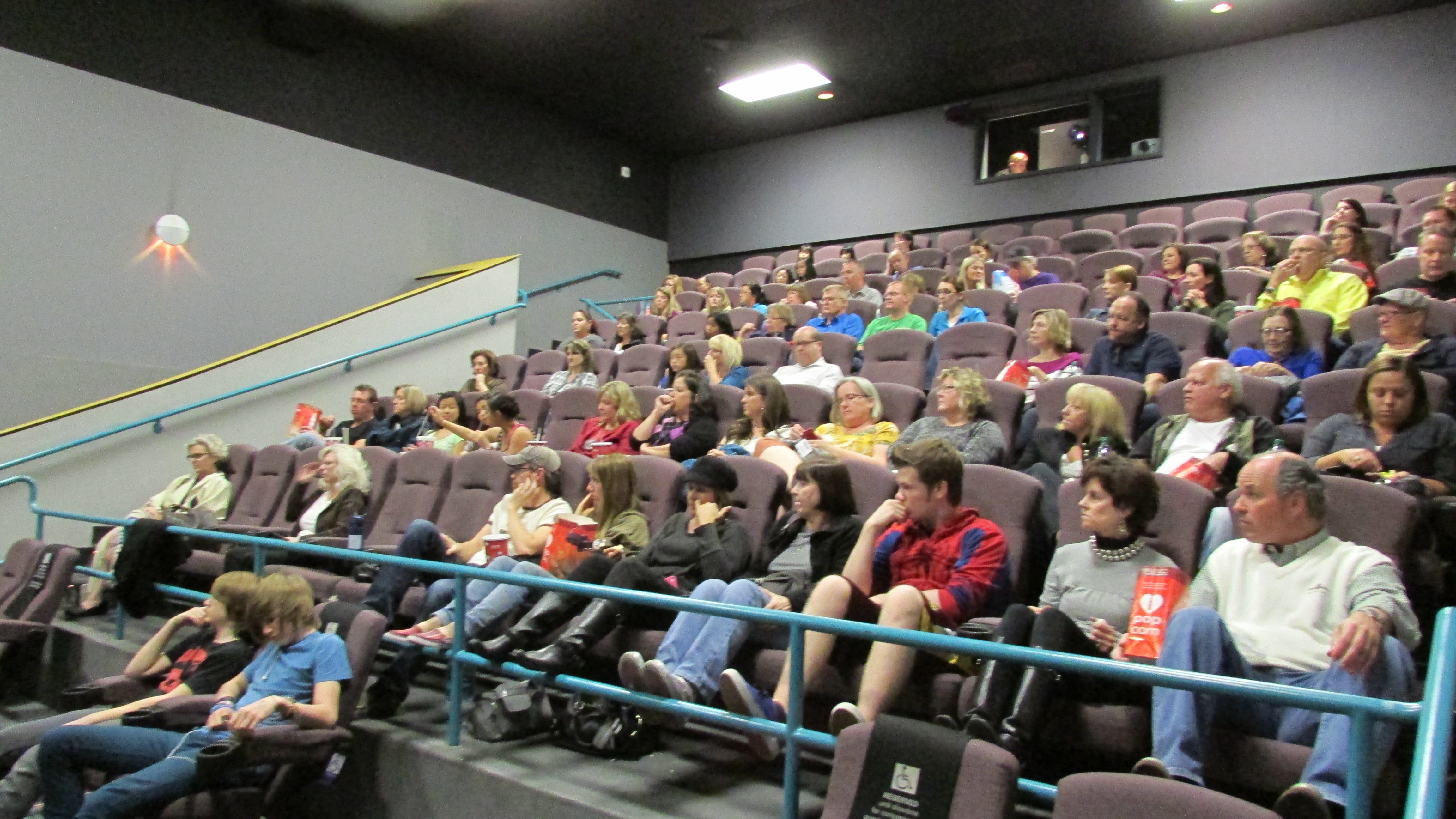
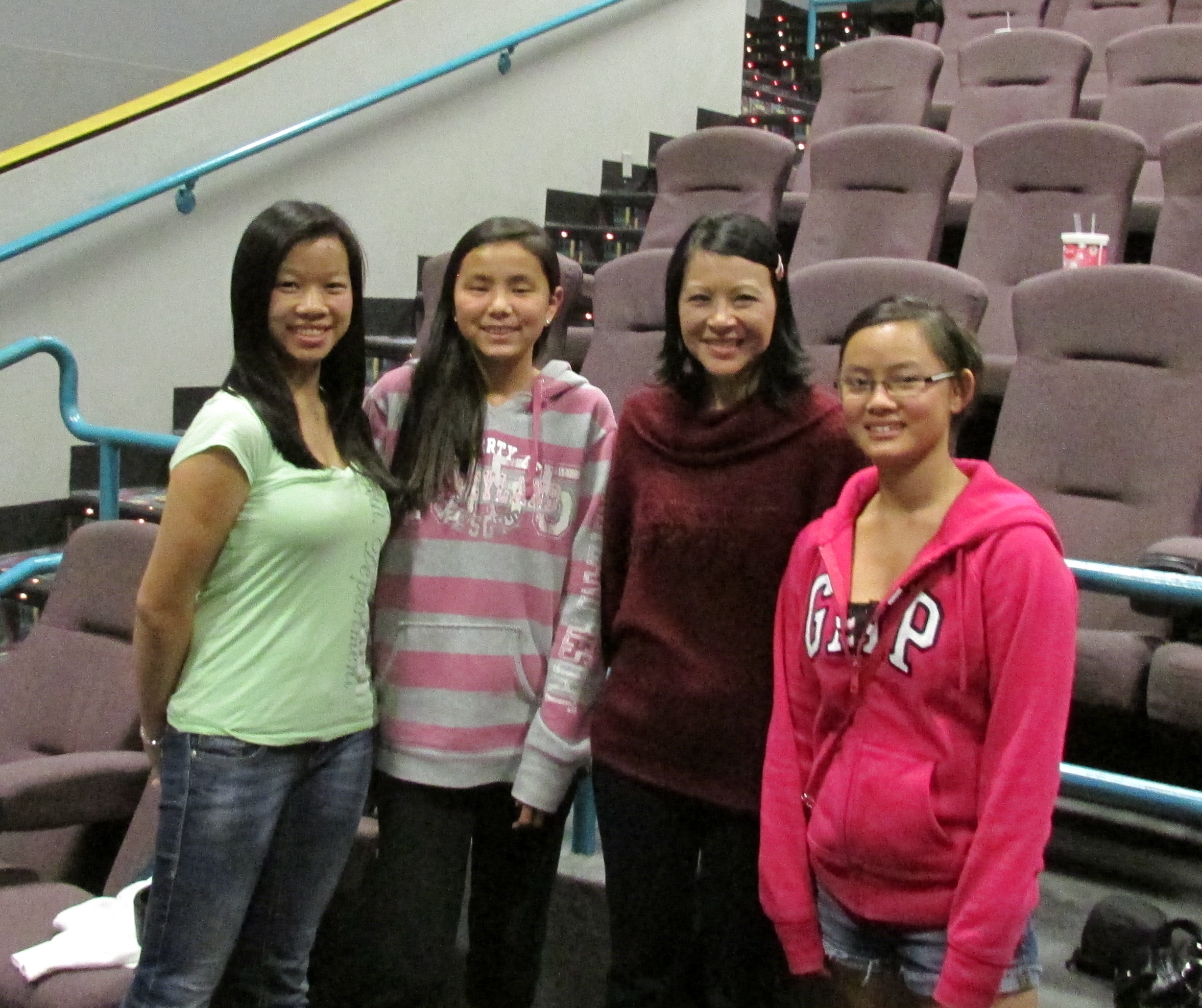


 In between overindulging on Halloween chocolate and preoccuation with the holidays, I watched two brief film documentaries, Struggle for Identity: Issues in Transracial Adoption (released on VHS in 1998) and a follow up to Struggle: A Conversation 10 Years Later (released in 2007). In the first documentary, we meet six adult transracial adoptees of different ethnic and racial backgrounds: John, Michelle, Josh, Allison, Martin and Seujan, who each speak on various issues related to transracial adoption. In addition, we hear from some of the adoptive parents and siblings. Both documentaries are short, 20 minutes each, yet pack a punch. As a transracial adoptee, I could relate fully to many of their insights, feelings and experiences and was literally moved to tears in some instances. As the month of November is “


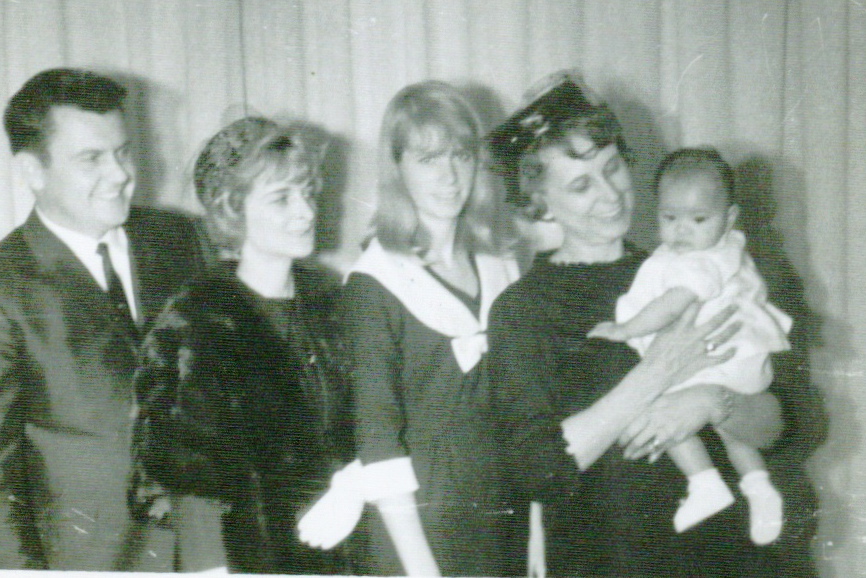


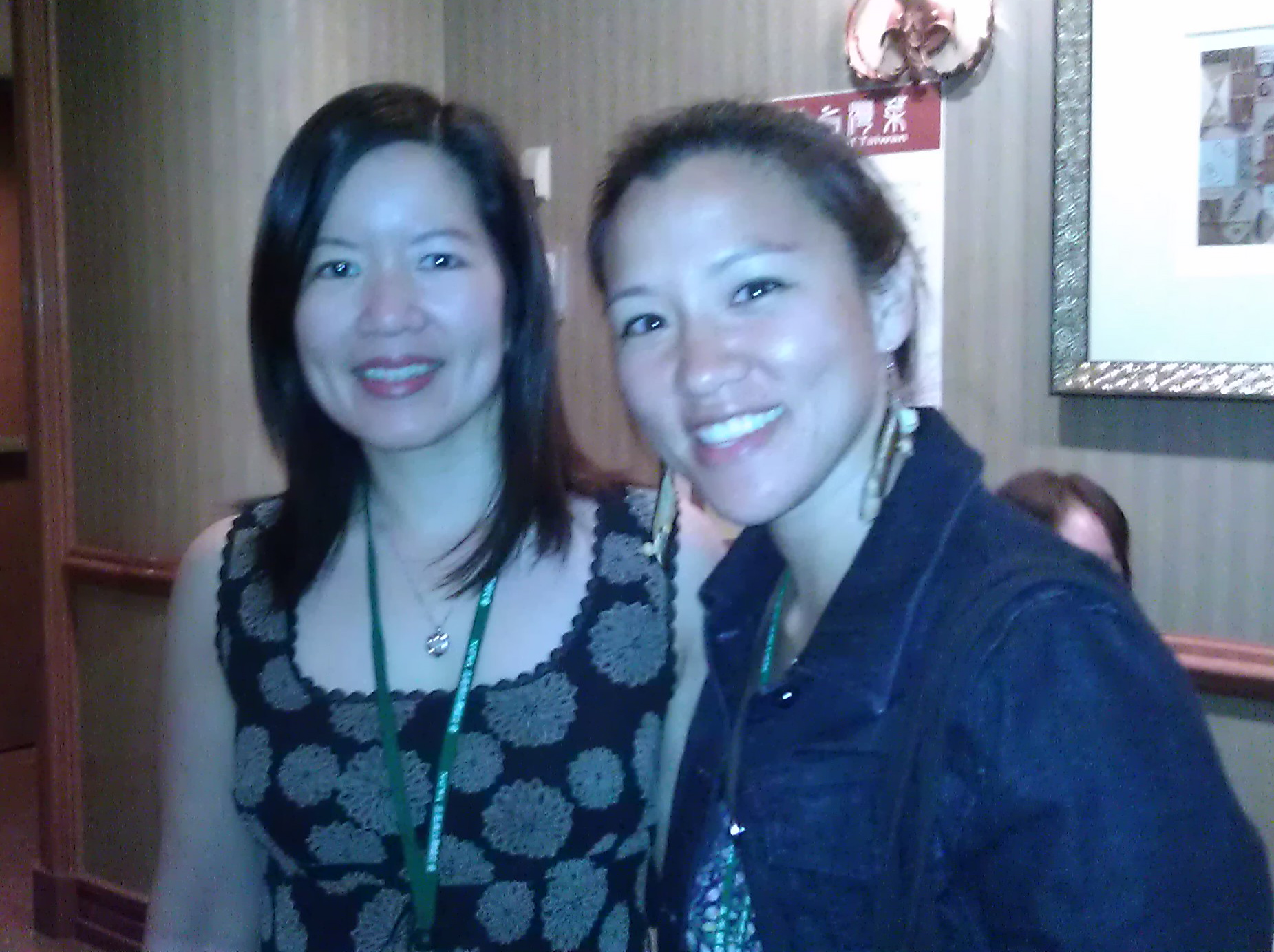

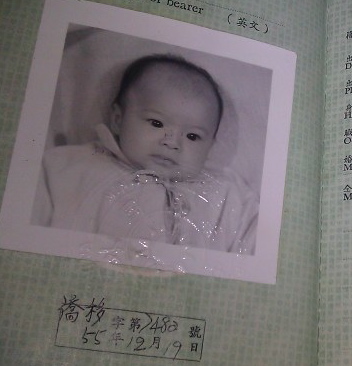




 I’m speaking at the upcoming NATWA II (North American Taiwanese Women’s Association) Convention! I was invited to join the speaker’s panel to share a little of my adoption story, as well as to address the topic of identity, more specifically the journey to my Taiwanese identity. The NATWA II Convention is held annually. This year’s theme is “Love and Compassion.” I’m thrilled to have the opportunity to meet so many other Taiwanese American and Canadian women, as well as to rub shoulders with the other speakers who include






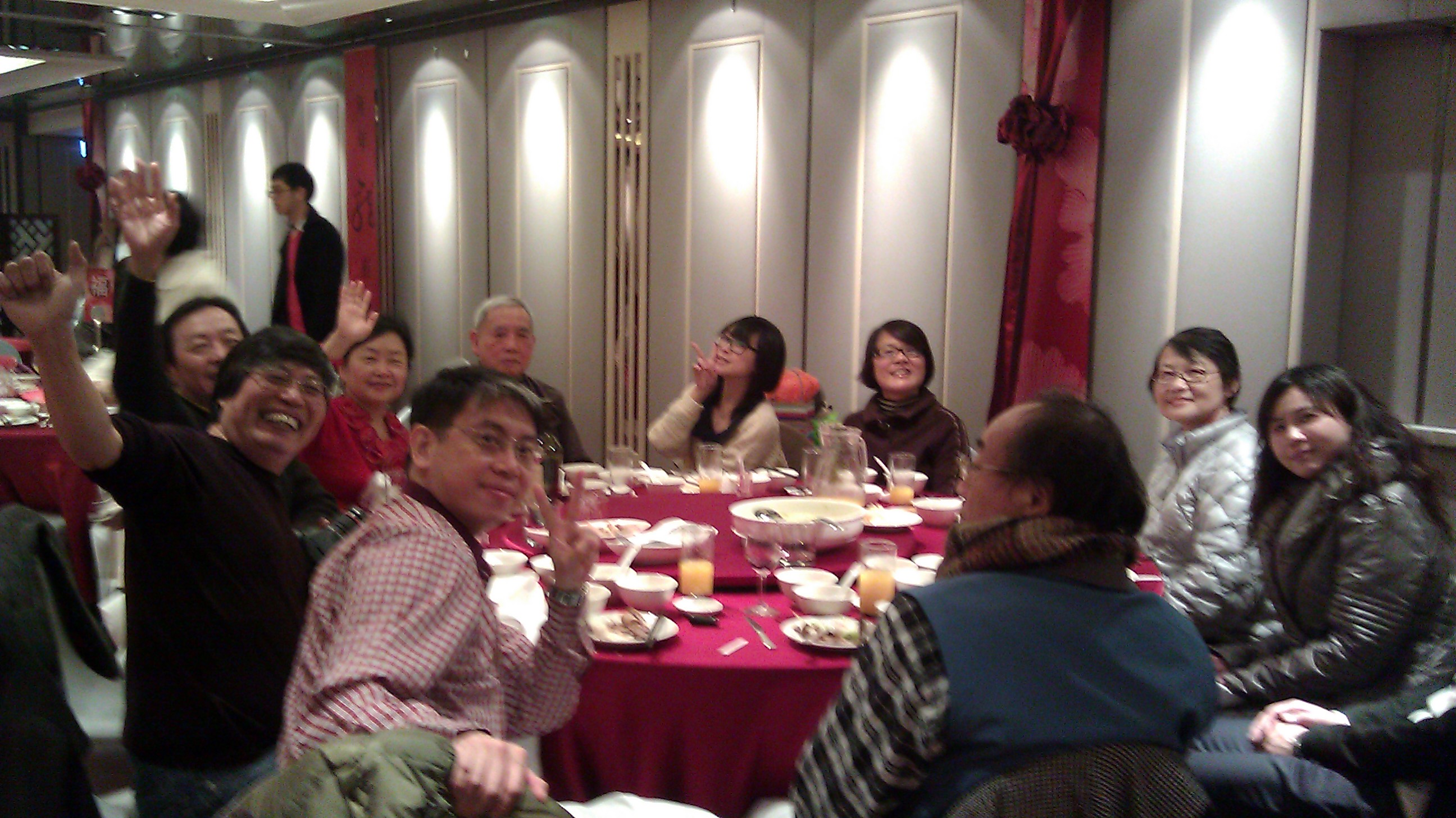





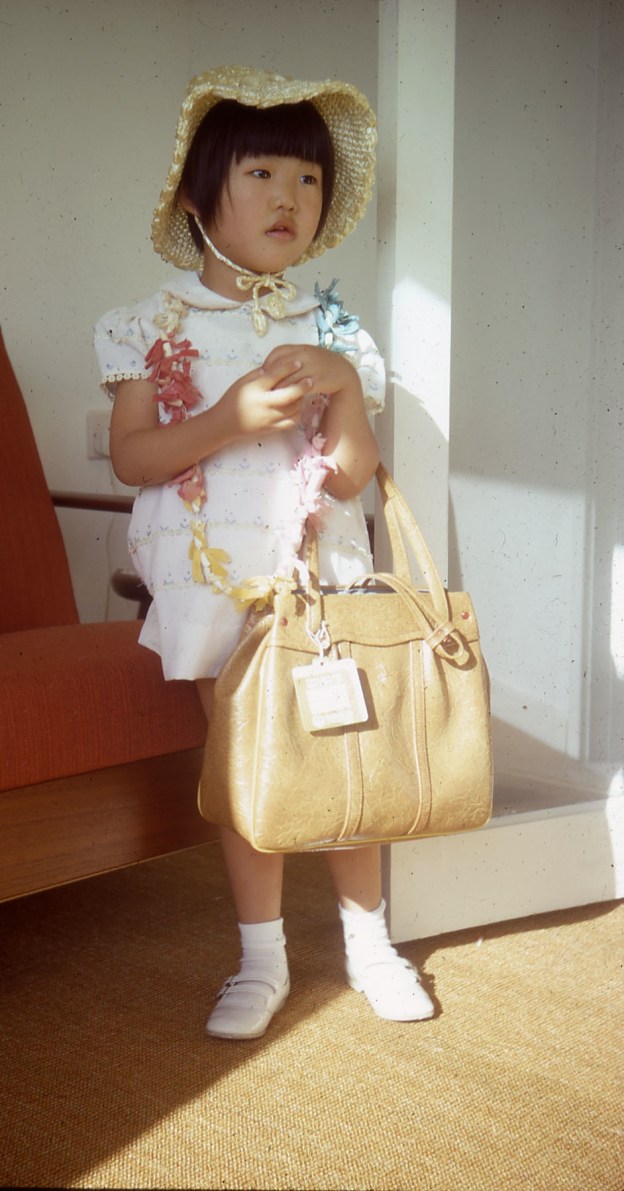



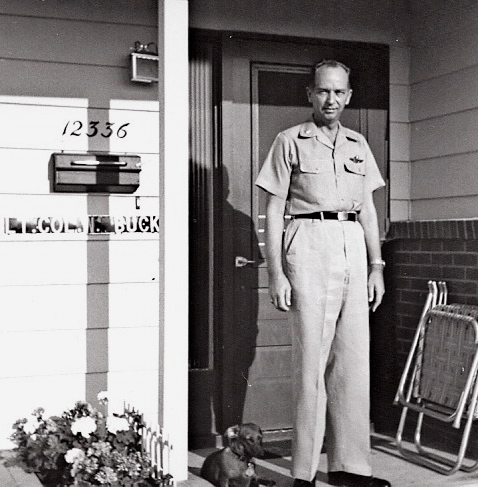 Mom married my dad on October 6, 1962, in Omaha, Nebraska where dad was stationed at Offut Air Force Base. On February 25, 1963, just four short months after their wedding, my dad suffered a subarachnoid brain hemorrhage which nearly took his life. Mom accompanied dad via air evacuation on a T-29 military aircraft to San Antonio, Texas, I’m assuming to a more specialized military hospital, where he underwent surgery. I can only imagine how frantic she must have been. In the bottom of my dad’s dresser drawer, I found an original Western Union telegram that was wired to his mother in California from Offutt AFB. This is what it said:
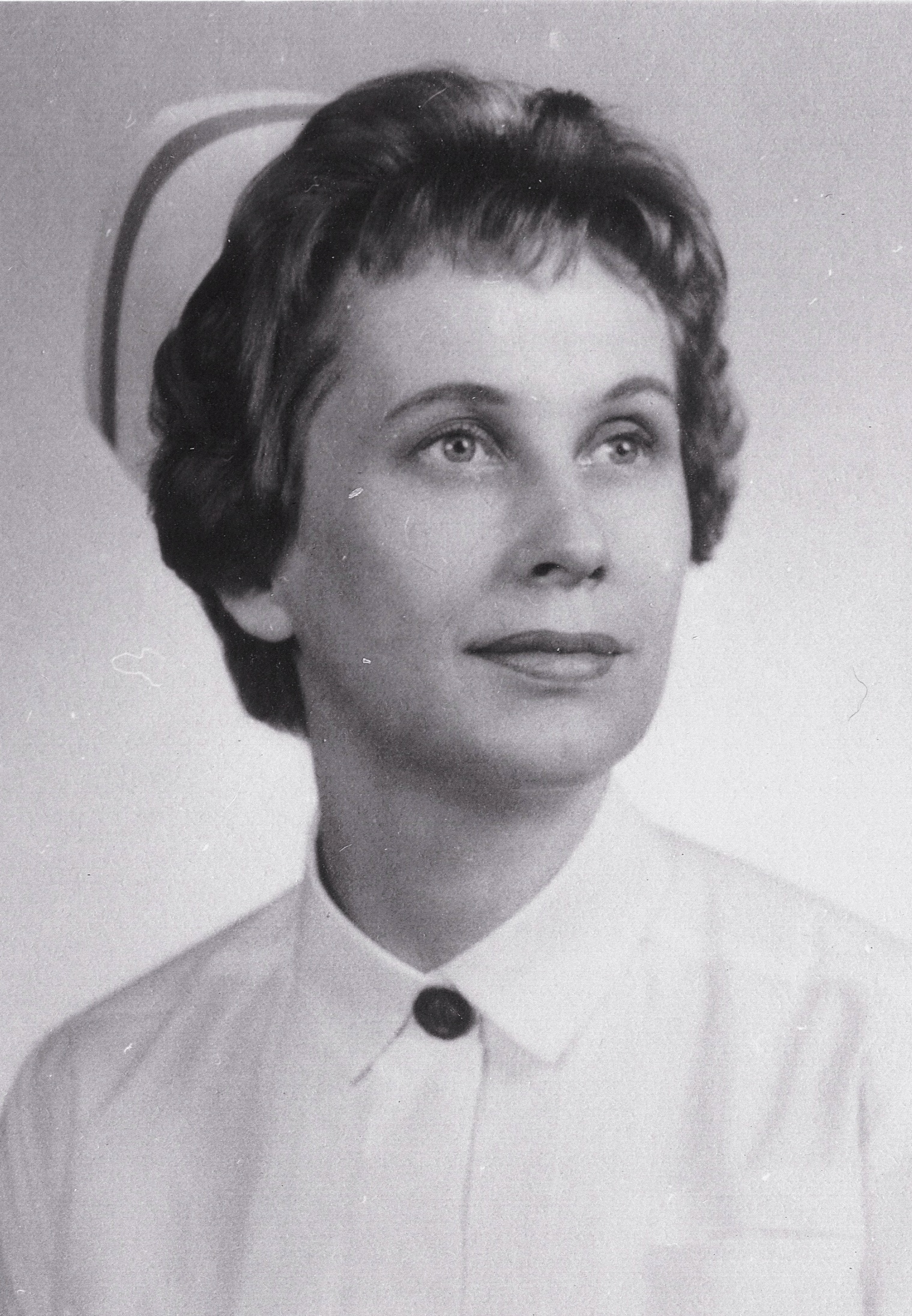 For the next two years, mom struggled through nursing school and late nights studying while juggling a demanding job and taking care of the family. I don’t know how she did it. The funny thing is, I don’t ever recall seeing her study, but according to her diaries, she often studied for biology, anatomy, chemistry and psychology after my niece and I were in bed. She spoke of the biology labs nearly killing her and failing a few tests. She was so disappointed in herself when she failed a test. She finally graduated from Northwestern University in August 1974. I will always remember mom wearing her white nursing uniform, white stockings and shoes, and nursing cap.
  Musings of a Taiwanese American Adoptee