Tag Archives: International Adoption

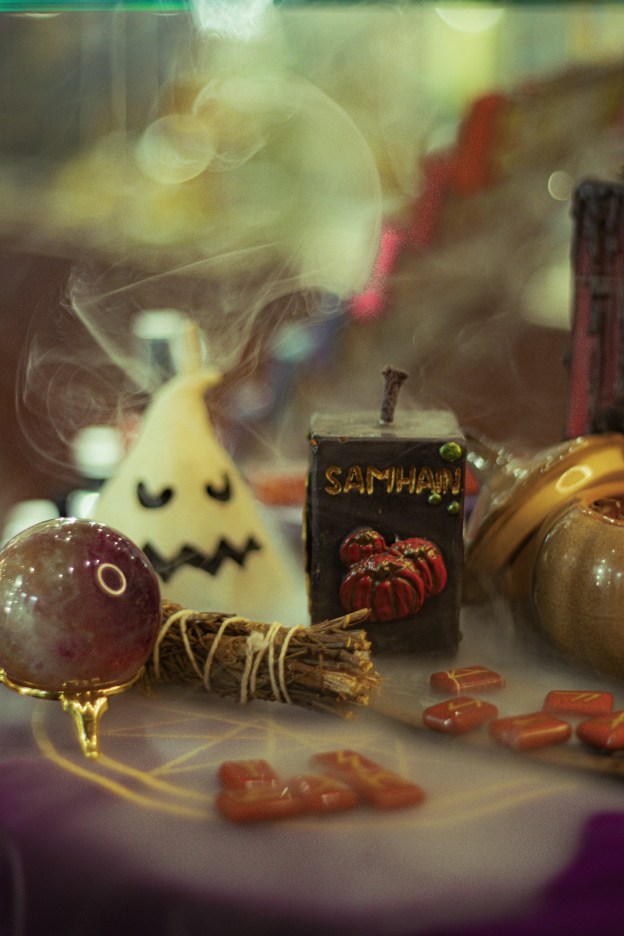
Honor Rest & Renewal on Samhain

Today, I pause. I breathe. I rest and honor my ancestors on this blessed Samhain.

I’m grateful to have the day off – to simply be. To sit in stillness and solitude without the weight of expectation feels like a blessing in itself. The veil is thin today, and I lean into the presence of those who came before me – my birth mother and father, and the lineage of ancestors whose names I may never know. I honor them, and I honor the mystery that connects us across time and space.

Lately, life has felt full and demanding. I’m working full-time again, and though I hoped summer break would bring the restoration I so deeply needed, fatigue seems to have returned too soon. Halfway through the fall semester, I find myself wondering how to sustain balance – how to counsel others, meet the demands of my current job while not forgetting myself.

My dream remains clear: To eventually transition into full-time sound therapy work. Supporting my adult daughter these past two years has delayed that shift, yet I hold faith that in time, things will align. When she finds her footing, I’ll be able to step more fully into the work my heart longs for, creating healing spaces through resonance, stillness, and sound.

Despite the challenges, I’m proud of the small steps forward. I’ve completed my website, OM Sacred Sound Journeys, a milestone that feels like planting a tiny seed. Beginning next February, I’ll offer bi-weekly sound therapy sessions, a sacred rhythm I hope will grow into something sustainable and nourishing. 

I’m reconnecting with my musical roots, singing and playing for a herd I once worked with in equine-assisted psychotherapy and slowly returning to my guitar after years away. These small acts of reconnection remind me that healing unfolds gradually, as does starting a private practice.

Self-employment feels both thrilling and terrifying. The freedom to follow my calling is overshadowed by the very real worries of bills, rent, health insurance, and all the practicalities of life. Yet amidst uncertainty, I sense that this path is where I’m meant to go.

So today, under the quiet light of Samhain, I choose rest. I choose reflection. I choose to listen deeply to the whispers of my ancestors, to the call of my own heart, and to stillness. May this season bring renewal, remembrance, and faith in what is yet to come.


Photo by Catherine Crawford on Unsplash

Dark Moon

Hello World! Wow, it’s been a minute since I last visited WordPress. It is the eve of Mabon and the Autumn Equinox – if you live in the Northern hemsphere – and  Ostara and the Spring Equinox – if you live in the Southern hemisphere. I will be observing Mabon bright and early first thing tomorrow morning before work…sigh…with a group of other like-minded and spirited individuals. It is also a dark moon or new moon, my favorite.

I am not a morning person, well, more accurately, I’m a slowwwww morning person and hate rushing. I am not a fan of the 8am-5pm work-life schedule of which I am now bound, against the clock at every damn minute of the day. Who’s idea was that anyway? I’m dreaming of cutting that cord, but the day has not yet arrived.

And so the wheel of the year continues…one cycle ends making space for a new one. What lessons have I learned? What paths have I traversed? Hmm…Life has been one continuous wheel of never-ending “tower moments” for the past two and a half years. I hope something more peace loving and soul aligned arrives soon. 

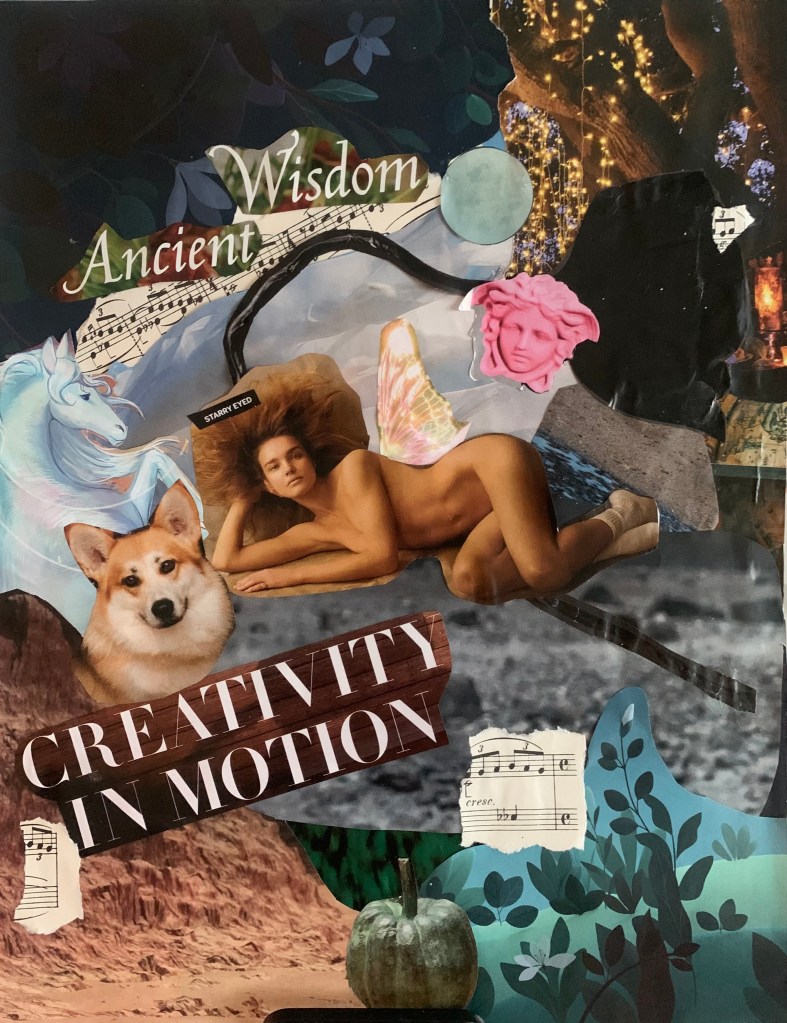
Things that keep me grounded during tower moments include art and spirituality. Collaging has become a beloved outlet, a wide open space to tap into creative expression. It’s such a satisfying artistic art form. I love designing a collage, selecting the photos, pictures, etc, to create a narrative. Maybe I’m the only one who gets it, but who cares! My spiritual practice has taken a nose dive now that I’m back at work. But little moments here and there are better than none at all.

I hope to travel to Taiwan over the winter break in January to visit my birthfamily. My eldest sister has already reserved a hotel. It’s been 13 years since I last saw my birthfamily. I never intended to wait such a long time to revisit. We are much older, and good health is not guaranteed to any of us. I truly hope I will have the energy to be present with my family, not some shell of myself. This academic year, I vowed not to get to the level of burnout I experienced last year. Steps to protect my energy are always at the forefront of my mind. 

In the meantime, welcome Autumn! I look forward to cooler days, to pumpkin pie, and the holiday season. Oh, and to slowing down, of course. Autumn is my favorite time of the year! I do love it so. Hoping you are all safe and well wherever you are. May cooler weather bring a welcome change of pace into your life!


Feature Photo by Šimom Caban on Unsplash

Photo Gallery: Collages by moi!

Rage

I have been hermit-ing this summer – doing some shadow work and exploring anger and rage. In the past, I was not very easily anger; however, I’ve noticed that I’ve become quick to anger and irritibility these days.

I was raised in a home where emotions were not expressed. I have a difficult relationship with my adoptive mother. She was emotionally dysregulated frequently in the home, exploded into rage and anger at the drop of a hat. No one would have known outside of immediate family. I grew up fearful of her and her erratic moods. My adoptive father and I tended to walk on eggshells. I received the brunt of her anger; dad was runner up. My adolescent years were the most turbulent in the home. My mom became physically aggressive during that period. Anger felt foreign in the past. Now, it’s familiar. I excused others’ anger toward me for a greater part of my life. Now I am the angry one.

I found some old, angry artwork that I painted years ago, probably after an argument. And the poem above was written more recently. To craft a sacred alter to rage, anger. This, too, along my spiritual journey, to explore blocks, emotional truth, blindspots. To evolve and heal. I am finding support through the Kali Oracle deck by Alaina Fairchild, illustrated by Jimmy Manton. She is simply fierce, and her spirit is inspiring.

Happy November 1st

Hi out there. Hope this post finds you well. I’m enjoying a day off of work, as I celebrated Samhain with a friend last nite. We honored our ancestors, practiced some divination, had some drinks. It was a fun, magickal evening.

I recently connected with a shaman who I’ll begin working with soon. She spoke of a strong ancestral presence upon our first conversation. I was never interested in my ancestry until I found my adoption contract, hidden in my adoptive parents’ attic for who knows how long. It found its way to me immediately following my adoptive mother’s funeral, as though my mom was saying, “I want you to have this now.” The contract revealed things my adoptive parents hid from me and likely falsified. So many things were untrue. My adoptive mom made sure that all ties to my birth country were severed. On the rare occasion that I brought up questions, she became weirdly paranoid, asking who put me up to asking such questions. I didn’t pursue it. It’s been 12 years since I visited the country of my birth, Taiwan. I’ve wanted to return but life happens and so many things have gotten in the way. My hope is to return sometime next year. And I hope that in working with this shaman, I’ll connect with my birth mother and perhaps other ancestors.

I haven’t written any poems lately. We’re so fatigued at work from a very busy fall semester and previously, a not so slow summer. Fatigue has a way of crushing creativity. I’m glad to know it’s not just me but my colleagues also feel it, the burnout. Secondly, I go back and read some of my poems and think, this is such shitty poetry. What possessed me to write poems? On the other hand, it was therapeutic while I went through a divorce. Freedom. It feels good. Yet there are some days when the loss comes up so strong it literally catches my breath, and I cannot believe where I am, how I made it out, what I’m doing. It’s not so much the loss of a marriage but what I left behind…my dog, my piano, my music books, the little nest I built that was home, etc (I will retrieve those things when I have a permanent place). Even the dissolution of the most toxic marriage is felt as a loss. I don’t know how else to explain it. I have felt the gamut of emotion, sadness, anger, anxiety, worry, hopelessness, uncertainty. At times, I sometimes still feel transient, displaced. No one would know that I’m grieving. I come across like I have my shit together (most days). And on we go.

Samhain lasts till sundown this evening; the veil between this world and the “Otherworld” remains thinnest. So maybe some spellwork today and divination. Certainly, pondering my ancestral roots, the birth parents I never knew and honoring my birth mother in particular. Wishing you all a very blessed day. I thank you for stopping by and hope to catch up on reading your posts soon. May you enjoy the turning of the season!

With You by Kalandra. To my soulmate wherever you may be…Honestly, we have multiple soulmates, but this song is so beautiful I’m sending it out…lolol…And I’m currently obsessed with this band.

Photo by Daizy Isumi on Unsplash

She

she looks to the sky
for some divination,
some explanation
for the way things are
why did the stars align
as they did on the day
she was born?
why was she vanquished
to a place where she languished
until it was decided she’d
grow up foreign?
daydreams and portals,
she was anything but normal
drawn to the celestial,
a bit of a rebel
a Starseed is she
when things get too troubling
on Earth, she is struggling
she remembers how silly
of her to forget
that she is
the love of her life
she will survive
she will yet thrive,
and that is all that she needs


For my fellow adoptees who know too well the hurts caused by adoption…

Berceuse in D-Flat, Op. 57, Frédéric Chopin. I love this piece so much and have always wanted to learn to play it. Chopin was always so difficult to play for lots of different reasons. I have small hands, and in Chopin’s piano literature, there are often large intervals that I had to get creative playing, not to mention the technical difficulty. I was an average pianist in my abilities compared to my peers and wasn’t super diligent with practice. I mean, 8 hours a day of practice was just not me. Four was about all I could mange. If super inspired, maybe six, lol. I learned one of Chopin’s Ballades (A-Flat) in my undergraduate piano studies. It was such a beautiful piece – I remember wishing that I could perform it better. I also recall another more technically advanced individual telling me it was Chopin’s easiest Ballade. I just wanted to say, fuck off. I truly hated the perfection required in classical training. Always riddled by performance anxiety. Probably why I despised performing and liked dancing and acting better – you could improvise if you messed up. I do admire pianists who achieve that level of performing. I think I’d be a different performer now, however.

Anyway, one of my professors performed the piece during a recital, and it was such a lovely performance. Was mesmerized. I like Gorlatch’s performance, as it’s at a tempo I prefer for this piece. He makes it look so easy! In fact, this piece is really difficult. So much is subjective within the limits of the period and style the piece was written in. It’s interesting to compare pianists’ interpretations. There is a performance I enjoy slightly more, Wibe Soerjadi, but couldn’t find on YouTube. I love alternative/indie/classic rock and other genres, but often go back to classical when I need to get more grounded.

This piece fit the poem above. Enjoy.

Photo by Rémi Jacquaint on Unsplash

hey, thanks

I hope you’re enjoying a restful, restorative weekend! I just wanted to take a moment to say thank you for visiting and taking time to read my poems, posts, etc. It truly means the world. It’s laughable, I never thought I’d ever write poetry. Okay, so it’s not great poetry, but the process is incredibly rewarding and even more so, healing.

I have loved writing since the time I could hold a pencil. Yes, I was that geek in school with the straight bangs and glasses who loved, yes loved, practicing cursive. The act of forming each letter was like art.

I started this blog in 2010 primarily upon the encouragement of a group of individuals I knew in high school, and a teacher who was very well liked by the students, Carole Ann Kaplan. We all created WordPress blogs and began posting stuff. Since then, so many other platforms to write and subscribe to have popped up. My posts began as a journey to find my birthfamily in Taiwan. I wrote a memoir about that journey. Things have changed tremendously since then, and the book would be much, much different now…I don’t write about adoption very often anymore, but elements of grief and loss, attachment, rejection, okay, yes, unrequited love, and longing that I’ve experienced as a result of adoption, I’m sure, influence my prose.

So, thank you, dear readers for following this blog, reading my silly poems, and sharing space with me. It’s really nice to read your posts as well, and I”m grateful for the support. Happy writing, and may you have a lovely rest of your day.


Photo by Wilhelm Gunkel on Unsplash

Enjoy this beautiful tune! A friend recently introduced me to Father John Misty, though he’s been around for awhile. I’ve had this song on repeat 🙂

the ache that bends

The attachment wound…if you’re adopted, you might get it…

the ache that bends

till i feel i might snap

visits from time to time

a hollow within

that has existed since

the day you abandoned me

a window, the only light

in a darkened room

full of shadows that frighten

but even more so,

the endless, pathetic quiet

there is no one there,

no voice to soothe and cajole

the ache that bends

feels icy and hot,

defiant and soft

i demand it leave,

to no avail

the ache that bends

until I feel I might snap

and yet,

I never do…

Featured Photo by Khamkéo Vilaysing on Unsplash

ROC national day

Taiwan, The Republic of China (ROC), celebrates National Day, otherwise known as Double Ten Day, on October 10th every year. Taipei, Taiwan, is my place of birth. I was adopted as an infant by an American family, and consequently, lost all connection to Taiwan and my first/birth family. That changed, however, over the Lunar New Year of 2012, at which time I traveled to Taipei to reunite with my first family including my two older sisters and brother, my uncle, niece and nephew, and close family friends. Sadly, I know very little about Taiwan’s history and had even less knowledge of Double Ten Day . So I messaged my oldest sister to learn more about its significance. I’m so glad I did, and my sister seemed pleased that I wanted to know more about Taiwan’s history. So I share what I learned now with my fellow Taiwanese adoptees.

Double Day Ten in Mandarin is 雙十節. means double or two; means ten; means day. Here is the history of Double Ten that my sister shared with me:

The Wuchang Uprising in China occurred at the beginning of the Revolution of 1911, and the Qing Dynasty, China’s last imperial dynasty, was overthrown by Chinese revolutionaries. The Republic of China was subsequently established on January 1, 1912. Since the first day of the Wuchang Uprising occurred on October 10, 1911, October 10 is commemorated as the anniversary of the founding of the Republic of China. My sister shared that there is not as much importance attached to Double Ten Day as in years past. She remembers that, at one time, there were many activities on National Day, and the whole country was joyous. The national flag was flown all over the sky, and national flags were placed everywhere on the streets and lanes, fluttering beautifully. There was a flag-raising ceremony at the Presidential Plaza at six o’clock in the morning, and during the day, the heads of state, officials from various ministries, and invited international guests gathered in the stands to watch a military parade. The Air Force and Army presented majestic shows. It was a very popular holiday, and there were numerous performances by various groups celebrating various folk customs. What everyone looked forward to most was the fireworks at night. Colorful fireworks were placed in the square in front of the Presidential Palace, bringing on cheers and applause. Everyone enthusiastically participated in the parade, holding a small flag and walking around for a long time following the performances. My sister said that In recent years, there have been firework displays at Taipei 101 and Sun Yat-sen Memorial Hall. She shared that these are the memories of older generations, and the jubilance once felt as a nation on this day has diminished. Now there are different kinds of activities on Double Ten in Taiwan but it is just a holiday without the same jubilance, and few young people pay attention to its meaning.

I asked about the Double Ten flag and Taiwan’s national flag. My sister explained, our national flag is based on the blue sky with a white sun created by the revolutionary martyr, Lu Haodong, and the founding father, Sun Yat-sen, with red as the background color. The 12 rays of light on the sun represent the 12 months of the year and the 12 traditional Chinese hours in a day (each ray equals two hours). In 1928, the red and blue flag with the white sun officially became the national flag of the Republic of China. The white flag with the double ten red Chinese characters is the flag that represents Double Ten Day.

I appreciate this history lesson about Taiwan from my sister. I hope it has meaning for you, too. There is still so much to learn and know. Incidentally, my daughter’s birthday is on October 10, to which my sister said, she has lucky blessing!

elevate adoptee voices

Since last November, I’ve had the privilege of connecting to many other adult intercountry adoptees around the U.S. via a podcast I hosted called Global Adoptee Talk. Some participated in my podcast and others did not. Nevertheless, just to hear and share stories was incredibly validating, and I appreciate the supportive community that we’re a part of. Unfortunately, I had to let go of my podcast before it even had a real chance to get off the ground due to increasing demands at work and the lack of time and energy I had to keep up with editing/interviewing. I am always inspired, grieved, saddened, angered, and motivated by the many adoptees stories I hear – motivated primarily to elevate adoptee voices in whatever shape or form that may take. It’s always important to be mindful of the fact that though an adoptee may have had a positive adoption experience, there is still undoubtedly loss, trauma, and frequently a longing to connect to cultural roots. That may mean searching for one’s birth parents or first/birth family or traveling to one’s country of origin, learning the language, and/or connecting to others who have similar backgrounds and experiences. It doesn’t go away – it may ebb and flow across the span of an adoptee’s life, but it’s a part of our makeup; it’s part of our DNA and hard-wired into our brains, literally. I don’t have time to go into how separation from birth mother is trauma, but suffice it to say, there is research that supports it. Acknowledging that adoptees have a vital role in the future of how adoption occurs and are given a voice is crucial.

I’m bummed to let go of my podcast, but I have hopes of one day picking it back up, as time allows. I miss that connection to other adoptees. There are plenty of super podcasts out there. Two of my favorite adoptee podcasts are Adoptees On, Adapted, and Born In June Raised in April.    The Rambler was also a favorite, but the show closed earlier this year. All of these podcasts are available on iTunes – listen in – it’s totally worth it.

I sure learned a lot while producing my podcast and am super grateful for those adoptees that I had the opportunity to connect with. Adoptee voices are truly making their way to the forefront of discussions on adoption, as they should. Let us continue to build a strong and vibrant community, inclusive and respectful of all adoptees and their unique stories.

Past episodes of Global Adoptee Talk are available on Soundcloud

ivory

Mrs. Guinn placed the clunky brown headphones snuggly over my head, the giant earpieces squeezed my temples. A long, coiled cord snaked across the shaggy green carpet to a stereo where she stood, ready to drop the needle. I had no idea what I was in for. Mrs. Guinn had never offered to play music for me at any of my other piano lessons. Mandi, my friend next door, and I took weekly lessons at Mrs. Guinn’s home. I loved going to Mrs. Guinn’s for my piano lessons and looked forward to them every week. She lived in a quiet neighborhood in Shady Grove and was a white, 30-something year old woman. She had short brown hair in a long pixie style, a pretty face, and was always dressed in jeans and a nice top. Mrs. Guinn was married to an officer in the Air Force. I remember her as having a quiet and gentle demeanor. She reminded me of Toni Tennille of Captain and Tenille. The front living room where Mrs. Guinn taught had an upright piano on one wall and an organ against another, a large window overlooked the street. Her house was always meticulously clean and smelled good. “I have something I want you to listen to today,” she said as she guided me into the den. The headphones felt heavy against my ears as she adjusted them. I sat silently and settled into Mrs. Guinn’s plush black couch, waiting for the music to begin playing.

“Da-da-da-DUM.” “Da-da-da-DUM!” Those first four notes of Beethoven’s all too famous Fifth Symphony bellowed in my ears. The music accelerated, and I was completely enraptured, magically swept away. The pulse of the bass vibrated in my chest. I was only 9-years old at the time, and yet that was such a defining moment in my life. The rest of the world fell away in those brief eight minutes or so of that first movement. I was an extremely shy, introverted kid, but at my lesson the following week, I mustered the courage to ask Mrs. Guinn if I could listen to that recording again. Of course, she obliged. Little did Mrs. Guinn know how much that recording influenced me. I discovered I had a love for classical music. One of the other things I enjoyed while taking lessons from Mrs. Guin was the monthly gatherings she held at her home where all her students performed. The best part was when she performed for us on her organ. I loved watching her feet fly across the pedals. It was certainly a treat.

Mrs. Guinn was a member of the National Federation of Music and entered me into my first music festival where students performed and were adjudicated. I received a superior + and was selected to perform in the Honors Recital with many other students. Kabelevsky’s, The Clown, Op. 39, No. 2, was my first performance piece ever. As I climbed the stairs the night of the recital towards the concert grand piano, it felt as though I were having an out of body experience. Somehow, I got through my piece without any fumbles and took my bow to the applause of the audience. I would perform in many other recitals, each one causing more anxiety than the last. It was something I continuously struggled with.

Mrs. Guinn moved within a year or two. I was deeply saddened when she told me her husband had received a military transfer to Texas, as I had become quite attached to her. It was very hard to say goodbye, and I remember having a hard time sleeping the night before my last lesson. I probably shed a few tears, too.

My mom found a new teacher, and I began taking lessons from Mrs. Ellis, whom I didn’t like very much. The music she gave me to play was “old” and not very fun. Mrs. Ellis was older than Mrs. Guinn and had short, reddish hair and a southern drawl. I didn’t feel the same connection with her as I had with Mrs. Guinn and dreaded going to my lessons where very often, her daughter, about my age, invited me to play while I waited for the kid’s lesson before me to end. She had what seemed like a million trophies from beauty pageants stacked in her room, and I remember jumping on the trampoline with her in the backyard. I felt awkward next to her, as she seemed so accomplished for a kid our age. Eventually, I moved on and studied with Mr. Robert Buckner during my high school years. Mr. Buckner lived in Shreveport and was quite a colorful character. He had a piano studio behind his house and a dachshund named Angie. Mr. Buckner’s gray hair was always disheveled and seemed to stand on end to one side. I began every lesson with major and minor scales to warm-up, or Hanon exercises. I felt comfortable with his teaching style and sense of humor. Mr. Buckner was bit of a stout man with a laugh that welled up from his belly, which was quite infectious. A couple of times, I caught Mr. Buckner sleeping while I played. His snores always gave him away.

I decided to major in music and attended Centenary College of Louisiana where I studied piano performance, primarily because it meant I didn’t have to take a single, damn math class. I was beyond horrible in math or anything that had to do with numbers. Initially, I felt terribly inadequate compared to my peers who seemed to have much better training musically than I did. I struggled with ear training and theory and loathed sight singing, but loved composition and piano literature. It wasn’t that I couldn’t sing, it’s just that I had never been taught sight singing, and it terrified me, especially when made to sight sing in front of all my peers. That was a very joyless experience. I studied with Constance Knox Carroll and absolutely adored her. She was an inspiring teacher and incredible pianist. I’m sure, however, that I was one of her least favorite students, as I was not very disciplined and did not practice as I should have, especially during my senior year when it was expected to perform a solo recital of full repertoire. I got distracted with theatre and dance and remember her scolding me at one particular lesson for my lack of practice. I hadn’t memorized all of my pieces, and my recital loomed near. I just sat there unable to say a thing. No doubt, part of her concern was that a poor performance would reflect badly on her. She said that it seemed like I liked theatre and dance better. She was right. What did I know at that age? Not a whole lot, except there was much less pressure when you were having fun, for God’s sake.

I wasn’t exactly lazy, but discipline was not my strong suit. Practicing was such an isolating, arduous endeavor, and yet in those days, I didn’t always mind it. I typically hit the practice room four hours a day, sometimes six on the rare occasion that I was super inspired. There were times when it was such a rewarding experience to sit at the keyboard and just play without anyone listening. The freedom from judgment or making mistakes, the connection to the music; it was magical. Those were the times when I performed the best. But in front of an audience, I lost all sense of composure. Performance anxiety plagued me. I could not control my hands; they became leaden.  Adrenaline rendered me helpless, and memory slips haunted me. On one occasion, several students were to perform with the Shreveport Symphony in a special recital. I was performing the first movement of Mozart’s Piano Concerto in A, K414. I can’t describe how exhilarating it was to perform with a live orchestra. Connection to other musicians performing together was something I had never experienced. It was like flying, but without the motion sickness. Unfortunately, performance anxiety got the best of me, and my memory lapsed somewhere during the development. The orchestra continued to play as if nothing happened while I sat frozen, paralyzed. Eventually, I wove my way back in, but the damage had been done. I barely made it through the cadenza. Instead of enjoying such a performance, I was relieved when it was over. My legs were so shaky afterwards, I could barely stand.

After graduating college, I taught piano for a brief time at St. Mark’s Episcopal in Shreveport and another Christian school before moving to Florida. I didn’t touch a keyboard for nearly 20 years after that. The trauma of it all prevented me. I deeply regret that now. One day, my mom asked if I wanted my baby grand piano, the one they bought me when I first started taking lessons. Of course I did, and a couple of months later, my baby grand arrived at our tiny condo in California. It took up an entire room. I started teaching piano thereafter at a Christian elementary school in Mission Viejo, CA, and eventually taught privately on and off until 2013. My piano skills were sadly more than a little rusty, and I lamented the loss. I attempted to take piano lessons a couple of different times, but just didn’t have the time to commit to practicing with family responsibilities and work. I stopped teaching altogether in 2013 when I went back to school to pursue a Master’s degree in Social Work.

I have now had my baby grand since 1999. It has moved with us many different times in the last several years. It’s sitting in our family room in need of a little TLC – or a lot actually. When we returned to California in 2016, my husband tried to talk me into selling it because all the homes in California are so much smaller! It was more challenging to find an “affordable” (there are no affordable homes in California) home that would accommodate its size. First of all, I silently fumed that he’d ask such a thing that’s so important to me, and second I refused to budge. We were not going to sell my baby grand piano! And so it was and is and will ever be.

Every once in awhile, I sit down to play when things are quiet and I can get away with it. Recently, I felt moved to find Mrs. Guinn and searched for her via Google. Amazingly, I found her, and she wrote back to me immediately. She continues to teach, perform at churches, and accompany choirs in Nebraska. Although she only vaguely remembered me, she said that she looked up old recital programs and located one dated May 23, 1976, that I performed in. She said I played a Schaum arrangement of Yankee Doodle as a solo and again in a trio performance with Mandi, my friend, and another student named Kelly Scott. I was so happy to hear from Mrs. Guinn and that she continues to teach and play.

I trained in piano for many, many years. I wish that I’d continued to play, but there was a part of me that felt my skills were inadequate, so I didn’t play for years. When I decided to study music therapy in 2006, that passion for music rushed back. And now, I long for my piano to be more than just a pretty conversation piece in my living room. One of these days, and hopefully not too long from now, I will get back to playing, perhaps a little at a time. Sometimes, it’s hard to play because I inevitably begin to compare my current level of skill to that of when I played daily for very long hours. People tend to tell me, “you should just play for yourself.” Well, it’s easier said than done. Nevertheless, music is truly part of my fabric. I can’t think of anything more powerful and transformative than music.

So, for your listening pleasure, here is one of my favorite pianists, Murrah Perahia, at the keyboard performing Mozart’s Piano Concerto No. 12 in A, K. 414. It always makes me happy to listen to this beautiful piece of music.

To Mrs. Carroll, who inspired me to be a better pianist:

My memoir!

Cover

Beyond Two Worlds: A Taiwanese-American Adoptee’s Memoir & Search for Identity is now live! If you have not yet purchased your copy, don’t delay. I have a few books left, and signed copies can be purchased right here on my website.  Just click on Shop to order. Kindle and hardcover editions are available via my author page at Amazon, and you can also find the book at Barnes & Noble, and Indiebound.org.

If you enjoyed reading the book, please consider leaving a review on Amazon, or wherever you purchased your copy. Unfortunately, I am unable to ship internationally; however, those copies can be ordered through Amazon and Barnes & Noble online. To learn more about the book and to read an excerpt, click here, and to read reviews, click here. Thank you for supporting Beyond Two Worlds.

Happy reading!

a certain slant of adoption

Hello folks! It’s Sunday morning, the skies are gray in my lovely locale. Nevertheless, I’m enjoying the weekend, despite the clouds. It couldn’t have come sooner.

Today, I wanted to talk about adoption…well, duh. I have something more specific in mind. For the past 7 years, I’ve actively searched for and read blogs, books, scholarly research, adoptee group sites, birthmother sites, and adoptive parent sites seeking connection, knowledge, resources, and validation. There are as many views on adoption out there as the colors of the rainbow. As an international and transracial adoptee, my own perspective on adoption has evolved. I don’t think it uncommon for our views to change as we experience personal growth and for lack of a better term, mature. Adoptees have strong inclinations regarding adoption rooted in their own life experiences, and multiple factors shape those attitudes. I’ve spoken with adult adoptees who are not terribly interested in connecting to their cultural roots or birth heritage, nor searching for their birthfamilies. Perhaps there’s a glint of interest, but there is not yet a compelling enough reason or desire to follow it. There are other adoptees who speak strongly against international adoption and for reasons that are quite justified. International adoption has a jaded history, and there are countless adoptees who were adopted illegally, through unethical adoption practices – in some cases both the agency and adoptive parents were plainly aware of the falsification of information. These deplorable practices still occur around the world. There is evidence, and though the U.S. attempts to keep the public aware of these dark practices, they continue.

I have several friends who are adoptive parents and have adopted children internationally from China, India, Africa, Ethiopia, and Russia. They also have very strong opinions and attitudes about international adoption. Sometimes – maybe even frequently – my friends and I do not see eye to eye; nevertheless we remain friends. I strongly believe in family preservation and the support of services to keep children with their biological families. As an adopted person, I cannot see past that. And yet, we live in a world where adoption is still thriving, although in decline internationally. I feel conflicted at times because I have my own very strong attitudes about adoption and yet I am supportive of my friends and other adoptive parents, and that will not change. I am for the welfare of children whether adopted or not.

What I particularly struggle with across the landscape of adoption is judgment and how we judge one another based on our attitudes and opinions towards international adoption. I know that I am judged by others for what I believe and support. I don’t necesarrily like being judged; the word ‘judge’ itself is so harsh. And yet I also judge – it’s inevitable. We all do because it’s human nature. I have no control over what others think and say, but I can temper my own thoughts, words, and actions. I’ve gone through the gamut of emotions related to my own adoption/identity and international adoption in general, from curiosity and awe, to self-loathing and anger, to grief and loss and depression, to acceptance. Like so many adoptees, ignorance makes me angry. It’s complex. There’s a lot of ignorance surrounding international and transracial adoption – adoptive parents experience it, too, and people can say some really dumb things. Sometimes I laugh it off, and other times I get angry and vent to a trusted friend or another adoptee who gets it. There is healing and validation in sharing our experiences.

And what about birthmothers? Of all involved in the adoption ‘triangle,’ their voices and stories are the least heard. And yet, I am certain that they have also experienced trauma, separation, grief and loss, and judgment. We know that women throughout the world have been forced to ‘give up’ their children through coercion for generations (Australia, Brazil, etc). And their children were later adopted by families/individuals from other countries. Societies often judge unwed, single pregnant women who are then stigmatized and left with few options.

What to make of all of this? I will be judged by what I say and do. That’s life, and I can accept that, as painful as it may be. There are a lot of adoptees and other folks out there with some very strong voices and opinions about how things should be. What I won’t accept is bullying by others who believe that everyone should share the same attitude and carry out the same actions. That’s just unacceptable. Adoptees do not all share the same points of view. Similarly, adoptees, adoptive parents, and birthmothers have vastly different experiences. Sometimes what we see on the outside is not what’s on the inside. I realize that we may not always agree, but we can certainly respect one another and our own personal and matchless journeys. We can look for ways to inform others who have not walked in our shoes. I’m speaking as one adoptee to another – I hope to support you wherever you are in life and wherever life takes you. I do believe that collectively, we can make a difference.

a Korean adoptee’s search

Greetings from sunny Long Beach, California! Hope you’re enjoying the holiday season. This morning, I wanted to share a very touching video posted by adoptee, Brent Silkey, who was born in S. Korea and adopted by an American family. Brent is currently searching for his birth mother. I saw the video below posted on an adoptee-only Facebook group page, Adoptees from Asia, and knew I had to post it here. The video has received around 136,000 views worldwide so far and close to 3,500 shares.

Brent’s birth mom and dad met through mutual friends and started dating. They enjoyed things like camping together with their friends. After their relationship ended, Brent’s birth mom found out she was pregnant. She had no way of getting in contact with his birth father. She came from a family that didn’t have a lot of financial means and dropped out of school after her second year of middle school (the US equivalent of 8th grade). Brent believes his birth mom helped her family cleaning homes, and she was the eldest of three girls. She lived with her father and father’s parents.

When Brent was born, his birth mom was just a teenager (19 years old in Korea, which is equivalent to 18 in America). He was a full-term baby and was placed for adoption immediately.

Brent expressed: I don’t know exactly why, but I would imagine that she wanted to give me the gift of life, but knew she would have been unable to take care of me with the other demands of her life and family.

I am SO thankful for her. I love her. I want to tell her how thankful I am for giving me the opportunity to be taken care of by such a wonderful foster family and then to be adopted by my parents in America. I have had such a blessed life and I want to give my birth mom a hug and thank her for being courageous enough to have me and to give me a great opportunity to have a wonderful life.

It is my dream to meet her in person, to share with her my life’s journey, and to tell her how my life has been forever changed by the love of God through Jesus Christ.

I would be incredibly honored to introduce her to my beautiful wife and two daughters (her granddaughters!!). We would do whatever we needed to in order to have the opportunity to meet her and to have relationship with her if she would allow us to.

I have only feelings of love, respect, and gratitude toward her.

I hope she has not carried around a sense of guilt or shame for the last 30 years. That is why I want to give her a hug.

I’ve been working with my adoption agency, but we continue to hit road blocks regarding the search. Her name is a very common name and “they don’t have the man power” to search for her.

I hope you’ll join me in supporting Brent and passing this video along. I’m certain that his birth mom never forgot him.

meeting carmen

2016 is quickly coming to a close, and what a year it has been! We arrived in southern California late Friday afternoon where we’ll take up residence indefinitely 🙂 It’s rainy and cool in Seal Beach, not so typical So Cal weather, but the rain is much needed considering the drought. Our daughter was born in Anaheim, the home of Disneyland, but was raised primarily in Chandler, Arizona, where we lived for just over thirteen years. As we departed Phoenix, I thought about what we were leaving behind- so many positive and significant milestones were achieved while we lived in Arizona. I’ll miss Chandler very much, our friends and my old stomping grounds – Tumbleweed Recreation Center where I worked out with a very friendly and lovely group of women and fitness instructors, Pomegranate Cafe, my favorite vegan restaurant, Peixoto Coffee, where I enjoyed many a seasonal coffee special, and Chandler Whole Foods because the employees were so darn friendly. I’ll miss the less jammed freeways for sure. Change is scary, too. Moving to a new city and finding the right job and home is certainly anxiety provoking. We’re looking at homes in a region of So Cal that we’ve never lived before, but have close friends in nearby Los Alamitos. Home prices are outrageous. Nevertheless, the best part of our move is being closer to our daughter, who’s attending college here. As I’m writing this post, we’re eating cookie dough in bed and watching old episodes of Modern Family, one of our favorites!

The Faulkenberg Family

The last few weeks prior to leaving AZ were hugely chaotic. I was writing quite a bit and trying to organize our house for the moving crew. I’ve hardly had time to process our departure. I spent a weekend in Louisville/Middletown Kentucky where I visited with Carmen Faulkenberg Seitz, another adoptee from Taiwan. Carmen and her husband, Courtney, were beyond hospitable, and Kentucky was absolutely beautiful! The fall weather was gorgeous and a welcome change from Arizona’s warmer temps. Carmen and I had so much to share. There’s a connection between adoptees, and maybe even more so adoptees from the same country, that’s undeniable. I learned from Carmen that she was abandoned as a baby. She was taken in by a group of nuns at a Catholic organization, St. Benedict’s Home for Children, in Taipei, now a Catholic monastery. Carmen returned to Taiwan with her husband in 2008 and reconnected with the same nun who signed her adoption contract and helped facilitate her adoption. She was able to take a tour through the old orphanage, currently headquarters to the monastery. We were adopted from different orphanages in Taipei, but in one of my mom’s diaries, she wrote about visiting St. Benedict’s. I wondered if she had hoped to adopt a baby there. My parents adopted me from The Family Planning Association of China. Carmen’s date of birth is unknown, but was presumed to be around 1962. She was adopted in 1965 by Clarence and Janice Marie “Mickey” Faulkenburg, just a year before my adoption. Carmen found out from her father before he passed away that he and my father were close friends in Okinawa and made a verbal agreement making my adoptive parents Carmen’s godparents. Both our fathers served in World War II and at Kadena AFB in Okinawa where my parents lived when I was adopted.

It was heartbreaking to learn about the difficulties Carmen experienced as a young girl. Her adoptive mother was physically and emotionally abusive often leaving her and her younger brother, a biological son, alone for long periods of time while her father was serving overseas in Korea. She and her brother grew up in Indiana and would leave the house frequently unaccompanied wandering off into the city and asking strangers to take them back home. Carmen said she protected her brother as best she could and assumed care and responsibility for him. Carmen’s brother was never abused. Carmen felt unwanted by her adoptive mother and said she believed it was her father who wanted to adopt her. Unfortunately, Carmen’s history of abuse is not uncommon among intercountry adoptees. I hear stories from other adoptees I connect with who were abused by one or both of their adoptive parents. Carmen, despite such a difficult childhood, is one of the most uplifting and energetic people I’ve ever met.

Carmen and I both have many questions about our adoptions and how our adoptive families crossed paths. We wonder how our dads originally met and what their relationship was like. Did they work together, were they drinking buddies, why didn’t they keep in touch? My dad never mentioned Carmen’s father or any other friends he may have had during his service in the Air Force. Neither of our parents are living, so our questions will probably never be answered. In any case, I’m thrilled to have connected with Carmen and Courtney. We talked about how cool it would be to form a gathering for Taiwanese adoptees one day to connect and share stories. That would really be something.

So, here we are in California. Who knows what the future will bring. We continue to house hunt, hoping to find a home we like and can afford. I continue to send out new apps and resumes. We’ll be spending the holidays in temporary housing, but at least we’re here. I’ll finish writing my book, Beyond Two Worlds, by the end of the year. It’ll be submitted for publication by the end of January 2017 with a release date of Summer 2017. Lots of change on the horizon. It doesn’t feel quite real yet, that we’ve moved to California. It kinda feels like we’re vacationing as we’ve done so many times before in California. I’m sure in time, everything will fall into place as it should be. Until then, I’m gonna do my best to enjoy the ride.

memoir

Happy November! This is my absolute favorite time of the year. With the holidays fast approaching, things are amping up. Since my last post, we sold our house and are now in escrow. My husband and I will be moving to California on November 18th where our daughter is attending college. We’ll be renting for a while until we can buy a home somewhere in the Long Beach area.

Instead of packing and organizing for the move, I’ve spent the majority of my time writing. I mentioned in my last post that I’m working on a book, a memoir. I’m thrilled to announce that the title of my book is Beyond Two Worlds, so named after my website. My editor, Allyson, and I have explored a number of different titles for some weeks now, but decided on Beyond Two Worlds because of the special meaning behind the title. The title is symbolic of the difficulties and joys I’ve experienced in accepting who I am as a Taiwanese American adoptee and speaks to the complexity of navigating two cultures and identities, one of which I tried very hard to forget for many years. The story is of my adoption and search and reunion with my birthfamily in Taiwan, by far one of the most meaningful events of my life. Ironically, the reunion with my birthfamily occurred just around the Lunar New Year (or Chinese New Year) in 2012, and we’re shooting for submitting my manuscript to the publisher around the Lunar New Year next year (end of January 2017). The timing has great significance in more than one way. If everything goes as planned, we hope the book will be out by Summer 2017.

Writing this story has been very special. It began one morning when I was sitting at home, praying. Interestingly, I was feeling like a loser that morning- I had no job, I wasn’t doing anything of much importance,  our daughter was off to college, it seemed as though our house would never sell- and I asked God, “what should I be doing?” I was suddenly overtaken with an urgency to start writing, and I haven’t stopped since. The words sprang to life. I believe strongly that this book is inspired by God and by the ties I have with my two sisters in Taiwan. I feel a connection to them that goes deeper than DNA. My sisters have inspired me beyond words. I began writing about five months ago, and I’m currently working on the final chapters.

There is much to do between now and the end of the year. Packing, organizing, moving, and finishing my book. I’ll be posting updates along the way and cannot wait to share my book with you!

meeting another taiwanese adoptee

I’s my favorite time of the year! I know that fall doesn’t really pick up for another month, especially in Arizona, but the mornings and evenings are gradually cooling off. And thank goodness. I’m about sick of triple digit weather.

I’m writing from beautiful Orange County, California, this morning. We’re here visiting our daughter, who just began her freshman year of college. Whoopee! Her 19th birthday is on the 10th, so of course, a celebration is in order. Those initial feelings of loss that first overwhelmed me have mostly subsided, and the new normal is beginning to feel – well, normal. That first week was rough though, I ain’t gonna lie. We’ve had our home in Arizona on the market for quite a few days in the hopes of moving back to California. Our daughter was born in Anaheim, and our family lived in Orange County for close to fourteen years. We want to be nearer to our daughter, but also talked of moving back to California to retire long before our daughter took off. In the past, we had considered settling in San Diego. Now seemed as good a time as any to make a move since we don’t have any other familial ties in Arizona. Alas, the housing market is dreadfully slow, and our dream of moving to the sunshine state is beginning to become just that. A dream. We spent the good part of yesterday looking at homes in Los Altos that were quite out of our budget. It’s California, though, and no surprise, everything is overinflated. After driving five hours, house hunting was kind of a drag and exhausting. I’m not sure if the house hunting itself or the tension was more exhausting.

Autumn brings new things to hope for, however. In early November, I’m heading to Kentucky. Never been to the great state of Kentucky and am greatly looking forward to it. It’s sure to be an especially memorable trip, as I’m meeting another Taiwanese adoptee who was adopted in Taipei from from another orphanage, St. Benedict’s. We have so much to talk about! Carmen’s adoptive parents were friends of my parents in Okinawa where both our fathers were stationed. Our families lived at Kadena Air Force base. Apparently, our parents had close ties, and my parents were Carmen’s godparents. I found Carmen’s adoption papers among the items in an old box that contained my original adoption contract. Carmen and her family once visited us in Louisiana when we were very young children. I must have been around kindergarten, or possibly pre-school age at that time. It’s really hard to remember. I set out to find Carmen almost five years ago and finally located her via her adoptive brother on Facebook. Since then, we’ve kept in touch through social media and by phone. I can’t wait to meet her and her husband in person!

Last week, I also spoke to another Taiwanese adoptee by phone, Michael. Michael lives on the East coast and was adopted from the same orphanage where my parents adopted me, The Family Planning Association of China in Taipei. A close relation to Michael found my blog and introduced us via email several years ago. I contacted Michael recently to talk and exchange stories about our adoptions. Michael traced his ancestry through 23andMe, an organization that provides DNA testing and analysis. He has a Taiwanese sister who was also adopted from the same orphanage and presently lives in England with her family. Their adoptive father was similarly in the U.S. Air Force. Michael, Carmen, and I were all adopted within years of one another. I would really like to build a yearly conference for Taiwanese adoptees one day, kind of like KAAN. It would take a team of folks to make that a reality, but it’s not impossible.

Lastly, I’m writing a book, a memoir of sorts, about my reunion with my birth family in Taipei. I’ve been working with an editor, formerly of Sage Publications, and am extremely excited about this project. It’s been a roller coaster of emotions as I’ve reached back into my memory, heart, past blog posts, and journal to recapture those years of searching, and ultimately, the reunion with my birth family in Taipei. My editor, Allyson, collaborates independently with writers who wish to self-publish and is considering making this a full-time occupation. She worked at Sage Publications for many years before deciding to leave her busy career there to focus on raising her family. My first draft is tentatively scheduled for completion by year’s end. Much of my time lately has been spent writing in between completing job applications, writing cover letters, and sending resumes to multiple agencies in California (no luck yet). It’s nice to have so much time to write, although this time will become much more limited once I start working again. I’ve completed roughly seventeen chapters thus far; however, there is much to be refined. No publication date set, but sometime in 2017. I’ll keep you posted!

I’m signing off to hang with our friends, the Pokorny’s, who generously allow us to stay in their home every time we visit California. Then off to pick up our daughter for a birthday shopping spree. Maybe staying in Arizona isn’t such a bad thing after all. It’s been very disappointing that our house hasn’t sold, but perhaps there is yet a better plan that we’re unaware of to be revealed.

out of the fog

A recent post written by another adoptee caught my attention the other day. The author’s name is Kumar, and he blogs at A Stroll Through My Mind. Kumar was adopted from Pudukottai, Tamil Nadu, India. In this particular post, he discusses a book, Daughter of the Ganges, written by author/adoptee, Asha Miro. Miro chronicles her travels back to India to uncover her native roots. She visits India on two separate occasions, the second eight years after the first. What struck me as I read Kumar’s post was his comparison of the two trips and how the impetus of Miro’s journey seems to change over time. He reflects, “Her first [trip] feels naive, innocent and very good natured. She, as I would do myself, trusts that others have her best interest at heart and ends up receiving information that is not wholly accurate.” I have not read Miro’s books, but could certainly relate to the naivety in which Miro sets out to uncover her roots and the receipt of inaccurate information. Kumar shares that he similarly trusted that others had his best interest at heart, as did I when I first began this blog and the initial search for my birthfamily in Taiwan. I trusted my adoptive parents and the information they provided to me only to find out that the information was hugely inaccurate. Unfortunately, I will probably never know where the lines got crossed. Miro’s second journey to India is quite different. Kumar says, “She pushes people for information, gets the necessary help and is able to create some amazing connections.” Adoptees are constantly pushing others for information. It often doesn’t come easily.

I set out to find my own native roots anxious to investigate the unknowns and find answers. I had a right to know about my past, yet my adoptive parents failed to provide this to me. Finding and reunifying with my birthfamily has been one of the most significant events in my life, one that I continue to ponder. That my sisters and family never forgot me and wanted to reunite is beyond wonder. As I have researched international adoption and read the stories of many other adoptees and birth mothers, I have lost the naivety I once possessed regarding adoption. Although I gather that many adoptive parents approach international adoption with the best of intentions and for a multitude of reasons, the very nature of international adoption is complex and rooted in loss, which is oft misunderstood or minimized. The loss of a culture and language, the loss of parents/caregivers, the loss of everything familiar is no small thing, and this grief and loss cannot be understated nor underestimated. Most internationally adopted children eventually adapt and assimilate, yet for some of us, the unknowns continue to be painful reminders that our pasts are not quite whole.

I know that my adoptive parents loved me, and despite the challenges in our family, I loved my parents. It was not easy growing up in my adoptive family, and I was often conflicted by their expectations and anger, primarily my adoptive mother’s, and my own insecurities. I’ve come to terms with who I am as a transracially adopted person, although there are days when my drive for perfection and neurosis drives even me crazy. I’m no longer the naive, “good natured” adoptee that I once was, which is actually freeing. I can’t help but be a little cynical and sarcastic. With age and maturity, I’ve come to a new knowledge, perspective, and understanding – in other words, like many other adult adoptees, I’ve come “out of the fog.”

I have many friends who have adopted children internationally, and it’s ironic that I somehow end up inadvertently in the company of others connected to adoption in some way…One of the psychiatrists I worked with at the state hospital had children adopted from Ethiopia and I want to say Guatemala, and my co-worker, also a social worker, was adopted from Brazil. On the long plane ride to the adoption initiative conference in NJ, I happened to sit next to a woman who had an adopted daughter from China. She wanted to know about my experiences and how I managed. Her daughter is a second year college student going through her own set of challenges. Go figure.

I find it difficult to discuss international adoption as the only alternative. I know far too many adoptees around the world whose stories are not characterized by the “forever family” rhetoric and whose adoptions occurred as a result of unethical adoption practices (that’s another story). Search and reunion becomes extremely difficult as you can well imagine because of falsified information or lack of information. But no matter, adoptees are resilient. I think it’s in our genes. We awaken, we learn, we evolve, we transform, and we become. Sometimes it’s a lonely, misunderstood road, but we keep going…And we wish our voices to be heard by those in the industry who would otherwise hope for us to be grateful that we were adopted.

adoption initiative conference

I recently attended the 9th Biennial Adoption Initiative Conference in New Jersey at Montclair State University. I had the opportunity to present my master’s thesis on international and transracial adoptees and how adoptees manage racism/racial discrimination. The presentation was based upon a qualitative study I conducted while completing my MSW at Arizona State University. The whole conference was one of those experiences that left me with plenty to think about and process. It was almost overwhelming, as there were many sessions on provocative topics. I wanted to attend them all, but only one selection could be made out of several per the conference schedule. It’s encouraging to see how many bright researchers there are conducting research related to international/transracial adoption, many of the researchers adoptees themselves. I regret that I did not meet and connect with more people, as I was not feeling very well during the 3-day conference and was not my usual self. Nevertheless, I had the pleasure of meeting some attendees who made my experience at the conference that much more meaningful.

The week following the conference, my husband and I traveled to California to begin house hunting. We will be moving to California in the coming months predicated upon the sale of our current home in Arizona. Oh the joys of moving. We’ve moved so many times over the years that I’ve lost count. Friends in California are welcoming our move back; however, I feel that the task is largely clouded by my own lack of energy and motivation, not to mention the stress of organizing such a move. We will obviously downsize, but have to find a home that will accommodate my baby grand piano. I’ve reluctantly entertained the thought of selling it, but I’ve had the piano since I was 8-years old and for sentimental reasons, don’t want to part ways. The piano was given to me by my adoptive parents, and I grew up practicing on those ivory keys for many an hour. It’s really not important to anyone else but me, but important enough to hang on to. We will travel to California again next week to continue our ventures in house hunting.

Since arriving back home from the conference, I’ve thought a lot again about legally changing my name, my middle name that is. My adoptive parents gave me the middle name “Chaling.” There is no such name in Chinese. My birth first name is Hsiao-ling and surname, Huang. I don’t know why my parents changed my middle name the way that they did. Perhaps to Westernize the spelling, yet keep some token of my birth country? In any case, there is an exorbitant fee attached to a legal name change even in the state of California. If I could change my first name back to Hsiao-ling, I certainly would, but at this point in my life, it seems a little late. Names are important. I never thought so until I realized the significance of being renamed by my adoptive parents. Many adoptees’ names are changed by their adoptive parents, or adoptees are given a generic name by orphanage staff because there is insufficient information regarding the birthfamily. I can’t understand why parents would change an adoptee’s name. It’s one of the only things left of their first identity after adoption. Well, actually it has everything to do with adoptive parents claiming the child as their own. It only makes identity that much more convoluted by all of the unknowns.

At this juncture, there are many big things going on at once. It feels unsettling, like a storm is brewing. We’re moving. I have to find a new job. I don’t know where that will be or what even interests me at this point. Our daughter is going to college in the fall. I guess a name change would go right along with all of the other changes that are taking place. The next time I see you, perhaps I’ll ask you to call me Hsiao-ling.

Photo by USGS on Unsplash

artistic gene

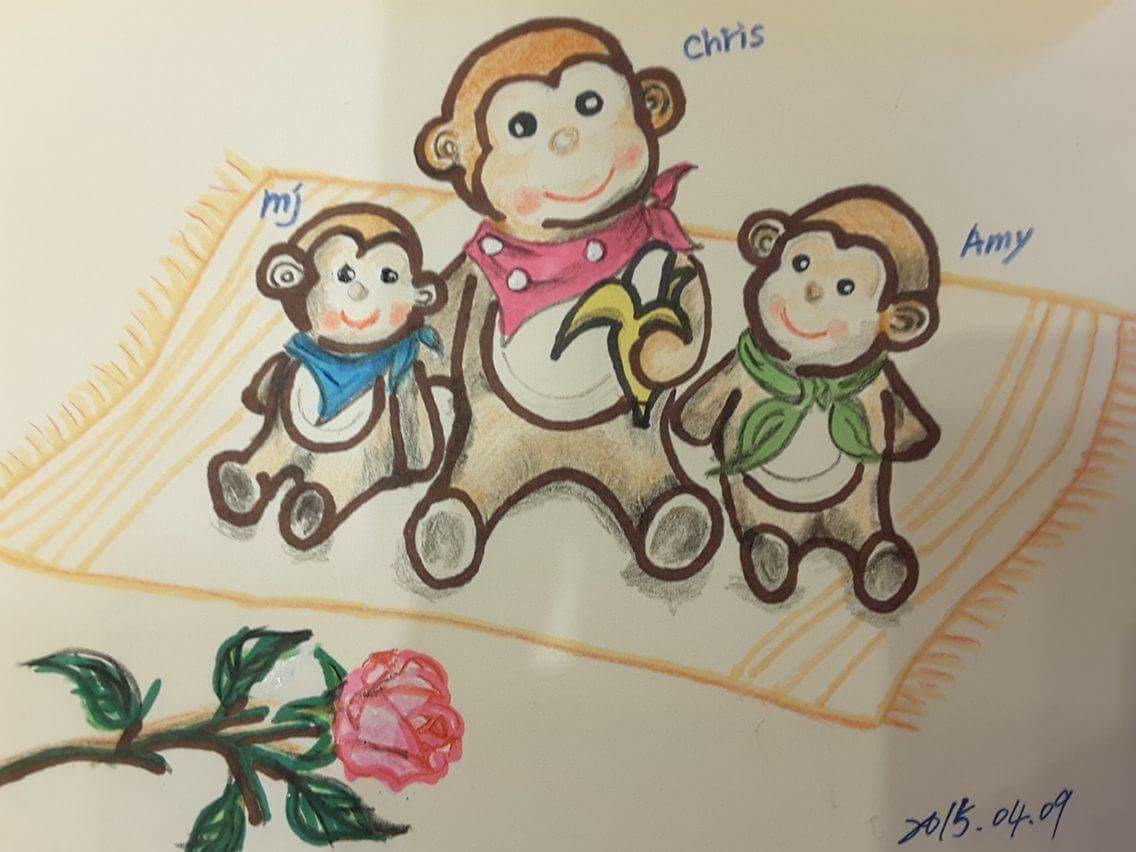
Monkey FamilyWhen I reunited with my sisters and family in Taiwan, I was so curious about our family history, about what led up to my adoption, and of course, about my country of origin. I had so many questions about our parents and family, but I wanted to be sensitive to my sisters and not press them to reveal things unless they wanted to. It was such a joyous event just to be with them and to meet my extended biological family, to share a sisterly connection despite a language and cultural barrier. I continue to learn about my cultural heritage, although sadly, there isn’t much Chinese or Taiwanese culture in Arizona.

Pic 2I often wondered prior to reuniting with my birthfamily if we shared any similar characteristics, physical features, but also areas of interest or special talents. I grew up playing the piano and studied piano performance in undergrad. I love classical music, learning, academia, drawing, writing, singing, drama/theatre – really, anything related to the arts. I learned from my sisters that our mother also enjoyed classical music and had a love of learning. When I was a young girl, I drew a lot and kept a sketchbook. Who knows whatever happened to that sketchbook – it probably ended up in the trash at some point. In any case, I posted some of my artwork on Facebook recently, and my oldest sister messaged me saying that she also loves to draw. She sent me several recent drawings and gave me permission to share some of them here. I’m so impressed with her artwork, but even more, that we share a common interest and passion. One of my favorites is a drawing my sister made of three little monkeys – of course, my sisters and I! 2016 is the Year of the Monkey, the ninth of the 12 animals in the recurring 12-year Chinese zodiac cycle, so the drawing is especially meaningful. My sister also told me that our brother is very artistic and a gifted photographer. Our father was a skillful calligrapher. So, I’m inclined to say that art is in our genes.

I’m so happy that social media allows me to stay connected to my family in Taiwan in a way that would have been impossible years ago. I hope to travel to Taiwan again in the near future. I had hoped to return years ago, but things seem to come up that prevent me from traveling back. It’s been 4 years since our reunification.

Pic 1

I’ve posted some of my eldest sister’s drawings here. I wish that I had more time to improve my drawing skills. It seems that at this stage in my life, I’m getting further and further away from the things I most enjoy artistically. Sad, but true. I’d like to find meaningful work that allows me to use my artistic talents to a greater capacity, as well as my experiences as an internationally adopted person. I haven’t quite found my niche yet…

another new year

Hello 2016! I say this every new year, but really, where did the time go? Now that Christmas 2015 has come and gone, I’m a little sad that I was so caught up in my busy life, primarily the new job. I have never worked in dementia care, and it feels like a really big transition. I have a great co-worker, another social worker, but getting to know new staff and job responsibilities is always stressful, right?

What are you hoping for in 2016? Personally, 2016 promises to be a year of big changes. My niece in Taiwan is soon to be married! How I would love to be there to see my family. In 2012, I reunited with my birthfamily in Taipei and have wanted to go back each year since. One day, I will return, maybe even in 2016.

Our daughter will be going to college in the Fall. She’s been accepted by four different universities, so we’re ecstatic that she has options. We’ll hear from two other colleges in the spring. I have moments of grief knowing she’ll be gone soon. She’s our only child. Tears are sure to be shed. Life is certainly going to be different when she’s in college. I have mixed feelings about how much less time I have with her now that I’m working full-time. The energy put into work is depleting. Isn’t that every working mom’s dilemma? She’s a teen and yes, very independent, yet it’s our last year at home with her before she leaves the nest. That time can never be had again. On the other hand, it’s exciting that she’s entering a new stage in her life sure to be full of adventures and paths to increased learning and growth. We couldn’t be more proud of her.

On the professional front, I’m submitting a proposal to the Adoption Initiative’s 9th Biennial Adoption Conference. The theme this year is Myth and Reality in Adoption: Transforming Practice Through Lessons Learned. My master’s thesis investigated how international and transracial adoptees manage experiences of racism and racial discrimination. It also focused on strategies adoptees proposed to better equip adoptive parents and adoption professionals to help international/transracial adoptees manage identity issues and racism/racial discrimination. I’ve never attended an adoption conference and am really looking forward to it. I plan to attend the conference whether my proposal is accepted or not and am excited about traveling to the East coast.

Finally, I hope this year to be one where I focus more on spending time with friends and on taking better care of myself. For the last two years, I’ve been rather isolative. It seems that the older I get, the more difficult it is to stay connected with friends.

To all my family, friends, fellow adoptees and followers far and near, I wish you good cheer, good health, and a new year full of personal and spiritual growth. Oh yeah, be sure to stop and smell the roses along the way.

annoying stereotypes & microaggressions

I enjoy meeting and talking with other international and transracial adoptees. That we are adopted persons gives us a social identity that is unique. The environmental contexts in which we grow up are doubtless very different, and our adoption journeys are unique; however, when I talk to other internationally adopted persons, there’s a connection. It’s like, he or she gets me. We get each other.

Towards the end of my last semester of grad school, I learned that the student who sat right across from me in my Advanced Practice class was also an adoptee. She was adopted from Korea and grew up in Michigan. She is some twenty years younger, yet I immediately felt that kinship with her. We met for coffee one afternoon after class to commiserate over school and swapped stories about adoption. We laughed about stereotyping and how we have managed to live in a predominantly white world. It felt good to connect with another adoptee who also happens to be a social worker!

Earlier this month, I met with another adoptee, a friend. She, too, was adopted from Korea. We met for lunch at a Vietnamese sandwich shop to catch up. During our conversation, she asked me about my feelings towards international adoption after having completed my thesis and if I had an interest in working in international adoption. It is such a difficult question to answer, and I don’t think that I have a definitive one. We talked about our conflicted feelings towards international adoption. On the one hand, orphans need permanency and loving families. On the other hand, the complexities of international adoption are significant, and there is a great need for others to be educated. There is still so much to learn about international adoption, how it impacts the psychosocial development of adoptees, and how to help prepare and support adoptive parents, as well as adoptees – not that any parent regardless of adoptive status or not could ever be fully prepared for parenthood. But there are ways to better educate the general public and adoptive families and to offer a more realistic picture of this process.

My journey through adoption continues to evolve. Although I have experienced incredible personal growth through the years, I’m not sure that I could work in international adoption, at least not in the capacity of a caseworker. I’m sure that my own personal challenges as an adoptee have much to do with these conflicted feelings. I can help educate adoptive families, provide cultural training and support, try to impact international adoption policy, but don’t think I could manage the actual adoption process. I have several friends who have adopted children internationally, and I always think in the back of my mind that international adoption is a business. I would support greater efforts to prevent the need for adoption altogether…preventive services and services to keep families together.

While we were sitting and conversing, an older white gentleman walked over to us and interrupted our conversation to ask if either of us knew of a good Asian salon where he could get his hair cut. He told us that most of the Asian women he encounters don’t speak very good English and upon hearing our conversation and ability to speak “good” English, felt like we could point him in the right direction. I felt completely annoyed. I told the man that I did not know of any Asian salons as did my friend. The look on his face was one of complete shock. It told me that he assumed we knew the right salon to direct him to. We did not tell the man that we were both adopted and knew as much about Asian salons as the man in the moon. Instead, we watched him walk away, perplexed, and returned to our conversation. I could not shake off how ruffled I felt. Although this man was completely unaware, he had committed a microaggression that was just plain annoying.

I’m glad to have visited with my friend. It was encouraging to hang out with another adoptee, someone who has walked in “my shoes” in many ways. I didn’t ask her if she felt as annoyed as I did by the man who asked us about a hair salon. She seemed to brush it off and was so polite. I took her lead and decided to be polite, too, despite my feelings.

international adoptee research study

In my last post, I mentioned that adoptees in the U.S. adopted through international adoption are often subjected to racism, discrimination, and microaggressions. It’s a subject that interests me greatly because I know how damaging the effects of racism, discrimination, and microaggressions are. I chose to investigate this subject for my master’s thesis in social work.

Over the past two months, I’ve sent letters and announcements to numerous adoption agencies, primarily in Arizona, but also California and Oregon. I have contacted adult adoptee groups on social media platforms and reached out to friends who may know of families with adopted children. I continue to search for adoptees 18+ years of age who were adopted from another country to the U.S. by parents of a different race/ethnicity to participate in the study. Participation includes an in-person interview. In the interview, I talk with adoptees about their background, experiences with family, peers, and their community. We discuss incidents that the adoptee has experienced related to racism, racial discrimination, microaggressions, prejudice, and stereotyping. My hope is to interview at least ten adoptees for this qualitative study. So far, I’ve conducted five interviews. The interviews are about 1.5-2 hours in length and are conducted in a location that ensures privacy, i.e, a study room at a local library. I use participatory diagramming or visual timelines to examine critical points in each adoptee’s life related to racism, discrimination, microaggressions, prejudice, and/or stereotyping as part of the interview process. Participants are informed that the interviews are confidential and no identifying information will be revealed in the study.

How international and transracial adoptees personally cope with racism and discrimination is not an area that is well understood in the literature. It is hoped that this research will produce data that will inform the development of interventions for international adoptees and their families that will provide tools to manage the effects of racism and discrimination. I hope that the study will also prompt further investigation into this particular area. If you know of an adoptee or are an adoptee who resides in Arizona and might be interested in participating in this study, please pass along the above information. I can be contacted privately at mcnguyen@asu.edu if you’d like to know more about the study or would like to schedule an interview. Any help you can provide would be greatly appreciated!

I believe that this is such an important issue for adoptive families and adoptees. It’s my belief that adoptive families and adoptees who are better equipped to face racism and discrimination will be happier and healthier. Thank you.


vegas family reunion

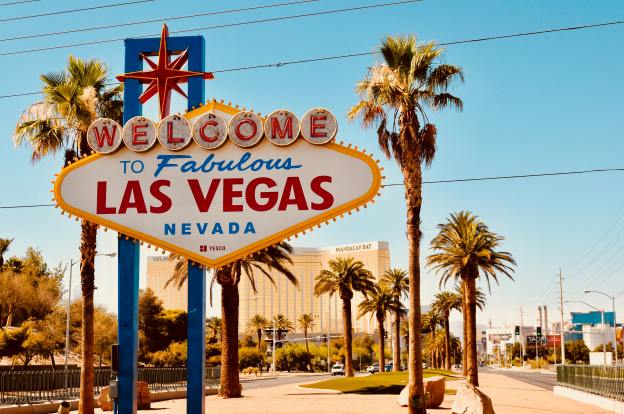
Hey folks! I’ve waited long enough to share some very exciting news. In four days, my family and I are heading to Las Vegas to meet my birth family! My sisters, my niece, and brother-n-law are coming to the U.S. In fact, they are touring Alaska even now and will then head to Vegas for a brief visit. I haven’t written about our reunion because one of my sisters has had some health challenges and wasn’t sure if she could make the trip. I have prayed for her constantly and am so happy that she is well enough to travel so far away. I think that it’s just hitting me that I’m really going to see them again in a few short days. My family and I had planned to take a trip to Taiwan this fall but will not be able to after all, to my great disappointment. However, I’m hoping to be able to go back to Taiwan sometime next year – we’ll see.

So much has happened since our reunion in Taiwan in 2012 when I met my birth family for the first time since my adoption. I can’t wait to catch up with my sisters! My Mandarin, sadly, has not improved. I do hope that one day I’ll be able to speak the language, or at least manage it somewhat. School has taken over my life. It has been a challenge and I cannot wait to graduate in 2015. I often wonder if going back to school will be worth all the trouble. I do hope so. In any case, I plan to enjoy the summer while it lasts, especially the reunion with my sisters and family in Vegas. I’ll keep you posted on our adventure.

Photo by USGS on Unsplash

international adoptees needed for research study

Hello everyone! I hope that you are staying cool during these hot summer days. We have officially hit triple digit weather here in Arizona! I have written recently that I’m working on a master’s thesis. I’m currently looking for volunteers to participate in this qualitative research study.

The purpose of the study is to examine the ways in which international and transracial adoptees experience racism, prejudice, racial discrimination and/or stereotyping and to identify patterns of coping. To explore these issues, interviews with international adoptees will be conducted. Results from the study will highlight the unique experiences of internationally adopted persons and provide a deeper understanding of how adoptees cope with racial derogation and discrimination. In-person interviews with adoptees will be approximately 1.5-2 hours.

To participate in this study, individuals should:

  • Be at least 18 years of age or older
  • Be adopted from another country to the U.S. by parents of a different race/ethnicity
  • Currently reside in Metro Phoenix, Arizona

All interviews will be conducted in a location that ensures privacy and confidentiality.

By participating in this study you will be contributing to the work of understanding how international and transracial adoptees manage racism and discrimination in their lives and how these issues impact the development of adoptees’ identity. The study will help to inform social workers and other healthcare professionals what types of support services would most benefit international and transracial adoptees and their families.

If you are interested in participating or would like more information about the study, please contact me. The link below contains a formal announcement including my contact information. Please feel free to distribute the announcement to any persons you think might have an interest in participating in the study. Thank you!

This research is conducted under the direction of:

Cecilia Ayón, MSW, PhD

Associate Professor

School of Social Work

College of Public Programs

Arizona State University

Click on the link below for the announcement and my contact information:

Study_Announcement_2014

the photo of my birth mother

I finally framed the picture of my birth mother, the only photo I have of her, which was given to me by my sisters in Taiwan. It was one of the first things they gifted to me at the airport upon my arrival to Taipei. It’s a 5×7 black and white photo. My sisters had the photo carefully laminated to prevent any damage. Such a thoughtful gesture. Her name was Shiow-Jean Lu according to my original adoption contract, which my adoptive parents hid from me.

My initial thought was that my birth mother looked so solemn. She’s wearing a black mandarin collared jacket or shirt. Her hair is short and neat in the style of older women. Her eyes are downturned slightly at the outer corners. I thought she appeared sad, as though she had seen many sorrows in her lifetime. She is not quite smiling, and I often wonder what she was thinking when the photo was taken. I never asked my sisters how old she was at the time. I think that I was so overwhelmed with joy to have her picture. Well, that and I didn’t want to ask too many questions, although I had many. My guess is she was somewhere in her fifties. My sisters told me that I look very much like our mother in her younger years. Unfortunately, there are no photos left of her when she was a young woman, as they were burned according to my sisters by our mother in a time of conflict. I don’t know much more about it, but I’m so curious.

It’s a really odd feeling knowing that I was born to two people who I will never have an opportunity to meet, partly a sense of numb, emptiness. The story of why and how I was placed for adoption is nearly unbearable of think about. Yet my sisters believe and told me more than once that my adoptive parents were angels and are very happy and thankful that I had the opportunity to be raised in the U.S. I understand why it happened the way it did. My birthfamily was impoverished, per my adoption contract, and I’m certain that life for my birth parents was not easy. I have benefited from white privilege due to my adoption, yet often feel conflicted by this. My adoptive parents loved me, yet there were numerous challenges, especially when I was a teen. My parents were ill-prepared to parent an adoptee with identity issues, and I feared my adoptive mother because of her instability, emotionally and psychologically. Her mood could change in a split second, and when she was angry, it struck terror in me.

I am happy that my sisters and family wanted to reunify. They have very big, kind, and generous hearts. The picture of my birth mother is now sitting in a place where I see it every morning. Framed, she appears happier, if only in my imagination. Sometimes I’m pained to look at the photo. Other times, I’m filled with such curiosity. I wish that I knew more about her, and I wonder what she was like, what she enjoyed, if she was happy, how she managed when I was relinquished unknowingly by my birth father…did she ever think about me? There is nothing that I can do but wonder…

my chinese roots

I cannot begin to tell you how relieved I am that my second year in graduate school has just ended!  I’m now taking full advantage of some R & R. Over the summer, I plan to catch up on some reading. Before I explain more, I wanted to go back to my last post, “what’s in a name?” I completed the paperwork to legally change my middle name to my given birth name, Hsiao-ling; however, upon filing the paperwork at the court, I was informed of a $340 fee attached to the process. I didn’t expect the fee to be so costly and will have to wait to finish this process at a later time. It’s truly disappointing.

Anyhow, I’m embarking on another small adventure. When I first learned about my true identity, I experienced many mixed emotions- shock, surprise, elation but I was also very confused. I know that my birthparents lived in Guangxi (广西), which is situated in the southern part of China. I don’t know when they moved to Taiwan, but know that I was born in Taipei in August 1966, the same month and year that China’s Communist leader, Mao Zedong, launched what became known as the Cultural Revolution. I also know that my birth father served in the military, but do not know to what capacity. I have so many questions, but the path to my past brings up very painful memories for my biological sisters. I am thankful for what my eldest sister was willing to share with me.

I decided to take on a reading challenge and am reading books written by Chinese and Taiwanese authors, fiction and non-fiction, or books that depict Chinese culture or history over the summer. Although I was born in Taiwan, my birthparents were originally from China. I just finished reading “The Ghost Bride” by Yangsze Choo. I loved the story – it is a work of fiction with elements of fantasy, folklore, and Chinese culture that I very much enjoyed reading. I learned about some of the superstitions and beliefs in Chinese folklore, especially in regards to the “afterlife” and honoring one’s ancestors. I found it overall to be a very fun and entertaining read. Currently I’m reading “Peony in Love” by Lisa See. See is not a Chinese author, however her works often describe some period of Chinese history and culture. The story is based on actual historical events and goes back to seventeenth-century China after the Manchus seize power and the end of the Ming dynasty. I cannot imagine living under such oppressive conditions for women, who basically had no rights.

I’m concurrently reading “The Good Women of China: hidden voices” by Xinran. Xinran is a Chinese journalist/writer. In the book, she captures through oral histories the voices of several Chinese women, all anynomous, who lived during decades of civil strife in a painfully restrictive society. It is an incredibly moving book. The stories shared by these women with Xinran are heartbreaking. I chose to read this book in order to understand how things may have been for my birth mother, who also suffered many hardships. She lived in China most of her life. I hope to gain a better understanding of what life may have been like for her. Perhaps her story could have been one included in Xinran’s book, but I couldn’t be sure.

The other books that I hope to read over the summer include, “Message from an Unknown Chinese Mother: Stories of Loss and Love” also by Xinran; “When Huai Flowers Bloom: Stories of the Cultural Revolution” by Shu Jiang Lu; “A Dictionary of Maqiao” by Han Shaogong; “Balzac and the Little Chinese Seamstress” by Dai Sijie; “Wild Swans: Three Daughters of China” by Chang Jung, and “The Third Son” by Julie Wu, a Taiwanese American author. I don’t know if I’ll get to all of them, but I’m going to try. I’m sure that there are many other Taiwanese authors whom I don’t know of but have written wonderful books. Grace Lin has written several children’s books, one of which I purchased awhile back but have not yet read, “Dumpling Days.”

My roots go back to China where my birthfamily first lived. I don’t know our complete family history, but I think that their move to Taiwan was not under favorable conditions. And I know that their lives in Taiwan were extremely difficult. By summer’s end, I hope to understand a little more about Chinese culture and indirectly about my own biological family or at least what China was like when my birth parents were in their youth. Sadly, I will not be able to travel to Taiwan this year with my own family as I’d planned to visit my sisters and extended family. There’s always 2015 – I do hope I can go back to see my family in Taiwan then. Until then, I will strive to learn more about my origins through reading and research.

our screening event

The Invisible Red Thread made me laugh, made me cry, made me more attuned to the disturbing fact that orphaned and abandoned children in this world are far too numerous. On Saturday, June 1st, we screened the film documentary at an event called Honoring One’s Cultural Roots. Twenty-two people attended, including adoptive parents and their adopted children. There were seven adoptees, three were adults.

The documentary was filmed in 2010 by directors Maureen Marovitch and Dr. Changfu Chang and follows two adopted adolescent girls from China who live on opposite sides of the planet. We accompany 15-year old Vivian, who lives with her family in Toronto, Canada, as she and her adoptive father, Hubert, travel back to China to meet Shumin. Shumin, 14 years old at the time of filming, was adopted within China by the Zhu family due to the One Child Policy. Unfortunately, Vivian’s adoptive mother was unable to travel to China with her and her father due to a sudden illness.

The film was about an hour long. I laughed when Shumin introduced Vivian to shopping outdoor market style where many interesting and live foods were being sold, including frogs, snakes, and all kinds of seafood. We watched Vivian squirm as she walked with Shumin up and down the aisles of the market holding her nose. On the flip side, Vivian took Shumin and her family to the city, which Shumin had never visited before. Shumin used a fork and ate toast and jelly for the first time. Watching Shumin’s facial expressions as Vivian showed her how a toaster worked was priceless. Vivian pondered what life would have been like for her in China had she not been adopted.

We also met Shumin’s birth parents, as well as another birth mother who was searching for the daughter she gave away in hopes that Vivian might be her daughter. This adoptive mother was obviously feeling so many emotions as the filmmakers documented her story. Vivian was not her daughter. Without fail, whenever I see the pain a birth parent feels due to the relinquishment of his/her child, I’m deeply saddened.

After the film, therapist, Stephanie Withrow, facilitated a discussion with those who were able to stay. One of the highlights of the discussion was how international adoption has evolved since it first became “popular” in the U.S. after the Korean War. One parent pointed out that because much has been learned about international/transracial adoption over the years, adoptive parents are more informed and educated about the challenges of raising an internationally and transracially adopted child. It’s possible that adoptees today may even experience fewer problems with identity and race because adoptive parents are more sensitive to these issues, facilitate an open dialogue with their adopted children, and seek opportunities to help their child develop a healthy sense of identity. I think more research is needed to demonstrate how changes in international adoption over the past few decades may affect adoptees and their families compared to previous decades. Finally, Dalena Watson prepared some information on homeland tour agencies for families interested in perhaps planning a trip one day to their adopted child’s birth country.

As a final note, I wanted to again thank all those who came out and spent the afternoon with us. It was a pleasure to meet all of you and your families. Your thoughts and comments are invaluable, and we hope to continue hosting community adoption events that you’ll be interested in attending.

honoring one’s cultural roots: the invisible red thread

TheInvisibleRedThreadSome 8,668 children were adopted into U.S. families from abroad in the 2012 fiscal year; 105 international adoptions took place right here in Arizona (U.S. Dept. of State, 2013). Although declining in number since 2004, intercountry adoption is still prevalent throughout the U.S. and is so often misconceived. One of the most complicated areas of transracial adoption is the development of identity. I read somewhere recently that identity is defined both by what one is and what one is not. Identity is affected by all members of the adoption triad. Adoptees who are born into one family, a family who will probably remain nameless to them, lose an identity then borrow one from the adopting family. Birthparents are parents and yet are not. Adoptive parents who were not parents suddenly become parents. Adoption, for some adoptees, precludes a complete or integrated sense of self. Adoptees may experience themselves as incomplete, deficient, or unfinished, or may lack feelings of well-being, integration, or solidity associated with a fully developed identity. We often lack medical, genetic, religious, and historical information and may be plagued by questions such as: Who am I? Was I merely a mistake, or an accident? Why was I relinquished? Do my birthparents ever think of me? This lack of identity may lead adoptees, particularly in adolescent years, to seek out ways to belong in more extreme ways than many of their non-adopted peers. Furthermore, adoptees may wish to search for their birthfamily or reconnect with their birth country.

To honor the cultural roots of an adoptee is a necessity. We must make every effort to help adoptees develop a strong sense of identity, to help them navigate through the process of identity development, to maintain the cultural connection to an adoptee’s birth country. This can be difficult, as we know that the tendency to assimilate to the predominant culture is strong (although having a parent of the same ethnic background or who speaks the language of the country from which the adoptee was born lessens the cultural disconnect).

In an attempt to address these needs, we are hosting an event, Honoring One’s Cultural Roots, on Saturday, June 1st. We will screen the film documentary, The Invisible Red Thread, written and directed by Maureen Marovitch of Picture This Productions in Montreal, which I’m very excited to see. Following the movie, Stephanie Withrow, M.S., LPC, will facilitate a discussion as we explore the intersection of adoption, culture and identity and what it means to honor one’s cultural roots. Stephanie and her husband have three adopted children from China. The event is for the whole family, although the film is recommended for children 10 and older. Admission is $10/person; children under 12 receive free admission. Reservations and pre-payment are also required. To make reservations, please contact Mj Nguyen at mjnguyen7@cox.net. For all the details, click on the The Invisible Red Thread- An AZ Premier link located above.

The Honoring One’s Cultural Roots event will be held at The Chandler Public Library, 22 S. Delaware Street, Chandler, AZ 85225, in the Copper Room (2nd level). Please join us for what I think will be a memorable and exciting event! I hope that many will leave feeling a greater sense of community and understanding the importance of honoring adoptees’ cultural roots. Please see the Honoring One’s Cultural Roots facebook page. Screening of The Invisible Red Thread is made possible through Picture This Productions of Montreal, QC (Canada).

poet jena

I am so happy to share the following piece below with my readers. It was written by one of the people I hope most to meet one day in person. Ma-Li and I connected a few years ago when she contacted me with news that she was also adopted in Taipei from The Family Planning Association of China. We are just a year apart in age. I was so excited that someone who once lived at  the same orphanage contacted me. Ma-Li currently lives in Germany, but was raised in the UK by British parents. She is a gifted writer and poet. You can read some of her beautifully written poetry at Poet Jena’s Blog. Please stop by for a visit. Here’s a little about Ma-Li in her own words:

Ma-Li2I am a writer, a poet, a thinker, a philosopher, a storyteller, a lover of children and animals and beauty –  an artist, love-junkie and music addict which, in terms of taste, can mean anything and everything…. ! My background is a ‘story within a story’ in the way that there is a ‘play within a play’ in William Shakespeare’s tragedy, “Hamlet”.  It involves being given up to adoption at an early age and adjusting to foreign cultures.  It is a story of a lonely upbringing and at the same time the never ending search for identity.  Above all, it is the archetypal journey from the life saving pages of a diary begun as a despairing teenager to the crystallization of thought as found in the adult poetry of my current writing.

By Ma-Li:

In an television broadcast I caught by non-coincidence, I was reminded of the adopted part of me, what in the end may only amount to a story in an ocean of stories, but still, I felt immediately connected to this interviewee, this woman called Sarah Fischer.

Existence beyond duality says we are all ONE. To find a little piece of ourselves in another is the seed of the hope of this awareness.

Others who have lived a part of our own lives strike us to the very core, or so I have always found. They awake inside us what it is we mean to ourselves. Or what we may have believed we have meant to ourselves for the longest time. As if by magic, there is the sudden and extremely moving recognition of a deep knowing – a sense of timelessness almost.

But perhaps what resonates for me most is when she says, to paraphrase, – it was of great importance to her that the man she met and eventually married had ‘roots’.

Something else which touched me deeply: in order to find out that Germany was her true home, she had to first undertake a trip around the world.

It reminds me that no matter in which ways we choose to do it, whether adoption or by other means, the underlying journey of which this globetrotting, to me, seems to be only an allegory, is one of self-discovery, and moreover, ‘re’-covery. And in it, one sees the soul’s intense longing to finally be acquainted with itself. And what relationship is there or was there ever going to be which is more essential than that?

Sarah Fischer, Globetrotter | Talking Germany | DW.DE | 01.03.2013

http://www.dw.de/sarah-fischer-globetrot

In her current book, “Heimatroulette”, Munich photographer Sarah Fisher describes her search for her own roots. She was adopted by a German couple as baby.

A few closing words from Ma-Li:
I came into contact with the writer of this inspiring blog some time ago during my own attempts to uncover aspects of my adopted past.  It is now coming up to more than forty years since the day that I myself got on that JAL airlines plane headed for a new and unknown life. Finding her was not only a surprise, but a huge unexpected delight. Imagine someone so close in age to me and even having been born in Taiwan!  And that is how the connection began. At present, time will not allow me to write more than this.  Suffice to say that like all adoptions it is a story, and a somewhat involved one at that, whose multifaceted details are to this day still not all known to me.  But for better or worse, adopted, I am. And nowadays I am starting to come around to the thought that the adoptees journey is not as rough a one as I might have believed in the beginning. Although we have never met in person, there is somehow a sense of closeness for me to have met someone such as this, in that space, as her blog so aptly says, “beyond the two worlds”. Simply put. It is an honor to know you Marijane.  And, without having ever been adopted myself our paths might never have crossed.
 

somewhere between in phoenix

Well, I have already broken my 30-day challenge to stay off-line the third day in! I thought this news important enough to share though and the quickest way to get out, especially if you live in the Phoenix-Metro area. I’m so happy to announce that there will be a special presentation of the film documentary, Somewhere Between, by director Linda Goldstein Knowlton on January 24, 2013, 5:30 pm, at the AMC Arizona Center 24 in Phoenix. Tickets are $10.00 and must be purchased in advance (see below for ticket purchasing info). We need a total of 84 people to attend in order for the screening to take place!

If you haven’t already heard, Somewhere Between is an award-winning film about four teenage girls. They live in different parts of the US, in different kinds of families, but have one thing in common: all four were adopted from China as a result of China’s “One Child Policy” and their birth parents’ inability to keep them. Although typical American teens, these four young women reveal a heartbreaking sense of self-awareness and grapple with issues of race, gender, and identity more acutely than most their age.

There will be a brief introduction preceding the film and discussion afterwards if you’d like to stick around. All of this has been made possible through Tugg and Kevin Carlson, who has worked on getting the film here to Phoenix for the past several months. A big warm THANK YOU to Kevin for making this possible. For more information about the presentation and to reserve your tickets, go to  http://www.tugg.com/events/2633, or contact me directly via email at mjnguyen7@cox dot net (your credit card will not be charged until we meet the threshold of 84 people). Signing off once again and hope to see you at the showing!

Note: DVDs of the film are being pre-sold on Amazon and will be released on February 5, 2013.

the letter that brought us together

I have been crazy busy this week preparing for the holidays and to host a Christmas party for a bunch of teens. Before I started baking though, I realized that this day exactly one year ago is the date I sent a letter to Taiwan– the letter that brought my birthfamily and I together.

By the time Tien (the social worker who helped me find my birthfamily) thought to write the letter to the Registration Office of Taipei, we already knew that I had two older sisters and one older brother. I was also working with an agency in Taiwan at the same time who found the addresses and names of my sisters but were unwilling to reveal them to me until they had received permission from my sisters. With continued delays, Tien decided to pen a letter in Mandarin to the Registration Office as if I had written it pleading for assistance in locating my sisters. We were so close to finding them, yet it seemed nearly impossible to move forward. I remember feeling frustrated over our inability to access the information we needed. The day I sent the letter, my co-worker, Jewel, and I drove to the Phoenix post office from the hospital where we worked. It was a cold, rainy afternoon, and I was worried that we wouldn’t have time to mail my packet if there was a long line. Sure enough, there was a line creeping along from the entrance to the counter. Jewel, however, spotted a self-mail kiosk with no line at all. I hopped over and, after printing and attaching a mailing label, sent the letter on its way to Taiwan.

It’s hard to believe that nearly a whole year has gone by since mailing that letter. I couldn’t wait to hear news from Tien about a response from Taiwan. Each day that passed, I waited in anticipation. Two weeks later on Christmas eve, I got my response from Tien! It truly feels like just yesterday I arrived in Taipei and met my biological sisters and family for the first time since my birth.

IMG_0324

A couple of days ago, I was sifting through some of my adoption papers, and I looked more closely at a document that’s almost blackened beyond readability, perhaps from sun damage. I had forgotten that I was relinquished for adoption at the age of one month and nine days. It suddenly struck me how brief a period I had with my birth mother. My adoption became legal on December 16, 1966, 45 years ago.

2012 has been a year full of introspection, reflection, and wonder. Not only did I reunite with my birthfamily, but for the first time, I understand some of the reasons why I am the way that I am. After all these years, I feel comfortable in my own skin. I thank God for bringing my birthfamily and I together and at the perfect time. There were plenty of times when I lost faith that we’d ever find them. My eldest sister and I still keep in touch regularly, and she passes along my hellos to the rest of the family. In the Fall of 2014, my husband, daughter, and I will make a trip together back to Taiwan. I imagine it will be another exciting celebration of family and reunion.

we are family

 I’ve been in Taipei just shy of one week now. So much has happened in the past 5 days. As much as I’ve wanted to keep a daily journal, I’ve just been too tired and busy to keep up. It’s a good kind of tired and busy though. Below is a recap of my first day in Taiwan.

The journey to Taiwan begins on Saturday, January 15th. I feel amped up and nervous about leaving my family behind, but once I get to the Seattle airport, I feel a bit more calm. I Skype my husband and daughter, and they seem fine. Around 10:30 pm, I notice a woman who looks like Tien arrive at the gate and immediately go to introduce myself. She’s the miracle worker (with the most effervescent personality) who has been instrumental in helping me find my birth family in Taiwan. We arrange to have seats near each other and get acquainted while waiting to board the plane. At last, boarding begins, and we make our way up to the top deck. I’m glad that Tien is here and that we’re traveling together. It’s around 1:00 am. Once airborne, the flight attendants start a meal service, not a snack, but a full on meal. Really, at 1:30  am? I’m not really hungry, but I eat anyway. It doesn’t take long for everyone to start snoozing. I sleep for most of the flight. Although it’s a 13-hour trip, time seems to pass quickly to my amazement. Another meal is served about 2-hours before we are to land. What bizarre times to eat! The Taiwanese woman sitting next to me strikes up a conversation and from then on doesn’t stop! She is giving me all kinds of advice about Taiwan after I explain to her why I’m visiting. She is leaning in towards me as close as she possibly can without bumping my head and continues to poke my sore left arm where I recently got a tetanus shot. I try to lean away the other way. She and her husband are very nice, but I’m glad when the flight attendants announce that we’re preparing for landing, a welcome distraction. The air turbulence doesn’t even bother me as we begin our bumpy descent toward Taipei. I can’t help but grin as we get closer to our destination; the anticipation of meeting my sisters growing. I gaze out the airplane window at Taipei City below. A thousand tiny specks of light illuminate the curvy highways below.

Finally, we touch ground; it’s around 6:30 am Taiwan time. I want to shout a really loud yahoo, but decide to keep it to myself. We wait impatiently for the plane to come to a complete stop at the gate. Once the signal is given, I gather my stuff and make my way into the crowded aisle. I feel like I’ve been stuffed into a can for the past 24 hours, and it’s nice to stand up. Tien tells me to go ahead of her, as she has to wait to get her carry on. We trudge off the plane and head straight to the money exchange window, fill out arrival cards and wait in the queue for the next available representative. Everything goes quickly and smoothly, and to my surprise, I don’t feel a bit tired. Next, downstairs to baggage claim and to meet my sisters! As we near the airport lobby, I immediately recognize my older sister. She and my 2nd sister are holding a white banner with big blue letters saying, “Welcome, Marijane.” I hurry over as fast as I can despite being weighed down by a set of heavy luggage and give each one a big hug. Our smiles are big enough to light up the entire city of Taipei. Tien and my sisters introduce themselves and exchange conversation, and I get caught up in the chatter of Mandarin and laughter. My older sister shows me pictures of our mother and pa-they’re mine to keep. She has also made a CD of pictures of our pa in his later years and gives this to me. I study my sisters’ faces. They both look so much alike, but do I look like either of them? My second sister tells the other something in Mandarin, and my older sister says to me, “she thinks you resemble our mother.” But after seeing both of our parents’ pictures, I think I look more like our pa in his younger days; same eyes and nose. Wow. Now I finally know what my biological parents look like. Soon, my older sister begins to take photos. I can’t seem to find my camera, but she reassures me that she’ll send me all of her pictures. I’m told that our brother is not physically well and will not join us until the dinner with the whole family on lunar Chinese New Year, January 22nd. I immediately notice the affection between my two sisters; they’re only one year apart in age. Now they have extended their affection toward me, little sister by 10 years. I’m amazed at how warm and welcoming they are, as though we’ve known each other our whole lives.

After a half hour or so of talking together, we decide it’s time to head for my hotel, about an hour’s drive away. My oldest sister first gives me a hand phone in a cute little red case and a diamond studded handle complete with charger for me to keep during my visit. She puts it inside another little case for safe keeping. They have thought everything through and are so organized! Older sister explains how to use it and makes sure that I know which number is hers and my other sister’s. She takes charge and both sisters wheel my luggage outside toward a long line of other people waiting for taxis. They banter back and forth in Mandarin. Once a taxi becomes available, we climb in and my sisters encourage me to close my eyes and rest. I’m too caught up in the moment to go to sleep though. So we talk most of the ride to the hotel. Once we arrive, my sisters help me check in, and we head upstairs to my room. They shower me with gifts, pineapple cakes packaged beautifully, a thermos, an umbrella, and a small knife for cutting up fruit. They insist on making sure I get some rest and leave shortly thereafter only to return to hand me some cash. They don’t take no for an answer either!

At 6 pm, they come by to take me to dinner, a nice Chinese restaurant not far from the hotel. They come bearing more gifts, fruit and specialty cookies famous in Taiwan, which the bell person offers to take to my room. We get into another taxi and head to the restaurant. After a quick drive through the crowded downtown streets, which continually abound with taxis, cars, and motorcycles, we arrive at the restaurant and are ushered upstairs to dine. My 2nd sister orders for us, and we talk about how my search for them first began. The food arrives quickly, one course after another, and is very delicious. Suddenly I feel like I’m 10-years old again as my sisters see to it to keep adding more food to my plate once it appears near empty. I’m stuffed by the time dinner is over. After dinner, we go back to the hotel room, and I show them the photo album that I put together of my adoptive family.They ooh and ah over my baby pictures, and my oldest sister comments on how alike both my adoptive father and our pa look. I totally agree!

It’s been an amazing day, and again I don’t feel the least bit tired. Maybe it’ll hit later on. It’s very surreal to be here in Taiwan, to have finally met the 2 sisters who looked after me at the babysitters after school. They were only 10 and 9 years old when I was born. Both tell me that they used to hold me when visiting the babysitters’. Interestingly, while we are looking at the photo album, my oldest sister recognizes a woman holding me in some of the pictures; it is the babysitter! How very amazing – another piece of the puzzle fits into place. My sisters do not overstay so that I can get some rest. Tomorrow there will be 2 interviews with 2 different newspaper reporters who are interested in our reunion story. My sisters decide not to be in the interview in order to protect their privacy. Before I even arrive, both have been contacted by the news reporters and are quite shocked. I respect their wishes. Tien will be there to translate. Oh, what a day it’s been, a joyous reunion to remember! My sister’s have made a schedule for our time together. It will be like trying to cram in a lifetime’s worth of being apart into 2 short weeks. It’s all an adventure!

from halfway across the world

I have searched for my birthfamily now for a little over a year. What instigated it all so late in my life was the discovery of my adoption papers three years ago after the death of my adoptive mom. My original adoption contract was hidden away in my parents’ attic in Louisiana where it remained buried in a box for nearly 40 years. When I started searching for my birthfamily, I knew it would be challenging. So many years had passed. I was adopted in December of 1966. Were there any records that had survived over the years? Was anyone from my birthfamily still living? Where should I start to look for answers? Who do I try to contact first? Little by little, I’ve been able to piece together bits of my past, and yet so many questions remain annoyingly unanswered. My mother’s diaries and an old letter I found helped fill in some of the gaps. The internet and social media have been invaluable resources during this journey. I’ve done search after search online for The Family Planning Association of China, the orphanage where I was adopted. Unfortunately, the agency no longer exists. I have emailed countless numbers of people who have in turn provided other contacts and resources to assist. Still so many unanswered questions. Recently, I gave up hope of ever finding anything or anyone related to my adoption or birthfamily. I felt like my past would always be some obscure thing. Last week, however, I received a surprising, but most welcome comment on my blog:

“Do the words Family Planning Association of China, Taipei City mean anything to you? I was adopted at the age of 3 via that organisation, but unlike you got delivered to London, Heathrow in the summer of 1970. The thought of going back to recover the lost, forgotten roots of my beginnings has been with me for a very long time…”

I couldn’t believe my eyes! The idea that another adoptee adopted from The Family Planning Association might ever contact me never crossed my mind, but we do live in an age of increased accessibility due to the internet. I followed the link to the commenter’s blog to see if I could find any pictures of her, then immediately emailed her. After hearing back from Ma-Li, we set up a time to connect via Skype. So cool! I learned that Ma-li lives in Germany between the cities of Weimer and Erfurt. There’s a nine hour time difference, so catching up to each other was tricky. On Easter morning after my family and I attended service, I discovered that Ma-li had left a voice message on my cell phone. Her British accent was so lovely! We finally connected last week.

I was getting ready for work when I saw the incoming call from Skype. Knowing it was Ma-li, I rushed to log on so that I wouldn’t miss her call. It was beyond awesome to actually see her face and hear her voice in real-time. She held up a business card to the computer screen with the name Tze-Kuan Shu Kan centered across it. I have googled that name in the past thousands of times in hopes of finding something about The Family Planning Association of China. Mrs. Kan was the director at the time of our adoptions. I have a similar card with the same name embossed on it which I found with my adoption papers. Another adoptee adopted from the same orphanage, with the same business card! Ma-li and I talked as long as we could before I had to leave for work. I learned that she and I share many things in common. Ma-li was adopted by an older British couple in the summer of 1970 and was raised in the UK. I was adopted by an older American couple, but raised in the US. Ma-li’s father served in World War II in the Royal Air Force. He was a pilot and flew a Supermarine Spitfire, a fighter aircraft used by the British. My father was also a pilot in the US Army Air Corp and flew a B-24 Liberator. I wonder if our fathers’ paths ever crossed somewhere up in the big blue. Ma-li said that her parents were terribly old-fashioned and strict, as were mine. Her father left the family when she was very young, so she was raised primarily by her adoptive mom as an only child. For the most part, I too, was raised as an only child. Ma-li’s parents are no longer living, just as both of my parents have passed on. We talked about the difficulties of growing up looking different from everyone else around us. She, too, struggled with identity issues, an Asian face that stood out among the crowd. Interestingly, Ma-li is just one year younger than me, however I was adopted at a younger age. My parents adopted me at the age of four months. Ma-li was adopted around the age of three years. She learned from her adoption contract that her birth father was not around the family much and that she was relinquished because her birth mother was unable to care for her. My birthfamily also relinquished me due to poor family conditions. I now know that I was the youngest and fourth daughter born to my birthfamily. Ma-li feels strongly that she, too, has siblings somewhere out there. Will we ever connect with them

I wish that we could have chatted longer. I’m amazed that she found me through my blog. What are the chances of that happening? Ma-li and I ended our conversation more motivated to, as she said, “recover the lost forgotten roots of our beginnings.” In Ma-li, I’ve found a kindred spirit, even if she is halfway across the world.

The featured photo is a young Ma-li. She sent the photo and gave me permission to post.

searching for my birthfamily

Tien made a new suggestion to try and find my birthfamily in Taiwan. She suggests that I place an article in a local newspaper stating that I’m in search of my birthfamily. The best solution by far would be to travel to Taiwan in person and search for records. Tien has even invited me to accompany her on her next expedition there in the near future. I would be very interested in doing so, although it seems like pursuing this is such a distant dream. Now that I’ve started a new full-time job, it would be difficult to get the time off from work. Honestly, I’ve been so wrapped up in my new job, I’ve given my adoption search less thought. But tonight, I wonder a little if this search will ever lead me to someone from my birthfamily. Will placing such an article in a newspaper draw any attention? It’s worth a chance.

I’m hoping to hear back from Tien soon to find out what information is needed to write such an article. What will I say? Woman in search of birthfamily who was adopted by Americans over 40 years ago? Who knows if anyone from my birthfamily is still living. I was the youngest, and I’m 44 years old. My birth parents may not be living, in fact, most likely are not. I know of other adoptees who have found their birth parents, or siblings, not all Asian American adoptees, but some white, who were adopted domestically. It seems that because my adoption took place so long ago, and both of my adoptive parents are no longer living, the little information that I’ve discovered is not enough to find out anything significant. It seems impossible. The obsession to find someone from my birthfamily has drifted a little. Perhaps I’m losing hope. Perhaps the hill is too steep to climb. I think it has some to do with working and having other distractions. In any case, I’ll have to continue to wait and see what unfolds. Who knows, maybe a trip to Taiwan will come to fruition in the not too distant future. I can hope.

older parents who adopt

It appears that rising birth rates among older women have increased, a trend that keeps growing as more women pursue education and careers in their 20s and 30s. Actress, Nicole Kidman, gave birth at 41, actress, Holly Hunter, gave birth to twins at 47, singer, Cheryl Crowe adopted her first child at 45 and her second at 48. According to an article published in Psychology Today, “forty is the new 20 when it comes to having babies…”

Several months ago I came across a letter written to the editor of a More magazine in response to an article entitled “Mommy Mavericks.” The article featured women who had given birth after the age of 50. The reader took issue with these “Mommy Mavericks” calling them “incredibly selfish.” She expressed that her own father was 52 and mother 45 when she was born, both of “whom she loved dearly.” Her father died when she was in her twenties (he was 78); her mother was 84 at the time. Her mother eventually had a stroke, and the reader spent the first years of her marriage caring for her mom and toddler. Her mother died four days after the birth of her second child, and the reader herself suffered a stroke before her mother’s funeral. The question she posed at the end of her letter was, “Do these ‘Mommy Mavericks’ realize how sad it is that their children’s children will never know them?” You could say that the same concerns regarding “age appropriateness” apply to older adults who want to adopt a child. I pondered my own situation with my adoptive parents. So, how old is too old to adopt?

Interestingly, the maximum age limit to adopt domestically by most adoption agencies in the U.S. is 40. Obviously, age is a factor for eligibility here. However, when it comes to intercountry adoption, the upward age limit for adopting increases significantly. For example, China allows parents to adopt until age 50, 55 if adopting a child with special needs. Here’s an even more interesting fact: for the majority of countries with children available to adopt, there is no maximum age limit, those countries that do place a limit are in the minority. Age and maturity are considered sought-after virtues in adoptive parents rather than a hindrance to adopting in some foreign countries. The notion that more mature adoptive parents may possibly have an advantage over younger, less experienced adopters is indeed a plausible one.

As I read her letter to the editor, I could very much identify with the pain experienced by the reader above who lost her parents and dealt with their declining health before her children had the chance to know and love them. Although our situations are somewhat different because I was adopted, my parents both passed away before my daughter had the opportunity to know either of them; one was stricken by a horrible disease which left little time for our daughter to build a relationship. I was 25 when my dad died (he had just turned 70), and my mom had Alzheimer’s disease for 10 years before her death at age 82. My daughter doesn’t remember her, and my mom never recognized her. I never had the opportunity to have the kind of relationship with my parents as an adult that I would have liked to, one where we could talk about things as adults and I could express more to them. That is a painful reality.

That also brings up a couple of issues for older adoptive parents: 1) Will the adoptive parent(s) live long enough to see their children grown, independent, and self-supporting? Will they live to see their children’s children? 2) will the older adoptive parent be physically capable and mentally prepared to appropriately connect with the child despite the age difference?

My mom was 40 and dad 43 at the time of my adoption. Not that old by today’s standards. As a very young child though, I often worried about my parents aging and not being around for me by the time I became a teenager. I was an anxious kid by nature, but this was a big fear. I’d make myself sick with worry calculating how old they’d be when I was 13, 16, 20, and so on. My dad had his first heart attack when I was a freshman in college. His health began to steadily decline after that just as I began transitioning into life independently and moved to another state clear across the country. He did not live long enough to participate in my wedding or meet my future husband or daughter. Ironically, over the past year I’ve learned more about my dad than I ever knew while he was still here. My mom’s health began to decline shortly after that following the death of her mother, which was only a year after my father’s. She began showing symptoms of Alzheimer’s when my daughter was still a toddler. When she became unable to care for herself, my sister in Louisiana became the primary caregiver. I visited as often as I could, but wish I could have been there more.

The most challenging area for my older adoptive parents and me was that of connecting emotionally and mentally. They made it to all of my piano recitals, softball games, graduations, and my dad even participated in my girl scout troop, but the teen years proved to be a battle field as I struggled to develop a sense of who I was and what I believed. There was a huge generation gap between my parents and I. They grew up in a different era and believed that parenting involved obedience, not necessarily giving choices or talking through things. They were inadvertently blind to the issues confronting transracially adopted children regarding cultural and racial identity. As I opposed my mom’s authority, she tightened the reins and became over controlling, which caused a full-blown teen rebellion.

I look back on those days with some regret and wish that my parents could have handled things differently. I wish that they had had better health and that we could have spent more time together before they died. I wish that there had been a way to communicate better and be seen and heard without anger. There were no trainings for adoptive parents back then, and still today, there are some adoptive parents who really should not be permitted to adopt at all, not just because of age. Ultimately, adoption should be for the child, not the adults adopting. Unfortunately, providing permanency to children is not going away. And sadly, too many adults adopt for themselves, to fulfill a need in themselves, not to raise a child who needs permanency. I wish people who adopted stopped to consider the special needs of raising a child through adoption because traditional parenting doesn’t work, no matter what age the parent is. Are parents prepared for that? Are they willing to face the challenges that come up when parenting an adopted child, e.g., identity issues, attachment, genetics, open communication, willingness to learn new ways of parenting and correcting behavior – no physical discipline, etc? These are things that all adoptive parents need to consider, whether young or old.

road block

Just before noon, my inbox alerted me to a new email. It was from Tien at Journeys of the Heart adoption services in Hillsboro, Oregon. She’s a caseworker at the agency who has volunteered to help me in the search for my birthfamily back in China. Tien is from Taiwan and therefore speaks the language. After three months, she finally returned my email in response to moving forward with the search. My neighbor, a month ago, offered to do what he could to help search for any information while he was visiting China. He returned last Thursday, but hasn’t contacted me at all. My husband suggested that perhaps this wasn’t of high priority to our neighbor and not to bug him. I’m at a loss and feel that finding my birthfamily is not going to be easy. I’m doubting that after such a long time there could be any possibility of finding them. Strangely, I’m not surprised that our neighbor did not come back with any news. Still, I feel disappointed.

It turns out that Tien’s email was timely. We’ll pick up where we left off. I She wasn’t surprised either that my neighbor came back with no information because my adoption took place such a long time ago. She mentioned something about the civil war that occurred in Mainland China making it even more difficult to gain information. I will now give my consent for power of attorney to give her contact person in Taiwan authority to dig for more information for me there, i.e., search records, ask for information, etc. I have to send this form to the Taiwan Economic and Cultural Office (TECO) for legalization.

We may not be able to get any further than this. Tien seems to think that my birthfamily moved from China to Taiwan where I was placed for adoption at the Family Planning Association of China. Unfortunately, that orphanage no longer exists. I will continue to hope for the best and try to figure out other ways to find information about my birthfamily.

my adoptive mother

This Easter’s Eve, I spent the afternoon baking and dying Easter eggs with my daughter. I rummaged through my mom’s old recipe box and found the one for her pecan monkey bread, one of my favorites. My daughter, who loves to bake, volunteered to help me out. My mom typically made this coffee cake on the mornings of special occasions like Christmas, Thanksgiving, or Easter. We always looked forward to the holidays.

My mom was a registered nurse by profession, a wife, mother, and grandmother. She worked full-time as the director of nurses at a skilled nursing facility and came home exhausted most evenings. Tired as she was, she always managed to cook dinner, unless we decided to go out to Pancho’s or another local eatery. She was a great cook, sewed, and crocheted. I remember that mom also wrote regularly in her diary. She would get a new one each year.

Dad MilitaryMom married my dad on October 6, 1962, in Omaha, Nebraska where dad was stationed at Offut Air Force Base. On February 25, 1963, just four short months after their wedding, my dad suffered a subarachnoid brain hemorrhage which nearly took his life. Mom accompanied dad via air evacuation on a T-29 military aircraft to San Antonio, Texas, I’m assuming to a more specialized military hospital, where he underwent surgery. I can only imagine how frantic she must have been. In the bottom of my dad’s dresser drawer, I found an original Western Union telegram that was wired to his mother in California from Offutt AFB. This is what it said:

1963 FEB 26 PM 7 01

I WISH TO OFFICIALLY INFORM YOU THAT YOUR SON MAJOR WENDELL R BUCK, 37033A, WAS PLACED ON THE SERIOUSLY ILL LIST AT THE 865 USAF HOSPITAL, OFFUTT, AFB, NEBRASKA, AT 1200 HOURS ON 26 FEBRUARY 1963, AS A RESULT OF A CEREBRAL HEMORRHAGE. HIS RECOVERY IS QUESTIONABLE. HE IS BEING EVACUATED BY AIRCRAFT TO THE USAF HOSPITAL LACKLAND AFB, SAN ANTONIO, TEXAS, IMMEDIATELY. THE ATTENDING PHYSICAN RECOMMENDS YOUR IMMEDIATE PRESENCE AT HIS BEDSIDE. IN THE EVENT YOU ARE UNABLE TO VISIT HIM AT LACKLAND AFB, THE HOSPITAL COMMANDER WILL FURNISH YOU A REPORT ON HIS CONDITION EVERY FIVE DAYS, UNLESS A SIGNIFICANT CHANGE OCCURS IN WHICH CASE THEY WILL ADVISE YOU IMMEDIATELY. PLEASE ACCEPT MY SINCERE SYMPATHY IN THIS TIME OF ANXIETY=

ELKINS READ JR COLONEL USAF COMMANDER==

After reading the telegram, I thought what a miracle it was that Dad survived. Mom wrote in one of the diaries I found:

“Wendy operated on. Subarachnoid brain hemorrhage. God spared his life. Thank you dear Lord.”

After the aneurysm, dad spent several long months in rehabilitation. I remember dad telling me that he had to learn to walk all over again. The aneurysm left him partially paralyzed on one side and caused extreme headaches. He told me that the sound of mom’s pantyhose as she walked into his hospital room was excruciating. Dad eventually regained his strength and was able to resume work, although paralysis permanently weakened his left side. I believe that this unfortunate event was a turning point in his life. At the height of Dad’s military career, he was discharged from ever flying a plane again due to “physical disability.” It must have been such a crushing blow for him. He was then assigned to a new position as Personnel Director until his retirement in 1972.

Mom didn’t write about dad’s recovery in her diary. Maybe it was all just too much to write about. Two months after the aneurysm, she began practical nursing training. She graduated in April 1964 from the Omaha Public School, Vocational Education Dept. in Practical Nursing and went on to successfully pass her state boards. Mom went back to school much later to become a registered nurse (RN), around August 1972. By that time, she was 47 years old and had a full-time career in nursing as an LVN. I remember mom taking me to class with her a couple of times at Louisiana State University. She probably couldn’t find a babysitter.

mom's legacyFor the next two years, mom struggled through nursing school and late nights studying while juggling a demanding job and taking care of the family. I don’t know how she did it. The funny thing is, I don’t ever recall seeing her study, but according to her diaries, she often studied for biology, anatomy, chemistry and psychology after my niece and I were in bed. She spoke of the biology labs nearly killing her and failing a few tests. She was so disappointed in herself when she failed a test. She finally graduated from Northwestern University in August 1974. I will always remember mom wearing her white nursing uniform, white stockings and shoes, and nursing cap.

Now that I’m a mom, I empathize with the stress my mom experienced as a nurse and raising two little ones at an age when some folks were already grandparents. Every evening after work, she and my dad relaxed with a couple of martinis before dinner. Dad used to put an olive speared with one of those little plastic cocktail picks at the bottom of their drinks. When we were little, my niece and I tried to sneak up and steal the olives right out of their glasses when they weren’t looking.Looking back, I’m sure that my parents both used alcohol and cigarettes to self-medicate. They had a difficult marriage, and I remember yelling and screaming when they fought. They both chain-smoked, something they started as young adults, but then that was popular in their generation.

Mom didn’t ever seem to rest, not even during the holidays. She’d get up early and cook nearly all day. Christmas was always my favorite.  At the end of the day, mom was exhausted.

I’m definitely not half the cook my mom was. This is the first time I’ve attempted to make her monkey bread recipe. I’ve included the recipe here in case you’re interested. We’re looking forward to eating a slice 🙂

Festival Coffee Cake

First put 3/4 cups nuts into greased bundt pan. Mix 1/2 cup granulated sugar and 1 tsp. cinnamon. Melt 1 stick butter and 1/2 cup liquid brown sugar or 1 cup packed brown sugar. Boil for 1 minute. Cut 3 cans of biscuits into quarters, roll in sugar and cinnamon and place evenly on top of nuts. Pour butter and brown sugar on top. Any cinnamon and sugar left over, sprinkle on top of biscuits. Bake at 350 degrees for 35 to 40 minutes. Let set for 10-15 minutes after removal from oven. Turn upside down on plate. Enjoy! (Note: May need to extend oven time to ensure center of cake is baked through)

a mystery letter

Bits of styrofoam clung to my hands and arms as I dug down to the bottom of the box. What did my sister send? I lifted out a manilla folder which had settled among dozens of scattered pictures and styrofoam peanuts. In the folder lay a letter yellowed from age. I recognized the embellished handwriting immediately as that of my mom’s. Curiosity set in as I wondered who Dr. Woo was, the obvious recipient.

letter to dr. wooThe letter was left undated and appeared to be a draft from all of the crossed out words. Apparently, Mom had written the letter as a followup to a conversation she’d previously had with Dr. Woo. After reading through the first paragraph, I soon realized that this letter described my parents’ initial visit to the Family Planning Association of China, the orphanage where I was adopted. I could not read the rest of the letter fast enough. This is what it said:

Dr. Woo –

Following our conversation adopted Chinese daughter’s visa physical, and our conversation as to what was where we obtained her, and the cash price we paid, I will attempt to explain the procedure and all the obstacles that confront an American who adopts a child from the Family Planning Association of China.

We arrived in Taipei at 10 AM – went directly to Family Planning. We were allowed to go immediately to the 4th floor to a huge room with open windows and no heat where we walked from crate to crate and from basket to basket looking at tiny babies. I chose two from the 26 that were adoptable that day.

At 4 o’ clock that evening we were ushered into a large office and were introduced to Mrs. Tze-Kuan Shee Kan. She stated she had just returned from a fundraising drive in the United States, and had acquired $30,000 to start building a new orphanage for her children. She stated that $250 was the minimum fee, which was $150 for prior care of the child (medical, food and lodging) and $100 was for the cost of all the paper work required to bring the po baby to Okinawa. This was to be pd. in American cash.

By 6 o’ clock – the necessary papers were signed and she asked if I had picked out a baby. I told her about the 2 I had chosen and which one they brought down was all right with us. In a few moments they brought our baby to us, a beautiful three month old, 7 lbs., 7 oz., and very listless baby girl. I could not stand to think she would stay another moment under their roof. I asked permission…

I couldn’t believe there wasn’t more to the letter! I went back to the box and rummaged around trying to find a second page but found nothing. Where was the rest of the letter? I was so intrigued and disappointed that there wasn’t more. I telephoned my sister back in Louisiana to ask if she knew about the letter and had any idea where the missing part might be. She knew nothing. I had to just accept the fact that the other half was gone.

I had so many questions. Did I go home with my parents that afternoon? What did Mom ask permission for? What were some of the “obstacles” mom mentioned in adopting from the Family Planning Association? Was Mom petitioning for Dr. Woo’s assistance and did he help in any way? From the description Mom gave in the letter, I envisioned the orphanage to be in poor condition with barely enough for all of the babies and children there due to little funding. That I was only 7 lbs and 7 oz. at the age of 3 months was proof enough. I went back to read one of mom’s diaries dated the same year I was born. There was nothing said about Dr. Woo, only how they brought me home to Okinawa.

I went back to the folder and found another clue about my adoption: a medical examination form signed by Dr. Woo. I pieced together that my parents needed to get a visa for me, and he must have given the exam required. The form is dated January, 31, 1968 and was officially stamped in San Francisco on June 28, 1968, six months later. I found some other information showing that one year previous, my parents had filed for a petition for visa in Okinawa, which was officially approved on July 7, 1967. The entire process to get an actual visa took over a year from start to finish. Eventually we moved to the states around 1968 or 1969. I’m pretty sure that my parents were in a hurry to get out of Okinawa in case my birthfamily changed their mind about the adoption. My dad was transferred from Kadena Air Force Base in Okinawa to Westover Air Force Base in Massachusetts.

The letter will probably always be a mystery, but it did give me some insight into the orphanage where I was adopted. Just yesterday, as I was out sweeping the driveway, our neighbor and his son, Alex, came outside. Alex and his sister-in-law had come over to help interpret my adoption contract just a week ago. We exchanged hellos and Alex’s father proceeded to ask me if I was Chinese. Three months ago, my response would have been no, but then I’ve learned so much since then. I launched into a brief explanation of my adoption and my current attempt to find my birthfamily in China. He told me that he’d be traveling to China soon and that his brother currently works for the government there. He offered to help do whatever he could in China to find out about my birthfamily with the help of his brother. Alex suggested that I give his father the address of my birthparents listed on the adoption contract. His father will be staying in Ghuangzhou which is very close to the province where my birthparents lived at the time of my adoption. I was touched that he wanted to help.

I’ll continue to try to piece together the mystery of my adoption from what I now have in my possession. I hope that my neighbor can bring back some kind of information about my birthfamily from China, but I’m not holding my breath. Only time will tell.

learning about my adoption

I peeked out of our office window to see who was at the door. UPS. My eyes settled in on a large brown box sitting next to the delivery man’s feet. Then I remembered. My sister had shipped a package from Louisiana with more stuff from home, including my mom’s diaries. Looking at the box, I noticed that the tape had come unglued around the edges leaving wide gaping holes. The UPS guy was concerned about possible damage to the contents and asked that I take a look inside. I hurried back into the house, and after grabbing a pair of scissors, knelt beside the box and began cutting away at the tape. Styrofoam peanuts began flying out as I reached inside. I lifted up one particularly large article bound tightly with bubble wrap and tape and heard the sound of clinking glass. After suggesting that I call UPS for an inspection of the damaged goods, the UPS guy zipped off. I dragged the heavy box inside and began tearing it open. By the looks of all the stuff inside, I wondered where I’d have room to put it all. There were large picture frames containing more of my dad’s military awards and a shoebox full of pictures, mom’s diaries, yearbooks, diplomas. One of the greatest finds was a small scrapbook evidently made by my dad’s mom, whom I don’t remember meeting. She had saved several newspaper clippings of stories about my dad from their hometown, as well as his early flight training graduation program and invitation to a grand graduation ball. I could tell that dad’s mom was very proud of him. I took out the broken item and, through the bubble wrap, saw that it was a certificate given to my dad in honor of his military retirement. The signatures of several officers were visible at the bottom in various shades of blue and black ink. Dad had served honorably as Director of the Personnel Actions Division for many years after an aneurysm in 1963 had physically disqualified him from ever flying again.

I dug in the box to find my mom’s diaries and was anxious to start reading. My sister found three, although I knew that there were more. They were all in pretty good shape and readable. The first one I perused through was dated 1943 – 1946, the years during World War II. Her entries were very brief, mostly just a few sentences, but there were a few longer ones. I discovered that my mom married her first husband, Jim Bell, on July 23, 1943 at the home of Mr. and Mrs. Everett Brines, Jim’s aunt and uncle. She was only eighteen years old. It appeared that she and Jim quarreled a lot, and one entry described a near split after Jim read a letter she received from another gentlemen. It was hard for me to imagine my mom at such a young age. My brother, Larry, recently told me that Jim, his dad, had an awful temper, and it made me wonder as I read mom’s diary what this man, my mom’s first husband, was like. Mom wrote about Jim flying often and being gone from home; obviously he was in the Army Air Corp. They listened to the radio and went to see shows together frequently. On May 8, 1944, she had her first son, my half-brother Larry. I skimmed through the rest of the diary anxious to see if one of the others covered the 60’s, the year my parents adopted me. I found one dated January 1, 1962 – December 31, 1966. Mom skipped around from year to year, which made it difficult to follow sometimes. I went right to 1966 looking for clues about my adoption. The first hint of my parents wanting to adopt occurred on January 21, 1966:

“Janie and I went to Machoriato to the Souls Episcopalian Church and Father Stough to talk about the baby. Not too much help but certainly believe he’ll help…”

I’m not sure where Machoriato is, but I did a Google search on the church mom referred to and found an All Souls Anglican Church and Mission on the Internet. From what I could tell, it fit the description of the church mom talked about in her diary. I sent an email hoping to find out and no more than half an hour later, received an email from Fr. Larry Kirchner stating that indeed it was the same church, and there was a Fr. Stough during that time period.

The next entry referring to “the baby” is dated February 1, 1966:

“Janie came up very early – Father Stough called that he had a little 3 yr. old boy, then it turned out to be a girl for me to see. Janie almost hit a kid on Kadena AFB.”

So glad they didn’t actually hit the kid. Janie is my godmother. I remember vividly one of her visits to us in Louisiana. She painted my fingernails and sewed a new dress for me, and I fell in love with her. I cried the day she had to leave. She and her husband, Nelson, once visited me when I lived in Orlando, Florida in the early 1990’s. I lost touch with Janie after that and am not sure if she’s still living. Janie was my mom’s confidante at Kadena and a dearly loved friend.

On February 3, 1966, Father Stough called mom about the baby, and they set a date the following Monday to meet with a little girl. Here’s the entry from Monday, February 7, 1966:

“We go to see the little girl. Went to Naha to see her – she was beautiful – absolutely as pretty a child as I ever saw in my life. We were so disappointed that the Grandma didn’t want to give her up. Janie and Nelson brought me home.”

I can only imagine the disappointment mom felt after that. I’m now starting to wonder where my dad was as Mom and Janie were off visiting orphanages. Probably at work. The next entry to mention any news of adoption doesn’t occur until 2 months later on April 28th. Mom heard about an Okinawan girl expecting a baby. Then on May 21st she makes the first mention of adopting from Taiwan:

“Rains so heavy. Heard about getting a baby in Taiwan…”

A month later, she wrote a letter about “getting a baby from Taiwan” followed soon after by another letter to Taiwan with power of attorney, so she and Dad could become legal guardians of a minor. I found the receipt for payment dated December 20, 1966 from the Dept. of State – United States of America. For the next month, they didn’t hear anything back from Taiwan. Finally on August 8th, word came back:

“…Got letter from Mr. Forbes in Taipei, Taiwan…”

For the next three months, my parents waited. Mom wrote on November 25th, 1966:

“…Maybe we’ll go to Taiwan soon…”

Around December 5th, things started to roll. I’ve tried piecing together the information I found, but it’s a bit confusing. It appears that they didn’t wait for or receive a referral for a child like adoptive parents do today, but could travel to Taiwan anytime they wanted to. How did they know which orphanage to go to, or did they visit several? I found 2 long lists of the names of orphanages mostly in the Taipei area with all of my adoption stuff and wonder if my mom visited all of those orphanages?

“Decided to go to Taiwan next week if possible…”

On Monday, December 12th, mom found out that they’d leave on the following Thursday for Taiwan, and the next day received some information on adoption in Taiwan. The big day arrived and Mom’s entry on December 15, 1966 said:

“Left Kadena AFB for Taipei, Taiwan. Went to Family Planning. Saw Chaling. Had interview with Mrs. Kan. Chaling was brought to us. Such a beautiful baby. Faulkenburgs with us. Went out to see and meet Miss Radley and Susie.”

On my adoption contract, “Chaling” is actually spelled out Hsiao-ling. I imagine that someone probably wrote out how to pronounce the name phonetically for my parents to remember and the translation stuck, which is how I ended up with Chaling as my middle name. On Friday, December 16th, my parents started the paperwork:

“Started the paperwork for Marijane Chaling Buck – raining. Finished at the Court House by 5 pm. Then we all went out to eat. Took the baby to 7th D. Adventist Hosp. She checked out OK.”

I found the original receipts from the Taiwan Sanitarium and Hospital mixed in with all the paperwork for my adoption. I wondered if the 7th Day Adventist Hospital and Taiwan Sanitarium were somehow connected? Sure enough, after another Google search, I found a web page for the Taiwan Adventist Hospital. It’s one of over 600 healthcare institutions operated by the Seventh-day Adventist Church in a worldwide mission system. The Hospital was relocated from Shanghai to Taipei in 1949. It was later re-established as the Taiwan Sanitorium Hospital by the founder. Afterwards, due to the hospital’s growth, it was renamed the Taiwan Sanitarium and Hospital. In 1971, it was again renamed the Taiwan Adventist Hospital after more community services were added. My visit there cost my parents $559.00 for vaccinations, meds, consultation, and the doctor’s visit.

Saturday, December 17th and Sunday were filled with getting all the necessary paperwork together and a little shopping. Mom wrote,

“Run – run – trying to get things done. Everything closes at noon in Taiwan. Took train to Yan Shui to St. Benedicts’. Beautiful. Enjoyed meeting the sisters.”

“Spent a little time shopping. Then stayed out at the Hosp. Visited with Susie. She’s a darling.”

Who were the sisters at St. Benedict’s? Was St. Benedict’s another orphanage, and who was Susie? I wonder if St. Benedict’s still exists? Hmmm….In the next entry dated Monday, December 19th, it looked like all the paperwork had finally been completed. Mom wrote:

“Wendy and Alice Lee run all day – got our papers finished. Baby vaccinated. Spent all day running with Esther and Susie to find baby clothes. Not too much luck. The Faulkenburgs left.”

“Shopped a bit. Met Col. Richmond – helped us get on S/A plane. Arrived at Kadena at 2 AM. Baby very good. Mickey and Barney here – Lee and Dan got up to see baby. Girls very pleased.”

Who are all the people my mom mentioned? I have no idea who Alice Lee was, or Col. Richmond, Mickey, Barney, Lee or Dan. So many unanswered questions! The girls were my two half sisters, Lynn and Linda, one from my mom’s previous marriage and one from my dad’s previous marriage. They were both teenagers in high school when my parents adopted me. I guess I’ll probably never know who the others were.

After getting the “new baby settled in,” the 4252nd wing gave mom a baby shower. She wrote, “I got everything for Marijane. It was so nice.” Mom saved all of the baby shower cards from that day. They were all carefully placed with my adoption papers, and I was amazed that she had kept them buried all this time. One of mom’s last entries for that year was:

“Our baby girl is with us. So precious. Went to the “Little Club” for Xmas Dinner. Marijane very good. Girls had a good Xmas. A very happy day for all.”

I wonder how I adjusted to my new family? I’m sure that English was foreign to my ears at the time of my adoption. Did I attach quickly to my adoptive parents? I’m not sure that I’ll ever find out.

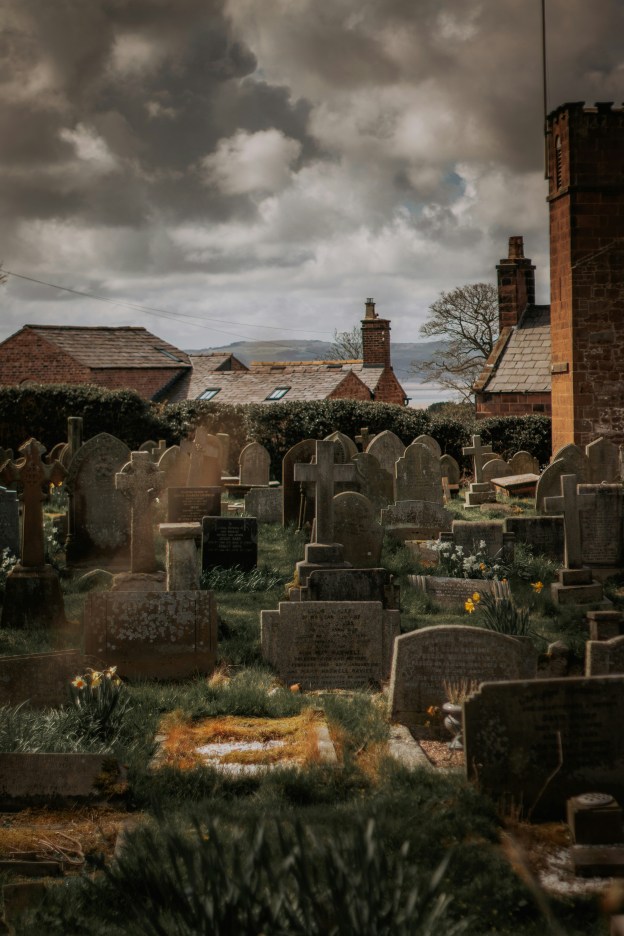
who am I

I guess I felt the first inkling of being “different” around the age of pre-school when we lived in Westover, Massachusetts. Although I don’t remember very much about pre-school, I do remember at that early age feeling out-of-place, distant from the other kids. I was extremely shy and hid behind my peers. I was perfectly content to read a book alone in a quiet corner or spend time listening to music. When I look back at school pictures, my face stands out among all the others. Mine was typically the only Asian one. I was a minority once we moved to the states from Okinawa, but I never knew or understood that term until much later.

The teasing began in kindergarten. By then we’d moved to Bossier City, Louisiana, where my father completed his military career. There was very little diversity in this small town, and we lived in a predominantly white neighborhood full of military families. Typically, I tried to downplay any teasing and brushed it off as though nothing had happened. Mostly, people did the same tired stereotypical thing, pulling up the corners of their eyes with their fingers or talking sing-songy. Occasionally I’d hear the word, “chink,” as I passed by. More than once, I was asked, “where are you from?” “No, where are you really from?” Once, on the school bus, someone I thought was my friend shoved me off the bus seat. At first, I thought she was joking around, but then realized she meant it. I didn’t understand why she would treat me in such a way. It was embarrassing, but I tried my best to act like nothing happened. It was a long ride to school that morning.

As I got older, feeling accepted by peers became increasingly more difficult. I’m sure some of that grew from my own insecurity and social awkwardness. Around junior high, I wanted desperately to be part of a particular group of girls who were considered “popular.” I craved acceptance. I began hanging out with them for a while, yet felt I had to fight to feel included. One day, one of the girls said to me, “Why don’t you find another group to hang out with?” Ouch. I was speechless, embarrassed, ashamed. I didn’t understand what I’d done to cause such rejection, but I got the message as confusing as it was. It didn’t occur to me that perhaps these events happened because I looked different from them, was uncool. I kept these incidents to myself and never talked to anyone about them. Back then, I wasn’t sure what to think of it all, and it was very difficult for me to put my feelings into words. Mostly, as I mentioned before, I felt embarrassed and confused. I was ashamed that I looked different from everyone around me. My parents seemed oblivious. I don’t think they ever clued into the teasing. We never talked about how things were going in school or any difficulties I may have been experiencing, and we never talked about my birth heritage. Sometimes I wonder if they had been offered education or cultural training, would things have been different? They were of a generation where families did not talk about problems openly, but rather swept them under the carpet. My parents were unaware of the pressures I felt to “fit in,” that it was compounded by my outward appearance. They did not know the sense of dread I felt going to school everyday during those elementary years and of the racial discrimination I experienced from both peers and teachers – mostly white male coaches.

As I got older I realized that being shy wasn’t cool. I longed to be liked and accepted by my peers just like any other pre-teen or teen. I downplayed my Asian features and rejected any association with my birth culture. In middle school, I wrote a biography report and lied about where I was born. In the report, I said that I was born in Hawaii, as I felt that was more “acceptable.” Many students questioned me afterwards, but I stuck to my ‘story.’ I wrote another paper about a girl who was teased by others and read it in class. My teacher, who was a black male, asked me, “does that happen to you?” or something like that. The conversation never went beyond that though.

In 8th grade, I became friends with some girls who were more accepting. Still, I struggled with insecurity. I was obsessed with wanting to look like everyone else. I used eye makeup to make my eyes appear rounder. I curled my straight hair every morning before school with hot rollers. By the end of the day, the southern humidity caused every last curl to go flat, which was incredibly annoying. In high school, I used Sun-In to lighten my hair. I pursued hanging out with the “popular” crowd. At home, I became increasingly disrespectful towards my parents. They were very strict and old-fashioned. One Christmas, my dad gave me a special present. I was horrified when it turned out to be a license plate for my car with the words “Oriental Express” inscribed across it. I refused to put it on my car and was upset with my dad. I know that in his small way, he was trying the only way he knew how to reach out to me. He had no idea how offensive the gift was. I felt conflicted that I had hurt his feelings by rejecting the gift, but was simultaneously mortified and ashamed. He and Mom were both so unaware. They were simply uneducated. I’m sure that Dad thought the gift was something special and was completely boggled by my reaction. The license plate sat on my dresser collecting dust. I didn’t want to get rid of it because I didn’t want to hurt my dad’s feelings any more than I already had. Eventually, I hid it. I’m not sure what happened to it over the years.

After college, I moved out of Louisiana. It was extremely difficult for my mom. Dad didn’t say much, but I know it was hard for him too. Mom wanted me to stay close to home, but I had other plans and ideas. I ended up in Florida for a couple of years and took acting classes. I partied with friends and enjoyed living independently out from under the control of my mother. I purposely did not go home to see my parents that first year, but stayed in Florida and worked. Eventually, I moved to California to pursue acting, which was really such a joke. That’s another story. Again, I struggled inwardly because I knew that staying away from home hurt my parents, yet I had to get out from under my mom’s control.

When I moved to California, the first thing that struck me was the large population of Asians. It was shocking. I’d never seen anything like it. Naturally, I avoided associating with anyone Asian. As time went on, I developed some close relationships with a group of friends and began to overcome my old insecurities, although, I still rejected my cultural heritage.

Last year, I began a master’s degree in social work at Arizona State University. I enrolled in a class called Diversity, Oppression and Change. This class forced me to re-examine the issues I struggled with related to culture, identity, and race-relations. I chose to write a research paper on ethnic and racial identity in Asian-American adoptees, a topic obviously close to my heart. To my surprise, I found much literature written on cross-cultural and transracial adoption. These research studies focused primarily on issues such as racial and ethnic conflict and confusion, the role of parenting and nurturing cultural identity, and the development of ethnic identity across stages of life. I also interviewed two other Asian-American adoptees, which was the best part. The whole process of researching and writing was inspiring. I became increasingly interested in learning more about other Asian-American adoptees and discussing our stories together. A desire to connect to my birth heritage took root and has been growing ever since.

For many years, I struggled with my identity and a sense of belonging. It never occurred to me that other internationally adopted persons experience similar feelings. I feel certain now that I’m not the only one.

the translation

Last Thursday morning I found the nerve to knock on our neighbor’s door. I knew the family was from China and wanted to ask if someone could help me with the translation of my adoption contract, which had been buried in my parents’ attic for years, hidden in an opened box. I wondered why I’d waited so long to have someone take a look at it. As I stood there waiting for someone to answer the door, I studied a small red vase with intricately etched dragons and yellow flowers hanging next to the door, undoubtedly for Chinese New Year . I wondered what the characters on the vase said. After several minutes, my neighbor answered the door. He owns a Chinese food restaurant right down the street. I stumbled over my words as I tried to explain why I had stopped by. He told me in broken English to come back in half an hour when his daughter-in-law would be there. I busied myself around the house and lost track of time until the doorbell rang an hour or so later. Our neighbor’s youngest son, Alex, appeared in the doorway with his sister-in-law, Kelly. He introduced her to me and explained that she did not speak English but would be happy to interpret my papers. I gave him a copy of the adoption contract, regretful that he had to hurry off to class. That meant I’d have to wait for the interpretation. I tried not to think about it too much throughout the day as I anticipated meeting them later.

The following night, our doorbell rang once again. It was Alex and Kelly. After showing them in, we gathered around the dinner table with the adoption contract, and the translation began. I sat on the edge of my chair wishing I could understand what Kelly was saying. I tried to determine the language she spoke. Was it Mandarin or Cantonese? Every so often Alex would interject to ask a question. Finally, Alex turned to me. The first thing he told me was that one particular page of the contract was a history of why my birth parents placed me for adoption. According to this paper, my birth parents were very poor and “there was no money in the household.” I was the 4th daughter from a large family. It didn’t state how many other siblings there were, but Alex and Kelly seemed to believe that the family was very large. They had to give one girl up for adoption and it happened to be me, the youngest. I immediately wondered had I been born a boy, would they have kept me? I wondered if they had been disappointed that another girl had been born into the family? Did they waiver over the decision to relinquish me? Was I placed in the orphanage right after my birth, or did I stay with my birth parents for a little while? In my mind, I was also trying to reconcile the huge differences in stories between my mom’s account and what was actually written on the contract. Mom had always told me that my birth parents had placed all the girls for adoption, and that they had tried to find one of my sisters to adopt her too. So many missing pieces.

Alex then brought my attention to a specific area of the contract. It was the handwritten signatures of my birth mother and birth father on the contract. I was amazed that their signatures were actually right there on the paper, and I’d never noticed it before. Had both of them signed, or just one? Alex circled their names, the Mandarin characters written one on top of the other, perfectly vertical. In fact, the entire contract was written in traditional Chinese forming vertical columns from top to bottom. I examined the faded handwriting of my birth parents more closely. Alex moved on and explained that my birth parents were from a province in China, not Taiwan, called Guangxi. Another surprise. “It’s in south China,” he explained, “like Hong Kong.” He wrote out the name phonetically, Gong-sai, so that I’d remember how to pronounce it. Cantonese is the prominent language in Guangxi and all of southern China. Later, I did some research on Guangxi learning that it has a population of 45 million people made up of several ethnic groups and borders the country of Vietnam. Hmm… So maybe that had something to do with my adoptive parents telling me that I was part Vietnamese. So, how did I end up in Taiwan? Did my birth parents travel, or actually move there? Alex suggested that perhaps the orphanages were better in Taiwan and my birth parents placed me there to increase any chances of being adopted.

As the evening came to a close, Alex and Kelly assured me that my adoption was legally agreed upon by both my adoptive and birth parents. Alex told me that traditional Chinese families typically remain living in one house their whole lives, so chances are that the family still currently lives in Guangxi at the same address. He also told me that their address would be fairly easy to locate if we should travel to China one day. I thanked them both for taking the time to help me, and they wished me good luck in my search happy to have been of help.

After they left, I went over everything Alex and Kelly told me. It’s frustrating not having all of the pieces, and I’m more intrigued than ever. I’ve enlisted the help of a social worker at an adoption agency specializing in adoptions from Taiwan. I hope that she can help me find my birthfamily, or at least connect me to the right people. It seems like a longshot, but I can always hope.

false identity

I don’t recall the exact moment I knew I was adopted. My parents must have told me at a very young age because I just always knew. They often told me that I was “chosen,” and mom occasionally retold the story of how they found me. Consequently, I came to feel “special,” but later special didn’t feel so special. Usually my mom ended up in tears, and I would try my best not to cry in front of her. Like anyone else’s parents, my mom and dad were my mom and dad. We had the same kind of relationship that other kids had with their parents. It didn’t matter that I looked different from them. As I grew up, however, my adoptive parents were completely unaware of the racial teasing that I experienced, the fear, the sense of inferiority that developed. I kept it to myself, and they never asked.

According to my mom’s story, I was the eleventh, give or take a few, child born to my birthparents; they gave all the girls up for adoption. How accurate this is, I’m not sure. My birthfather was supposedly Japanese and mother, Vietnamese. My parents attempted to find one of my biological sisters to adopt as well, but were unsuccessful in finding her. After my mom’s death in 2008, I found the original contract of my adoption, as well as many other documents, notes, receipts, etc. Everything had been carefully preserved and hidden away in a storage box up in my parent’s attic. I found one note of a list of orphanages scribbled on pieces of tablet paper; the writing appeared to be in Mandarin, but had English translations. Were these the orphanages my parents visited to look for my sister, or maybe even for me? I’ve often wondered how they found the Family Planning Association of China, the orphanage where they found me. The orphanage no longer exists today.

We traveled back to Kadena Air Force Base in Okinawa where my dad was stationed after my adoption. It would take another seven months for the petition for my visa to be approved (through the Tokyo, Japan Immigration and Naturalization Service). When my parents attended their appointment at the American Embassy to file for the petition, they were disappointed to learn that additional documentation was required attesting to “the abandoned status of their adopted daughter,” meaning a letter from the adoption agency was needed. My parents contacted the Secretary General of the Family Planning Association, Mrs. Tze-kuan Shu Kan, to write the letter. In addition to this information, I found some interesting letters to my parents from a caseworker, Rose-Marie, reassuring them that the necessary paperwork was being properly notarized and that there would be “no further trouble.” I also found the letter that Mrs. Kan eventually wrote to confirm the status of my abandonment; however, only half of it is legible. Part of the document is damaged, to my great disappointment. This was frustrating, as I was hoping to learn more about my adoption and birthfamily. What I did make out basically stated that I was abandoned at the age of 1 month, 9 days and placed in their orphanage. I’m almost positive that there was more explaining why my birthparents gave me up for adoption though. On July 7, 1967, my parents finally received approval on their petition for the visa. This enabled them to file a formal visa application, which required even more paperwork. A small note with scribbled handwriting listed all the items mom needed for the visa application: 6 photographs, 4 copies of adoption paper, 6 copies of household registration of the child, passport, medical exam and vaccinations, etc.

When I first found my adoption contract, I thought I’d made the discovery of a lifetime. What has intrigued me since examining the contract is that some of my mom’s story is contrary to the content of the contract. Mom never alluded to this document, and once when I asked to see my adoption papers, she freaked out and became suspicious. I have no idea why, except that perhaps she was afraid I’d want to find my birthfamily, which I never had any desire to do. It was all very weird. The adoption contract revealed the names of my birthparents. My birthmother’s name was Shiow-Jean Lu and birthfather’s, Chan-Huai Huang. My birth name was Hsiao-ling Huang (pronounced Shou-ling, like cow). My parents kept my birth name as my middle name but changed the spelling to Chaling. I’m speculating that during the translation of the contract, someone wrote out phonetically how to pronounce my birth name, or maybe my parents did it, and that’s how “Chaling” came to be. Or perhaps they simply ‘Americanized’ my given birth name. What really puzzles me is the fact that my birthparents names’ are not Japanese or Vietnamese, but Chinese. Could I be Chinese, or Taiwanese (I was born in Taiwan)? It’s such a mystery…

As my mom’s story goes, they knew that I was “the one” they wanted when I looked up at my mom and smiled at her. Apparently, my parents did not get to choose the baby they wanted, they were just given a baby. The process of cross-cultural adoptions in the U.S. is nothing like what my parents experienced. Adoptive parents go through a very lengthy process of completing a complicated mass of paperwork, the dossier, which can take months. Each country’s government has its own set of eligibility criteria, requirements, fees, etc. and there are also U.S. state and federal adoption laws. Then there’s interviews with adoptive parents, background checks, home visits… After all of that, adoptive parents begin to receive referrals based on their preferences. The whole process can take up to 2 or 3 years depending on which country the adoptive parents are seeking the adoption. My parents adopted me in a matter of days. Of course, they were actually there in Taiwan and able to go to the orphanage and see the children available for adoption. On December 16, 1966, I became Marijane Chaling Buck, the daughter of Lt. Col. Wendell and Gloria Buck. 

After finally receiving the visa in 1968, my dad received a transfer to the States. We moved to Westover Air Force Base in Massachusetts for a couple of years, then were transferred again to Barksdale AFB in Bossier City, Louisiana. It was in Shreveport on March 4, 1971, at the age of 4 years that I became a naturalized American citizen, along with 37 other people. I remember vaguely the naturalization ceremony, mostly feeling scared. The court room was filled with so many people, and when the judge picked me up to hold me for the news reporters, I started to cry.

We remained in Bossier City, Louisiana, throughout the rest of my childhood, and my parents continued to live there for the rest of their lives. They lived in the same house for 37 years. Obviously, finding my adoption contract has left me with a lot of questions. My parents are deceased, so it will be difficult to find the answers. After all of these years, I never thought that I’d be this curious about my past, but because my adoptive parents provided mistruths, perhaps lies, I’m perplexed and would really like to find some answers. I’m not sure if they’re out there or how to go about finding them, but I’m going to try.

my childhood home

my childhood home

I got the call from the realtor this morning as I drove up I-17 to Phoenix. My parents’ home will finally be listed for sale this Saturday. The realtor and I exchanged a few words, shared a few laughs then hung up. Since 2008, the succession of my parents’ home has been caught up in complicated family issues. Part of me feels relieved that we’ve finally reached this point, and yet another part of me feels a great sense of loss. There’s just something about saying goodbye to the house you grew up in when there are so many memories attached. It was a small brown and white house in a subdivision called, Sun City. The streets were named after planets, and most families in the neighborhood at that time were military ones. Everyone knew each other; it felt like a real community.

I remember the first time we visited the home. My parents were so excited about purchasing a brand new house after having lived on the military base at Barksdale for some time. It must have been around 1971 – Brady Bunch era – and homes were still being constructed in the subdivision. I remember wiggling my toes through the lime green shag carpet and turning cartwheels in the wide-open space of the family room. Out back, there was a patio and yard large enough to fit a swimming pool and swing set. The family room walls were wood-paneled, and the marbled formica countertops in the kitchen matched the lime green carpet. Not real stylish by today’s standards. Down the long hallway were three bedrooms. It wasn’t a very big house, but big enough for a family of three and house pets.

After settling in, my parents had a swimming pool built in the backyard. The sound of drills and other motorized equipment woke me up in the mornings, and I’d stand on my bed to peer out the window inspecting the daily progress. It was like waiting for Christmas. I eagerly anticipated the day that I could finally go swimming! When, at last, that day arrived, I got into the pool and fearfully clung to the edge for weeks. My mom immediately signed me up for swim lessons at the local YMCA, which fixed my fear of water pretty quick. Soon I was swimming like a little fish, although I hated my swim lessons and swimming laps every morning. My dad used to throw me up in the air like a cannonball while Mom lounged and watched us from a fold up lawn chair, the kind that left crisscrosses on the backs of your legs. In addition to swimming, I also spent a lot of evenings playing in the front yard with all the other kids from the neighborhood when it was still safe to do so. We’d play swing the statue, red rover, and red light/green light until the sun began to fade and our moms called us back in for the night. What good times those were.

My dad loved gardening and planted a large garden full of vegetables in the backyard behind the pool. We had fresh cucumbers, okra, tomatoes, and zucchini. My mom liked to make homemade ice cream with fresh peaches from our peach tree. I’d watch her pour the rock salt into the ice cream machine and then peer through the plastic top as the mixing arm swirled the ice cream around. What delight. In the mornings, I got used to waking up to the rumble of B-52’s revving up their engines at Barksdale Air Force base. It grew to be a comfort. I walked to Sun City Elementary School every morning and back home every afternoon with my niece or a friend unless it was too rainy or cold outside.

My parents owned that house for 37 years. The next time I visit Louisiana, the house will belong to some else, a stranger. For memory’s sake, I’ll take a spin down Pluto Drive just to check it out. I’ve heard that childhood homes don’t hold up to the memory once it passes on to new homeowners. New homeowners often remodel, the appearance changes, and the warm feelings you’d expect to emerge somehow don’t. Hmm…I wonder? In any case, I spent most of my childhood in that old house. I don’t think I could ever forget that.

my mysterious adoption

Imagine your whole life believing that you are one thing and then learning in mid-life that you are not what you have always believed you were. Let me explain. When I was four months old, I was adopted by a white American family from an orphanage in Taipei, Taiwan. My dad was a lieutenant colonel in the U.S. Air Force, and he and my mom were stationed in Okinawa at the time I was adopted. My parents provided very little information about my adoption, and I knew nothing about my birth family or birth culture. I always believed that I was Vietnamese and Japanese. That is what they told me, that is what I believed. I had no reason to question what I’d been told. After my mom passed away in 2008, however, I made a discovery about my adoption that in one instant changed everything I ever knew.

My mom was diagnosed with Alzheimer’s disease, which slowly progressed across several years. Before her death, my half-sister began rummaging through our parents’ attic in an attempt to get rid of junk. There were tons of boxes stored, and none of us had a single clue what was inside them. As it turned out, one box in particular contained some very surprising things. After mom’s funeral, sorted through the boxes. There we were, in the tiny dining room where I’d sat a million times with my family for breakfast and dinner, removing yellowed tape from boxes, rummaging through what was inside. Some contained interesting artifacts from my dad’s service in the military. He was in the United States Army Air Force, a co-pilot of a B-24 in World War II. These little treasures are very meaningful to me now, old photos from my dad‘s youth, flight records, clues to his military past, which I knew so little about.

We rummaged and rummaged. Then, I stumbled upon a box where I found the original contract of my adoption plus other items related to my adoption that my mom stowed away and never told me about. I knew something of my past had to exist somewhere, but never had any motivation or reason to search up in the attic, of all places. I used to think that monsters and scary things lived in the attic. The most curious thing of all was a picture of my mom holding me in her lap in what appeared to be the orphanage where I was placed for adoption, though I can’t be certain. She is no longer here to answer the many questions about my adoption that are exponentially growing in number as I write this. A small baby bed, its railings rusted with peeling paint, is situated just behind us. I found safety pins that probably held together my cloth diapers and baby shower cards, congratulating my mom on her “new addition to the family.” I was stunned, excited about these curious new finds and that I’d finally found some tangible link to my mysterious adoption. At the same time I felt sad that my parents never shared these things with me. Why not? Why hide my early beginnings? Secrets tend to surface at some point.

At the beginning of this year I went back to Bossier City, Louisiana, to salvage what I could from my parents’ home. It all seemed so surreal knowing that this would be my last visit to the house I grew up in before it is put on the market. I shipped back home tons of old pictures, an antique grandfather clock that has been in Mom’s family forever, LP’s of Glen Miller music, and several of Dad’s military awards, plaques, and old service records. So many memories came flooding back as I unpacked all the boxes and unwrapped each little item, childhood memories, days gone by. It saddens me that neither of my adoptive parents are here anymore. We’ll never get the chance to clear things up about my adoption. It’s up to me now to figure it out. But really, that has been the theme of my life – left to figure things out on my own, alone. 

Since coming back home to Arizona, I’ve thought more and more about my adoption and decided to begin a search for my birth family. I sent my adoption contract to an adoption agency specializing in adoptions from Taiwan to American families. Surprisingly, I learned from one of the caseworkers that my birth parents were not Vietnamese and Japanese, but very possibly Taiwanese. Could I be Taiwanese? It would make sense, after all, because I was adopted from Taipei. For years I have explained to people that I was born in Taiwan, but am really Japanese and Vietnamese, adopted by white parents. I had to further explain why I had a southern accent. The script…the script became second nature, yet incredibly annoying at the same time. The fact that I didn’t exactly look like either of my parents raised question upon question and elicited unwelcome stares, especially having lived in a predominantly white area.  It will be so much easier now to just tell people that I’m Taiwanese and not feel obligated to share more, not that I am really obligated in the first place. It’s just when you grow up in an area where you don’t look like your parents or anybody else, people ask questions. And not just one question…

I’m not sure how the search for my birth family will go. Chances are that neither of my birth parents are still living. My birth mother was 39 and birth father, 55 when I was born. Still puzzling to me is why my mom told me that I was Japanese and Vietnamese. Did the translation get mixed up, or was it all fabricated? It’s hard for me to believe that my parents would purposely lie to me. But, there is that…Perhaps it will always remain a mystery.

Discovering things I never knew about my adoption, digging into my past has led to a burning curiosity to know and understand my cultural heritage, which I so strongly rejected growing up. Why would I want to look Asian in a world filled with white people? I am now more curious than ever about my birth family. Do I look like any of them, does anyone else in my birth family have an affinity for music? Are there any health issues to be concerned about, was it difficult for my birth parents to relinquish me, did they ever want to see me? Hell, I’d never even heard of the term, “birth family,” until recently. Although I may never find out anything other than what’s preserved on my adoption contract, I hope that won’t be the case. 

Related articles