Monthly Archives: August 2026

Monday Music Notes

Happy Monday to y’all! It was my birthday last Saturday, which means I’m another decade older 😳 It was a quiet day spent doing some of the things I love most: listening to music, making art, and drinking coffee, lol! I headed to one of my favorite coffee spots, Reinne’s Place, on Retro Row in Long Beach. It’s a local favorite, especially within the Filipino community. The owner experienced a profound loss, and the coffee shop was born from that grief. Seriously, some of the best coffee in LB. And right next door is San & Wolves Bakeshop, a Filipino bakery that makes a variety of irresistible treats. They were down in Orange County at a huge festival, Daisy Chain, so I’ll have to wait until they reopen tomorrow to grab my bakery fix!

I visited my daughter in Hollywood on Sunday, and she baked me a homemade pot pie. Delish! It was altogether a quiet birthday, as my birthdays have been for the past couple of years.

I also facilitated my first sound bath, a Sturgeon Full Moon Sound Journey, on Friday night. There were eight attendees, including a good friend and former coworker, as well as a former student. I was thrilled to see them both! It was hot, unfortunately, but other than that, I think it went pretty well. Sound therapy is still very new to my skill set, so there’s obviously room for improvement. I’m learning with each experience and will keep honing my skills along the way.

I think the highlight of my weekend was listening to Turnstile. A guy I knew a couple of years ago introduced me to them, and I’ve been hooked ever since. They’ve been redefining the boundaries of modern heavy music, successfully bridging the gap between traditional punk and mainstream alternative rock. Seriously, if you don’t get up and groove when listening to their music, there’s something amiss! 😂

The songs currently on repeat are Seeing Stars, Birds, and Slowdive from Never Enough: Versions (Disc 2).

Turnstile is currently on tour, and they’ll be making their way to Southern California in October and November, playing a couple of different festivals. One is at the Observatory Festival Grounds in Orange County, and the other is Camp Flog Gnaw Carnival at Dodger Stadium in Los Angeles. I’m seriously considering going to the Orange County show. Tickets are already almost sold out! I’ll be in Taiwan visiting my birth family in November, so October may be my window. I’d be perfectly okay going solo, as none of my friends are really into hardcore punk, but we’ll see 😎

In the meantime, here’s a live performance so you can get a taste of what I’ve been listening to. Fair warning: you may find yourself getting up to groove 😉 I know I do!

What music are you listening to these days? Leave a comment and let me know! 🎶

Blackout and Birds performed live at Lowlands 2026

a whisper away

my mother used to tell me
not to wish time away

when I was a young girl,

and yet, I find myself wishing
for the next time
that you are near.

I steal long glances,
gazing upon your sunkissed face
when you look away,
tracing the lines ’round your eyes
with mine.

the cadence of your voice is
etched to memory.

I count the days since our last encounter
like a metronome
beating time till our next.

and everything I dare not say aloud
lies hidden in this hollow heart,
a whisper away from hope.


This poem belongs in the realm of imagination. Mine appears very committed to a good story, and I may be a bit of a hopeless romantic.

the space between

in the space between
i chase possibility
dreams and desires
coursing through me
restless for expression

i leave the past behind
a mysterious spark
ignites curiosity
fueled by the beating
of my heart

i will flow with the chase
make it mine
surrender to Divine Timing
for i am Time and Time is me
and nothing is impossible


The End Where We Start by The Black Queen felt so aligned with this writing.

Grieving the Mother Given to Me

I hesitated to write this post about my adoptive mom. Yesterday was her birthday. She would have been 83-years old. She died in 2008 of Alzheimer’s disease.

My adoptive mom was an RN. She returned to school later in life to complete her nursing education; I must have been in preschool or early elementary at the time — my memories are fuzzy. I do remember her taking me to class with her on occasion, likely when she was unable to find a sitter. Looking back, I realize there was so much about my mom’s life that I knew very little about. I knew her as my mother, but I didn’t know much about the woman she was beyond that role.

When I was a very young girl, I don’t remember much physical affection. I know she and my adoptive father loved me, but I don’t recall either ever engaging in play with me. I was an extremely insecure child — slept with a blanket beyond the age considered acceptable and drank from a bottle longer than I probably should have. I remember “the maid” throwing my blanket away because it was literally in tatters. I suspect my mom had her do it. I remember the gutwrenching grief that followed, which lasted days, perhaps weeks. That blanket had been a source of comfort and security to me, and losing it was profoundly painful. Looking back, I recognize that those attachments reflected a need for comfort and security.

In elementary school, I began having painful stomaches, and I frequently cried to my first grade teacher, asking her to call my mom to be checked out of school. On one occasion, my mom picked me up in the morning before class had even begun. When we got home, she promptly spanked and yelled at me. Spanking was, of course, a common form of discipline at the time, and I received my fair share of it. As I grew older, the stomachaches subsided, but I carried with me an intense shyness and great difficulty asking for help, especially from teachers or other adults. I learned at a subconsious level that expressing distress might not necessarily bring comfort.

My parents, particularly my mom, sheltered me. They were overprotective in many ways, and this became increasingly troublesome as I grew older. It was during preadolescence that the relationship with my mom became increasingly tense. While most teens were beginning to establish greater independence, my mom exerted more control. She chose the activities I was allowed to participate in and made it clear when she didn’t like certain friends or didn’t want me hanging out with them.

My mom had wild mood swings. On weekends, our home was often tense as she cleaned the house or made meals. When she was angry, she yelled. Her anger was often directed at me, but also my dad, whom she often critized. He rarely fought back. There were, however, a few verbally aggressive arguments between them that were particularly frightening to my younger self.

Both of my parents drank too much and shad an addiction to nicotine. Some might say this was typical of their generation. As a young child, the evening martinis seemed to lighten the mood. I didn’t understand the significance of drinking till intoxicated nearly every evening. Our home was thick with cigarette smoke most of the time. As I grew older and wanted more independence, I became aware that the alcohol seemed to make my mom angrier and more emotional. What I experienced as tension as a child began to feel more threatening as I entered adolescence.

I know it isn’t uncommon for teens to yell back at their parents, and perhaps some of what happened between my mom and me was not unusual for adolescents of that time. What makes my story more complicated, however, was not only the misunderstandings between us, but my parents’ lack of understanding about how race and identity shaped my desperate need to fit in with my peers.

Staying out late, dating, and many other things my friends were beginning to experience were forbidden in our home. I watched my friends gain the freedom I desperately wanted. So I yelled back. It was the only way I knew how to protect myself. There were no conversations, no teaching, no attempts to help me understand or show support. Just yelling.

On one occasion, my mom became so angry that she pushed me back onto my bed and began tearing my shirt off, leaving a hole in the fabric. Another time, she ripped the telephone in my bedroom out of the wall jack while I was talking to a friend. These incidents, and many others, created such fear in me that I shrank, and I hated my mom in those moments. There was no one to confide in, not that I would have known how to ask for help or how to express myself at the time. I was unable to make sense of what was happening in our home, and there was nowhere to take the confusion, anger, and fear except music. Music is where I escaped

When I went to college, I grew more and more distant from my parents. I lived at home my first year, then moved on campus. I loved having the physical distance. It provided a respite, a barrier between me and my mom, and a place where I finally felt safe.

I loved college. Perhaps, not surprisingly, I began experiencing everything in excess, indulging in the freedoms that come along with being away at college. Excessive drinking, partying, staying out late, doing pretty much whatever the hell I wanted, alongside hours of practicing the piano. Some of my favorite moments were the quiet ones, practicing late into the night, alone in the music building, holed up in a tiny practice room. It was just me and the piano. There was something deeply magical about those hours.

The flip side was that I hated performing. The expectations of perfection that came with being a piano performance major was crushing. To this day, anything that makes me feel as though I have to perform or prove myself can trigger intense anxiety. I’m better now at moving through it without beating myself up when I fail to meet my own expectations. But I recognize that old feeling. Somewhere along the way, performance became intertwined with the fear of not being good enough.

In college, I began planning my escape. After graduation, I moved back in with my parents for about a year while I taught paino lessons to kids. I kept my distance from my mom as much as I could. Eventually, I hatched a plan to get out of Louisiana. By then, my grandmother had moved into our home. Though she and my mom didn’t always see eye to eye, I think it must have been a comfort to my mom to have her there. One morning, I packed my car with whatever belongings would fit and drove away.

I remember seeing both of my parents standing in the driveway, waving goodbye. My mom’s face held a sadness and worry that I had rarely seen before. I was leaving the home I had desperately wanted to escape, yet seeing her standing there caused something in me to break a little. I loved her. I resented her. I was relieved to be leaving, yet I was sad to leave her. This was the beginning of an inner conflict I would carry for many years: loving and despising my mom at the same time.

I got married at 26. That is a completely different story for another day. And, I gave birth to my daughter on October 10, 1997. Her birth marked the beginning of a profound new chapter in my life. She was the first human with whom I experienced what felt like true intimacy. Becoming a mother changed the way I saw my own mother. Something softened. For the first time, I could glimpse at her pain and suffering in a way I hadn’t been able to before. My mom was diagnosed with Alzheimer’s disease not long after. And, very gradually she declined, until one day I returned for a visit, and she no longer recognized me.

I have wrestled with grief and guilt, struggling to reconcile both the resentment I held for my mom with deep sadness, knowing we will never be able to express apologies or forgiveness to one another. I do not hold anger or hatred towards her anymore. What remains is sorrow.

I know she did and said terrible things. For years, I refused to visit my parents. But time has a way of softening us. I don’t know much about my mom’s history or what she endured before I knew her, but I imagine there were wounds and pain none of us understood. I wish I had known more. I wish I could have understood her suffering while she was still here. And I hate that she suffered from Alzheimer’s disease. It was tragic to watch her deteriorate physically and cognitively as the years passed.

To this day, i feel I never really knew my mom. I know she loved me, and I feel gratitude that she did; perhaps she was doing the best she could with what she had. That doesn’t erase my own pain and suffering. It simply calls me to continue healing the wounds that are still tender and that sometimes affect me in ways I don’t even recognize. In some ways, I believe this pain led me to my profession. It has helped me understand the complexity of trauma, the ways our early experiences shape us, and the importance of creating the safety and compassion that I sometimes needed as a child. Perhaps this is one way I have made meaning from what I experienced.

My birthday is only nine days after my mom’s. Every year, those two dates sit close together on the calendar, a reminder of the complicated bond we had and the ways I will always be connected to her.

So, happy birthday, Mom.

May you be at peace, and may you be somewhere kinder and gentler now.


Photo by Christopher Sardegna on Unsplash

The Girl Who Found RUSH

There wasn’t much room in my friend’s tiny Pinto, but somehow we all squeezed in. We were teenagers, high, laughing, and on our way to see RUSH at the Hirsch Memorial Coliseum. I don’t remember exactly what we talked about on the way there. I mostly remember the feel of it: being young and free, surrounded by friends, the anticipation of the concert ahead. For a few hours, nothing but laughter and silliness. We were just a group of kids who loved music.

RUSH was the first band I ever saw in concert. I was in high school at the time, an unlikely fan of a band whose music was probably more complicated than any other band I followed at the time. But something about RUSH drew me in. I’m certain it was more than just the music itself that resonated.

My friends and I were in marching band together. We were a raucous group of kids, and our band director had a difficult time getting the entire class to settle down, yet we were a top marching band. I loved music, but hated marching band. For one thing, girls weren’t permitted to wear makeup, which was nothing short of a tragedy to my teenage self.

My adoptive mom forced me to be in marching band after I casually told her that the band director invited me. I wanted to be a cheerleader. That, of course, was not to be. Band, despite being geeky, was where I eventually found my tribe.

Most of my friends, growing up in Bossier City, Louisiana, were white. I was not. In Junior High, I desperately wanted to be part of a popular group of girls, most of whom were white. For a while, they seemed to accept me. Then one day, I was told to find another group to hang out with. That stung. At the time, I didn’t understand why I had been pushed out, or consider that race may have had anything to do with it. The girl who seemed to lead the group was of mixed race and very popular, which made the racial exclusion even harder for my younger self to understand.

My band friends were white. I knew that. Race was never something we ever talked about, nor did anyone else. Growing up as a Taiwanese adoptee (although I was told I was Japanese and Vietnamese at the time) meant that I was often aware of difference in ways that I could not articulate. But with these friends, something happened that I didn’t fully understand then. They seemed to look beyond the obvious differences between us. We were simply kids in band together who shared a love of music and partying, and that felt safe.

Then there was 2112.

Exit Stage Left was the first RUSH album I owned. Of course, Tom Sawyer and Limelight were my favorites. My love of RUSH, and one of my band friends, led me to 2112. I must have listened to that album a million times over.

The story of 2112 is about individuality versus conformity. The protagnist discovers a forbidden musical instrument in a society that has eliminated music and individuality. The discovery awakens something in him that doesn’t fit the world in which he exists. I think something around the nonconformity was part of what drew me into the album so deeply.

Though I was in marching band, which was ostensibly about music, I hated being forced into it and the expectations that came with it. I was being told, in small and big ways, who I should be and how I should present myself. Then I found RUSH, a band whose music was expansive, strange, rebellious, and completely unconcerned with fitting into the expected mold.

In the music, I didn’t need to explain myself. My friends could not share my experience of being a Taiwanese adoptee or what it was like growing up racially different from the people around me. And yet, they saw me. We liked the same music. We laughed a lot together. We crammed into a tiny Pinto. For a confused teenage girl who carried an awareness of being different without having much language for it, their friendship was profoundly meaningful.

Sometimes belonging doesn’t come from people who are just like us. Sometimes it comes from finding people with whom we can simply be ourselves, without having to work so hard to fit in.

Belonging is messy and sometimes partial. What I know about RUSH, beyond the fact that they remain one of my favorite bands, is that their music gave me an escape from a messy, racially complicated adolescence. For a spell, I didn’t need to figure it all out. I could listen to the music, share thoughts about it with my friends, and feel like I belonged.

And I’d cram back into that Pinto with that group of friends any day.


If you haven’t listened to RUSH 2112, it’s a trip. Here’s the opening track, 2112: Overture…

Outsider Within

It’s been an interesting week. I’ve been quietly building my sound therapy and psychotherapy practices while planning for events later this month and into September. On Monday, I met with a new client. As I settled into the session, something felt different. The office, though aesthetically beautiful, is shared with other practitioners and didn’t quite feel like mine. The familiar structure I’d become accustomed to was gone. I was left with an unsettling sense that something was missing. Perhaps it was a version of myself that is still shedding.

Despite the excitement of building something brand new and connecting with a new collective of practitioners, I’ve found myself feeling lonely. Perhaps it’s the strange paradox of being someone who deeply values solitude while still longing for connection. Maybe this is an invitation to open myself up to different kinds of connection. It’s curious how you can be surrounded by people, immersed in relationships, and still feel profoundly disconnected. It’s like being an outsider within. I’ve known that feeling since childhood and spent much of my life overcompensating for it. Now that I’m older, I don’t care so much about being the social butterfly. Still, there’s something deeply human about wanting to feel connected.

What I’m learning in this season of transition is that I do my best work in solitude, and music appears to be my muse. Oddly enough, it has taken me this long to realize that listening to music is what awakens my own creativity. There are a few songs I’ve been living inside this week. I’m realizing that creativity energizes me. It’s like air. Without it, I shrink.

A couple of songs that have inspired me are Wolf Alice’s new cover of Hammond Song and Visions Of A Life from their 2017 album of the same name. On Hammond Song, guest vocalists Julia Cumming of Sunflower Bean and Canadian singer-songwriter, Bria Salmena, join lead vocalist Ellie Rowsell. OMG, why have I never heard of Wolf Alice until now? The rawness and expansiveness of their sound immediately drew me in on my first listen of Hammond Song, This led me to revisit The Roches’ original version and the albums and songs I grew to love in the 90’s.

I love the way that Wolf Alice moves between intensity and vulnerability, from the ferocity of their punk and grunge to dream pop and folk songs that feel vulnerable and transportive. Visions Of A Life in particular struck a chord deep within. There’s a sharp edge to it that feels chaotic and alive. It reminds me that creativity is not always a quiet, gentle process. Sometimes it comes crashing in with grit, noise, and a bit of chaos.

I’ve also revisited Kalandra’s album, Mørketid. The first song, Mitt Hjerte Alltid Vanker, feels so austere, mysterious, evocative, and bold. I learned that the song is based on a Scandanavian Yule hymn. The artists reshaped the traditional song by rooting the lyrics deeply in seasonal nature and childhood memories. It evokes feelings of winter longing and the quiet nature of the darker months.

Perhaps that is why I’m so drawn to the song. I prefer Fall and Winter and seem to come alive during these seasons, as though I’m emerging from my own kind of hibernation. The song takes me to a place of reverence and vulnerability where I find myself confronting my shadow. We all have one, yet often suppress the parts of ourselves that feel uncomfortable or difficult to embrace. My fears, my old wounds, my hidden impulses are there, asking not to be rejected, but witnessed.

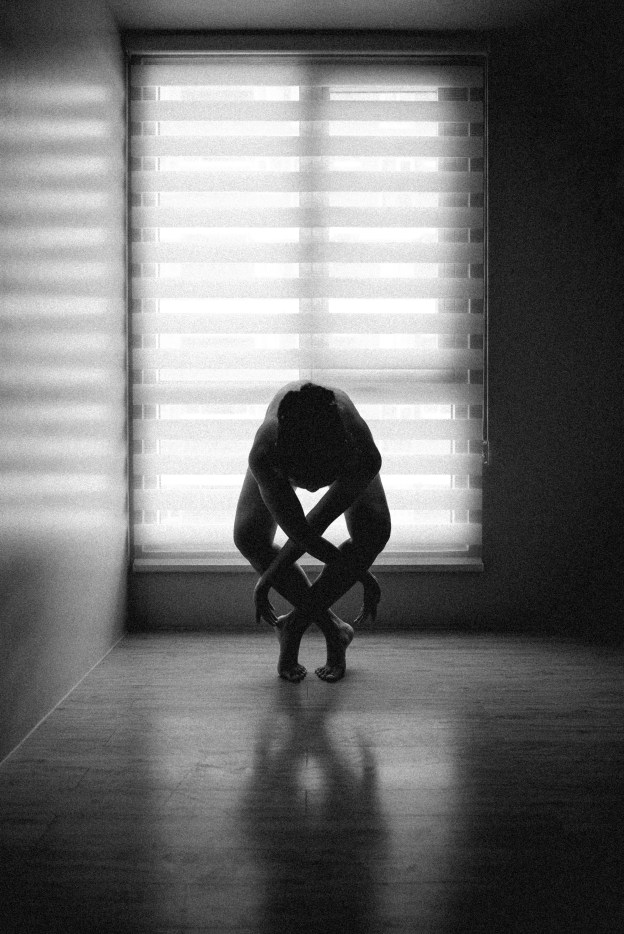
I recently read that light cannot exist without shadow, and shadow cannot exist without light. I’m learning that their is beauty in shadow, too, not just the light. Shadow makes me braver, more resilient, more confident. There is beauty in that even when the process is painful.

I love that music makes me feel so much, that it awakens something in me. Sometimes it guides me toward pain and shadow; other times toward immense joy and light. Music has a way of alchemizing all these parts of me, a reminder that shadow and light do indeed coexist. Most of all, I surrender. In a world that can often feel isolating, I am held by something larger than myself. And somehow, I find my way forward.


Visions Of A Life by Wolf Alice. Live version, 2018. Epic 🤘 Lyrics here.


Mitt Hjerte Alltid Vanker by Kalandra, lyrics included 🖤 The ending of the song is especially beautiful.


Photo by Vasi on Unsplash